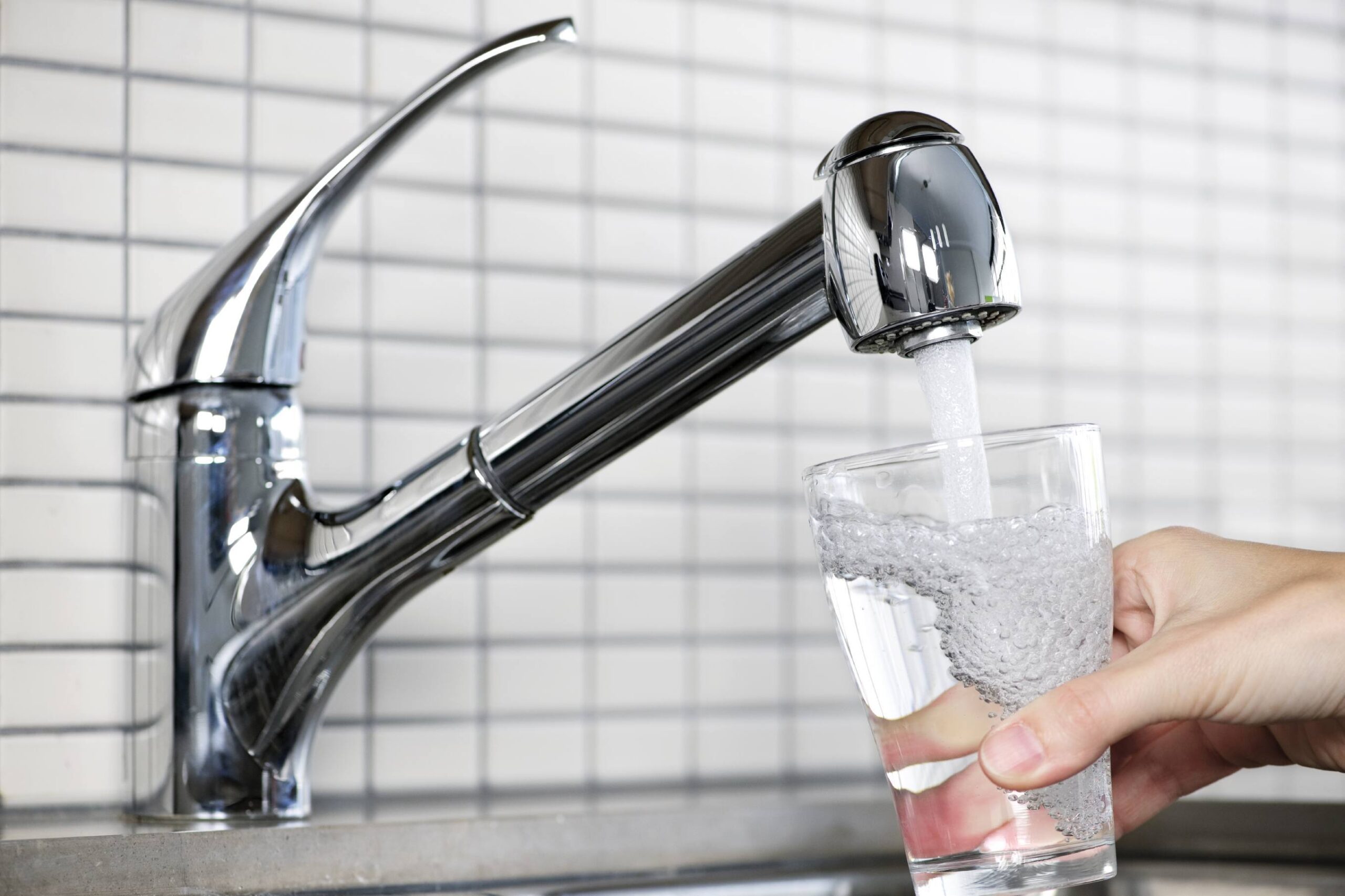
Tap This: Why You Simply MUST Filter Your Water

(DrFrankLipman – Frank Lipman) Water is a life-sustaining fluid that’s essential to health, but can undermine it if you’re drinking straight out of the tap. The trouble is, drink tap or even spring water and you’ll likely be getting more than you bargained for – chlorine, fluorine compounds, Trihalomethanes (THMs), assorted hormones, pesticides and even trace amounts of prescription drugs. It can be a witches’ brew of health-killing effluvia – but you can improve the odds. Here’s the low-down on water, and how to turn it back into the health drink nature intended:

Tap Water is Dirtier Than It Looks

Even “clean” drinking water that flows from the tap isn’t what most of us would think of as clean. It’s traveled through miles of pipeline, picking up contaminants, pesticides and industrial run-off along the way. It’s been disinfected with potential carcinogens like chlorine, ammonia and or chloramines, then “fortified” with fluoride. While disinfection is a necessary evil – without it, water-borne illnesses would be a constant problem – drinking, showering and bathing every day with this chemical brew is a lousy idea.

No, Seriously. Your Water Is Funky

Problem is, most of us don’t have a clue about the chemicals and contaminants in our water, nor do we know their long-term effects. We trust that everything is OK, but it’s not. In fact, the Environmental Working Group spent three years investigating the country’s drinking water and the results were jaw-dropping. They found that roughly 85% of the population was using tap water laced with over 300 contaminants, many with unknown long-term effects and more than half of which aren’t even regulated by the EPA. Add to the mix an ever-growing list of new chemical compounds that come online just about every day and well, the waters only get murkier.

Bottled Water Isn’t Better, Cleaner or Good for the Earth

Let me be blunt: there’s just no good reason to drink bottled water —and if you’re one of those folks who buys it by the case, I beg you to stop. Bottled water is virtually unregulated, expensive, and even the EPA says it’s not necessarily safer than tap. It’s also insanely wasteful – an estimated three liters of water is needed to produce just one liter, and roughly 17 million barrels of oil is required to produce all those bottles, according to The Pacific Institute. What’s worse, roughly 2/3rds of those bottles wind up in the ocean and in landfills, polluting and poisoning waters and wildlife.

Brew Your Own – With the Help of Water Filtration Systems

So, how to tamp down the bad stuff in your brew? The best way to go is a water filtration system. For starters, look for one that’s certified by the NSF, an independent, non-profit group that tests and verifies the contaminant reducing abilities of water filters. Next, you’ll need to determine how far you’re willing to go, based on your needs and budget. Ideally, whole-house filtration systems are an excellent option, but they’re not always feasible. If whole-house filtration isn’t appropriate for your home, then I recommend investing in individual drinking water and shower filter units.

Tap Into Your Tap

For drinking water, there are different ways to go, with the three simplest options being under-the-counter filters, countertop filters and pitcher systems:

· Under-the-counters are great because they’re tucked away out of sight and receive very high marks for filtration. However, the initial purchase price plus cost per gallon can be a bit higher than the other options, and there is some installation involved.

· Countertop filters use water pressure to force water through the filtration process, which helps make water healthier and tastier, removing more contaminants than standard pitcher systems. Countertop systems require minimal installation (a small hose, but no permanent fixtures), and take up only few inches of counter space.

· Water pitchers work well for the space-challenged because they’re portable, need no installation, fit easily in the fridge and are available on just about every street corner. They do a decent job of filtering out some of the major contaminants, but generally not as many as under-the-counter and countertop versions. And while the initial investment is small, filters need frequent replacement which boosts the cost per gallon over other methods. My favorite pitcher (and the one we use in my office) is the Aquasana Powered Water Filtration System.

Don’t Bathe Yourself in Chemicals

Your morning shower should not include daily exposure to chlorine, carcinogens and vaporized chemical contaminants being absorbed into your skin and breathed into your lungs. Without a shower filter, it does. A few simple tips to cut exposure: shorten your showers, turn down the temperature a bit so pores are less open to absorbing contaminants, and most importantly, install a shower filter.

Clean Up Your Act – But Kick the Tires First

Water filtration is a simple, no-brainer way to support your health by preventing toxic chemicals and carcinogens from entering your body – and everyone should do it. Before you invest though, check out The Environmental Working Group’s helpful Water Filter Buying Guide to learn more about the options that will work best for your specific needs.

My Secret Water Weapon

My favorite filters, which I recommend to my patients (and the ones I personally use) are from Aquasana. They remove much of the bad stuff without stripping the water of beneficial minerals such as calcium, magnesium and potassium and they are NSF certified. But what I admire most is that they make a real effort to be kinder to the environment, with a solar powered manufacturing facility and casings and filter cartridges made of recyclable parts and compostable materials. I’ll drink to that!

Body Care From Your Kitchen

(NaturalNews – Alex Du Toit) Most body care products that you buy from the store are full of harmful chemicals and toxins that don’t even clean your skin or hair properly. The products that are natural and organic that actually work are expensive. There is a perfect combination of inexpensive ingredients you can find in your kitchen that will give you the cleanest teeth, hair and skin you could imagine.

Ingredients

  • Apple Cider Vinegar
  • Baking Soda
  • Coconut Oil
  • Dr. Bronner’s Soap
  • Himalayan Pink Salt
  • Honey
  • Hydrogen Peroxide
  • Sugar

Directions

Step 1: Oil Pulling:

Take a tablespoon of coconut oil and put it in your mouth. If it was hard, it will liquify. Keep it in your mouth for about 20 minutes, gently swirling around in the mouth. When 20 minutes has gone, spit into a trash can or outside; don’t ever spit in a sink or toilet, as it could clog the drains. Oil pulling is excellent for dental hygiene, while protecting the teeth against bacterial rot and improving the digestive system by speeding up the metabolism.

Coconut oil should be a staple at home. It is so incredible for you with its antibiotic, anti-inflammatory and antiviral properties. It can be used all over the body, a tablespoon for constipation, for cooking, for oil pulling, deep conditioning and more.

Step 2: Conditioning the hair:

Heat oil (olive, jojoba, almond, coconut, etc.) and pour warm oil on the roots and hair. Put hair up. This helps with hair growth and conditions the hair.

Step 3: Cleaning the face:

Spread honey all over the face and let sit for 20 minutes. The honey pulls out the toxins and black heads while tightening the skin.

Step 4: Brushing your teeth:

Mix 2 tablespoons of baking soda and add 1 teaspoon of Himalayan pink salt. After oil pulling, dip your brush into the tooth powder and brush away. You will have the cleanest and whitest teeth ever. You can also add coconut oil with the baking soda and salt to make a paste. The baking soda and salt help deep-clean the teeth and gums while making the teeth extra white.

Step 5: Mouthwash:

Rinse the mouth with hydrogen peroxide. Hydrogen peroxide kills bacteria in the gums.

Step 6: Cleaning the hair and face:

Head for the shower. When you get in, rinse the honey off of your face. Grab the Dr. Bronner’s soap. Pour some in your hand and scrub into the hair and face.

Step 7: Conditioning the hair:

Take the bottle of apple cider vinegar and fill the capful. Pour capfuls onto the roots of the hair and let it drip down the rest of the hair. Try and get a bit of ACV on the entire head of hair. Then massage some into your face as a toner. Take a drink of the ACV and rinse off the face with water. Apple cider vinegar has incredible benefits for the body inside and out.
(http://www.naturalnews.com)

Step 8: Scrubbing the skin:

Take a handful of sugar and mix with Dr. Bronner’s Soap, then scrub your skin to remove all of the dead skin that rests on the surface. Rinse body completely.

Step 9: Moisturizing the body:

Once you dry off from your shower, take a bit of coconut oil and put a light layer on the skin, face, arms, hands, bottom of feet and anywhere else you want deep skin softening.

Voila! You are extra clean and beautified with products from your kitchen. If you create this as your daily ritual, people in your life will start asking you why you look so good! You can tell that them its from your kitchen.

Sources for this article include:
http://science.naturalnews.com

5 Reasons to Skip the Skim Milk

(DrFrankLipman – Jenny Sansouci) From skinny lattes to fat free frozen yogurt, skim milk is seen everywhere as the milk of choice for health conscious people – but this couldn’t be further from the truth. Not only is skim milk the opposite of delicious, it’s actually not a healthy choice at all. Here’s why you should ignore the skim milk advertising, get off the fat-free bandwagon, and forget everything you think you know about skim milk.

1) Skim milk about has twice the amount of sugar as full fat cream. When you take out the fat, you add sugar to make up for it, and don’t we all know by now that fat doesn’t make you fat…sugar does? This means if you’re buying skim milk to manage your weight, you’re making a mistake.

2) Skim milk is totally devoid of nutritional value. The vitamins (A, D, E and K) in milk are fat soluble, which means they need fat in order to be absorbed by the body. Also, calcium absorption is enhanced by Vitamin D, but the Vitamin D needs fat, so skim milk breaks the entire chain of absorption and becomes nutritionally empty. It’s basically like drinking sugar water.

3) Saturated fat (which is removed to create skim milk) has satiating, blood sugar stabilizing effects. Fats slow the release of sugar into your bloodstream. Eating a low-fat diet that makes up for the fat by adding more sugar can lead to blood sugar issues like diabetes and hypoglycemia. Contrary to popular belief, lowfat does NOT mean healthier!

4) The dairy industry often adds skim milk powder to skim milk. Skim milk powder processing causes the cholesterol in the milk to be oxidized – and oxidized cholesterol can lead to buildup of plaque in the arteries. Cholesterol that naturally occurs in food is not something to worry about, but oxidized cholesterol can cause inflammation in the body and contribute to heart disease.

5) Because skim milk is a highly processed, “altered” food, it can leave you feeling unsatisfied and experiencing cravings for something more. Our bodies thrive on whole foods, the way they are found in nature. Eating a diet full of high quality protein and healthy fats from whole foods can prevent the ups and downs and cravings that come from eating fat-free foods that are “missing something.

While we’re not advocates of dairy as a health food in general, if you are going to choose to eat or drink dairy products it’s important to choose full fat, organic dairy that comes from grass-fed cows that haven’t been treated with hormones. Either way, do not to be tricked by skim milk marketing. Skim milk is not a health food!

Research Proves Emotional Wellbeing is Crucial to Good Physical Health

(NaturalNews – Reuben Chow) Much research over the years has shown that a positive emotional state actually has a very strong and profound impact on one’s physical health.

Endorphins and the immune system

Most people are aware of endorphins, the “feel-good hormones” in the body. Endorphins are a type of natural occurring substance known as peptides or neuropeptides which influence one’s mood, pain and pleasure. When released, they give rise to pleasurable responses not dissimilar to those linked to opiates.

What most people are probably unaware of is that endorphins can also be found in the immune system.

“The astounding revelation is that these endorphins and other chemicals like them are found not just in the brain, but in the immune system, the endocrine system, and throughout the body. When people discovered that there were endorphins in the brain that caused euphoria and pain relief, everyone could handle that. However, when they discovered they were in the immune system as well, it just didn’t fit, so these findings were denied for years. The original scientists had to repeat their studies many times to be believed,” said Candace Pert, PhD, former Chief of the Section on Brain Biochemistry of the Clinical Neuroscience Branch at the National Institute of Mental Health.

In other words, emotions are not just purely psychological, but actually have a direct impact on the functioning of different systems of the body, including the immune system.

According to Dr. Pert, viruses and neuropeptides use the same receptors to get into a cell. If there are more of the latter around, viruses would find it more difficult to penetrate cells.

Positive emotions and immunity

One’s mood and attitude has a great impact on his or her immune function. When optimistic and happy, one’s immunity is much stronger.

Several studies have shown that laughter and other positive emotional states can actually boost immune function. Indeed, laughter, play, love, faith, hope and self-acceptance help to boost and balance the immune system.

Even the use of therapies such as guided imagery, hypnosis and other meditative states has been revealed to improve immune function.

Other ways positive emotions improve health

More specific associations shown in other studies were stated by Jeanne Achterberg, PhD. For example, feeling helpless, hopeless, fearful, anxious or stressed all negatively affected health in one way or another. On the other hand, feeling secure and being able to cope actually countered the harmful effects of negative emotions, while feeling relaxed and joyful improved circulation to injured or painful areas of the body and boosted tissue repair.

A sense of control over a serious illness, attained via taking action, also helped to reduce fear and depression.

In one study, the animals trained to have a sense of control were most likely to fight off injected tumor cells, whereas those conditioned to experience helplessness were more likely to get cancer and die.

Research has also found that positive emotions helped to maintain blood pressure at healthy levels, while being optimistic helped to improve physical health and boost mental functioning. Other than boosting the immune system, laughing could help decrease inflammation.

Further, research suggested that having a sense of control, commitment and connectedness, plus looking at change as a challenge as supposed to a threat, helped to maintain good health even when placed under stress.

In addition, it was shown that meditation helped to produce beneficial changes in both the immune system and the brain.

Conclusion

Moral of the story? Laugh more, be more relaxed, choose to look at life more positively, learn to let go, and use therapies such as meditation and guided imagery to improve health.

Sources for this article include:

Trivieri, Jr., Larry, and Anderson, John W. Alternative Medicine: The Definitive Guide. 2nd ed. New York, USA: Celestial Arts, 2002. Print.

Murray, Michael, ND, and Pizzorno, Joseph, ND. Encyclopedia of Natural Medicine. 2nd ed. New York, NY: Three Rivers Press, 1998. Print.

Mercola, Joseph, Dr., and Pearsall, Kendra, Dr. Take Control of Your Health. Schaumburg, IL: Mercola.com, 2007. Print.

10 Tips for Raising a Healthy Eater

(DrFrankLipman – Courtney Blatt) Parenting comes with lots of joy, but it can also be stressful when trying to balance all the ‘should do’s’ in your life.  As a practicing health coach and mom, I know one of my most important responsibilities is to make sure my child is well nourished-both emotionally and physically.  I’m often asked how I find time to cook and actually get my toddler to eat my healthy meals.

I started this journey by reading books and speaking to experienced colleagues within my nutrition-based community, but in the end I decided to follow my intuition. Once my son was old enough to eat solids, I asked myself, why can’t he just eat what I eat? I made it my mission to start him on a path of eating real, fresh food, just like I eat real, fresh food.

Now that he’s a toddler it’s gotten a bit more challenging, but with a little creativity and resourcefulness he’s on a great path. His diet is full of whole foods and we’ve managed to skip the typical child’s menu altogether. Whoo hoo!

Here are my top 10 tips to setting your child up for a lifetime of healthy eating habits:

1. Keep your Pregnancy Diet Clean

Research shows that what we eat while pregnant shapes our child’s food preferences later in life. Wow, is this true. I ate a ton of veggies during my pregnancy, and now my son’s favorite foods are plain, cut vegetables.

2. Don’t Cook Twice

As long as you’re eating fresh, whole foods, there’s no reason for a child to eat different foods than you. Luckily toddlers often want to eat what you’re eating. By setting a good example, it will encourage them to eat healthy foods too!

3. Keep a Set Schedule

With a regular sleeping and eating regimen kids are much less likely to ask for food outside meal or snack times.

4. Don’t use Food as a Reward

Giving your child treats for good behavior early in life sets them up for emotional eating habits a an adult.

5. Be Creative

Come up with ways to introduce different foods and flavors. If your little one doesn’t like a certain food the first time he tries it, present it another way. My son despised beans the first time I made them. I tried again with a simple chicken chili recipe and now it’s a staple in our house!

6. Plan Ahead for the Week

It’s easy to fall in the trap of reaching for processed food shortcuts if you don’t know what you’re making for a meal in advance. On Sunday night, I plan meals and shopping times for the week so I don’t get overwhelmed.

7. Utilize a Slow Cooker

It’s a great tool for making food for the entire family. You can also cook a large batch when you have time, and freeze in small containers for easy meals in busy weeks to come.

8. Be Flexible and Give Choices

If a meal isn’t working out, try giving your child another choice. Toddlers love to show their independence, so give them the opportunity to choose between two healthy options.

9. Skip the Kid’s Menu

Almost every option on the kid’s menu is fried, loaded with butter, or smothered in cheese. So what alternatives do you have? Ask them to make a small version of what you’re ordering. If that doesn’t work, request they grill the protein instead of frying it and add a vegetable. Or just order an extra side and share your meal!

10. Don’t Make Food an Issue

The last thing you want is your child feeling deprived. If he’s at a birthday party or event and there are limited options, it’s not the end of the world. Chances are if your child is eating healthy, they’ll develop an inclination for healthy foods. With any luck once they can make their own decision, they won’t even want the junk food!