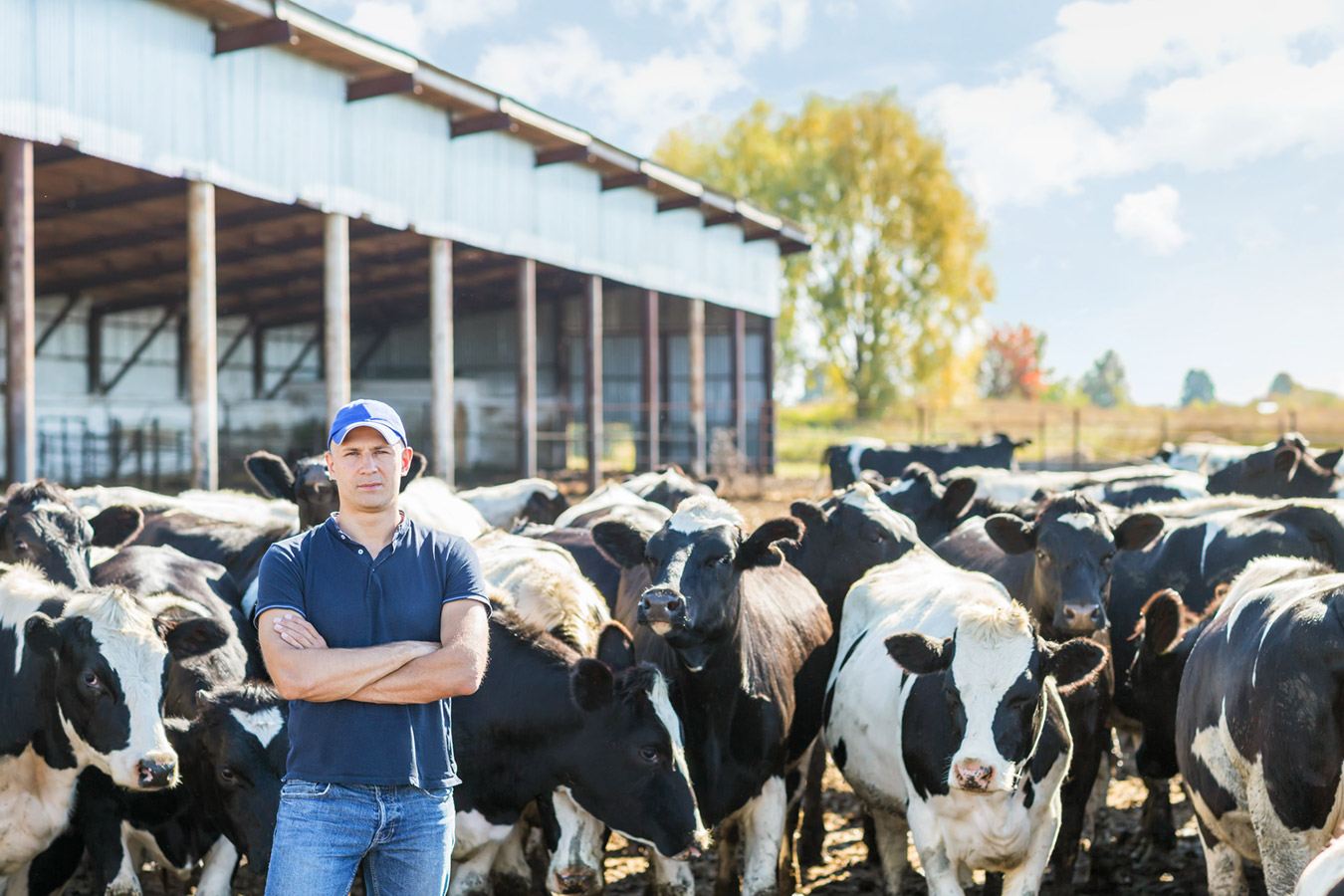
(Dr. Mercola) U.S. prices of wholesale organic milk have dropped significantly — in some cases by more than 30 percent — in the last year. While this might seem like welcome news for consumers looking for a price break on this premium milk, it comes at a cost to small farmers — some of whom are selling organic grass fed milk at non-organic prices or, worse, being forced to dump it.1
Small farmers risk being forced out of business in this market, even as the organic dairy industry has grown in size. The problem is that as larger industrialized farms have entered the organic market, it’s increasingly pushed the small players by the wayside. The Washington Post reported a glaring reason why: The number of organic cows rose by 13 percent from 2008 to 2015, but the amount of organic milk products produced rose by 35 percent.2
The Northeast Organic Dairy Producers Alliance (NODPA) attributed some of the increase to “better practices,” but others, including an investigation by The Washington Post, suggest skimping on organic practices may be a better description.3 Even NODPA noted the reason behind the large jump is “the increase in those mostly larger herds where the cows are fed in the barn instead of going out to pasture as the organic regulations require.”4
Large Organic Dairies Skimping on Grazing Time
Cows produce more milk, faster, when they’re fed grain in the barn, as opposed to grazing on grass on pasture. Industrialized organic dairies are capitalizing on this by skimping on grazing time, raising thousands of cows in veritable CAFOs (concentrated animal feeding operations), yet still gaining the USDA organic label that suggests otherwise.
When the Post visited Aurora Organic Dairy in Colorado, the company that provides organic store brands to corporations like Wal-Mart, Target and Costco, a few problems were evident right off the bat. For starters, the farm is massive, housing 15,000 cows, “making it more than 100 times the size of a typical organic herd,” the Post noted. Further, organic standards require that cows have free access to certified organic pasture for the entire grazing season, but there are large loopholes in the requirement.
The Post investigation revealed that Aurora Organic Dairy appears to be stretching the limits of the rule, noting that “signs of grazing were sparse, at best” and “at no point was any more than 10 percent of the herd out.”5
The Post even had samples of Aurora’s organic milk tested for “a key indicator of grass-feeding” (its fatty acid profile), which revealed the milk matched conventional, not organic milk. When raised correctly, organic milk contains about 25 percent less omega-6 fats and 62 percent more omega-3 fats than conventional milk, along with more vitamin E, beta-carotene and beneficial conjugated linoleic acid (CLA).6
Organic Violators Allowed to Keep Operating
Unfortunately, the U.S. Department of Agriculture (USDA) is not doing nearly enough to protect the integrity of its organic label. Farmers hire their own inspection agencies to comply with USDA rules, and even when violations are found, they typically amount to only a slap on the wrist in terms of punishment.
In 2007, for instance, while the USDA sanctioned Aurora Organic Dairy for willfully violating organic standards, the farm was allowed to continue operating after a settlement was reached. Mark Kastel of the Cornucopia Institute told the Post:7
“The USDA has shown a remarkable lack of interest in whether these big organic dairies are really organic … Most times, they don’t even investigate. And when they find a problem, there’s very little punishment, if any. It’s a gross betrayal of the spirit of the organic law.”
The latest Post investigation did prompt some of Aurora’s wholesale customers to look into their practices but so far none, including Wal-Mart and Costco, have decided to change suppliers. Meanwhile, small farmers who allow their herds to graze the right way are unable to compete with the industrialized organic farms that are cutting corners, yet both get rewarded with the same USDA organic label.
Organic Amish farmer James Swantz told the Post, “We know with that high concentration of cows that it’s impossible to meet the grazing rule … They’re not organic. No way.”8
The Cornucopia Institute has engaged with two law firms that are investigating Aurora’s role in creating a glut of organic milk that has driven prices down and pushed many small farmers out of the business. Kastel told Sustainable Food News the law firms are investigating “the gross amount of milk [Aurora Organic Dairy] creates and … the marketplace pressure their customers place on the balance of participants in the industry.” He continued:9
“We are in the exploratory stage right now … It appears that there is a good legal basis to pursue this and we are attempting to develop a plaintiff pool. We just need to have solid and creditable plaintiffs with standing. We have already had a number of farmers who have expressed a willingness to pursue this legal action prior to our outreach …”
Dairy Industry Forced to Make ‘Grass Fed’ & ‘Free-Range’ Claims as Organic Label Damaged
With the organic dairy label under increased scrutiny, the U.K.’s Arla Foods has changed the name of its Arla Organic Farm Milk to Arla Organic Free Range Milk. Studies have shown that many people in the U.K. are unaware that organic milk comes from cows with free access to pasture (or at least is supposed to), which is why Arla is highlighting the fact on its label.
The company claims that its cows are outside for an average of 200 days per year.10 Likewise, in the U.S., Organic Valley also offers a separate Grassmilk brand promoting 100 percent grass fed milk and cows fed no grain. According to the company:11
“Since grazing is a bedrock principle of our organic farming practices, all Organic Valley farmer-owners nationwide do their utmost to maximize fresh and dried forages to maintain the health and well-being of their animals, and because they know that milk produced from grazing cows contains increased levels of beneficial omega-3 and (CLA) fatty acids.”
As for why some Organic Valley milk is 100 percent grass fed and some is not, they explained that not all farms have the land base available to produce enough forage for cows when grains are removed from their diet. In addition, they noted some farms’ soils “are not ready for full conversion to pasture” while “cows must be transitioned slowly from a grain diet, to less grain, to no grain.”12
Similarly, Organic Pastures calls their milk “grass-grazed” as opposed to “grass fed,” the latter of which they point out could mean virtually anything, like “grazed at some point,” leading to milk with questionable nutritional value.13 Unfortunately, even with a claim of grass fed, it’s still a buyer beware market when it comes to choosing dairy. As it stands, dairy can be sold as “grass fed” whether the cows ate solely grass or received silage, hay or even grains during certain times.
Fortunately, the American Grassfed Association (AGA) recently introduced much-needed grass fed standards and certification for American-grown grass fed dairy,14 which will allow for greater transparency and conformity.15 I would strongly advise you to ensure your dairy is AGA certified as grass fed. As reported by Organic Authority:16
The new regulations are the product of a year’s worth of collaboration amongst dairy producers like Organic Valley as well as certifiers like Pennsylvania Certified Organic and a team of scientists.
‘We came up with a standard that’s good for the animals, that satisfies what consumers want and expect when they see grass fed on the label, and that is economically feasible for farmers,’ says AGA’s communications director Marilyn Noble of the new regulations.”
Non-Organic Ben & Jerry’s Continues to Stall on Cleaning Up Dairy
A recent commentary written by Will Allen and Michael Colby, co-founders of the organic advocacy group Regeneration Vermont, for Vermont Digger reveals that ice cream maker Ben & Jerry’s, which is owned by Unilever, is still not living up to their natural and socially responsible reputation. Ben & Jerry’s does some things right, like supporting GMO labeling, and their environmentally friendly image has propelled the ice-cream maker to a $600 million-a-year enterprise — slated to be a billion-dollar-a-year corporation by 2020.17
However, Ben & Jerry’s is a non-organic dairy, and they source their milk largely from CAFOs. In Vermont, more than 200 dairy farms have transitioned to organic and returned their cows to a grass-based diet. Regeneration Vermont is dedicated to bringing sustainable, regenerative agriculture back to Vermont and that includes bringing Ben & Jerry’s into the discussion.
Regeneration Vermont has urged the ice cream maker to source milk from organic/regenerative farmers, which would signal to desperate dairy farmers that there’s another, viable option to the destructive GMO, CAFO method that’s currently considered the norm. Allen’s and Colby’s commentary explains:18
We shared all of our research on labor abuse, animal abuse, farm bankruptcy, water pollution and damaged rural communities with Ben & Jerry’s. We also introduced them to consultants and resources in an effort to convince them that going organic would not only be good for them — practicing what they preach and all — but it would also be an essential lifeline for farmers in the state who wanted to convert to organic but had no market.
Instead of greenwashing, we argued that they could finally advertise their decision to completely clean up their supply chain. They said they would get back to us.”
As of July 2017, however, they have not, and they continue to profit immensely off cheap, inhumanely produced and environmentally destructive milk while passing themselves off as a natural, environmentally responsible company. Allen and Colby continue:
Stalling has been refined to an art form with Ben & Jerry’s social mission and dairy teams. In April 2016, they felt that they would have a decision on changing their dairy sourcing by September/October 2016. When October came, they felt that they would have a decision by December. In December, we were told that February or March would be when they made their sourcing decision …
Finally, April or May was to be the target date for making sourcing decisions. It is now July — still no decision, still no meeting with the CEO. Still stalling … It’s time to stop pretending that Ben & Jerry’s is a socially or environmentally conscious corporation. They know how damaging their milk supply chain is. They know that labor is being abused. They know that cows are burning out before they are [5] years old.
They know that antibiotics were being misused. They know that the dairies that supply their milk are polluting our drinking water and most of the rivers and lakes in Vermont. They can’t pretend that they didn’t know how damaging their supply chain is, because we shared all this data with them. Yet they refuse to act.”
Cornucopia’s Organic Dairy Scorecard Helps Level the Playing Field
How can you tell if your organic milk comes from grass fed cows being raised humanely on a small family farm — or from a pseudo-organic CAFO? Getting your raw milk from a local organic grass fed farm or co-op is best, but if you’re considering milk from another source, check out Cornucopia’s Organic Dairy Scorecard.19 The Cornucopia Institute is an organic industry watchdog whose core constituencies are family farmers across the U.S. and consumers concerned about the availability and quality of organic foods.
Their goal is to empower you to make informed purchasing decisions. You might be surprised to see many big-name organic brands ranking near the bottom of the list, even receiving a “zero” rating. In this case, it’s not worth your money to pay for an “organic” product that’s likely no better than conventional. You’d be better served by supporting the ethical farms that received a “4- or 5-cow” rating instead (meaning their farming practices are either excellent or outstanding).
While you’ll certainly notice the difference in flavor when purchasing truly grass fed, organic dairy, you can even see the difference. Grass fed organic milk tends to be yellowish, not pure white. The coloration comes from the natural antioxidant carotenoids found in the grass, which is a precursor to vitamin A. When cows are raised on dried grass or hay, as opposed to fresh-growing grass, you end up with a whiter product, which is an indication of reduced carotenoid and antioxidant content.
The increased coverage about certain big-name organic brands putting out a sub-par product is important news for consumers, but please don’t let it deter you from supporting the organic farmers raising truly grass fed cows. For more information about finding high-quality farm-fresh foods near you, see the links below:
|
American Grassfed Association
The goal of the American Grassfed Association is to promote the grass fed industry through government relations, research, concept marketing and public education.
Their website also allows you to search for AGA approved producers certified according to strict standards that include being raised on a diet of 100 percent forage; raised on pasture and never confined to a feedlot; never treated with antibiotics or hormones; and born and raised on American family farms. |
|
EatWild.com
EatWild.com provides lists of farmers known to produce raw dairy products as well as grass fed beef and other farm-fresh produce (although not all are certified organic). Here you can also find information about local farmers markets, as well as local stores and restaurants that sell grass fed products. |
|
Weston A. Price Foundation
Weston A. Price has local chapters in most states, and many of them are connected with buying clubs in which you can easily purchase organic foods, including grass fed raw dairy products like milk and butter. |
|
Grassfed Exchange
The Grassfed Exchange has a listing of producers selling organic and grass fed meats across the U.S. |
|
Local Harvest
This website will help you find farmers markets, family farms and other sources of sustainably grown food in your area where you can buy produce, grass fed meats and many other goodies. |
|
Farmers Markets
A national listing of farmers markets. |
|
Eat Well Guide: Wholesome Food From Healthy Animals
The Eat Well Guide is a free online directory of sustainably raised meat, poultry, dairy and eggs from farms, stores, restaurants, inns, hotels and online outlets in the United States and Canada. |
|
Community Involved in Sustaining Agriculture (CISA)
CISA is dedicated to sustaining agriculture and promoting the products of small farms. |
|
FoodRoutes
The FoodRoutes “Find Good Food” map can help you connect with local farmers to find the freshest, tastiest food possible. On their interactive map, you can find a listing for local farmers, CSAs and markets near you. |
|
The Cornucopia Institute
The Cornucopia Institute maintains web-based tools rating all certified organic brands of eggs, dairy products and other commodities, based on their ethical sourcing and authentic farming practices separating CAFO “organic” production from authentic organic practices. |
|
RealMilk.com
If you’re still unsure of where to find raw milk, check out Raw-Milk-Facts.com and RealMilk.com. They can tell you what the status is for legality in your state, and provide a listing of raw dairy farms in your area. The Farm to Consumer Legal Defense Fund also provides a state-by-state review of raw milk laws. California residents can also find raw milk retailers using the store locator available at www.OrganicPastures.com. |