Are Air Fryers Healthy?

(By Dr. Mercola) As you may imagine, I am not a fan of fried food. For that reason, I admit I have not paid much attention to the air fryer craze. Although these gadgets have been around for years, they have skyrocketed in popularity in recent months. Given the traffic on Amazon, Google and Pinterest alone, it’s clear air fryers are capturing the interest of people who love the taste of fried food but not all the calories associated with traditional deep frying.

As part of their central marketing message, air fryers promise to provide you with a faster, healthier and less messy fried-food experience right in your kitchen. Before you rush out to buy one, let’s take a few minutes to consider an important question both critics and fans of this kitchen appliance should be asking: Are air fryers healthy?

Related: Detox Cheap and Easy Without Fasting – Recipes Included

What Is an Air Fryer and How Does It Work?

Air fryers — a kitchen gadget that has been steadily capturing the imagination of fried-food lovers in recent years — promise great-tasting crispy food, fast, and with half the calories and fat of foods fried using traditional methods. The chief selling point is the use of hot air and a little oil instead of multiple cups of hot oil to cook food quickly and crisply.

Given their similar air circulation method, some compare air fryers to mini convection ovens. Check out the video above for more details on the innerworkings of air fryers. According to Women’s Health,1 hundreds of models of air fryers popped up on Amazon, Google and Pinterest in 2017, with peak consumer interest coinciding with the Christmas shopping season. The U.K.-based Alternative Daily offers the following details about air fryers:2

“An air fryer can ‘fry’ foods with just half a spoonful of oil. Instead of using fat and oil to fry foods, this appliance was designed to fry without needing to dunk food in oil. In fact, most foods [prepared] within this cooking device require no oil at all — just hot air. Based on Rapid Air Technology, air fryers blow superheated air to cook foods that are traditionally fried in oil.

Whether you want to make fish and chips, chicken or even donuts, air that’s up to 200 degrees C (400 degrees F) begins to circulate, creating a browned, crispy surface. In just 10 to 12 minutes, for instance, you can cook a batch of fries, using just half a spoonful of oil. And, that’s just the beginning. From cakes to nuggets [and] burgers to steaks, foods can be rapidly cooked to achieve the same results when frying, toasting, baking or roasting.”

Related: Start Eating Like That and Start Eating Like This – Your Guide to Homeostasis Through Diet

Is Air-Fried Food Good for You?

While most conventional health experts agree air frying is somewhat healthier than deep frying, the reality is fried food is still fried food and not something you should ever consider to be a healthy dietary choice. As featured in Women’s Health, Natalie Rizzo, a New York-based registered dietitian (RD), suggests air frying saves calories and fat, but in terms of your health what really matters isn’t cutting calories and fat but making sure the calories and fat you consume come from whole food (and not whole food that’s been heated to high temperatures in any sort of fryer).

“With an air fryer, Rizzo says, you can prepare a somewhat healthier version of nearly any traditionally fried food. You can use to it to create a crispy coating on anything you would normally fry, like french fries, chicken fingers or even veggies.”3 By Rizzo’s account, the cooking process using an air fryer is relatively simple: Brush oil on the foods you are about to fry and set the air fryer heat to the desired temperature.

While noting the temperature varies according to the type of food you are cooking, Rizzo says “usually the 300- to 400-degree F range (150 to 200 degrees C) is typical.” To me, that high temperature range is an immediate red flag and my first caution about air fryers. As explained later in this article, heating certain types of foods beyond 250 degrees F may produce a neurotoxic compound called acrylamide.

Naturally, as Rizzo explains, you would not expect fried food — regardless of whether it emerges from an air fryer or deep fat fryer — to be as healthy as raw food or food prepared using non-frying preparation methods. I believe eating most foods in their raw, natural, whole-food state (or as close to whole as possible) is almost always your healthiest option.

Related: How to Make the Healthiest Smoothies – 4 Recipes

With respect to cooked foods, blanching, sautéing and steaming are far superior to frying. In fact, lightly cooking some foods, such as asparagus, spinach and tomatoes, makes their nutrients more bioavailable. The antioxidant lycopene in tomatoes, for example, has enhanced bioavailability when heated.4 Because fried food falls short as a health food 100 percent of the time, it’s heartening Rizzo wisely cautions against adopting the air frying cooking method as a lifestyle choice.

I agree with her that using an air fryer on a regular basis would be unwise because it will likely give you a false sense of “healthy eating.” As such, there is no point in owning an air fryer; it will serve only to tempt you to overconsume certain unhealthy foods. Most of those unhealthy foods, by the way, are likely to be highly processed. That said, the belief air-fried foods will be healthier for you solely because the preparation method is perceived to be healthier is quite simply a myth.

Neurotoxic Chemical Acrylamide Lurks in Fried Foods

As mentioned, one of the biggest cautions about eating fried foods has to do with the way frying changes certain foods into probable carcinogens. If you regularly enjoy fried foods, particularly those heated in such a way as to create a browned or charred surface, you need to know about a toxic compound called acrylamide.

Related: Holistic Guide to Healing the Endocrine System and Balancing Our Hormones

In 2002, researchers discovered this cancer-causing and potentially neurotoxic chemical, which is created when carbohydrate-rich foods are cooked at high temperatures. This includes carbs that are baked, fried, grilled, roasted or toasted. Acrylamide is the byproduct of a chemical reaction that occurs at high temperatures between sugars and the amino acid asparagine.

While the toxic chemical can develop in a variety of foods cooked or processed at temperatures above 250 degrees F, carbohydrate-heavy foods are by far the most vulnerable. The presence of acrylamide is particularly noticeable when plant-based foods are heated to the point of a noticeable browning or charring. While not every single food within these categories is affected by acrylamide, the categories of food most likely to produce it include:5

  • Cocoa products: baking chocolate, cocoa mix, chocolate bars, chocolate milk mix and chocolate pudding and pie filling
  • Coffee: roasted coffee beans and ground coffee powder, as well as chicory-based coffee substitutes, which contain two to three times more acrylamide than real coffee
  • Grains: bread crust, breakfast cereal, cookies, crackers, crisp bread, toast and various processed snacks
  • Potatoes: chips and french fries, as well as other fried or roasted potato foods

How Much Acrylamide Is in Your Diet?

Since 2013, the U.S. Food and Drug Administration (FDA) has advised consumers to reduce their intake of acrylamide-containing foods, noting about 40 percent of the calories consumed as part of the average American diet is laced with this toxic byproduct. To cut acrylamides from your diet, the agency recommends:6

  • Avoiding fried foods
  • Baking bread, muffins and other baked goods, as well as potatoes, to a light golden color rather than dark brown or blackened
  • Opting for untoasted or lightly toasted bread
  • Storing potatoes at room temperature, because storing potatoes in the refrigerator can increase acrylamide during cooking

Rather than the fridge, store potatoes in a dark, dry closet or pantry. You can further reduce acrylamide formation in potatoes by soaking them in water for 15 to 30 minutes prior to cooking. While the FDA makes no mention of avoiding processed foods that are “browned,” such as cookies, crackers, potato chips, roasted nuts (and nut butters) and snack mixes, you should know they may also contain acrylamide due to being processed at high temperatures.

Health Risks Associated With Acrylamide

The findings related to the potential health risks of a diet heavy in acrylamide are mixed. Animal-based research7 suggests acrylamide “is capable of inducing genotoxic, carcinogenic, developmental and reproductive effects in tested organisms.” About the potential harmful effects of acrylamide, the National Cancer Institute says:8

“Studies in rodent models have found that acrylamide exposure increases the risk for several types of cancer. In the body, acrylamide is converted to a compound called glycidamide, which causes mutations in and damage to DNA. However, a large number of epidemiologic studies (both case-control and cohort studies) in humans have found no consistent evidence that dietary acrylamide exposure is associated with the risk of any type of cancer.

One reason for the inconsistent findings from human studies may be the difficulty in determining a person’s acrylamide intake based on their reported diet. The National Toxicology Program’s report on carcinogens considers acrylamide to be reasonably anticipated to be a human carcinogen, based on studies in laboratory animals given acrylamide in drinking water.”

Based on the research completed to date involving lab animals, the American Cancer Society calls attention to the following agencies, each of which has weighed in with potential concerns about acrylamide for humans:9

  • International Agency for Research on Cancer (IARC): As part of the World Health Organization, the IARC seeks to identify causes of cancer. It has classified acrylamide as a “probable human carcinogen.”
  • National Toxicology Program (NTP): Formed from parts of several different U.S. government agencies, including the Centers for Disease Control and Prevention, Food and Drug Administration and the National Institutes of Health, the NTP, in its 2014 report on carcinogens, classified acrylamide as “reasonably anticipated to be a human carcinogen.”
  • U.S. Environmental Protection Agency (EPA): As owner of the integrated risk information system, an electronic database containing information on human health effects from environmental exposures, the EPA classifies acrylamide as “likely to be carcinogenic to humans.”

The Best and Healthiest Oils to Use for Cooking

While some air fryers live up to their claims of using up to 75 percent less oil than traditional deep-frying methods,10 it’s important to remember that not all cooking oils are created equal, even if you are using less of them. Most oils used for cooking, in fact, are heavily processed and some may even be hydrogenated or partially hydrogenated, which means they are full of trans fats. According to the American Heart Association, regular consumption of trans fats:11

  • Lowers your HDL (good) cholesterol level
  • Increases your risk of developing heart disease and stroke
  • Is associated with a higher risk of developing Type 2 diabetes

In addition, I always advise you to steer clear of canola oil, corn oil, cottonseed oil and soybean oil, as well as any foods containing them or cooked in them. As you may already know, these are the primary oils used to prepare most fried and processed foods, as well as nearly all fast food. While these oils do not have trans fats, when heated they may degrade to even more dangerous toxic oxidation products, including cyclic aldehydes.

Another reason to avoid these oils is the fact that many are genetically engineered (GE). GE foods can damage your health and are among the worst foods on the planet. Healthier oils include coconut oil, olive oil, organic grass fed raw butter, clarified butter called ghee and sesame oil. Take note that coconut oil is the only one useful for high-heat cooking, including frying, although ghee can also be used for cooking.

While you may be tempted to use olive oil for cooking or frying, its chemical structure and large amount of unsaturated fats make it very susceptible to oxidative damage. For that reason, only use olive oil (and sesame oil) cold, such as for drizzling over salads. (For some new salad ideas, check out my healthy salad recipes.)

If you choose to use an air fryer, be aware of the possibility of increased free radicals from even small amounts of oil. As noted by Alternative Daily, “Even if little oil is used, the type of oil, the temperature, the food that’s be[ing] cooked and aeration all influence the formation of free radicals. If you’re a fan of air frying, at least use oils that do not oxidize easily, such as coconut oil.” For more information about cooking oils, check out my Healthiest Cooking Oils infographic.

Final Thoughts About Air Fryers

Given the unhealthy nature of fried food, I would not consider an air fryer to be a must-have kitchen gadget, especially if one of your goals is to optimize your health. More often than not, you will likely be air frying processed foods using toxic oils, resulting in a manner of eating that simply cannot be considered part of a healthy lifestyle.

Furthermore, though I did not mention it previously, I also have concerns about the types of plastics and nonstick coatings used in some air fryers. Depending on the model you choose, you may also be risking toxic exposures to bisphenol-A (BPA) and nonstick coatings, which I strongly caution against.

To wrap up my thoughts on this subject, I will close with a comment I read in one of the air fryer online reviews. If you have any lingering doubts, it may be the final piece of advice you need to help you decide if you should purchase an air fryer. The reviewer said, “Air fryers have the added benefit of making fried food healthier, but if fried food is not a staple within your diet, you probably will not benefit from owning an air fryer.”12

‘The Big Fat Surprise’ — Saturated Fat and Cholesterol Are Important Parts of a Healthy Diet

Some food without sugar

(By Dr. Mercola) Saturated fat and cholesterol have been wrongfully vilified as the culprits of heart disease for more than six decades. Meanwhile, research has repeatedly identified refined carbs, sugar and trans fats found in processed foods as the real enemy. The first scientific evidence linking trans fats to heart disease while exonerating saturated fats was published in 1957 by the late Fred Kummerow,1 biochemist and author of “Cholesterol Is Not the Culprit: A Guide to Preventing Heart Disease.”

Related: Candida, Gut Flora, Allergies, and Disease

Story at-a-glance

  • Refined carbs, sugar and trans fats found in processed foods are the primary dietary culprits causing heart disease, not saturated fat or cholesterol
  • While the dangers of trans fats are now becoming widely recognized, the recommended replacement — vegetable oils — may actually be even more harmful
  • When heated, vegetable oils degrade into extremely toxic oxidation products, including cyclic aldehydes, which cause severe inflammation and may damage your gastrointestinal tract
  • Concomitant with low-fat diets becoming the cultural norm, heart disease rates have soared, clearly demonstrating saturated fat is not a contributing factor
  • Studies have confirmed that higher cholesterol levels are associated with better health and longer life

Unfortunately, Kummerow’s science was overshadowed by Ancel Keys’ Seven Countries Study,2,3 which linked saturated fat intake with heart disease. The rest, as they say, is history. Later reanalysis revealed cherry-picked data was responsible for creating Keys’ link, but by then the saturated fat myth was already firmly entrenched.

Keys’ biased research launched the low-fat myth and reshaped the food industry for decades to come. As saturated fat and cholesterol were shunned, the food industry switched to using trans fats (found in margarine, vegetable shortening and partially hydrogenated vegetable oils) and sugar instead.

Related: Gluten, Candida, Leaky Gut Syndrome, and Autoimmune Diseases

The Big Fat Surprise

Investigative journalist Nina Teicholz was one of the first major investigative journalists to break the story on the dangers of trans fats in a 2004 Gourmet magazine article.4 In the video above, Joe Rogan interviews Teicholz on her 2014 book, “The Big Fat Surprise: Why Butter, Meat and Cheese Belong in a Healthy Diet,” which grew out of that initial exposé.

In it, not only does she dismantle the belief that saturated fat and cholesterol make you fat and cause disease, she also reveals that while the dangers of trans fats are now becoming widely recognized, the recommended replacement — vegetable oils — may actually be even more harmful. She also delves into the politics and shady underbelly of nutritional science, revealing how the food industry has manipulated the scientific discussion and built a largely false foundation for the nutritional recommendations we’re given.

Corruption is not the sole problem, though. Teicholz notes there is a very strong tendency to “fall in love” with your own ideas and beliefs, and this is as true for scientists as it is for regular people. And, when you strongly believe something to be true, you will tend to find the evidence you’re looking for and ignore anything that refutes it. So, it’s really a human psychology problem.

Related: Holistic Guide to Healing the Endocrine System and Balancing Our Hormones

Scientists are not supposed to fall into this all-too-human trap. “They’re taught to distrust their beliefs [and] shoot down their own hypothesis,” Teicholz says, “but in the case of nutrition science, that didn’t happen … They cherry-picked the evidence and completely ignored and actively suppressed, even, anything that contradicted their ideas.” This certainly included Keys, who was passionately wed to his hypothesis that saturated fat caused heart disease.

Busting the Low-Fat Myth

Teicholz points out the fact that saturated fat has been a healthy human staple for thousands of years, and how the low-fat craze has resulted in massive sugar consumption that has increased inflammation and disease.5 The American Heart Association (AHA) started encouraging Americans to limit dietary fat, particularly animal fats, to reduce their risk of heart disease in 1961, and maintains this position to this day.

Just last summer, the AHA sent out a presidential advisory to cardiologists around the world, reiterating its 1960s advice to replace butter and coconut oil with margarine and vegetable oils to protect against heart disease. Yet historical data clearly shows this strategy is not working, because concomitant with low-fat diets becoming the cultural norm, heart disease rates have soared. The AHA also ignores research demonstrating the low-fat, low-cholesterol strategy does more harm than good. For example:

  1. In 2012, researchers at the Norwegian University of Science and Technology examined the health and lifestyle habits of more than 52,000 adults ages 20 to 74, concluding that lower cholesterol levels increase women’s risk for heart disease, cardiac arrest and stroke. Overall, women with “high cholesterol” (greater than 270 mg/dl) actually had a 28 percent lower mortality risk than women with “low cholesterol” (less than 183 mg/dl).6
  2. In 2013, prominent London cardiologist Aseem Malhotra argued in the British Medical Journal that you should ignore advice to reduce your saturated fat intake, because it’s actually increasing your risk for obesity and heart disease.7
  3. A 2014 meta-analysis published in the Annals of Internal Medicine, using data from nearly 80 studies and more than a half-million people, found those who consume higher amounts of saturated fat have no more heart disease than those who consume less. They also did not find less heart disease among those eating higher amounts of unsaturated fat, including both olive oil and corn oil.8,9

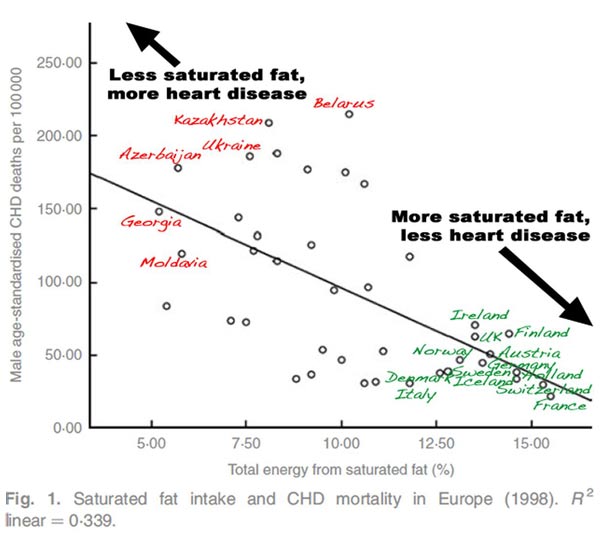
The following graph, from a British Journal of Nutrition study published in 2012, also shows how Europeans who eat the least saturated fats have the highest risk of heart disease, whereas those who eat the most have the lowest rates of heart disease — the complete opposite of conventional thinking and AHA claims.

Related: How to Detoxify and Heal the Lymphatic System
British journal of nutrition
Source: British Journal of Nutrition, 2012 Sep;108(5):939-42

Your Body Needs Saturated Fat and Cholesterol

Cholesterol is not only beneficial for your body, it’s absolutely vital for optimal functioning. For example, cholesterol is needed for the construction of your cell membranes and helps regulate the protein pathways required for cell signaling. Having insufficient amounts of cholesterol may negatively impact your brain health, hormone levels, heart disease risk and more.

Related: Start Eating Like That and Start Eating Like This – Your Guide to Homeostasis Through Diet

Your body also needs saturated fats to function properly. One way to understand this need is to consider the foods ancient humans consumed. Many experts believe we evolved as hunter-gatherers and have eaten a variety of animal products for most of our existence on Earth. To suggest that saturated fats are suddenly harmful to us makes no sense, at least not from an evolutionary perspective.

Reducing saturated fat to extremely low levels, or shunning it altogether, also doesn’t make sense when you consider its health benefits and biological functions, which include but are not limited to:

Providing building blocks for cell membranes, hormones and hormone-like substances Facilitating mineral absorption, such as calcium Acting as carriers for fat-soluble vitamins A, D, E and K
Converting carotene into vitamin A Helping to lower cholesterol levels (palmitic and stearic acids) Antiviral activity (caprylic acid)
Optimal fuel for your brain Providing satiety Modulating genetic regulation and helping prevent cancer (butyric acid)

High-Carb Versus High-Fat Diets

As noted by Teicholz, by eliminating saturated fat and cholesterol-rich foods we’ve also eliminated many of the most nutrient-dense foods from our diet — eggs and liver being just two examples — and this also has its repercussions for human health and development. Vitamins A, D, E and K are fat-soluble, which means you need the fat that comes naturally in animal foods along with the vitamins in order to absorb those vitamins.

Additionally, fat is very satiating, so you’re far less likely to overeat on a high-fat diet than a high-carb diet. Most people who complain about “starving” all the time are likely just eating too many carbs (quick-burning fuel) and not enough fat (slow-burning fuel).

Then there’s carb-addiction, of course, which further fuels the cycle of hunger and overeating. What’s worse, when you eat a high-carb diet for a long time, it blocks or shuts down your body’s ability to burn fat, which means all of your body fat remains right where it is, as it cannot be accessed for fuel.

By shifting your diet from high-carb to high-fat, you eventually regain the metabolic flexibility to burn both types of fuel — fat and sugar — which solves most of these problems; the hunger and cycle of overeating, weight gain, inflammation and related disease processes. Cyclical ketogenic diets are very effective for this, as is intermittent fasting and longer water fasts for those who are overweight.

The Problem With Vegetable Oils

As mentioned earlier, Teicholz’s book also delves into a new nutritional twist that has developed as the dangers of trans fats have been exposed and accepted. While the U.S. Food and Drug Administration has removed partially hydrogenated oils — the primary source of trans fats — from the list of “generally recognized as safe” ingredients, the vegetable oils (such as peanut, corn and soy oil) that have replaced them may have even more harmful health ramifications.

When heated, vegetable oils degrade into extremely toxic oxidation products. According to Teicholz, more than 100 dangerous oxidation products have been found in a single piece of chicken fried in vegetable oils. As early as the 1940s, animal experiments showed animals would develop cirrhosis of the liver or enlarged liver when fed vegetable oils. When fed heated vegetable oils, they died prematurely.

Cyclic aldehydes are among the most toxic of these byproducts, and animal research has shown even low levels of exposure cause serious inflammation, which is associated with heart disease and Alzheimer’s. Findings like these make the AHA’s recommendation to use margarine and vegetable oils all the more troubling.

In her book, Teicholz also cites research in which aldehydes were found to cause toxic shock in animals by damaging the gastrointestinal tract. We now know a lot more about the role your gut plays in your health, and the idea that aldehydes from heated vegetable oils can damage your gastric system is frighteningly consistent with the rise we see in immune problems and gastrointestinal-related diseases.

How a Cyclical Ketogenic Diet Can Improve Your Health

Two-thirds of the American population is overweight or obese,10 more than half of all Americans struggle with chronic illness,11 1 in 5 deaths in the U.S. is obesity-related12 and 1 in 4 deaths is related to heart disease.13 Saturated dietary fats and cholesterol are not to blame for these statistics. The evidence is actually quite clear: Excessive net carbohydrate intake is the primary culprit behind these disease statistics, primarily by decimating your mitochondrial function.

To address this, you need to eat a diet that allows your body to burn fat as its primary fuel rather than sugars, and to become an efficient fat burner, you actually have to eat fat. In my latest book, “Fat for Fuel,” I detail a cyclical or targeted ketogenic diet, which has been scientifically shown to optimize metabolic and mitochondrial health. A primary difference between this program and other ketogenic diets is the cyclical component.

It’s important to realize that the “metabolic magic” in the mitochondria occurs during the refeeding phase, not during the starvation phase. If you’re constantly in ketosis, you’re missing out on one of the most valuable benefits of the ketogenic diet. Basically, once you have established ketosis, you then cycle healthy carbs back in. As a general rule, I recommend adding 100 to 150 grams of carbs on the day or days each week that you do strength training. Some of the most important benefits of this kind of eating program are:

Weight loss

By rebalancing your body’s chemistry, weight loss and/or improved weight management becomes nearly effortless. Studies have shown a ketogenic diet can double the weight lost compared to a low-fat diet.14

Reduced inflammation

When burned for fuel, dietary fat releases far fewer reactive oxygen species and secondary free radicals than sugar. Ketones are also very effective histone deacetylase inhibitors that effectively reduce inflammatory responses. In fact, many drugs are being developed to address immune related inflammatory diseases that are HDAC inhibitors.

A safer and more rational strategy is to use a ketogenic diet, as it is one of the most effective ways to drive down your inflammation level through HDAC inhibition.

Reduced cancer risk

While all cells (including cancer cells) can use glucose for fuel, cancer cells lack the metabolic flexibility to use ketones, while regular cells thrive on these fats. Once your body enters a state of nutritional ketosis, cancer cells are more susceptible to being removed by your body through a process called autophagy. A cyclical ketogenic diet is a fundamental, essential tool that needs to be integrated in the management of nearly every cancer.

Increased muscle mass

Ketones spare branched-chain amino acids, thereby promoting muscle mass.15 However, make sure to implement cyclic ketosis. Chronic ketosis may eventually result in muscle loss as your body is impairing the mTOR pathway, which is important for anabolic growth. mTOR needs to be stimulated, just not consistently, as many people do with high protein diets.

Lowered insulin levels

Keeping your insulin level low helps prevent insulin resistance, Type 2 diabetes and related diseases. Research has demonstrated that diabetics who eat a low-carb ketogenic diet are able to significantly reduce their dependency on diabetes medication and may even reverse the condition.16

Lowering insulin resistance will also reduce your risk of Alzheimer’s. Recent research strengthens the link between insulin resistance and dementia even further, particularly among those with existing heart disease.17,18,19

Mental clarity

One of the first things people really notice once they start burning fat for fuel is that any former “brain fog” lifts, and they can suddenly think very clearly. As mentioned earlier, ketones are a preferred fuel for your brain; hence, the improved mental clarity.

Increased longevity

One of the reasons you can survive a long time without food is due to the process of ketosis, which spares protein breakdown.20 A fairly consistent effect seen in people on a ketogenic diet is that blood levels of leucine and other important structural proteins go up, allowing these proteins to perform a number of important signaling functions.

Ketones also mimic the life span extending properties of calorie restriction21 (fasting), which includes improved glucose metabolism; reduced inflammation; clearing out malfunctioning immune cells;22 reduced IGF-1, one of the factors that regulate growth pathways and growth genes and which is a major player in accelerated aging; cellular/intracellular regeneration and rejuvenation (autophagy and mitophagy).23

World Famous Psychiatrist Says: More Psychiatric Drug Treatment Means More Shootings Will Happen

(Natural Blaze by Jon Rappoport) Listen to this man. You’d better listen.

His name is Peter Breggin. He is a world famous psychiatrist. He has been called the conscience of his profession.

Here is an excerpt from his bio:

“Peter R. Breggin MD is a Harvard-trained psychiatrist and former Consultant at NIMH [National Institute of Mental Health] who has been called ‘The Conscience of Psychiatry’ for his many decades of successful efforts to reform the mental health field. His work provides the foundation for modern criticism of psychiatric diagnoses and drugs, and leads the way in promoting more caring and effective therapies. His research and educational projects have brought about major changes in the FDA-approved Full Prescribing Information or labels for dozens of antipsychotic and antidepressant drugs. He continues to education the public and professions about the tragic psychiatric drugging of America’s children.”

Recommended: Holistic Guide to Healing the Endocrine System and Balancing Our Hormones

“Dr. Breggin has authored dozens of scientific articles and more than twenty books, including medical books and the bestsellers Toxic Psychiatry and Talking Back to Prozac. Two more recent books are Medication Madness: The Role of Psychiatric Drugs in Cases of Violence, Suicide and Crime and Psychiatric Drug Withdrawal: A Guide for Prescribers, Therapists, Patients and their Families.”

“Dr. Breggin has unprecedented and unique knowledge about how the pharmaceutical industry too often commits fraud in researching and marketing psychiatric drugs. He has testified many times in malpractice, product liability and criminal cases, often in relation to adverse drug effects…”

Here is an explosive excerpt from Dr. Breggin’s recent column at Mad In America: “Psychiatrist Says: More Psychiatry Means More Shootings”:

“In the early 1990s, a federal court-appointed me to be the scientific expert for all of the combined product liability cases that were brought against Eli Lilly throughout the country concerning Prozac-induced violence, suicide and crime. Since then I have been involved in many cases in which judges and juries, and even prosecuting attorneys, have determined that psychiatric drugs have caused or substantially contributed to violence. For a lengthy list, see the Legal Section on my website [www.breggin.com].”

“In 2003/2004, I wrote a scientific review article about antidepressant-induced suicide, violence and mania which the FDA distributed to all its advisory committee members. This took place as the FDA Advisory Committee members prepared to review new warnings to be put in the Full Prescribing Information for all antidepressants.”

Recommended: Sugar Leads to Depression – World’s First Trial Proves Gut and Brain are Linked (Protocol Included)

“In my peer-reviewed paper [about the effects of antidepressants], I wrote: ‘Mania with psychosis is the extreme end of a stimulant continuum that often begins with lesser degrees of insomnia, nervousness, anxiety, hyperactivity and irritability and then progresses toward more severe agitation, aggression, and varying degrees of mania.”

“In words very close to and sometimes identical to mine, the FDA one year later required the manufacturers of every antidepressant to put the following observations in the Warnings section of the Full Prescribing Information:”

“’All patients being treated with antidepressants for any indication should be monitored appropriately and observed closely for clinical worsening, suicidality, and unusual changes in behavior, especially during the initial few months of a course of drug therapy, or at times of dose changes, either increases or decreases. The following symptoms, anxiety, agitation, panic attacks, insomnia, irritability, hostility, aggressiveness, impulsivity, akathisia (psychomotor restlessness), hypomania, and mania, have been reported in adult and pediatric patients being treated with antidepressants for major depressive disorder as well as for other indications, both psychiatric and nonpsychiatric’.”

“These adverse drug effects—including agitation, irritability, hostility, aggressiveness, akathisia, and impulsivity—are an obvious prescription for violence. Akathisia, which I also described in my article, is a psychomotor agitation that is strongly associated with violence.”

“The FDA Medication Guide for antidepressants warns clinicians, patients and families to be on the alert for the following:

  • acting on dangerous impulses
  • acting aggressive or violent
  • feeling agitated, restless, angry or irritable
  • other unusual changes in behavior or mood”

“This list (above) of antidepressant adverse effects from the Medication Guide should make clear that antidepressants can cause violence.”

“The FDA also acknowledges the risk of both psychosis and aggression from the stimulant drugs used to treat ADHD…”

“In the study of violence reports to the FDA, any predisposition toward violence in the patients themselves was largely ruled out because some of the most violence-inducing drugs were not psychiatric drugs, and were being given to a more general population. Some of the violence-inducing drugs were antibiotics, including Lariam (Mefloquine), which Sgt. Robert Bales was taking when he slaughtered 16 helpless, innocent villagers in Afghanistan.”

“[The authorities] do not foresee that the psychiatric strategy for treatment will sometimes lead to tragic outcomes like the school shootings. Nor do they realize that the overall evidence of harm from psychiatric drugs is infinitely greater than the evidence for good effects, as scientist Peter Gøtzsche has confirmed in Deadly Psychiatry and Organized Denial.”

“Calling for more spending on mental health and on psychiatry will make matters worse, probably causing many more shootings than it prevents.”

Recommended: Gluten, Candida, Leaky Gut Syndrome, and Autoimmune Diseases

“Not only do psychiatric drugs add to the risk of violence, but psychiatric treatment lulls the various authorities and the family into believing that the patient is now ‘under control’ and ‘less of a risk.’ Even the patient may think the drugs are helping, and continue to take them right up to the moment of violence.”

“Even when some of their patients signal with all their might that they are dangerous and need to be stopped, mental health providers are likely to give drugs, adding fuel to the heat of violent impulses, while assuming that their violence-inducing drugs will reduce the risk of serious aggression.”

NOTE: DR. BREGGIN ISSUES THIS WARNING: “Most psychiatric drugs can cause withdrawal reactions, including life-threatening emotional and physical reactions. So it is not only dangerous to start psychiatric drugs, it can also be dangerous to stop them. Withdrawal from psychiatric drugs should be done carefully under experienced clinical supervision. Methods for safely withdrawing from psychiatric drugs are discussed in Dr. Breggin’s book: Psychiatric Drug Withdrawal: A Guide for Prescribers, Therapists, Patients and Their Families.”

My comments: The tragedy of many mass shootings—many more than are highlighted by the press—is mirrored by the tragedy of psychiatric drug treatment.

Overwhelmingly, psychiatrists bury their heads in the sand, as they continue to dose patients with compounds that cause horrendous effects, including violence.

The psychiatric solution to mass shootings—more diagnosis and more drugs—becomes the cause for increased shootings.

Many mainstream reporters are aware of this, but they are constrained from telling the whole truth. Their media outlets are relying on pharmaceutical advertising for their very existence.

Legal authorities make it very difficult, if not impossible, to obtain information about which psychiatric drugs shooters were taking before they went on their rampages. Case in point, Sandy Hook, 2012—the (purported) killer, Adam Lanza, had been under psychiatric treatment. But an assistant attorney general for the state of Connecticut stated that the list of Lanza’s meds would not be disclosed, because that “can cause a lot of people to stop taking their medications.” Better for patients to keep taking those drugs—and then some of them will violently go off on innocent persons.

Recommended: Hypothyroidism – Natural Remedies, Causes, and How To Heal the Thyroid

In conversations with attorneys over the years, I’ve been told that judges, police officers, and prosecutors avoid the “psychiatric drug issue.” They don’t want to touch it. After all, friendly psychiatrists are part of the legal system. They often testify at trials. Further, “medical experts” will lash out and go on the attack against law enforcement if an attempt is made to link a violent crime to the effects of psychiatric drugs. (Dr. Breggin has managed to break through this code of silence. He is one of the only psychiatrists who has been able to testify in court about the true effects of psychiatric drugs.)

At the federal level, lobbyists for drug companies are crawling all over Washington DC. They exert an astonishing level of influence on law makers and bureaucrats. The issue of psychiatric drug-induced murder is obviously not on the list of permitted issues for open and extensive discussion.

Then there is the FDA. This is the agency tasked with approving every medical drug as safe and effective before it can be released for public use. The FDA will never admit its decisions have been fueling mass shootings across America. The Agency views the pharmaceutical industry as its partner. Placing warnings on informational drug inserts (as described above by Dr. Breggin) easily escapes the attention of psychiatric patients. Doctors who prescribe the drugs may or may not read those warnings. Even if they do read them, the drugs are THE solution to “mental disorders.” Very few doctors will seek other means of treatment.

The public is in the middle of a psychiatric plague. Learning the truth is the first step forward.

After that, we MUST preserve the right to refuse medication.

Freedom and life itself hang in the balance.

(To read about Jon’s mega-collection, The Matrix Revealedclick here.)