Fewer crops are feeding more people worldwide – and that’s not good!

(The Conversation – Karl Zimmerer) One day last March I talked with Juliana and Elisa, a mother and daughter who farmed just outside the city of Huánuco, Peru. Although they had only one acre of land in this mountainous landscape, they grew dozens of local varieties of potatoes and corn, along with other crops. And they knew each of their varieties by a common name – mostly in their Quechua language.

Potatoes are native to the Andes, and over 4,000 varieties are grown there now. They come in numerous shapes, sizes and colors – red, yellow, purple, striped and spotted. A colorful mound of them resembles the bold, burnished colors of locally woven shawls.

Recommended: Holistic Guide to Healing the Endocrine System and Balancing Our Hormones
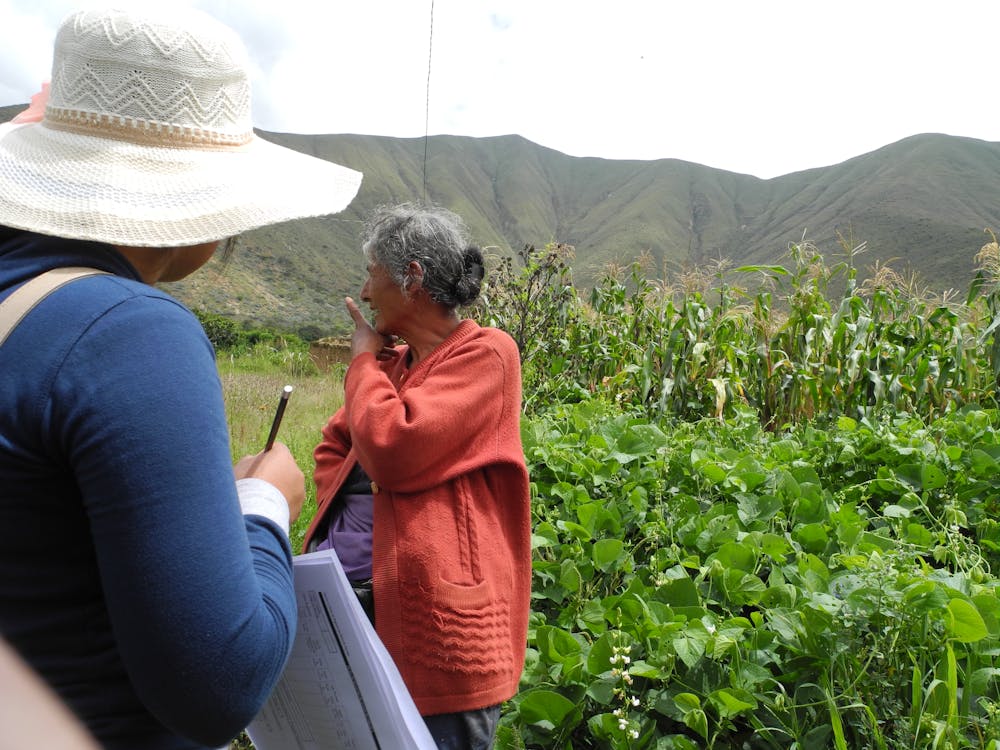
Farmers near the city of Huánuco continue to grow many species and varieties of food plants in their fields and gardens in this mountainous landscape.
Karl Zimmerer, CC BY-ND

This wide array of types is an example of agrobiodiversity – a genetic legacy created by natural selection interacting with cultural practices over thousands of years. Today, however, agrobiodiversity is declining in many countries. In Mexico farmers are cultivating only 20 percent of the corn types that were grown there in 1930. Chinese farmers are producing only 10 percent of 10,000 varieties of wheat that were recorded there in 1949. More than 95 percent of known apple varieties that existed in the United States in 1900 are no longer cultivated.

Recommended: Start Eating Like That and Start Eating Like This – Your Guide to Homeostasis Through Diet

According to Bioversity International, an international research and policy organization, just three crops – rice, wheat and maize – provide more than half of plant-derived calories consumed worldwide. This is a problem because our diets are heavy in calories, sugar and saturated fat and low in fruits and vegetables.

But there also are bright spots, such as Andean potatoes. In a recent article, Stef de Haan of the International Center for Tropical Agriculture and I call for a major effort to strengthen agrobiodiversity for the future. Consuming many different species and varieties provides a diet that offers many unique tastes and a wide selection of nutrients that humans need to thrive. It also can help ensure more stable food systems and the needed variety of desirable genetic traits, such as hardiness.

Wealthy nations have less-diverse diets

Generally, agrobiodiversity is significantly lower in wealthy nations, where the industrial food system pushes toward genetic uniformity. For example, federal agriculture policy in the United States tends to favor raising large crops of corn and soybeans, which are big business. Crop subsidies, federal renewable fuel targets and many other factors reinforce this focus on a few commodity crops.

In turn, this system drives production and consumption of inexpensive, low-quality food based on a simplified diet. The lack of diversity of fruit and vegetables in the American diet has contributed to a national public health crisis that is concentrated among socioeconomically disadvantaged groups. Low agrobiodiversity also makes U.S. agriculture more vulnerable to pests, diseases and climate change.

Recommended: Detox Cheap and Easy Without Fasting – Recipes Included
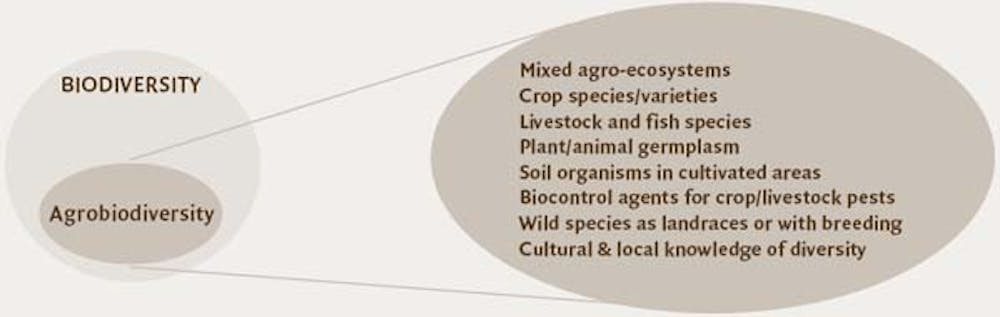
Agrobiodiversity is a set of genetic resources in food and agriculture.
FAO

To connect these conditions to agrobiodiversity, consider potatoes. Although the United States has 10 times more people than Peru, only about 150 varieties of potato are sold here. Six varieties account for three-quarters of our national potato harvest. They dominate because they produce high yields under optimal conditions and are easy to store, transport and process – especially into french fries and potato chips. Federal policies have helped these varieties become established by reducing the cost of irrigation.

Ironically, rich agrobiodiversity in many low- and medium-income nations supports more standardized and genetically uniform breeding industries in wealthy nations. U.S. and European scientists and seed companies have used the diversity of Andean potatoes and their relatives to create commercial varieties that are the roots of modern industrial agriculture.

How change can promote agrobiodiversity

To protect and increase agrobiodiversity, we have to know how to value it in a rapidly changing world. In the GeoSynthESES Lab that I lead at Penn State, we are developing an ambitious new framework to analyze whether and how agrobiodiversity can continue to be produced and consumed in the future.

Recommended: Permaculture Agriculture – The Transition to a Sustainable Future

Thanks to our fieldwork in Peru and other countries, we’re finding that certain global dynamics, such as urbanization and migration, can be compatible with agrobiodiversity production and consumption. For example, Elisa and Juliana live within a few miles of the Huánuco urban area, and they both work jobs in the city. Their “traditional” farming and eating patterns blend with their part-time farming.

Such changes can even support the innovative use of local food varieties, but only under the right conditions. Farmers must have sufficient land and water. They have to continue preferring these food flavors and tastes. Vibrant local markets for these foods make producing them economically viable.

Heirloom apples, Stroud Farmers Market, Gloucestershire, England.
Barry W******, CC BY

Together with collaborators working in Huánuco, our lab is assessing ways in which global trends could undercut agrobiodiversity in Peru. One concern is local adoption of “improved varieties” of both potatoes and corn that are being created by national and international breeding programs and private seed companies.

Under favorable conditions, these types provide high yields and potentially good sales income. But the seeds can be expensive by local standards, and growing them requires more inputs, such as fungicides and irrigation. Farmers who use them are less resilient if it’s a bad growing year or if cash is low. For these reasons more than one-half of the potato and maize seed being grown by the Huánuco farmers still comes from local sources such as nearby markets, neighbors, and family members.

So far, farmers in Huánuco and elsewhere in Peru prefer to growth both their traditional crops and new ones if possible. But discussions of new initiatives to extend the reach of such “improved varieties” reflect how these challenges will continue to evolve.

Shifting diets

We also are analyzing local impacts of the global spread of inexpensive, low-quality industrial foods. Juliana, Elisa and their Huánuco neighbors increasingly depend on staples such as rice and sugar and on heavy use of cooking oil. Many of them still grow high-agrobiodiversity crops, but on a smaller scale, and these crops play a shrinking role in their diets. It is important to counter this trend by revaluing these nutritious foods, both for human health and for the environmental benefits that agrobiodiversity brings.

On the positive side, middle-class Peruvians are embracing agrobiodiverse foods sold through markets and food fairs, such as the huge annual Mistura food festival in Lima. Internationally renowned elite restaurants and celebrity chefs are potentially important, nontraditional allies. It is crucial to find ways in which Elisa, Juliana and other producers of agrobiodiverse foods can earn rewards from these new markets.

There also is growing interest in agrobiodiversity in the United States. Potato farmers here in central Pennsylvania and across the Northeast are reviving more than 100 local varieties that until recently had been considered lost. In the Southwest, research groups recently uncovered evidence of the ancient “Four Corners Potato,” the first known wild potato in North America, which was used some 10,000 years ago. DNA from this species could provide genes to make modern potato strains more resistant to drought and disease.

Recommended: My Journey into Organic Farming

Conflicting trends

The ConversationGlobal shifts of urbanization, migration, markets and climate can potentially be compatible with agrobiodiversity, but other powerful forces are undermining it. The imperatives of producing food at lower cost and higher yield clash with efforts to raise high-quality food and protect the environment. The future of agrobiodiversity hangs in the balance.

Karl Zimmerer, Professor of Geography, Pennsylvania State University

This article was originally published on The Conversation. Read the original article.

The real reason some people become addicted to drugs

(The Conversation) Why do they do it? This is a question that friends and families often ask of those who are addicted.

It’s difficult to explain how drug addiction develops over time. To many, it looks like the constant search for pleasure. But the pleasure derived from opioids like heroin or stimulants like cocaine declines with repeated use. What’s more, some addictive drugs, like nicotine, fail to produce any noticeable euphoria in regular users.

So what does explain the persistence of addiction? As an addiction researcher for the past 15 years, I look to the brain to understand how recreational use becomes compulsive, prompting people like you and me to make bad choices.

Myths about addiction

There are two popular explanations for addiction, neither of which holds up to scrutiny.

The first is that compulsive drug taking is a bad habit – one that addicts just need to “kick.”

However, to the brain, a habit is nothing more than our ability to carry out repetitive tasks – like tying our shoelaces or brushing our teeth – more and more efficiently. People don’t typically get caught up in an endless and compulsive cycle of shoelace tying.

Another theory claims that overcoming withdrawal is too tough for many addicts. Withdrawal, the highly unpleasant feeling that occurs when the drug leaves your body, can include sweats, chills, anxiety and heart palpitations. For certain drugs, such as alcohol, withdrawal comes with a risk of death if not properly managed.

The painful symptoms of withdrawal are frequently cited as the reason addiction seems inescapable. However, even for heroin, withdrawal symptoms mostly subside after about two weeks. Plus, many addictive drugs produce varying and sometimes only mild withdrawal symptoms.

This is not to say that pleasure, habits or withdrawal are not involved in addiction. But we must ask whether they are necessary components of addiction – or whether addiction would persist even in their absence.

Recommended: How to Detoxify From Antibiotics and Other Chemical Antimicrobials

Pleasure versus desire

In the 1980s, researchers made a surprising discovery. Food, sex and drugs all appeared to cause dopamine to be released in certain areas of the brain, such as the nucleus accumbens.

This suggested to many in the scientific community that these areas were the brain’s pleasure centers and that dopamine was our own internal pleasure neurotransmitter. However, this idea has since been debunked. The brain does have pleasure centers, but they are not modulated by dopamine.

So what’s going on? It turns out that, in the brain, “liking” something and “wanting” something are two separate psychological experiences. “Liking” refers to the spontaneous delight one might experience eating a chocolate chip cookie. “Wanting” is our grumbling desire when we eye the plate of cookies in the center of the table during a meeting.

Dopamine is responsible for “wanting” – not for “liking.” For example, in one study, researchers observed rats that could not produce dopamine in their brains. These rats lost the urge to eat but still had pleasurable facial reactions when food was placed in their mouths.

All drugs of abuse trigger a surge of dopamine – a rush of “wanting” – in the brain. This makes us crave more drugs. With repeated drug use, the “wanting” grows, while our “liking” of the drug appears to stagnate or even decrease, a phenomenon known as tolerance.

In my own research, we looked at a small subregion of the amygdala, an almond-shaped brain structure best known for its role in fear and emotion. We found that activating this area makes rats more likely to show addictive-like behaviors: narrowing their focus, rapidly escalating their cocaine intake and even compulsively nibbling at a cocaine port. This subregion may be involved in excessive “wanting,” in humans, too, influencing us to make risky choices.

Recommended: How to Be Happy

Involuntary addicts

The recent opioid epidemic has produced what we might call “involuntary” addicts. Opioids – such as oxycodone, percocet, vicodin or fentanyl – are very effective at managing otherwise intractable pain. Yet they also produce surges in dopamine release.

Most individuals begin taking prescription opioids not for pleasure but rather from a need to manage their pain, often on the recommendation of a doctor. Any pleasure they may experience is rooted in the relief from pain.

However, over time, users tend to develop a tolerance. The drug becomes less and less effective, and they need larger doses of the drug to control pain. This exposes people to large surges of dopamine in the brain. As the pain subsides, they find themselves inexplicably hooked on a drug and compelled to take more.

The result of this regular intake of large amounts of drug is a hyperreactive “wanting” system. A sensitized “wanting” system triggers intense bouts of craving whenever in the presence of the drug or exposed to drug cues. These cues can include drug paraphernalia, negative emotions such as stress or even specific people and places. Drug cues are one of an addict’s biggest challenges.

These changes in the brain can be long-lasting, if not permanent. Some individuals seem to be more likely to undergo these changes. Research suggests that genetic factors may predispose certain individuals, which explains why a family history of addiction leads to increased risk. Early life stressors, such as childhood adversity or physical abuse, also seem to put people at more risk.

Recommended: Natural Remedies for Depression

Addiction and choice

Many of us regularly indulge in drugs of abuse, such as alcohol or nicotine. We may even occasionally overindulge. But, in most cases, this doesn’t qualify as addiction. This is, in part, because we manage to regain balance and choose alternative rewards like spending time with family or enjoyable drug-free hobbies.

However, for those susceptible to excessive “wanting,” it may be difficult to maintain that balance. Once researchers figure out what makes an individual susceptible to developing a hyperreactive “wanting” system, we can help doctors better manage the risk of exposing a patient to drugs with such potent addictive potential.

In the meantime, many of us should reframe how we think about addiction. Our lack of understanding of what predicts the risk of addiction means that it could just as easily have affected you or me. In many cases, the individual suffering from addiction doesn’t lack the willpower to quit drugs. They know and see the pain and suffering that it creates around them. Addiction simply creates a craving that’s often stronger than any one person could overcome alone.

That’s why people battling addiction deserve our support and compassion, rather than the distrust and exclusion that our society too often provides.

Wildfire Smoke and Health: 5 Questions Answered

(The Conversation) Editor’s note: The federal government has declared a public health emergency in Northern California due to wildfires burning across 10 counties. One major threat is smoke, which is causing unhealthy air levels across a wide area, including San Francisco. Atmospheric chemist Richard Peltier explains why smoke from wildfires is hazardous and what kinds of protection are effective.

What substances in wildfire smoke are most dangerous to human health? What kinds of impacts can they have?

Wood smoke contains a mixture of microscopic droplets and particles and invisible gases that spread downwind from the fire source. Surprisingly, relatively few studies have investigated the types of exposures we are now seeing in California. Most studies focus on very controlled laboratory experiments, or forest firefighters who are working on controlled burning, or exposures people in developing nations experience when they use primitive cookstoves. None of these accurately reflects conditions that Californians are experiencing now.

Wood smoke is a very complicated mixture of material in the air, and much of it is known to affect human health. It comes from lots of different fuel sources, including mature trees, dried leaves, forest litter and, unfortunately, local homes. The emissions vary depending on what material is burning and whether it is smoldering or in flames.

For the most part, wildfire smoke is a mixture of carbon monoxide, volatile organic carbon and particles that include alkaline ash, black carbon and organic carbon, which usually contains polyaromatic hydrocarbon, a known cancer-causing agent.

Recommended Reading: Cure Cancer Naturally

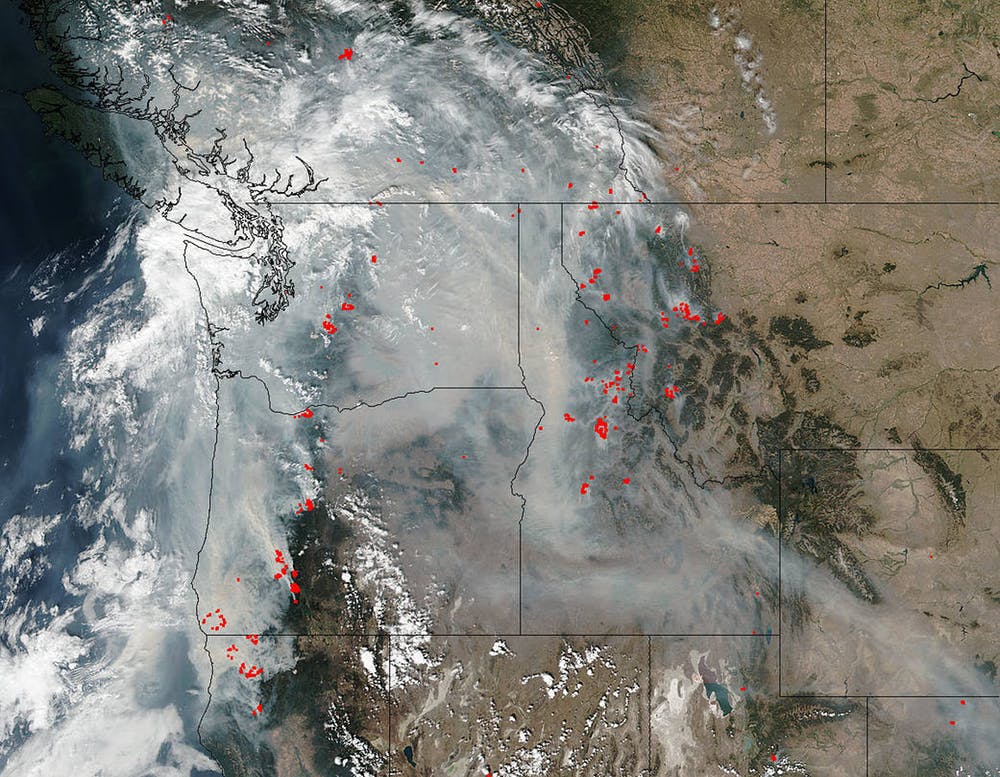
Smoke from wildfires in Northern California, Oregon, Washington, Idaho and Montana blankets much of the Pacific Northwest on Sept. 5, 2017. NASA

Is a brief exposure, say for a few hours, dangerous, or is smoke mainly a concern if it lingers for days? How does distance from the fire affect risk?

We don’t fully know how the size and length of the dose affect risks, but the longer you are exposed to pollutants from wood smoke, the higher the risk of developing smoke-related illnesses. Short-term exposures to intense smoke can lead to lung and cardiovascular problems in some people, especially if they are already susceptible to these diseases. Longer-term exposure over a few days or weeks increases the risk and the chance of health impacts as your cumulative dose increases.

Smoke tends to become more diluted with distance from the source, but there really isn’t any way to estimate a safe distance where the pollutants are so diluted that they pose no risk. Eventually rainfall will clean all of this pollution from the atmosphere, but that can take days or even weeks. In the meantime, these pollutants can travel thousands of miles. That means air pollution from wildfires may threaten people who are far downwind.

Image of a plume of high-altitude smoke from a forest fire near Alaska, observed in northern Quebec, Canada, more than 2,000 miles away. Richard PeltierCC BY-ND

How do the worst pollution levels from the wildfires in California compare to bad air days in a megacity like Beijing or Mumbai?

The concentrations of pollution in communities downwind of these fires are on par with what we see in rapidly growing cities such as Mumbai and Beijing. But there is an important difference. In California these pollutants affect a relatively small geographic area, and the affected areas can rapidly shift with changing weather patterns. In locations like Mumbai and Beijing, high concentrations are sustained across the entire region for days or even weeks. Everyone in the community has to endure them, and there is no practical escape. For now, though, Californians are experiencing what it’s like to live in a developing country without strong air pollution controls.

How should people in smoky areas protect themselves? Are there remedies they should avoid?

The most effective way to protect yourself is by staying with friends or family who live far away from the smoke. People who can’t leave the area should close windows and doors, and apply weather sealing if they detect smoke leaking in. Even masking tape can be reasonably effective. But most houses leak outside air indoors, so this strategy isn’t foolproof.

Recommended Reading: How Himalayan Salt Lamps Work

Portable high-efficiency filter devices – often marketed as HEPA – can remove indoor air pollution, but often are too small to be effective for an entire house. They are best used in individual rooms where people spend a great deal of time, such as a bedroom. And they can be very expensive.

N95 mask. Max-Leonhard von SchaperCC BY

Products marketed as air fresheners that use odorants, such as scented candles or oil vaporizers that plug into an outlet, do nothing to improve air quality. They can actually make it worse. Similarly, products that “clean” the air using ozone can release ozone into your home, which is very hazardous.

Personal face mask respirators can also be effective, but not the cheap paper or cloth masks that many people in developing countries commonly use. The best choice is an N95-certified respirator, which is designed to protect workers from hazardous exposures on the job.

These masks are made of special fabric that is designed to catch particles before they can be inhaled. Paper masks are meant to protect you from contact with large droplets from someone who might be ill. N95 respirators block particles from entering your mouth and nose. They can be a little uncomfortable to wear, especially for long periods, but are pretty effective, and many retailers sell them.

What else do scientists want to know about wildfire smoke?

We have a pretty good understanding of the pollutants that wildfires emit and how they change over time, but we don’t have a firm grasp of how different health effects arise, who is most susceptible or what the long-term effects may be. It is not easy to predict where and when wildfires will occur, which makes it hard for scientists to evaluate individuals who have been exposed to smoke. Controlled laboratory studies give us some clues about what happens in the human body, but these exposures often are quite different from what happens in the real world.

The California fires are affecting thousands of people, and it is good to see that firefighters are starting to contain them. But there will be more wildfires, so we need to learn more about how smoke exposure affects people long after the fires end.

Most Milk Substitutes are Low in Iodine – Here’s Why it Matters

(The Conversation) Milk and dairy products are the main source of iodine in many diets, and an important iodine source in many countries. However, our latest research found that the iodine concentration of most alternatives to cows’ milk – such as soy and almond “milk” – is very low. This matters because deficiency of iodine, especially during pregnancy, affects brain development and is linked to lower intelligence.

As people increasingly switch from cows’ milk to alternative drinks, and their sales grow, we wanted to know if consumers of these products would be able to match the amount of iodine in cows’ milk. To do this we measured the iodine concentration of 47 milk substitutes available in the UK, including a range of different types: soya, almond, oat, rice, coconut, hazelnut and hemp (but excluding those marketed for infants and children).

Related: Homemade, Vegan Nut Milk Recipes and More

We found that most milk substitutes were naturally low in iodine; their concentration was around 2% of that of cows’ milk. And only three of the 47 drinks were fortified with iodine. While some manufacturers replace the calcium found in cows’ milk, the vast majority, including big brands, do not replace the iodine.

We are aware that consumers may choose these alternatives for a variety of reasons, including allergy or intolerance to cows’ milk, so it is important that they are aware of the low iodine content of milk substitutes and the potential health consequences.

Iodine matters

Most people don’t know that iodine is found in cows’ milk and are unaware that they need a certain amount in their diet. In the UK, iodine is not listed on the nutrition information labels on milk containers, and there is little knowledge that iodine intake matters – even among pregnant women.

Cows’ milk is an excellent source of iodine, with a glass (200g) providing around 70μg (micrograms), a considerable proportion of the 150μg iodine intake recommended for European adults every day. By contrast, our study found that a glass of milk substitute would provide only around two micrograms.

The drinks with added iodine (as stated on the ingredients label) provided a reasonable amount of iodine (between 45μg and 60μg per glass). But, as these drinks were not from a market leader, most consumers will probably not get enough iodine in their diet from this source.

Severe iodine deficiency during pregnancy is well known to cause impaired brain development and lead to lower IQ in the infant. It is for that reason that many countries have added iodine to table salt (iodised salt) in order to improve iodine intake and reduce the impact of deficiency on population health. As a result, the number of countries with severe iodine deficiency has been reduced, but some countries are still classified as mildly-to-moderately iodine deficient.

But as our earlier research has shown, even mild-to-moderate iodine deficiency in pregnant women is linked to lower IQ and reading scores in their children, up to nine years of age.

Other dietary sources

Of course, milk is not the only source of iodine. Other rich sources include seafood – particularly white fish, such as cod. Eggs are also a good source of iodine.

Cod is a good source of iodine. TunedIn by Westend61/Shutterstock

For people who cannot or will not eat these alternative sources – such as vegans or those who dislike fish – it can be hard to meet the recommended iodine intake. Some people may, therefore, need to consider a suitable iodine supplement to ensure that their intake is adequate.

Related:  Four Easy Ways to Improve Your Thyroid Function

It is very important that kelp supplements – often sold as an iodine source in health food shops – are not used, as they can provide excessive amounts of iodine.

Unfortunately, there is no test for iodine deficiency. To know if you’re getting enough iodine, you need to consider whether iodine sources are part of your diet. We have written a fact sheet on iodine, available through the British Dietetic Association, that can help you understand how to meet the recommendations.

GOP health care bill would make rural America’s distress much worse

This Thursday, March 9, 2017, photo shows the main entrance to Evans Memorial Hospital in Claxton, Ga. Like many other rural hospitals in the U.S., Evans Memorial has struggled to keep its doors open while treating patients who tend to be older, poorer and often uninsured. (AP Photo/Russ Bynum)

(The Conversaton) Much has been made of the distress and discontent in rural areas during the 2016 U.S. presidential election. Few realize, however, this is also felt through unequal health.

Researchers call it the “rural mortality penalty.” While rates of mortality have steadily fallen in the nation’s urban areas, they have actually climbed for rural Americans. And the picture is even bleaker for specific groups, such as rural white women and people of color, who face persistent disparities in health outcomes. In every category, from suicide to unintentional injury to heart disease, rural residents’ health has been declining since the 1990s.

While some have blamed these gaping disparities on “culture” or “lifestyle” factors – such as a supposed fatalism or overconsumption of unhealthy products like Mountain Dew – the truth is that the biggest culprit is limited access to health care and challenging economic circumstances.

The passage of the Affordable Care Act (ACA) in 2010 began to change this as more rural Americans gained insurance coverage and the government invested more money into regional health facilities and training.

This progress is now at risk, however, as the Republican Congress inches closer to repealing Obamacare and replacing it with a feeble alternative that greatly weakens rural health care access. As researchers who study the mental and physical health of rural Americans, we believe this would have disastrous consequences.

A protester is escorted away by police as they arrested 43 health care and disability activists at a demonstration outside Senate Majority Leader Mitch McConnell’s constituent office in Washington. Reuters/Kevin Lamarque

The travails of rural America

Even as rural America feeds the country, hunger is on the rise in rural areas.

Some 98 percent of rural residents live in food deserts – defined as counties in which one must drive more than 10 miles to get to the nearest supermarket. This makes it challenging to maintain healthy and nutritious diets, leading to higher rates of obesity in rural areas that greatly increase the risk for diabetes, heart disease and certain cancers.

As rural workers struggle to sustain employment in a shifting economy, the increasing poverty is contributing to mental distress and substance use. On a larger scale, the economic changes that have hit rural areas have resulted in a declining tax base, lower incomes and strained educational institutions. Together, they challenge rural residents’ health not just in the immediate term but cumulatively over their lives.

Barriers to accessing health care

Yet, despite all these medical issues, rural residents have a tough time getting the health care they need.

The nature of rural employment, for example, is characterized by self-employment, seasonal work and lower-than-average pay. This means rural workers are less likely to get insurance through their jobs and thus face higher premiums when buying their own policies.

The lack of public transportation in most rural areas is also a major hurdle to seeing a doctor, particularly as residents have to travel much farther than those in urban areas to reach health care providers.

Rural residents get most of their services through primary care providers, who take on the work of other practitioners, like behavioral health clinicians, due to longstanding specialist shortages. When handling numerous complaints during a single medical encounter, primary care providers may concentrate on the most acute health concerns of their patients, undermining the ability to diagnose all their conditions and meaningfully discuss their larger health risks, such as exercise, weight and substance use. When providers are rushed or deliver sub-par care, rural residents may wonder if seeking it out is worth the challenge, opting to struggle on their own.

These and other constraints make it tougher for rural Americans to get the screenings necessary to spot serious diseases such as cancer early or to maintain adequate followup on conditions like hearing loss. Finding the regular medical care necessary to manage chronic conditions, such as diabetes, depression or opioid disorders, is even more challenging.

Rural health care has at times been characterized as patchwork. In part, that’s because the costs of sustaining health care infrastructure in rural areas are higher thanks to the large service areas, the inability to negotiate bulk pricing and lack of financial incentives to fill in provider gaps.

Susan Collins is one of a handful of Republican senators who may stand in the way of passage of current legislation to repeal and replace Obamacare. Reuters/Joshua Roberts

The ACA and the AHCA

The ACA, intended to turn this around, has in fact led to dramatic gains in insurance coverage among rural Americans.

Broadly speaking, insurance rates in rural areas reached almost 86 percent in early 2015, up from an estimated 78 percent in 2013.

In Kentucky – a state with high poverty, a large rural population (42 percent of residents) and a successful Medicaid expansion initiative – tens of thousands of newly insured low-income adults began using preventative services after previously being unable to afford it. The state’s uninsured fell by half and, as a result, fewer people skipped taking their medications due to financial hardships relative to other states that didn’t expand Medicaid.

The ACA also strengthened rural health care institutions by investing in upgrades to hospitals and clinics, preventative health programs and support for providers to stay in rural areas. While rural hospitals are often laden with the expense of providing extensive care without payment to indigent patients, rural hospitals in states that expanded Medicaid under the ACA finally were able to better balance their books when caring for this vulnerable group. At the same time, the ACA supported innovative models ideal for rural areas that prioritized outreachintegration of services and collaboration between safety-net players.

Both the House and Senate bills to repeal and replace Obamacare would drastically reduce rural Americans’ insurance coverage and significantly threaten the ability of many rural hospitals and clinics to keep their doors openAnalysts show that the bill would provide insufficient tax credits to pay for rural premium costs, drastically increase the price of rural premiums and increase uncompensated care in rural hospitals.

What rural areas need from health care reform

Previous efforts at health care reform show us that rural areas are uniquely vulnerable. Efforts need to take account not only of coverage and access – as has been the focus of the current debate – but also how reform affects rural health care institutions and the larger social factors shaping overall health.

The particular economic factors affecting rural health care institutions make rural areas particularly vulnerable to political shifts that disrupt services for existing patients and for those newly insured, creating immense challenges for rural providers. Steps that fail to account for the impact of financial hardship on these institutions not only hurt their bottom line but contribute to poor morale and workforce turnover and larger-scale decisions to reduce services, which decrease their ability to address patient needs.

At the same time, commitment to improving the health of rural Americans requires attention to the so-called upstream factors shaping rural health. That means preserving the safety net programs so vital in rural areas with underemployment and low-paying jobs, strengthening rural economies and investing in high-quality education.

If our leaders are serious about reform that will lessen the rural-urban mortality gap, they should recognize the unique needs of rural America and ensure health care policy reflects how vital access to quality care is to their financial success – not to mention their well-being.