Top Five low-impact exercises for overall health

(Natural News) To anyone who doesn’t frequently engage in exercise, just mentioning the word brings up images of exhaustion, pain, and lots of sweat. These are more than enough to turn plenty of us off from physical activity. Yet according to one Harvard doctor, the best exercises may actually be the easiest ones.

Forget long-distance running: Dr. I-Min Lee, a professor of medicine at Harvard Medical School, says that this can do a number on your joints and digestive system. There are five low-impact exercises you can do to lose weight, build muscle, and strengthen your bones, all of which Lee has extensively discussed in a Harvard Medical School report entitled “Starting to Exercise”. These exercises are:

  1. Swimming: Lee has called this “the perfect workout” since it requires you to use all the muscles in your body. Swimming has plenty of other health benefits too, and these run the gamut from improved brain and heart health to decreased risk of chronic illness to better helping you keep your weight under control. Plus, being in water takes a huge load off your joints, so people who have arthritis can easily do swimming and enjoy the benefits it has to offer. Swimming regularly for 30 to 45 minutes is the ideal.
  2. Tai chi: Also known as tai chi chuan, this centuries-old Chinese martial art involves performing a series of slow, rhythmic movements while paying special attention to deep breathing. Although gentle and relaxing in appearance, tai chi can actually enhance your upper- and lower-body strength, boost flexibility, and help you develop a greater sense of balance. Furthermore, practitioners of tai chi typically go at their own pace, so they aren’t left struggling for breath at the end of each session. This makes tai chi perfect for all kinds of people regardless of their fitness level or age. In fact, Lee has gone on to state that tai chi “is particularly good for older people because balance is an important component of fitness, and balance is something we lose as we get older.” (Related: Tai chi benefits people with chronic health problems like Parkinsons, arthritis and fibromyalgia)
  3. Strength training: If your goal is to build muscle and lose weight, then strength training is for you. This type of physical exercise basically involves using weight to create resistance against gravity, resulting in improved strength and endurance. Barbells, dumbbells, elastic bands, weighted ankle bracelets, and even your own body can serve as weights during strength training. You can begin strength training by performing a single set of eight to 12 movement repetitions per session. From here, build up to a greater number of sets and more intense training sessions. Just keep in mind that consistency is the key to getting positive results from strength training.
  4. Walking: Perhaps the easiest exercise to pull off, walking is one of the most beneficial as well. Brisk walking daily for a solid 20 minutes has been found to add years to your life. Even leisurely walking for 30 minutes can do wonders for your brain and body. If you’ve never engaged in walking as an exercise before, then start off with 10- to 15-minute treks around your neighborhood. Gradually build up your walking routine to 30- or 60-minute hikes, and soon enough you’ll be feeling better than before.
  5. Kegel exercises: Doing Kegel exercises will basically have you clenching and releasing the muscles that make up your pelvic floor, which are the muscles that support your pelvic organs. Kegel exercises are usually encouraged as a treatment against urinary stress incontinence, particularly among women. But both men and women can benefit from these exercises since the muscles in our pelvic floor weaken with age and make us more prone to bladder leakage and passing gas at inappropriate moments. To perform Kegel exercise, squeeze the muscles of your pelvic floor in the same way you’d hold in pee and hold these contractions for two to three seconds. Release and repeat 10 more times.

As Lee has shown, you don’t need to push your body until it breaks to be healthy. Making time, putting in the effort, and keeping at it is what exercise is all about. And whether you choose tai chi or brisk walking, you’ll come out looking and feeling your best ever.

Visit Slender.news for more tips and tricks to achieving your best state of health.

Sources include:

DailyMail.co.uk
Independent.co.uk

Do the Healing Benefits of Comfrey Oil Outweigh Its Toxic Effects?

(Dr. Mercola) Comfrey, while considered an important herbal medicine, is controversial due to certain toxic components in it, which led to the U.S. Food and Drug Administration (FDA) to restrict the use of oral comfrey in dietary supplements.1

The dilemma is how to weigh the virtues of comfrey oil while considering the safety concerns that surround it. It has exhibited the potential to treat skin concerns and pain when used topically. Learn about comfrey oil, its practical applications and potential contribution to skin healing and maintenance, as well as the FDA’s concerns about it.

What Is Comfrey Oil?

Comfrey oil is extracted from comfrey (Symphytum officinale), a perennial herb of the Boraginaceae family with a black, turnip-like root and large, hairy broad leaves bearings small, bell-shaped flowers. The plant is native to Europe and grows in damp, grassy places such as ditches and riverbanks. It is typically found in Ireland and Britain on ditches and riverbanks, but it also grows in profusion in North America and western Asia.

The plant has found widespread use in folk and herbal medicine for its properties as a healing agent. Its oil, for instance, is ideal as a base for salves and has been used in folk medicine to treat wounds and skin infections.

Uses of Comfrey Oil

Many of the beneficial properties of comfrey are attributed to its high content of allantoin, a substance that, according to the University of Maryland Medical Center, helps promote new skin cell growth, along with other substances that may work in reducing inflammation and maintaining healthy skin.2 Comfrey ointments have been used to help heal bruises and pulled muscles and ligaments.

Recommended Reading: How to Get Rid of Muscle Cramps, Charley Horses, Muscles Spasms

Previously, comfrey was used in its tea form to aid in treating stomach problems, as well as ulcers, heavy menstrual periods, diarrhea, bloody urine, persistent cough and even cancer and chest pain.3 But experts have raised the alarm on consuming it, as it contains toxic substances called pyrrolizidine alkaloids (PAs), which damage the liver and can lead to fatality. According to the FDA, there is even evidence that PAs may be carcinogenic in sensitive body tissues when used orally.

The FDA reported this in 2001, when it sent letters to supplement manufacturers warning them not to put this herb in dietary supplements. Today, in the United States, comfrey is sold only in creams and ointments; countries like the United Kingdom, Australia, Canada and Germany have also banned the sale of comfrey-containing oral products.

But this isn’t to ignore the potential healing effects of a common comfrey product, which is its oil. Comfrey oil can help you naturally address wound healing and skin issues4 such as scratches, rash (including diaper rash), bug bites (particularly spiders) and shallow wounds. It is also deemed helpful as a massage salve easing pain from arthritis, muscle aches, low back pain and soreness.5

Composition of Comfrey Oil

The comfrey plant contains substances thought to aid skin regrowth, primarily allantoin but also including rosmarinic acid and tannins. As already noted, it also contains pyrrolizidine alkaloids (PAs), which can be toxic to your liver.

Benefits of Comfrey Oil

Here are different comfrey oil benefits classified according to skin or health condition:6

For skin rashes —– Comfrey oil can help in treating rashes. However, caution should be taken when it comes to deep wounds – the oil can help heal the skin so quickly that the new tissue may cover the wound before deep healing inside, resulting in an abscess or skin infection. Remember, too, that there are warnings against using comfrey on broken skin because its PAs can still be absorbed by your skin.

As a poultice — A poultice is a good alternative if you have an infection but don’t want to apply comfrey oil directly. Here’s how to do it: Blend 4 cups of chopped comfrey leaves and stems with 1/4 cup of carrier oil, such as jojoba, almond or olive oil. Without straining out the herb, wrap the comfrey oil paste with a cotton cloth. Freeze this poultice before applying to help reduce pain and inflammation. Otherwise, you may apply it directly on the affected area for at least 30 minutes.

For bone fractures — Apart from helping treat superficial wounds, comfrey oil has also been used for fractured bones or torn ligaments in areas of the body where it is not possible to place a cast, such as a rib. It can be applied directly onto your skin or in a poultice, potentially promoting faster healing. It is also said to help reconstruct torn muscles that might have been injured.

How to Make Your Own Comfrey Oil Infusion

Create an herbal oil infusion7 by infusing 2 cups of cut comfrey leaves in 4 cups of olive oil with a steady low heat (110 degrees) for two to three weeks. Strain and pour into a clean, dry bottle. Here is another comfrey oil infusion recipe, from Wildly Natural Skin Care.8

Ingredients

8 ounces comfrey leaf (70 percent)

4 ounces comfrey root (30 percent)

Extra virgin olive oil, to cover, approximately 16 ounces

Procedure

The roots should already be broken down by chopping. Break up the leaves by hand. To make this using the cold infusion method, put all the herbs in a 16-ounce glass jar, cover with olive oil and cap and shake. This can steep for 28 days. To strain, use a clean old shirt lined in a strainer, pour the mix through into a bowl and squeeze the shirt with herbs in it. The strained liquid is your comfrey oil.

Notes:

If possible, use freshly dried herbs for this purpose.

To get fresh, dry comfrey root: Dig the root when it is dry weather. Clean by hand or use some water and a vegetable brush. Brush the root gently. Chop finely; lay out on a paper bag overnight.

To get freshly dry leaves: Harvest, wipe the dirt off with a towel and allow to dry whole overnight.

How Does Comfrey Oil Work?

As an old European folk remedy, comfrey has many traditional and current uses, mostly focused on skin care. It is important to attribute many of these positive impacts to its high amounts of allantoin, a mucilaginous healing substance that causes cell growth.

Being mucilaginous, comfrey is commonly used for helping heal wounds, preventing scars and treating existing ones, along with decreasing dryness and flaking of skin. The oil appears to work as an anti-inflammatory, an analgesic and an aid in the healing of sprains and broken bones. It also demonstrates effectiveness in assisting treatment of atopic dermatitis, psoriasis and eczema.

Recommended Reading: Beat Eczema Naturally

All these potential benefits are obtained through topical application and not ingestion, largely due to the PAs or toxic, liver-destroying substances present in the plant.

Is Comfrey Oil Safe?

Comfrey oil appears to be safe when applied to unbroken skin in small amounts. Note that the poisonous chemicals present in comfrey can still pass through the skin, so they can still be absorbed if your skin is broken or if large amounts are administered. It is considered unsafe to take comfrey oil by mouth because of its PAs, which can cause liver damage, lung damage and cancer. The FDA has recommended that supplement manufacturers not sell any oral form  of comfrey.

While a Garden Web community forum9 argues that the pyrrolizidine alkaloids (PAs) in comfrey are less toxic than those found in known poisonous plants, such as ragwort, and questions whether PAs cause cancer outside of laboratory experiments, I advise that you err on the side of caution: Stick to prudent topical use of comfrey oil and avoid ingesting any comfrey-based product. Pregnant and breastfeeding women, along with the elderly and children, are also better off avoiding the use of this oil.

Side Effects of Comfrey Oil

There are no known scientific reports of interaction between comfrey and conventional drugs.10 But some herbs that have also been known to cause liver problems — such as kavaskullcap and valerian — should not be used while using comfrey products because of the increased risk for liver damage.

Recommeneded Reading: Boost Your Liver Function Naturally

Diatomaceous Earth – Mother Nature’s Secret Weapon: What Is It, How to Use It, Where to Find It

Diatomaceous earth (DE) is a powerful, inexpensive solution to most of your health issues. It’s probably the simplest and most straightforward health product out there on the market. It can be used as a beauty product, an internal cleanser, or a deep revitalizer for the whole human body.

(Organic Lifestyle Magazine by Claude Borel) There it is—a bit of diatomaceous earth resting at the bottom of my water glass. It might not taste delicious, but its ability to cleanse my body and fill it with sought-after nutrients more than makes up for it.

Where Does DE Come From?

Diatomaceous earth is the waste product of unicellular algae. Over a 30 million year period, it has taken the form of white sedimentary rock that is typically harvested from the bottom of oceans, lakes, and rivers around the globe. After it is harvested and dried, DE is a fine, white dust.

In 1836-1837, Peter Kasten was the first to discover DE while drilling a well in Hausselberg Hill, which is located in Luneburg Heath, Germany. Until the first world war, most of the worldwide production of diatomaceous earth was from this region.

de-diatomaceous-earth-food-gradeThere are a few deposits here in the United-States. In Colorado and in Clark County, Nevada, there are deposits that are up to several hundred meters thick in places.

  • Marine deposits have been worked in the Sisquoc Formation in Santa Barbara County, California near Lompoc and along the Southern California coast.
  • Additional marine deposits have been worked in Maryland,Virginia, Algeria and the MoClay of Denmark.
  • Freshwater lake deposits occur in Nevada,Oregon, Washington, and California.
  • Lake deposits also occur in interglacial lakes in the eastern United States

arranged-polished-diatoms

What Has Diatomaceous Earth Historically Been Used For?

Throughout its history, DE has been used in chemistry labs for various experiments and procedures when filtering very fine particles. Diatomaceous earth is also used in the filtering processes for drinking water. Fish tanks, swimming pools, beer, wine, sugar, syrups, and honey are all filtered in a medium containing DE.

diatomaceous-earth-diatoms-under-a-microscopeThe agriculture field has greatly benefited  from this product, as it has been used as an insecticide and pesticide, and it has been used as a soil additive for growing potted plants. It serves as an anti-caking agent in grain storage and livestock feeds and has been used for its mild abrasive qualities in products like toothpaste, metal polishes, and facial scrubs.

What Is Diatomaceous Earth Predominantly Used for and Known for at the Present Time?

The usefulness of diatomaceous earth ranges from an internal one (as a natural medicine or supplement), to a solution you can apply in-and-around the house in order to protect yourself from unwanted vermin. DE, amazingly, can also be made into a beauty product with its special and unique properties highly effective against “aesthetic defects” which tend to appear as Father Time catches up with all of us. Here’s a quick list to showcase its numerous benefits:

  • Help the body function and regenerate itself properly
  • Detox the body and kill parasites
  • Have an attractive and improved physical appearance
  • Kill bugs, ants, fleas, and the like
Related: How to Kill Fungal Infections

#1: To Help the Body Function and Regenerate Itself Properly

DE is very rich in silica (85% of it), a trace mineral vital for bone health, artery health, and almost all vital organs like the liver. We used to be able to get our silica from nutrient-rich foods. Unfortunately, traditional farming methods have depleted the soil and the possibility of filling our needs through traditional I-eat-and-my-body’s-needs-will-be-met has become a somewhat utopian thing of the past. That’s why this white rock has become so fascinating to so many people. Silicon, calcium, sodium, magnesium, and iron are only a few of the trace-minerals that you’ll find in the white powder, all of which promote bone and muscle growth. People fighting high cholesterol will be satisfied, too, as it’s known to have a regulating effect on cholesterol levels.

#2: To Detox the Body and Kill Parasites

Within a few months of taking diatomaceous earth most will rid the body of  all parasites and most toxic metals as well.

#3: To Have an Attractive and Improved Physical Appearance

Another interesting facet of diatomaceous earth is that it can be used as a fascial mask and exfoliant.

As a matter of fact, when it comes to the skin, it can be used anywhere, and your skin will thank you for it. But it’s not just the skin that can benefit from diatomaceous earth. It’s also your teeth, your hair, your fingernails: all of which will become stronger and healthier over time.

Related: Heal Gum Disease and Cavities Naturally – Step by Step

#4: To Kill Bugs

The benefits of DE truly seem endless at times, and then again there’s still much more to cover. DE is useful against any type of insect infestation you might have in your house. Bugs adapt to conventional pesticides and become immune to their killing agents.  DE works by mechanical action, disrupting their waxy shell, making them more prone to eventual death by dehydration.

DE will also purify any room it has been applied in by detoxifying the ambient air.

Diatomaceous Earth Is Not Profitable to Pharmaceutical Companies

If this product is so great, why haven’t you heard about it before?

The reason most people remain unaware of this earth’s blessing is because of money. It’s as simple as that. Big business and influential pharmaceutical companies, can only profit from a product if they possess the exclusive rights to its merchandising. That certainly won’t happen with diatomaceous earth since the product comes directly from the earth’s soil.

As a result, DE is one of the hundreds of natural alternatives that get overlooked by doctors and pharmaceutical enterprises. People know about it because their friend, their relative, or someone they trust recommended it to them. If something is genuinely helpful to people, it will eventually make itself  known.

Filter grade DE is great for filtering, but should under no circumstances be ingested or inhaled as it’s very dangerous for your health.
Related: Herbs and a Protocol that Eliminates Parasites from the Body

The Difference between Diatomaceous Earth and Any Other Alternative

What makes DE truly stand out though for its aficionados, and therefore makes it an essential addition to any person’s health cabinet, is its “silica-argument.”

Silica is the most important trace-element in human health.” – Dr. Barbara Hendel.

Life cannot exist without silica. Food grade DE is approximately 80-85% silica. When you take into account that most people are silica-deficient, although still holding over 7 grams of the mineral in their bodies (more than any other trace-element, even iron), you begin to understand its importance a bit better.

Issues/Illnesses Where Diatomaceous Earth Has Been Shown to Be Helpful

  • Osteoporosis: As silica helps with the absorption of calcium, taking a silica supplement along with a calcium supplement can effectively offset chronic illnesses like osteoporosis, which are due to chronically depleted calcium stores.
  • Detoxifying the body
  • Losing weight
  • Revitalizing the skin
  • Promoting hair growth
  • As a cough decreasing agent
  • Fighting kidney stones and healing infections of the urinary tract
  • Reducing inflammation in the intestines and stomach
  • Protecting vital lung tissue from pollution and restoring its elasticity
  • Normalizing hemorrhoidal tissue
  • Preventing side-effects of menopause like stress
  • Killing bacteria and parasites

Such a powerful force of action begs the question: how can a product do so much without it hurting the organism?

Related: Holistic Guide to Healing the Endocrine System and Balancing Our Hormones

Diatomaceous Earth Is Completely Safe

For example, DE makes your body bug-free, not with a chemical but by physical action. The hundreds of particles that attack the insect are so small, so microscopic, they cause no harm whatsoever to people or pets. So it’s completely safe to ingest orally, as long as it’s food grade!

Calcined vs. Non-Calcined/Amorphous vs. Crystalline/Food Grade vs. Non-food Grade

Filter grade DE is great for (like the name says it) filtering, but should under no circumstances be ingested or inhaled as it’s very dangerous for your health. This version of the white powder starts by being food grade DE with at about 85% amorphous silica, but then it’s heated to about 1000 degrees. The purpose of this is to make the exoskeletons of the diatoms much harder, which makes for improved filtering properties. The process causes the amorphous silica in DE to turn in to crystalline silica. It’s now called “calcined” diatomaceous earth and is 60% crystalline. The world health organization says DE needs to be less than 2% crystalline silica in order for it to be safe. You don’t want to ingest or inhale this form of DE (though it’s not good to inhale any DE). Also, in order to be considered food grade, the diatomaceous earth (food grade) has to have arsenic levels below 10mg/kg and lead levels below 10mg/kg.

What If I’m Taking Medication?

Reports have been extremely positive with or without medication. DE doesn’t seem to interact at all with pharmaceutical drugs, maybe in part because DE essentially operates through mechanical action only (by tabbing and mangling the little buggers).

Apparently, though, some people experience a rise in energy after taking the powder, a side-effect which has no major consequence, but it might interfere with a goodnight’s sleep. It is advised not to consume any diatomite before going to bed precisely for this reason.

Related: How to Detoxify From Chemotherapy and Repair the Body

So How to Use Diatomaceous Earth (Food Grade)

#1: Internal Use

  1. First week: 1 teaspoon of DE in a glass of water or favorite juice, first thing in the morning (the body needs time to get used to it).
  2. Week 2, 3, and 4: 1 tablespoon of DE in a glass of water, again, first thing in the morning.

The following is only if you wish to do a full detox or have a parasitic infection 

  1. For the next 3 months, take 2-3 tablespoons of DE every single day.
  2. Stop taking it for one whole month. In other words, you don’t take anything on the fourth month.
  3. Start again with 2-3 tablespoons per day for the next 3 months.

Note: drink a lot of water to help flush out toxic metals and dead parasites out of your system.

#2: External Use

Step 1: Mix diatomaceous earth and some water in a bowl (roughly 1 part DE to 3 parts water).

Step 2: Choose whether you prefer a mask or a facial scrub. If you want a mask, just add more of DE to the mixture. If you want a scrub, just add more water to dilute the solution even more.

Step 3: Whatever you have decided, spread the mixture across your forehead, your nose, your chin, and your cheeks.

Step 4: Leave it on your face for 2-5 minutes, allowing it to dry.

Step 5: Finally, thoroughly wash your face with some water and a wash cloth. And that’s it, my friend. You should be good to go now—your skin, delicately exfoliated by the sweet action of diatomaceous earth.

How to Use Crawling Insect Control Diatomaceous Earth

Crawling Insect Control is a good way to control ants, bedbugs, box elder bugs, carpet beetles, centipedes, crickets, cockroaches, earwigs, fleas, grasshoppers, millipedes, slugs, and silverfish (Never ingest it orally).

You’ll need a hand-duster, power-duster, or other similar means for application.

  • Indoor use: Lightly coat a thin layer of Crawling Insect Control in cracks and crevices; behind and beneath refrigerators, cabinets, stoves, garbage cans; in and around sewer pipes and drains, and window frames; and in attics and basements.
  • Outdoor use: Place in areas around patios, outdoor sills, window and door frames.

https://www.youtube.com/watch?v=7EESQG9b-yc&list=PLWRMcGAPG97SRpvHA33BSRB0GHk6YuYsn

Products:
Related Reading:
Sources:

Microplastics On Beaches Now Recorded At Insane Levels

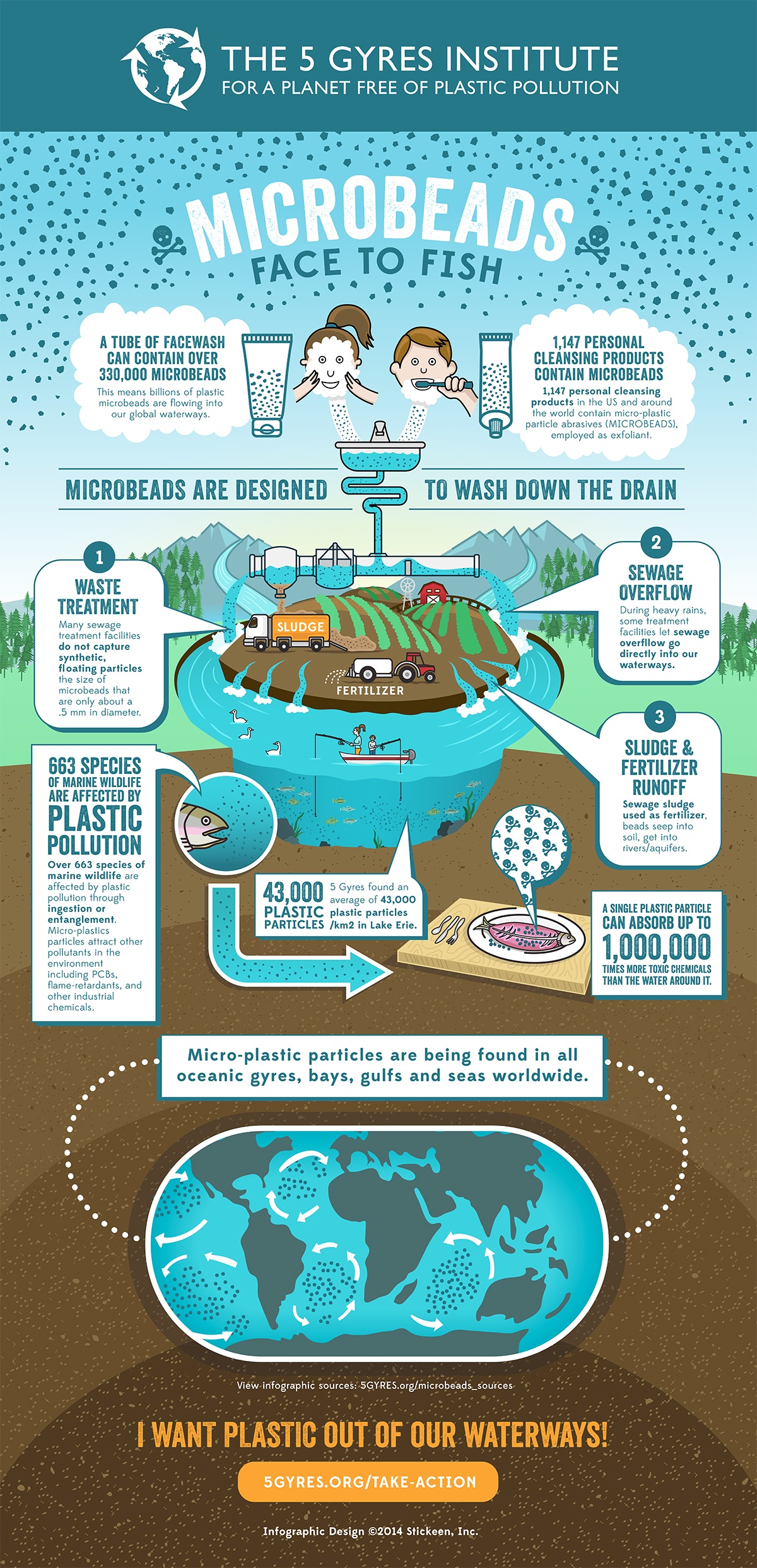
(Natural Blaze By Jason Erickson) More attention is finally being given to determining the ill effects that microplastics (microbeads) are having on human health and the environment. Previous concerns have been raised in everything from toothpaste to beer to the wider ecosystem where it was found to threaten juvenile fish that were becoming addicted to them.

Perhaps even worse is that “an investigation by Orb Media revealed that microplastics were present in 83 percent of drinking water samples. The study encompassed more than a dozen countries, including the U.S., the U.K., France, Germany, Lebanon, Indonesia, Equator, and India.” (Source)

Related: How to Detoxify and Heal the Lymphatic System

Recommended: Start Eating Like That and Start Eating Like This – Your Guide to Homeostasis Through Diet

In a startling case of “the more you seek, the more you find,” a new study orchestrated by a bachelor student and her supervisor from the Leiden University, the Netherlands, along with help from citizen investigators, began collecting samples of European beach sand. It turns out that plastic particles abound in outlandish concentrations right under our feet as we walk among apparently clean and beautiful sand:

They found that every kilogram of sand on European beaches contained on average 250 fragments of microplastic. In some locations the number can be even higher, a spot in Iceland had 700 microplastics per kilogram, in Italy it was as high as 1,500 per kilogram. Bosker has already found relatively high levels in the Netherlands, with 500 fragments per kilo on the beach near to The Hague.

While their findings varied, they found microplastics in every sample taken from 23 locations in 13 European countries.

‘If you fill an espresso cup with sand, it will contain easily twentyfive pieces of plastic, with the number of fragments changing according to the location.’

The researchers have taken steps to standardize their collection process so that even more help can be solicited from the public. In subsequent studies they will be looking at other regions of the world, as well as determining the true nature of the impact that living among pervasive plastic might have on human health and the environment.

Related: Microplastics in Sea Salt – A Growing Concern

You can visit the University website and contact Professor Thijs Bosker if you’d like to inquire about how you can help contribute to this important scientific investigation.

Source: “Plastic Between Your Toes”

Jason Erickson writes for NaturalBlaze.com. This article (Microplastics on European Beaches Recorded at Insane Levels) may be republished in part or in full with author attribution and source link.

Wildfire Smoke and Health: 5 Questions Answered

(The Conversation) Editor’s note: The federal government has declared a public health emergency in Northern California due to wildfires burning across 10 counties. One major threat is smoke, which is causing unhealthy air levels across a wide area, including San Francisco. Atmospheric chemist Richard Peltier explains why smoke from wildfires is hazardous and what kinds of protection are effective.

What substances in wildfire smoke are most dangerous to human health? What kinds of impacts can they have?

Wood smoke contains a mixture of microscopic droplets and particles and invisible gases that spread downwind from the fire source. Surprisingly, relatively few studies have investigated the types of exposures we are now seeing in California. Most studies focus on very controlled laboratory experiments, or forest firefighters who are working on controlled burning, or exposures people in developing nations experience when they use primitive cookstoves. None of these accurately reflects conditions that Californians are experiencing now.

Wood smoke is a very complicated mixture of material in the air, and much of it is known to affect human health. It comes from lots of different fuel sources, including mature trees, dried leaves, forest litter and, unfortunately, local homes. The emissions vary depending on what material is burning and whether it is smoldering or in flames.

For the most part, wildfire smoke is a mixture of carbon monoxide, volatile organic carbon and particles that include alkaline ash, black carbon and organic carbon, which usually contains polyaromatic hydrocarbon, a known cancer-causing agent.

Recommended Reading: Cure Cancer Naturally

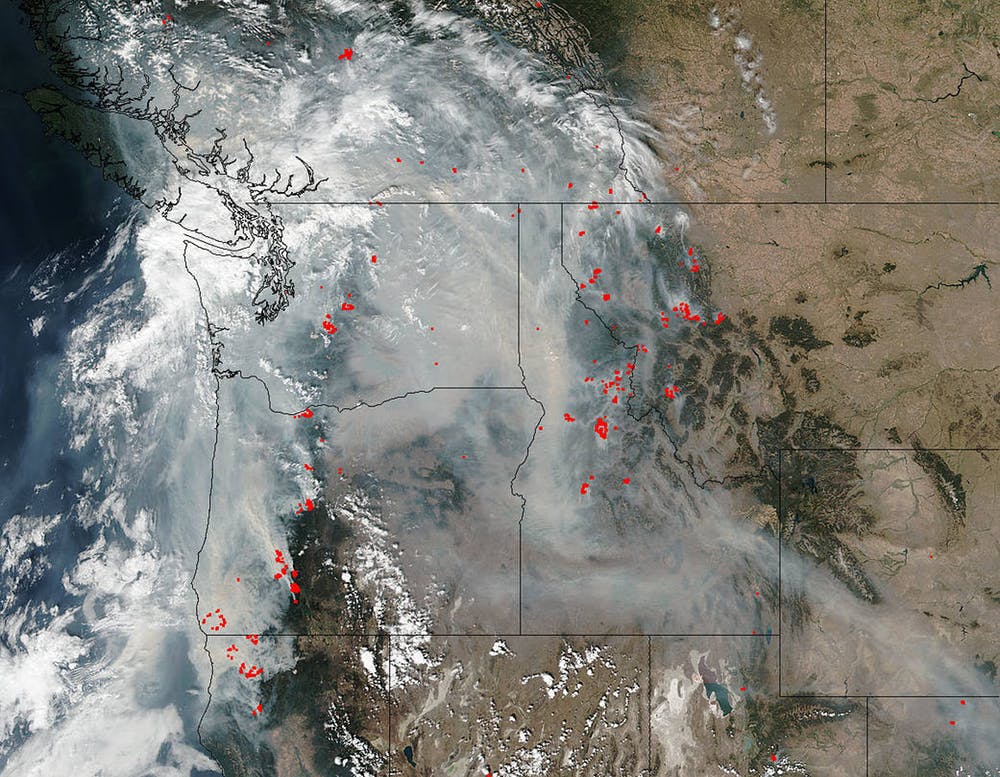
Smoke from wildfires in Northern California, Oregon, Washington, Idaho and Montana blankets much of the Pacific Northwest on Sept. 5, 2017. NASA

Is a brief exposure, say for a few hours, dangerous, or is smoke mainly a concern if it lingers for days? How does distance from the fire affect risk?

We don’t fully know how the size and length of the dose affect risks, but the longer you are exposed to pollutants from wood smoke, the higher the risk of developing smoke-related illnesses. Short-term exposures to intense smoke can lead to lung and cardiovascular problems in some people, especially if they are already susceptible to these diseases. Longer-term exposure over a few days or weeks increases the risk and the chance of health impacts as your cumulative dose increases.

Smoke tends to become more diluted with distance from the source, but there really isn’t any way to estimate a safe distance where the pollutants are so diluted that they pose no risk. Eventually rainfall will clean all of this pollution from the atmosphere, but that can take days or even weeks. In the meantime, these pollutants can travel thousands of miles. That means air pollution from wildfires may threaten people who are far downwind.

Image of a plume of high-altitude smoke from a forest fire near Alaska, observed in northern Quebec, Canada, more than 2,000 miles away. Richard PeltierCC BY-ND

How do the worst pollution levels from the wildfires in California compare to bad air days in a megacity like Beijing or Mumbai?

The concentrations of pollution in communities downwind of these fires are on par with what we see in rapidly growing cities such as Mumbai and Beijing. But there is an important difference. In California these pollutants affect a relatively small geographic area, and the affected areas can rapidly shift with changing weather patterns. In locations like Mumbai and Beijing, high concentrations are sustained across the entire region for days or even weeks. Everyone in the community has to endure them, and there is no practical escape. For now, though, Californians are experiencing what it’s like to live in a developing country without strong air pollution controls.

How should people in smoky areas protect themselves? Are there remedies they should avoid?

The most effective way to protect yourself is by staying with friends or family who live far away from the smoke. People who can’t leave the area should close windows and doors, and apply weather sealing if they detect smoke leaking in. Even masking tape can be reasonably effective. But most houses leak outside air indoors, so this strategy isn’t foolproof.

Recommended Reading: How Himalayan Salt Lamps Work

Portable high-efficiency filter devices – often marketed as HEPA – can remove indoor air pollution, but often are too small to be effective for an entire house. They are best used in individual rooms where people spend a great deal of time, such as a bedroom. And they can be very expensive.

N95 mask. Max-Leonhard von SchaperCC BY

Products marketed as air fresheners that use odorants, such as scented candles or oil vaporizers that plug into an outlet, do nothing to improve air quality. They can actually make it worse. Similarly, products that “clean” the air using ozone can release ozone into your home, which is very hazardous.

Personal face mask respirators can also be effective, but not the cheap paper or cloth masks that many people in developing countries commonly use. The best choice is an N95-certified respirator, which is designed to protect workers from hazardous exposures on the job.

These masks are made of special fabric that is designed to catch particles before they can be inhaled. Paper masks are meant to protect you from contact with large droplets from someone who might be ill. N95 respirators block particles from entering your mouth and nose. They can be a little uncomfortable to wear, especially for long periods, but are pretty effective, and many retailers sell them.

What else do scientists want to know about wildfire smoke?

We have a pretty good understanding of the pollutants that wildfires emit and how they change over time, but we don’t have a firm grasp of how different health effects arise, who is most susceptible or what the long-term effects may be. It is not easy to predict where and when wildfires will occur, which makes it hard for scientists to evaluate individuals who have been exposed to smoke. Controlled laboratory studies give us some clues about what happens in the human body, but these exposures often are quite different from what happens in the real world.

The California fires are affecting thousands of people, and it is good to see that firefighters are starting to contain them. But there will be more wildfires, so we need to learn more about how smoke exposure affects people long after the fires end.