Breakthrough In Explosive Lawsuit Against Monsanto

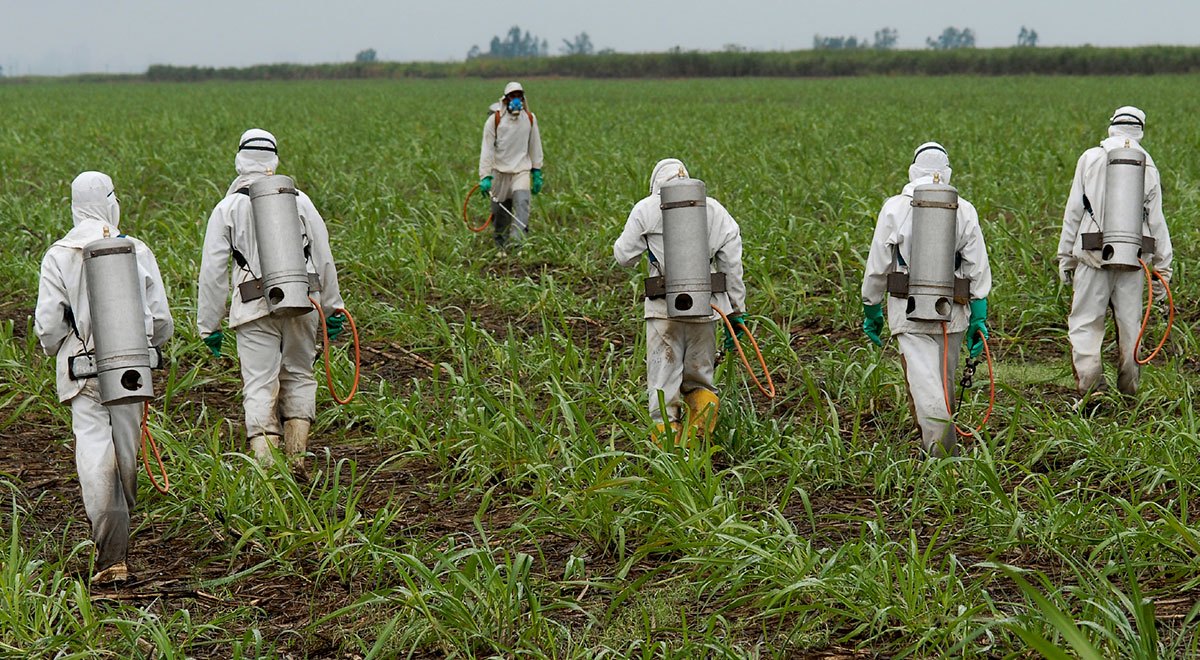
(Natural Blaze By Jon Rappoport) A San Francisco lawsuit against Monsanto and its weedkiller, Roundup, is moving forward. And it’s just received a new green light from the judge in the case.

Monsanto’s lawyers are bracing for a deep level of attack, which they were hoping to avoid. The judge has ruled the jury can hear testimony on this issue: Monsanto suppressed evidence that Roundup causes cancer.

Reporter Carey Gillam has the story (The Guardian, 5/22): “At the age of 46, DeWayne Johnson is not ready to die. But with cancer spread through most of his body, doctors say he probably has just months to live. Now Johnson, a husband and father of three in California, hopes to survive long enough to make Monsanto take the blame for his fate.”

“On 18 June, Johnson will become the first person to take the global seed and chemical company to trial on allegations that it has spent decades hiding the cancer-causing dangers of its popular Roundup herbicide products – and his case has just received a major boost.”

Related: How to Avoid GMOs in 2018 – And Everything Else You Should Know About Genetic Engineering

“Last week Judge Curtis Karnow issued an order clearing the way for jurors to consider not just scientific evidence related to what caused Johnson’s cancer, but allegations that Monsanto suppressed evidence of the risks of its weed killing products. Karnow ruled that the trial will proceed and a jury would be allowed to consider possible punitive damages.”

“’The internal correspondence noted by Johnson could support a jury finding that Monsanto has long been aware of the risk that its glyphosate-based herbicides are carcinogenic … but has continuously sought to influence the scientific literature to prevent its internal concerns from reaching the public sphere and to bolster its defenses in products liability actions’, [Judge] Karnow wrote.” [Yes, the Judge in the case wrote that statement.]

“Johnson’s case, filed in San Francisco county superior court in California, is at the forefront of a legal fight against Monsanto. Some 4,000 plaintiffs have sued Monsanto alleging exposure to Roundup caused them, or their loved ones, to develop non-Hodgkin lymphoma (NHL). Another case is scheduled for trial in October, in Monsanto’s home town of St Louis, Missouri.”

“How the Johnson lawsuit plays out could be a bellwether for how other plaintiffs proceed. If Johnson prevails, there could be many more years of costly litigation and hefty damage claims. If Monsanto successfully turns back the challenge, it could derail other cases and lift pressure on the firm.”

Related: Doctors Against GMOs – Hear From Those Who Have Done the Research

“According to the court record, Johnson had a job as a groundskeeper for the Benicia unified school district where he applied numerous treatments of Monsanto’s herbicides to school properties from 2012 until at least late 2015. He was healthy and active before he got the cancer diagnosis in August 2014. In a January deposition, Johnson’s treating physician testified that more than 80% of his body was covered by lesions, and that he probably had but a few months to live.”

How will Monsanto proceed? First, they’ll argue that Johnson’s cancer could have been caused by other factors. They’ll throw the kitchen sink at the jury. It could have been genetics. It could have been lifestyle. It could have been causes that are still unknown to researchers. It could have been starlight from a galaxy far, far away. Monsanto’s lawyers will try to bury the jury in reams of supposition.

Second, they’ll show the jury an EPA (Environmental Protection Agency) finding that Roundup does not cause cancer. Like the FDA, the EPA has sided with major corporations in efforts to protect them. Monsanto will claim: “The federal government has asserted Roundup is safe, and that’s the end of our responsibility. The federal government is the final arbiter.” Which is to say: the truth isn’t the final arbiter.

Third, Monsanto will execute a series of acrobatic moves to prove they never suppressed evidence that Roundup causes cancer. They were simply “considering all relevant safety issues.” They were “posing various scenarios.” Their internal memos were “temporary work product” on the way to making a final judgment about Roundup’s safety. They were raising valid concerns about flawed studies that claimed Roundup was dangerous.

If all else fails, Monsanto might try to settle with Johnson—and then claim the $$ payout was simply a way to show compassion for his unfortunate condition—and move on—continuing to offer the public a fine and safe product (Roundup). No guilt admitted.

In the extreme—and I need to raise this question—might Monsanto, behind the scenes, secretly and illegally offer Johnson’s lawyer and his client a very large sum to present a weak case in court and let Monsanto win the case?

You decide.

If Monsanto has intentionally hidden the dire effects of Roundup for decades, while people have gotten sick and died, what wouldn’t they do?

Among the myriad scandals and crimes of Monsanto, here is one that sheds light on the mindset of the company. Axisoflogic.com reports (3/22/12): “In 2001, 3,600 inhabitants of the city of Anniston, Alabama, attacked Monsanto for PCB [a chlorine chemical] contamination. According to a report, declassified by the U.S. Agency of Environmental Protection (EPA), Monsanto for almost forty years dumped thousands of tons of contaminated waste in a stream and an open garbage dump in the heart of a black neighborhood in the city.”

“The way The Washington Post reported the story is instructive: ‘Monsanto documents — many emblazoned with warnings such as ‘CONFIDENTIAL: Read and Destroy’ — show that for decades, the corporate giant concealed what it did and what it knew. In 1966, Monsanto managers discovered that fish submerged in that creek turned belly-up within 10 seconds, spurting blood and shedding skin as if dunked into boiling water. They told no one.”

“Monsanto was finally convicted in 2002 of having polluted ‘the territory of Anniston and the blood of its people with the PCB’. The firm was ordered to pay $ 700 million in damages and to guarantee the cleaning-up of the city. No legal action was brought against the company officials.”

(To read about Jon’s mega-collection, The Matrix Revealedclick here.)

The author of three explosive collections, THE MATRIX REVEALEDEXIT FROM THE MATRIX, and POWER OUTSIDE THE MATRIX, Jon was a candidate for a US Congressional seat in the 29th District of California. He maintains a consulting practice for private clients, the purpose of which is the expansion of personal creative power. Nominated for a Pulitzer Prize, he has worked as an investigative reporter for 30 years, writing articles on politics, medicine, and health for CBS Healthwatch, LA Weekly, Spin Magazine, Stern, and other newspapers and magazines in the US and Europe. Jon has delivered lectures and seminars on global politics, health, logic, and creative power to audiences around the world. You can sign up for his free NoMoreFakeNews emails here or his freeOutsideTheRealityMachine emails here.

Autism Rates Up Again – Not Born With It

(Natural Blaze) By Brian S. Hooker, Science Advisor, Focus for Health and Board Member, World Mercury Project.

Recently, the newest U.S. autism prevalence numbers were released by the CDC.  It was not good news.  Among children born in 2004 and 2006, the prevalence of autism had increased from 1 in 68 to 1 in 59, respectively.  Leading the nation in terms of autism prevalence was New Jersey with a rate of 1 in 35 children and 1 in 22 boys.  In other words, nearly 5% of boys in New Jersey have autism spectrum disorder as defined by the new DSM V criteria. Of the children with autism in the U.S., 56% had an evaluated IQ of 85 or less, meaning they possessed intellectual disability, with the majority of those children having an IQ of less than 70.

Many in the scientific community have posited that autism is genetically determined, and researchers have searched the genome looking for the cause of this disorder.  However, the over 400 genes that have been attributed to autism risk were found to contribute to only a fraction of autism cases.  Climbing down this flimsy branch of genetics, researchers and lauding media contrived the phrase “individuals born with autism.”

Related: Doctors Against Vaccines – Hear From Those Who Have Done the Research

Looking at prevalence alone, we are seeing a dramatic and chilling increase in numbers of autism cases, especially in the past 18 years since CDC started to officially count autism numbers in the U.S.  In 2000, the prevalence was 1 in 250, then 1 in 133 (2006) followed by 1 in 88 (2012), 1 in 68 (2014) and now 1 in 59.  Historic data also consistently show that the rate of autism in the 1980’s was near 1 in 2000 children.  It is clear that we are in an ever-increasing epidemic of this often profoundly debilitating developmental disorder, where the majority of these children will never be able to live independently throughout their lifetime.

These wonderful kids were born normally, developed normally for the first one year to 18 months of life, and then regressed into the isolated, painful and disabling world of autism.

Let’s go back to the “individuals born with autism” phrase that I take issue with.  It is the experience of my family and many, if not most families of children with autism, that these wonderful kids were born normally, developed normally for the first one year to 18 months of life, and then regressed into the isolated, painful and disabling world of autism.  They were not born with it but experienced a significant decline in function after an environmental stressor.

Related: Autism, Gut Health, Obesity, the MMR Vaccine, and Andrew Wakefield

Just prior to the release of the CDC’s autism prevalence numbers, an important paper by Dr. Sally Ozonoff and her colleagues at the prestigious UC Davis MIND Institute was quietly published in the journal Autism Research.  The paper, entitled “Onset Patterns in Autism: Variation across Informants, Methods, and Timing” was the culmination of a prospective study tracking the onset of autistic symptoms as evaluated by special education practitioners and parents.  This was done with the gold standard autism assessment instrument Autism Diagnostic Observation Schedule (ADOS), including assessments of frequency and quality of eye contact, shared affect, and overall social engagement by highly trained examiners.

Related: How To Detoxify and Heal From Vaccinations – For Adults and Children
Among those children diagnosed with autism, 88% showed a decline of function (i.e., regression) from an average to above average performance during the first assessments, as compared to those children who did not end up with an autism diagnosis.

147 infants with a family history of ASD and 83 without such a history were evaluated during 7 extensive practitioner assessments held periodically within the first three years of life.  If these children were born with autism they would have shown signs at the very beginning of life. But they did not.

Among those children diagnosed with autism, 88% showed a decline of function (i.e., regression) from an average to above average performance during the first assessments, as compared to those children who did not end up with an autism diagnosis.  In addition, the examiners saw a higher rate of regression than that reported even by parents (88% compared to 69%, respectively), using assessment instrument findings that were based on parental ratings and interviews.  Also, when retrospective instruments were used for reporting (which are hampered by recall bias), incidence of regression was roughly 40%, much lower than that seen in the arguably more accurate prospective study.

How Farmed and Frankenfish Salmon Endanger Our Most Perfect Food

(Dr. Mercola) In November 2015, the U.S. Food and Drug Administration (FDA) approved AquaBounty salmon, a genetically engineered (GE) “frankenfish” that’s being touted as a way to solve overfishing and world hunger. The GE salmon are engineered to grow about twice as fast as typical farm-raised salmon, an eerie feat achieved by inserting the DNA from two other fish, a growth-promoting gene from a Chinook salmon and a “promoter” gene from the eel-like ocean pout.

This genetic tweaking results in fish with always-on growth hormone, and because they grow so much faster than other salmon, they also require less food. The fish are being grown on land and have several other supposed safeguards in place to prevent both escape and breeding with wild populations but, in nature, nothing is foolproof.

If you live in the U.S., the fish haven’t reached grocery store shelves — yet — but there’s a chance they could become the first GE animal food to be sold in the U.S. to date, with completely unknown consequences.

Recommended: Best Supplements To Kill Candida and Everything Else You Ever Wanted To Know About Fungal Infections

GE Salmon, Already Sold in Canada, May Soon Be in US Grocery Stores

While the FDA approved AquaBounty’s salmon over two years ago, a rider attached to an Alaskan budget bill imposed an import ban, effectively blocking the FDA from allowing GE salmon into the U.S. In Canada, however, the GE fish are already being sold and eaten, to the tune of 5 tons in 2017 (none of which were labeled as such).1 Meanwhile, AquaBounty has recently acquired a fish farm in Indiana, where they’re making plans to start raising GE salmon.

“That means the company’s salmon could be on sale in the U.S. by 2019, which would make it the first genetically modified animal food ever sold and eaten in this country,” wrote Richard Martin, senior editor for energy at S&P Global Market Intelligence, for BioGraphic. “Opposition, naturally, is fierce.”2

The creation of GE salmon is anything but natural. For the last 13 generations of AquaBounty salmon, dating back to a single GE fish from 1992, every fish carries a copy of the “mutant” gene set that leads to the supergrowth and is passed down to the next generation. As such, gene splicing doesn’t take place at every AquaBounty facility, although intense breeding of the GE fish does. Martin explained:3

“At spawning time, conventional females are milked of their eggs by hand, a method that requires two fish wranglers per female — one to handle the fish and another to hold the container that collects the eggs. The technicians use the same squeeze technique to extract semen, or ‘milt,’ from the males … When combined, the eggs and milt produce fertilized eggs.

The technicians place the developing embryos in a stainless-steel tube where they are subjected to high pressure. This renders all the embryos’ cells triploid, meaning they have three sets of chromosomes instead of two, which makes the fish incapable of reproducing …

After a period of incubation at the Bay Fortune hatchery [on Prince Edward Island, Canada], the sterile, all-female transgenic embryos are flown to a rearing facility in the highlands of Panama, where the resulting salmon are grown to maturity before being reimported into Canada …

Eventually, AquaBounty plans to produce market-ready fish at a new facility under construction at Rollo Bay, on Prince Edward Island, and at the Indiana facility — an existing fish production factory that belonged to a now-defunct aquaculture company.”

Recommended: How to Avoid GMOs in 2018 – And Everything Else You Should Know About Genetic Engineering

Most Americans Say They Would Not Eat GE Fish

In the U.S., negative public opinion has been instrumental in keeping GE fish off store shelves. In 2013, a New York Times poll revealed that 75 percent of respondents would not eat GE fish and 93 percent said such foods should be labeled as such.4 Yet, as in Canada, which does not require GE seafood to be labeled, the FDA concluded that AquaBounty salmon is “not materially different from other Atlantic salmon” and thus would not require any special labeling.5

If the frakenfish does end up in U.S. stores in the next year, then, you won’t be able to distinguish it from other salmon. Further, many experts are concerned that the release of GE salmon hasn’t been thought through and could pose a risk to wild salmon species.

Martin quoted Anne Kapuscinski, a professor of sustainability science at Dartmouth College, and George Leonard, chief scientist at the Ocean Conservancy, who stated, “The future of GE fish farming will surely involve larger fish farms, with less confinement, in many different environments.”6

As such, no one knows what future expansion could mean for the marine environment. A lawsuit led by the Center for Food Safety, and joined by U.S. tribes in the Pacific Northwest, including the Quinault Indian Nation, is challenging the FDA’s approval of AquaBounty’s salmon, alleging the agency “has not adequately assessed the full range of potentially significant environmental and ecological effects presented by the AquaBounty application.”7

Recommended: How Farmed Fish Degrades Our Health and the Environment – Better Options Included

The lawsuit is pending, but for now the FDA continues to maintain that AquaBounty’s salmon “is as safe to eat as any nongenetically engineered … Atlantic salmon, and also as nutritious.”8 They also state the approval “would not have a significant impact on the environment of the United States,” but the Center for Food Safety sees it differently, stating:9

“Salmon is a keystone species and unique runs have been treasured by residents for thousands of years. Diverse salmon runs today sustain thousands of American fishing families, and are highly valued in domestic markets as a healthy, domestic, ‘green’ food.

When GE salmon escape or are accidentally released into the environment, the new species could threaten wild populations by mating with endangered salmon species, outcompeting them for scarce resources and habitat, and/or introducing new diseases.

Studies have shown that there is a high risk for GE organisms to escape into the natural environment, and that GE salmon can crossbreed with native fish. Transgenic contamination has become common in the GE plant context, where contamination episodes have cost U.S. farmers billions of dollars over the past decade. In wild organisms like fish, it could be even more damaging.”

Aquaculture’s Farmed Salmon Are Environmentally Destructive

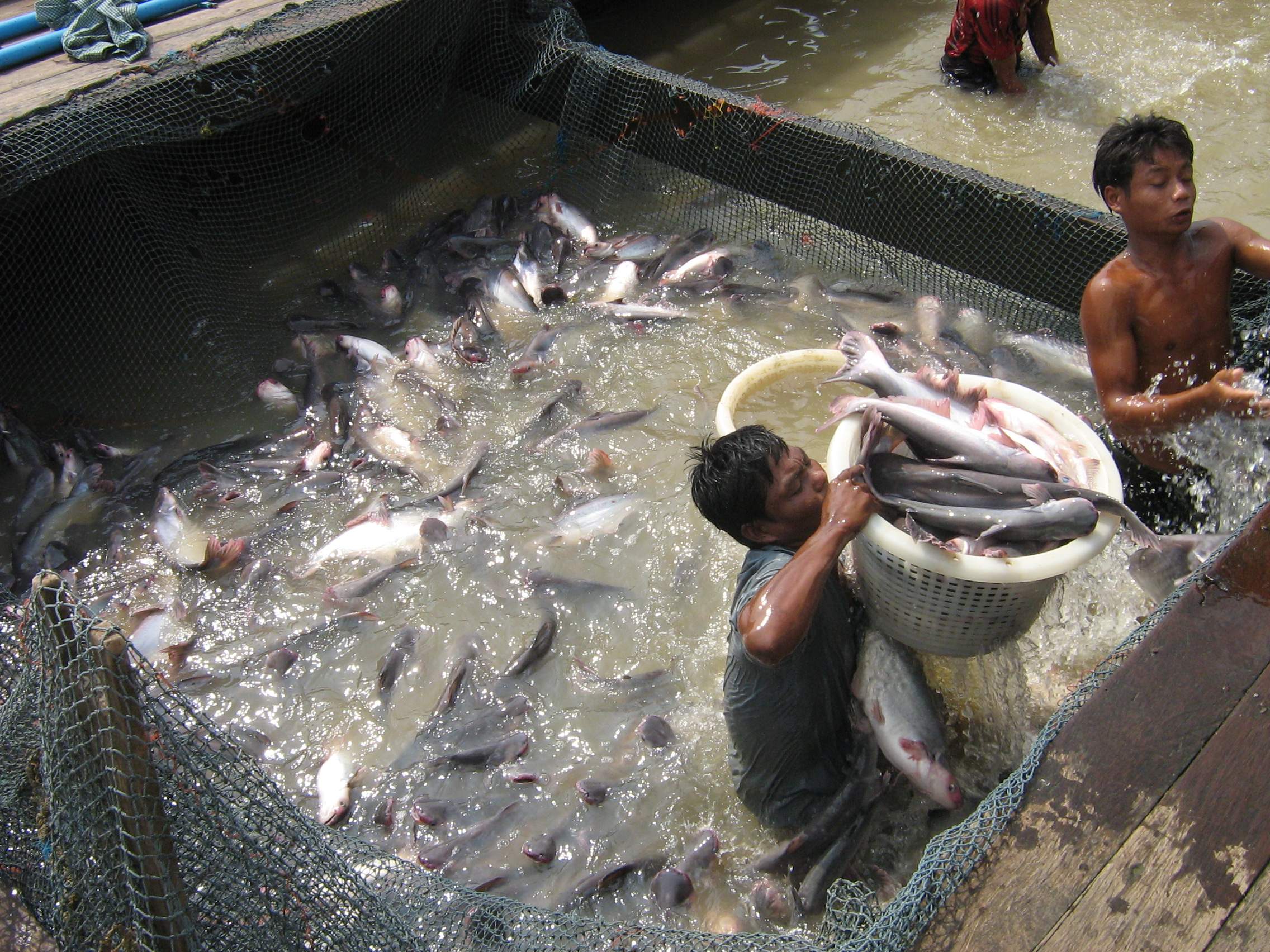
In the U.S., farmed salmon is one of the most popular seafood choices, with many being misled to believe it is a safe choice for dinner. In reality, while farmed salmon is not genetically engineered like AquaBounty’s frankenfish, it is still one of the worst seafood choices available in terms of pollutants and the environment. One of the major problems is that farmed salmon are typically raised in pens in the ocean, where their excrement and food residues are disrupting local marine life. The potential for escape is also high.

Even land-based salmon aquaculture is problematic, according to research published in Scientific Reports, which performed an analysis of four salmon aquacultures in Chile.10

The facilities, often described as CAFOs (concentrated animal feeding operations) of the sea, pump water from rivers into their hatcheries, then pump it back out to the river once it’s no longer clean. The researchers found the water is often contaminated with dissolved organic matter (DOM) — a mixture of liquid excrement, food residue and other salmon excretions, along with disinfectants and antibiotics.

The release of DOM into Chile’s rivers is causing significant ramifications for the entire ecosystem. Upstream of the fish farms, the researchers detected higher amounts of natural algae biofilms on rocks, which help to produce oxygen and provide food for organisms that fish later eat.

Downstream, however, biofilms had a greater abundance of bacteria, which use up oxygen and may lead to low-oxygen environments that could threaten many species. The researchers suggested that no additional fish farms should be installed on Chilean rivers, noting, “[R]ivers should not be misused as natural sewage treatment plants.”11

Viruses, Sea Lice From Farmed Salmon Threaten Wild Fish

Since farmed salmon pens are often placed along wild salmon runs, they pose a severe threat to wild salmon stocks that pass by, exposing wild fish to diseases that run rampant among the confined fish, such as sea lice, pancreas disease, infectious salmon anemia virus and piscine reovirus. Piscine reovirus is a highly contagious blood virus that causes heart disease in the affected fish.

The virus was first discovered in Norwegian salmon farms and has proven to be nearly impossible to eradicate. And, with the spread of this disease into wild populations, wild salmon may soon go extinct. Alexandra Morton, a Canadian marine biologist who has spent decades studying the impact of salmon farming on wild salmon, has also reported that sea lice from salmon farms are eating young wild salmon to death, while Canada’s Department of Fisheries and Oceans (DFO) has failed to take action.

In fact, an oceanic watchdog group recently reported a sea lice outbreak in Clayoquot Sound UNESCO Biosphere Reserve, located on the west coast of Vancouver Island in British Columbia, Canada.

Fish farms in the area had salmon lice up to 10 times higher than the rate that requires treatment, at numbers that could prove lethal to wild salmon. While DFO requires salmon farms to monitor and control sea lice via the use of chemicals in feed or hydrogen peroxide baths, the measures don’t appear to be working — and are toxic in and of themselves.

British Columbia has granted aquaculture company Cermaq Canada a permit to apply 2.3 million liters of Paramove 50, a pesticide, to 14 salmon farms in Clayoquot Sound in order to fight sea lice. Not only may the pesticide be toxic to other marine life such as Dungeness crab, prawns and herring, but it’s also known to suppress salmon immune systems, making them even more susceptible to viruses. In turn, wild salmon swimming by may be further exposed to deadly diseases.

“So just as the young salmon are passing by the farms, we could shock these farmed fish into getting PRV or that becoming HSMI (heart and skeletal muscle inflammation disease) which is deadly to wild salmon,” watchdog group Clayoquot Action Campaigns director Bonny Glambeck told The Narwhal.12 She continued in a news release:13

“This outbreak is an environmental disaster — we are seeing wild juvenile salmon carrying lethal loads of salmon lice … These fish have been given a death sentence … We don’t expect the new pesticides that they want to use will work. It’s not working in Norway right now. Studies show there is no way these fish will survive to spawn and reproduce … Basically the industry is unable to control sea lice. So that’s why we want to see these farms come out of the oceans.”

Tire Chemicals, PCBs Common in Farmed Salmon

Nutritionally speaking, farmed salmon are also a far inferior choice to the wild variety. For starters, their pens are often placed near shore, which means they’re close to land-based sources of pollutant runoff. In addition, they’re fed a diet of ground-up fishmeal, which may lead to concentrated levels of PCBs.

In a global assessment of farmed salmon published in the journal Science, PCB concentrations in farmed salmon were found to be eight times higher than in wild salmon.14 Similarly, when the Environmental Working Group (EWG) tested farmed salmon from U.S. grocery stores, they found farmed salmon had, on average:15

  • 16 times more PCBs than wild salmon
  • 4 times more PCBs than beef
  • 3.4 times more PCBs than other seafood

Further, ethoxyquin, developed by Monsanto in the 1950s, is a rubber stabilizer (used in the production of tires), pesticide, preservative and antioxidant all in one that’s often added to farmed salmon feed. While it doesn’t have the health benefits normally associated with dietary antioxidants, it does prevent oxidation of fats, which is why it’s used in different types of animal feed, including fish feed and pet food.16

But studies have also shown ethoxyquin adversely affects cell metabolism, especially the metabolic pathways of renal and hepatic cells in rats, and the mitochondria in bovine hearts and kidneys. Due to its potential toxicity, the EU has strict limits for ethoxyquin levels in fruits, nuts, vegetables and meat. However, since it was never intended for use in fish, and fish feed manufacturers never informed health authorities that they were using it, there are no limits on how much of the chemical is allowed in seafood.

On top of more toxins, farmed salmon lack the correct ratio of healthy fats that many people are seeking when eating a “healthy” fish meal. Half a fillet of wild Atlantic salmon contains about 3,996 milligrams (mg) of omega-3 and 341 mg of omega-6.17 Half a fillet of farmed salmon from the Atlantic contains just a bit more omega-3 — 4,961 mg — but an astounding 1,944 mg of omega-6;18 more than 5.5 times more than wild salmon.

While you need both omega-3 and omega-6 fats, the ratio between the two is important and should ideally be about 1-to-1. The standard American diet is already heavily skewed toward omega-6, thanks to the prevalence of processed foods, and with farmed salmon, that unhealthy imbalance is further magnified rather than corrected.

Choose Wild Salmon for Your Health — and the Environment

If you’re wondering how can you tell whether salmon is wild or farm-raised, the flesh of wild sockeye salmon is bright red, courtesy of its natural astaxanthin content. It’s also very lean, so the fat marks, those white stripes you see in the meat, are very thin. If the fish is pale pink with wide fat marks, the salmon is farmed. Avoid Atlantic salmon, as typically salmon labeled “Atlantic Salmon” currently comes from fish farms.

The two designations you want to look for are “Alaskan salmon” and “sockeye salmon,” as Alaskan sockeye is not allowed to be farmed. So canned salmon labeled “Alaskan Salmon” is a good bet, and if you find sockeye salmon, it’s bound to be wild. As for GE salmon, if it comes to your grocery store it’s not currently slated to be labeled as such, but it’s another variety of Atlantic salmon, so steering clear of Atlantic salmon in favor of wild varieties will help you steer clear of adding this frankenfish to your dinner plate.

Survey Claiming Millennials Like GMOs Ridiculously Biased And Manipulated

(Natural Blaze by Heather Callaghan) Millennials lead the charge against GMOs and have more in common with their grandparents than their parents’ generation. Millennials are reviving the art of gardening, local food, and food preservation so it shouldn’t be surprising to find thousands of them at the March Against Monsanto. Yet a new survey is attempting to influence the public that it is millennials who love GMOs.

A new survey, according to the Telegraph, declared that “Millennials ‘have no qualms about GM crops’ unlike older generation”. Most people read headlines and headlines like this cast a major influence. All the propaganda is right in the title. First, it is falsely claiming that millennials have embraced genetic engineering of their food. Second, by mentioning the “older generation” and claiming they are against GMOs, the survey casts a subtle message that if you don’t accept GMOs you are stodgy and archaic, instead of hip and open-minded like the supposed millennials.

But is that what the survey was about at all??

Must Read: How to Avoid GMOs in 2018 – And Everything Else You Should Know About Genetic Engineering

GM Watch reports on the survey commissioned by the GM industry body, the Agricultural Biotechnology Council (ABC), carried out by the polling firm Populus. At first, the actual survey wasn’t made available with any links, which means journalists wrote articles without even checking. But then….:

…perhaps in response to queries from skeptical members of the public, Populus put the survey tables online, under “New Farming Techniques“.

It turns out that the skeptics were right. The questions were appallingly biased.

All the questions in the poll were preceded by some information: “Technology is increasingly being developed to tackle the challenges of 21st century farming and food security. Innovative techniques have been designed to provide the best possible data collection and management to allow greater precision across the food production process. The benefits of these techniques include: allowing more targeted weed, pest and disease control, reducing energy usage, delivering higher yields and overall allowing for more sustainable and productive farming. To what extent would you support or oppose the following farming techniques?”

This clearly is intended to suggest that all of the techniques people were then asked about deliver some or all of these benefits, but in the case of GM and gene editing, that is a matter of huge public controversy. So the introduction cannot by any stretch of the imagination be seen as a neutral piece of information.

Only after being given this information were people asked, in the GM question, what they thought about “Plant breeding using gene editing to make crops more nutritious, pest and disease resistant”.

Not only is the question biased but it is strange that the answers are interpreted as sweeping, uncritical support for GMO crops among millennials. “No qualms?” There was no room for qualms in the survey!

GM Watch says that Populus – a member of the British Polling Council – violated rules for conducting polls. A Council stipulation states that complete wording of the question asked must be made public the same time the survey results come out – not several days later, in this instance.

Recommended: Best Supplements To Kill Candida and Everything Else You Ever Wanted To Know About Fungal Infections

The Council says that a reputable organization ideally would not contain any serious bias in their questionnaire and “introduce bias into a survey by means of question-wording.”

By these standards, the survey should be held to the light for what appears to be some sneaky info maneuvering.

What would have happened if a decidedly anti-gmo group had manipulated data and presented it to the media the way that Populus has done?

First, Marijuana. Are Magic Mushrooms Next?

(Kaiser Health News by Barbara Feder OstrovIn Oregon and Denver, where marijuana is legal for recreational use, activists are now pushing toward a psychedelic frontier: “magic mushrooms.”

Groups in both states are sponsoring ballot measures that would eliminate criminal penalties for possession of the mushrooms whose active ingredient, psilocybin, can cause hallucinations, euphoria and changes in perception. They point to research showing that psilocybin might be helpful for people suffering from depression or anxiety.

“We don’t want individuals to lose their freedom over something that’s natural and has health benefits,” said Kevin Matthews, the campaign director of Denver for Psilocybin, the group working to decriminalize magic mushrooms in Colorado’s capital.

The recent failure of a nationally publicized campaign to decriminalize hallucinogenic mushrooms in California may not portend well for the psilocybin advocates in Oregon and Denver — though their initiatives are more limited than California’s.

Recommended: Less Opioid Prescriptions Where Marijuana Is Legal

The proposal in the Golden State would have decriminalized sales and transportation of magic mushrooms, not just possession. The proposed Denver measure would apply only to that city, while in Oregon mushroom use would be allowed only with the approval of a physician and under the supervision of a registered therapist.

None of the proposed initiatives envisions fully legalizing psilocybin mushrooms, which would allow the government to regulate and tax sales in a similar fashion to medical and recreational marijuana.

In Oregon, advocates face a steep climb to qualify their measure for the ballot, because such statewide initiatives typically require hiring paid signature gatherers, said William Lunch, a political analyst for Oregon Public Broadcasting and a former political science professor at Oregon State University.

Still, familiarity with recreational marijuana may have “softened up” voters and opponents of drug decriminalization, he said. Oregon legalized marijuana for recreational use in 2015, Colorado in 2012.

The Oregon and Denver activists, echoing Lunch, say they hope voters who already accepted pot would now feel comfortable decriminalizing personal use of magic mushrooms as well.

Taking mushrooms can lead to nausea, panic attacks and, rarely, paranoia and psychosis. But they generally are considered safer and less addictive than other illegal street drugs.

Even so, Paul Hutson, professor of pharmacy at the University of Wisconsin who has conducted psilocybin research, says he is wary of the drive for decriminalization. Psilocybin isn’t safe for some people — particularly those with paranoia or psychosis, he said.

Recommended: The Unique Mushroom that Balances Hormones

“I reject the idea that this is a natural progression from medical marijuana,” Hutson said, noting that the safety of pot is much better established. Mushrooms, he added, “are very, very potent medicines that are affecting your mind. In the proper setting, they’re safe, but in an uncontrolled fashion, I have grave concerns.”

Kevin Matthews is the campaign director of Denver for Psilocybin, the group working to decriminalize magic mushrooms in Colorado’s capital. (Courtesy of Kevin Matthews)

Even psilocybin advocates share Hutson’s concerns. “It is such a powerful compound. People should take it very seriously when experimenting,” Matthews said.

These efforts to legitimize hallucinogenic mushrooms come at a time of renewed interest in the potential mental health benefits of psychedelics, including mushrooms, LSD and MDMA (known as ecstasy). Two small studies published in 2016 by researchers from Johns Hopkins University and New York University found that a single large dose of psilocybin, combined with psychotherapy, helped relieve depression and anxiety in cancer patients.

A British company backed by Silicon Valley investor Peter Thiel plans clinical studies in eight European countries to test the use of psilocybin for depression. Other research has examined the effectiveness of psilocybin in treating alcohol and tobacco addiction.

In California, the campaign to decriminalize psilocybin was always a long shot — even though the famously liberal state legalized possession of recreational marijuana in November 2016 and sales starting this year.

California ballot measures typically require nearly 366,000 signatures to qualify, and supporters usually have to spend between $1 million and $2 million to pay signature gatherers. A Monterey County couple leading the decriminalization campaign managed to collect more than 90,000 signatures for their proposal with the help of volunteers, but they halted their efforts late last month.

The initiative would have exempted Californians 21 and over from criminal penalties for possessing, selling, transporting or cultivating psilocybin mushrooms.

Recommended: Three Easy Mushroom Varieties To Grow at Home

Possessing them is generally a misdemeanor under California law, but selling them is a felony. State statistics on psilocybin offenses are scarce, but few people are jailed for such crimes, according to an analysis by the California attorney general’s office.

“It’s not a reckless community,” said Kitty Merchant of Marina, Calif., who spearheaded the California psilocybin campaign alongside her husband, Kevin Saunders. “It’s experimentation with your mind and your thoughts. There’s a safeness to it. And there’s an intelligence to it.”

Merchant said she and Saunders, both medical marijuana advocates, spent about $20,000 of their own money on the campaign.

In Denver, Matthews and his pro-psilocybin colleagues want voters to pass a city ordinance eliminating criminal penalties for possessing, using or growing magic mushrooms. City officials have cleared the measure for signature gathering. Supporters need 5,000 signatures to get it on the ballot in November. Matthews said he has already lined up dozens of volunteer signature gatherers.

He said he has used mushrooms to help alleviate depression and other mental health problems. A big part of the decriminalization campaign, he said, is promoting responsible use.

Tom and Sheri Eckert are working to decriminalize hallucinogenic mushrooms in Oregon, but only under the supervision of a therapist. (Courtesy of Tom Eckert)

Denver, a progressive city in a state that was the first to legalize recreational marijuana, “is a good testing place for this initiative nationwide,” Matthews said. Just getting it on the ballot, whether or not it passes, would be “a huge victory,” he added.

In Oregon, activists are proposing a measure for the 2020 ballot that would decriminalize psilocybin statewide for adults 21 and over who get approval from their doctors and agree to participate in a “psilocybin service.” The service would include a preparatory meeting with a therapist, one session of supervised mushroom use and a follow-up visit. Patients would be under the care of state-certified “Psilocybin Service Facilitators.”

Tom Eckert, a Portland, Ore.-based therapist who leads the psilocybin decriminalization campaign with his wife, Sheri, said the proposed limitations on psilocybin use are important.

“Psilocybin is generally safe, but it puts you in a vulnerable state of mind,” he said. “If you do it in the wrong setting, things can go sideways.”

This story was produced by Kaiser Health News, which publishes California Healthline, a service of the California Health Care Foundation.