Interested In Muscle? Eat Whole Eggs Rather Than Egg Whites

(Natural Blaze by Natasha Longo) Egg yolks contain over 80 percent of the overall vitamins and minerals that can be found within the egg as a whole. The yolk also contains enzymes which help the body absorb the protein in the white. People who consume protein from whole eggs or from egg whites after engaging in exercise differ dramatically in how their muscles build protein, a process called protein synthesis, during the post-workout period, researchers report in a new study.

For years, this misunderstood food — low in calories, containing every single vitamin (A, B, D, E, K) except C, and nearly perfect in protein — was once shunned for threats to cholesterol intake.

Specifically, the post-workout muscle-building response in those eating whole eggs is 40 percent greater than in those consuming an equivalent amount of protein from egg whites, the team found.

The discovery, reported in the American Journal of Clinical Nutrition, suggests that the widespread practice of throwing away egg yolks to maximize one’s dietary protein intake from eggs is counterproductive, said Nicholas Burd, a University of Illinois professor of kinesiology and community health who led the research. The USDA National Institute of Food and Agriculture Hatch project supported this research.

The yolks also contain protein, along with key nutrients and other food components that are not present in egg whites, Burd said. And something in the yolks is boosting the body’s ability to utilize that protein in the muscles.

Egg yolks actually contain all the healthy, fatty acids that are contained within the egg. It is a nucleus of wholesome goodness that supplied our ancestors with their sustenance since before they were upright. When you strip away the egg yolk and eat only the white, you’re completely missing out on the benefits of those fatty acids like the Omega-3 fats.

Another reason to avoid separating the egg from the yolk relates to biotin. Avidin is a component in egg whites that bonds with biotin, preventing the nutrient’s absorption.

“This study suggests that eating protein within its most natural food matrix tends to be more beneficial to our muscles as opposed to getting one’s protein from isolated protein sources,” he said.

In the study, 10 young men engaged in a single bout of resistance exercise and then ate either whole eggs or egg whites containing 18 grams of protein. Researchers administered infusions of stable-isotope-labeled leucine and phenylalanine (two important amino acids) to participants. This allowed the scientists to maintain and precisely measure amino acid levels in participants’ blood and muscles.

The U. of I. Poultry Research Farm developed eggs for the study that also were isotopically labeled with leucine. This allowed for precise tracking of where the food-derived amino acids ended up after participants ingested them.

The team took repeated blood and muscle biopsy samples to assess how the egg-derived amino acids were appearing in the blood and in protein synthesis in muscles before and after the resistance exercise and eating.

“By using those labeled eggs, we saw that if you ate the whole egg or the egg whites, the same amount of dietary amino acids became available in your blood,” Burd said. “In each case, about 60 to 70 percent of the amino acids were available in the blood to build new muscle protein. That would suggest that getting one’s protein from whole eggs or just from the whites makes no difference, as the amount of dietary amino acids in the blood after eating generally gives us an indication of how potent a food source is for the muscle-building response.”

But when the researchers directly measured protein synthesis in the muscle, they found a very different response.

“We saw that the ingestion of whole eggs immediately after resistance exercise resulted in greater muscle-protein synthesis than the ingestion of egg whites,” Burd said.

Previous studies suggest this difference has nothing to do with the difference in energy content of whole eggs and egg whites — whole eggs containing 18 grams of protein also contain about 17 grams of fat, whereas egg whites have no fat. Studies from Burd’s lab and others show that simply adding fat to an isolated protein source in the diet after exercise does not boost protein synthesis.

“There’s a lot of stress on protein nutrition in modern society, and research is showing that we need more protein in the diet than we once thought to maintain health,” Burd said. “As world population grows, we need cost-effective and sustainable strategies for improving the use of protein in the diet. This work is showing that consuming egg protein in its natural matrix has a much greater benefit than getting isolated protein from the same source.”

Recommended:

Drug Companies Responsible for Massive Environmental Pollution

(Dr. Mercola) Environmental pollution is a tremendous concern, and the sources of toxic pollution are many. One source that has managed to skirt below the radar is the drug industry.1,2,3,4 In 2016, the nonprofit foundation Changing Markets issued a report on “Impacts of Pharmaceutical Pollution on Communities and Environment in India,”5 on behalf of Nordea Asset Management, a major investment firm in Sweden.

According to this report, the severe water pollution problem in India can be, to a significant extent, traced back to the generic drug industry. Between 2010 and 2015, the number of contaminated waterways in India more than doubled, and by 2015, more than half of the nation’s rivers were polluted. India’s low cost of manufacturing has lured a number of drug companies to set up shop, congregating in the city of Hyderabad and along the Andhra Pradesh coastline.

Recommended Reading: How to Detoxify From Antibiotics and Other Chemical Antimicrobials

According to a recent economic survey by the Finance Ministry of India, Hyderabad’s drug industry accounts for nearly half of the country’s drug exports.6 “Outsourcing of production to the emerging markets, where labor is cheap, workforces skilled and environmental standards lax, has now become second nature for the pharmaceutical majors, many of which are based in the United States and Europe,” the report noted.

The report also stressed that there’s a disturbing lack of transparency within the drug industry about the origin of active ingredients and the finished drugs, and that while regulators “who could easily demand greater transparency from the drug industry, have so far shied away from taking action.”

New Report Calls Renewed Attention to India’s Pollution Crisis

In a follow-up report,7 the Changing Markets Foundation now calls renewed attention to the pollution crisis in Hyderabad, with a focus on heavy metal and other toxic waste pollution created by the “bulk drug” industry operating in India.

Based on visits to the area, interviews with experts and locals, and analysis of published research and media articles, the report concludes that drug companies in Hyderabad continue to “discharge untreated or inappropriately treated wastewater into the environment and that local and national authorities are failing to get the situation under control.”

In fact, in the two years since the publication of the first report, the situation in Hyderabad has deteriorated further. What’s worse, plans to expand drug production in the city, combined with a lack of regulations to control toxic waste emissions, makes for “a grim future” for local residents in the area, the report warns.

In addition to the release of untreated effluent, local media investigations have revealed the practice of illegal toxic waste dumping, where drug companies are discarding hazardous waste under the cover of night, using unmarked vehicles.8,9 Mass die-offs of fish have also made headlines, and the dead fish were found to contain toxic solvents used during the drug manufacturing process.

Source: Changing Markets Foundation, 

Hyderabad’s Pharmaceutical Pollution CrisisWater sampling near drug factories in the area, collected in September 2017, reveal significant amounts of heavy metals — including leadmercury, copper, cadmium, vanadium, hexavalent chromium, nickel, zinc and arsenic — as well as toxic industrial solvents, are being released into the city’s waterways.

“In some cases, these were found to be present at extremely high concentrations, orders of magnitude higher than maximum regulatory limits or safe exposure levels, which points to substantial human and ecological risk potential,” the report states, adding “The mere presence of some of these substances is cause for alarm given their extreme toxicity.”

Antibiotic Production Poses Grave Risks

The report also highlights previous studies showing factories manufacturing antibiotics pose a grave risk by fueling antibiotic resistance in the environment. Antibiotic pollution is a problem not only in India, but also in China, Pakistan, Korea, Denmark, Norway and Croatia, and promotes the development of drug-resistant pathogens.

In November 2016, German researchers collected water samples from “the direct environment of bulk drug manufacturing facilities, the vicinity of two sewage treatment plants, the Musi River and habitats in Hyderabad and nearby villages.”10

Twenty-eight sampling sites were surveyed, and the water samples were analyzed for 25 anti-infective pharmaceuticals as well as multidrug-resistant pathogens and certain resistance genes. Disturbingly, all of the samples were contaminated with antimicrobials, including high concentrations of moxifloxacin, voriconazole and fluconazole. Area sewers also contained elevated concentrations of eight other antibiotics.

Some of the water samples contained antimicrobials at levels up to 5,500 times higher than the environmental regulation limit. What’s more, more than 95 percent of the samples also contained multidrug-resistant bacteria and fungi. The researchers called the contamination “unprecedented” and blamed it on “insufficient wastewater management by bulk drug manufacturing facilities, which seems to be associated with the selection and dissemination of carbapenemase-producing pathogens.”

Toxic Antibiotics Pollute India’s Waterways and Farmland

What happens is that during the drug manufacturing process, significant quantities of antibiotics are flushed out into wastewater, which then find its way into rivers, drinking water and farmland. The Patancheru water treatment plant, located near Hyderabad, receives 400,000 gallons of wastewater from 90 drug companies each day. All of this manufacturing effluent is combined with domestic wastewater, less than 25 percent of which actually undergoes treatment.

Swedish researchers, who have studied and published environmental reports about Hyderabad since 2007, have reported that some drug levels found in wastewater are higher than what is found in patients’ blood.11 The worst water contaminant detected was the antibiotic ciprofloxacin, which was found at a concentration high enough to give 44,000 people a full course of treatment.

Cipro is a fluoroquinolone antibiotic, a class of synthetic antibacterial drugs that directly inhibit bacterial DNA synthesis, and has been linked to permanent nerve damage in some patients. Due to their tremendous health risks, fluoroquinolones should be reserved for treating serious bacterial infections that will not respond to any other treatment. The idea that Cipro is being disseminated at those levels into the environment and people’s drinking water is disconcerting, to say the least.

Antibiotic Pollution Promotes Spread of Drug-Resistant Genes

Researchers have also confirmed that this wastewater is toxic to a number of organisms, and promotes drug-resistant genes. DNA samples taken downstream from drug manufacturing facilities reveal nearly 2 percent of the samples contain drug-resistant genes. Aside from direct ingestion, contaminated wastewater also finds its way onto crop fields via irrigation and sludge (biosolids) used as fertilizer.

In this way, drug-resistant genes are spread, shared and multiplied throughout the environment. A 2013 paper12 published in Environmental Health Perspectives addresses management options for reducing antibiotics and drug-resistant genes into the environment — such as safe disposal practices, wastewater and biosolid treatment, limiting agricultural and aquacultural use of antibiotics — and using alternatives to antibiotics whenever possible. But, so far, regulators and the industry itself have done virtually nothing.

Indian Drug Manufacturers May Lose European Supply Contracts

According to Changing Markets, Indian drug manufacturers who fail to clean up their act may soon lose their competitive advantage though. According to the report:13

“European NGOs have recently called for major procurement bodies, including the U.K.’s National Health Service, German health insurance companies, and French hospitals, to blacklist the worst-offending polluters and embed environmental criteria in all the contracts with pharmaceutical suppliers. Several of these organizations are now reviewing the situation. In Sweden, the country’s regions have come together and introduced environmental criteria and audits in their contracts.”

Sasja Beslik, who heads Nordea’s Group Sustainable Finance, also warned that “The pharmaceutical industry has to take action to tackle pollution at Indian factories supplying medicines to the global market,” adding that Nordea is willing to “continue the engagement with the pharma industry in order to find constructive and concrete solutions for these significant challenges that are impacting millions of people and the environment.”14 Changing Markets’ campaign manager Natasha Hurley also stressed that:15

“Multinational pharmaceutical companies which outsource API [active product ingredient] production to India to cut costs and maximize profits have a responsibility to take rapid action to put a stop to pollution in their supply chains.

Given the lack of transparency within the industry and the slow progress the global pharma giants have made on this to date, it is of paramount importance that regulators introduce environmental criteria that guard against such bad practices, both at national and international level.”

Pollution From Drug Manufacturing — A Supply Chain Problem That Must Be Tackled

According to the report, pollution from drug manufacturing has been “clearly exposed as a supply chain problem,” and the answer lies in holding drug companies responsible for their supply chains. While some have started taking steps in the right direction, “the industry and regulators are not moving fast enough to address the threat,” Changing Markets warns, saying that multinational drug companies that outsource production of active ingredients to India must step up and “take rapid action to end pollution within their supply chain.”

Regulatory agencies and medical agencies must also add environmental criteria to the good manufacturing practices standards, to prevent uncontrolled pollution within drug manufacturing. It’s a truly sad irony that millions of people in India are being poisoned by the very industry producing “lifesaving” medication for the rest of the world.

On a personal level, there’s not much you can do about this state of affairs. Governments and the drug industry need to address these problems head on, and hopefully Nordea’s push to hold drug companies accountable will have a marked effect.

Cleaning Up Your Own Household

That said, it’s important to remember that pollution is a global problem, and that pollutants don’t stay in any one area. Toxins and drug-resistant pathogens in India’s waterways spread far and wide. As noted in a 2008 report16 by the U.S. Centers for Disease Control and Prevention, multidrug-resistant E.coli bacteria have even been found in the Arctic; brought there by migrating birds!

So, no matter where you live, it would be wise to consider the purity of both your food and water. Also be mindful of not adding to the problem yourself. Never dispose of unused drugs by flushing them down the drain or toilet. It’s also inadvisable to throw them out in your garbage, as then they just end up in a landfill. For guidance on proper drug disposal, see this previous article.

Unfortunately, toxic biosolids may be used even in organic farming, and may be found in USDA 100 percent organic compost, mulch and potting soil for use in your own backyard. These products do not need to disclose the presence of biosolids, but some companies will list “milogranite” on the label, which means it contains toxic biosolids.

Your best alternative is to contact your local nursery and ask them if they use biosolids in their compost. Another alternative is to make your own, using a composting bin or wood chips for example. When it comes to buying organic food, the only way to find out if biosolids were used is to talk to the farmer.

Lastly, consider installing a high-quality water filtration system in your home, as drugs are a commonly occurring contaminant just about everywhere. The reason for this is because water treatment facilities are not equipped to filter these substances out. For more information and guidance on water filtration, see “How to Properly Filter Your Water.”

 Recommended Reading:

Are Homeopathic Products Now Illegal?

(By Dr. Mercola) About 5 million U.S. adults and 1 million U.S. children use homeopathy every year, and the remedies are known to be “generally safe and unlikely to cause severe adverse reactions,” according to the U.S. National Institutes of Health’s National Center for Complementary and Integrative Health.1 Yet, if the U.S. Food and Drug Administration (FDA) continues on its latest crusade, this natural health modality may soon be much harder to come by.

In a draft guidance document released in December 2017, the FDA takes aim at homeopathic remedies, or as they put it, “drug products labeled as homeopathic.”23 In a reversal of a long-standing decision to treat homeopathic remedies differently from other drugs, the FDA has now labeled virtually all of these products as “new drugs” that are “subject to FDA enforcement action at any time.”

Recommended: Sugar Leads to Depression – World’s First Trial Proves Gut and Brain are Linked (Protocol Included)

FDA Declares Homeopathic Drugs Illegal, Plans to Ramp up Enforcement Actions

While deaths from drugs like opioids are now a public health crisis, homeopathy has maintained a much lower, and presumably safer, profile. Yet, the FDA is using its limited resources to target the latter, citing a need to “protect consumers who choose to use homeopathic products.” Why now? The FDA also cited a “large uptick in products labeled as homeopathic that are being marketed for a wide array of diseases and conditions,” to the extent that homeopathic products are now a close to $3 billion industry.4

Perhaps that’s $3 billion too much for Big Pharma, FDA’s cozy partner in crime. “[I]n one fell swoop, the FDA has declared that virtually every single homeopathic drug on the market is being sold illegally,” the Alliance for Natural Health USA (ANH USA) wrote5 — and it’s not an exaggeration. In essence, the FDA’s guidance reads:6

  1. Any homeopathic drug that has not been considered “generally recognized as safe and effective” (GRAS/E) is considered a new drug
  2. FDA has not determined that any homeopathic drugs are GRAS/E
  3. A new drug cannot be marketed unless it goes through the FDA’s approval process
  4. No homeopathic drugs have gone through FDA approval nor can any producer afford to take them through the approval process

The FDA then states that it’s proposing a “new, risk-based enforcement approach” and first plans to target the “unapproved drug products labeled as homeopathic that have the greatest potential to cause risk to patients.” This includes:7

Recommended: Detox Cheap and Easy Without Fasting – Recipes Included
Products with reported safety concerns Products that contain or claim to contain ingredients associated with potentially significant safety concerns
Products for routes of administration other than oral and topical Products intended to be used for the prevention or treatment of serious and/or life-threatening diseases and conditions
Products for vulnerable populations Products that do not meet standards of quality, strength or purity as required under the law

FDA Does About-Face, ‘Penalizes an Entire Industry’

The draft guidance is a complete turnaround from the FDA’s prior stance on homeopathic remedies, which stated, under the 1988 Compliance Policy Guide (CPG) 400.400, Conditions Under Which Homeopathic Drugs May be Marketed, they did not need to get FDA approval prior to coming on the market. Instead, the ingredients in homeopathic remedies were to be verified by the Homeopathic Pharmacopoeia of the United States (HPUS). As noted by law firm Venable:8

Essentially, the HPUS creates a monograph for homeopathic drugs to follow, not dissimilar to the OTC drug monographs that FDA has developed for allopathic drugs. Accordingly, by virtue of an ingredient’s inclusion in the HPUS, the ingredient has already been closely examined and determined to be safe and effective by the HPCUS [Homeopathic Pharmacopoeia Convention of the United States].

Compliance with the HPUS functions as a premarket review of safety and effectiveness in the homeopathic context. By classifying homeopathic drugs as unapproved new drugs, the FDA is requiring a second showing of safety and effectiveness, a step that is unnecessary, not to mention impractical, given that the Agency intends to hold homeopathic products to an allopathic standard that is inappropriate, given the nature of homeopathic products.”

Further, it was by the FDA’s own deliberate decision that homeopathic drugs were excluded from former drug approval processes and intended to be a separate category. Venable continued:9

“The FDA deliberately excluded homeopathic drugs from both the Drug Efficacy Study Implementation (DESI) review (the process by which all drugs approved between 1938 and 1962 were retrospectively evaluated by the FDA for effectiveness) and the OTC Drug Review in 1972 (the process used to develop OTC drug monographs for allopathic drugs), deciding instead in the latter case to regulate homeopathic products separately because of their uniqueness.

By withdrawing the CPG and classifying all homeopathic drugs as unapproved drugs subject to FDA drug approval, the FDA is now requiring higher regulatory thresholds for OTC homeopathic drugs than are applicable to allopathic OTC drugs, many of which are permitted to be sold pursuant to the FDA monograph system. This move in effect penalizes an entire industry for the Agency’s 1972 decision.”

Recommended: Start Eating Like That and Start Eating Like This – Your Guide to Homeostasis Through Diet

FTC Targeted Homeopathy in 2016

The FDA isn’t the first government agency to target this centuries’ old natural medicine system. In a notice filed in November 2016, the FTC stated that in order for homeopathic remedies to claim they are effective, their makers must provide proof. If no proof is provided, the remedies must state there is “no scientific evidence that the product works.”

In order to not mislead consumers, the FTC further stated that homeopathic remedies lacking sufficient proof must communicate to consumers that “the product’s claims are based only on theories of homeopathy from the 1700s that are not accepted by most modern medical experts.”10 Dana Ullman, MPH, CCH, one of the leading advocates for homeopathy in the U.S., said at the time:11

“Considering the longtime safety history of homeopathic medicines, it is surprising and even shocking that the FTC would consider proposing new regulations now.

One cannot help but wonder who or what is pulling their strings … policies … commonly result from powerful economic forces at play … it is clear that this governmental agency is ignoring important scientific evidence, and one must wonder if they are protecting Big Pharma from competition more than protecting the consumer.”

Does Homeopathy Work?

Based on the theory that “like cures like,” or the Law of Similars, homeopathy was founded by German physician Dr. Samuel Hahnemann. The idea is that health conditions can be healed by treating a person with minute doses of a substance that would produce similar symptoms to their health condition if given in larger doses.

Homeopathy’s other guiding principle is that of the minimum dose, which is based on the premise that the more a substance is diluted, the more potent homeopathic remedy it becomes, known as the “law of infinitesimals.” Homeopathic remedies may be made from plants, minerals or other substances and are commonly administered in pellet form, dissolved under the tongue. A number of intriguing studies suggest homeopathy is effective and safe for a variety of ailments, including flu. According to Ullman:

“The use of a homeopathic medicine called Oscillococcinum is an example of a remedy that can be effective for many people with the flu, though clinical experience suggests that it is most effective when used within 48 hours of getting flu symptoms. Although most homeopathic medicines are made from the plant or mineral kingdom, Oscillococcinum is unusual in that it is made from the heart and liver of a duck.”

Recommended: How to Make the Healthiest Smoothies – 4 Recipes

In one study, nearly twice as many patients who were given Oscillococcinum recovered from the flu within 48 hours as those given a placebo.12 Further, Ullman noted:

A different group of researchers conducted a randomized, double-blind study involving 372 patients (188 treated with Oscillococcinum and 187 with placebo) of both sexes, ranging in age from 12 to 60, who presented rectal temperature ≥ 100.4 F, muscle pains, headache, or at least one of the following symptoms: shivering, chest pain, spine pain, coughing, irritation of nasal mucosa or feeling of malaise.13

Patients received three tubes of Oscillococcinum or placebo each day (morning, noon and night) for three days. The results of this trial show a highly statistically significant difference between the two groups, for what concerns disappearance of symptoms after 48 hours (19.2 percent in the Oscillococcinum group versus 17.1 percent in the placebo group) and improvement in symptoms (43.7 percent versus 38.6 percent for placebo).”

Additional research shows homeopathy’s promising role in the following conditions:

In patients with allergies, those using homeopathy reported improvements in nasal airflow compared with a placebo group.

With homeopathic treatment, the researchers described a “clear, significant and clinically relevant improvement in nasal inspiratory peak flow, similar to that found with topical steroids.”14

Homeopathy significantly reduced the severity and duration of chemotherapy-induced stomatitis (swelling and sores in the mouth) in children.15
Homeopathic medicine was effective in treating acute childhood diarrhea, decreasing both the duration of the diarrhea and the number of stools per day.16,17 Homeopathy has positive effects in children with attention deficit hyperactivity disorder (ADHD), particularly in the areas of behavioral and cognitive functions.18
Homeopathy lessened tender point pain and improved quality of life in people with fibromyalgia.19 Homeopathic was effective in treating the early stages of vitiligo in a report of 14 cases20

FDA Continues to Crack Down on Natural Substances, Protect Big Pharma

The FDA’s new push to regulate homeopathic products is eerily reminiscent of their recent crackdown on the plant kratom. Leaves from the kratom tree have been used for pain relief for hundreds of years, but scientists now know they contain compounds that target the brain similarly to opioids, helping to relieve pain. It appears the plant may be safer than opioids for pain relief and could even act as a tool to help those suffering from opioid withdrawal.

Recommended: Holistic Guide to Healing the Endocrine System and Balancing Our Hormones

In November 2017, however, rather than targeting the prescription opioids that are the root of the opioid epidemic, the FDA issued a public health advisory regarding risks associated with kratom use, suggesting that its usage could “expand the opioid epidemic.” What this comes down to, for some, is the right to choose what form of “medicine” to put in your body. As Dr. Lee Hieb, an orthopedic surgeon and past president of the Association of American Physicians and Surgeons, wrote in WND:21

“I’m not here to tout any particular over-the-counter remedy, but who gave the FDA total ability to limit what we can take into our bodies, while virtually forcing us to be given what they prescribe? It’s none of their business whether a ‘homeopathic remedy’ is worthless.

That’s an issue of commerce and truth in advertising. I, for one, want the freedom to research and decide for myself what supplements to take, even if my supplements ultimately do me no good. (Many do a great deal of good as Big Pharma knows only too well.)”

People have the right to choose their treatment, and doctors (many of whom admit to prescribing placebos to their patients) also retain the right to offer treatments they deem useful, whether it be homeopathy or another remedy.

As for the FDA’s new draft guidance on homeopathic drugs, it’s attempting to discredit such remedies’ proven healing powers before their mechanisms of action have even been fully understood. If you want to express your opinion on the matter, the FDA is accepting comments from the public until March 30, 2018.

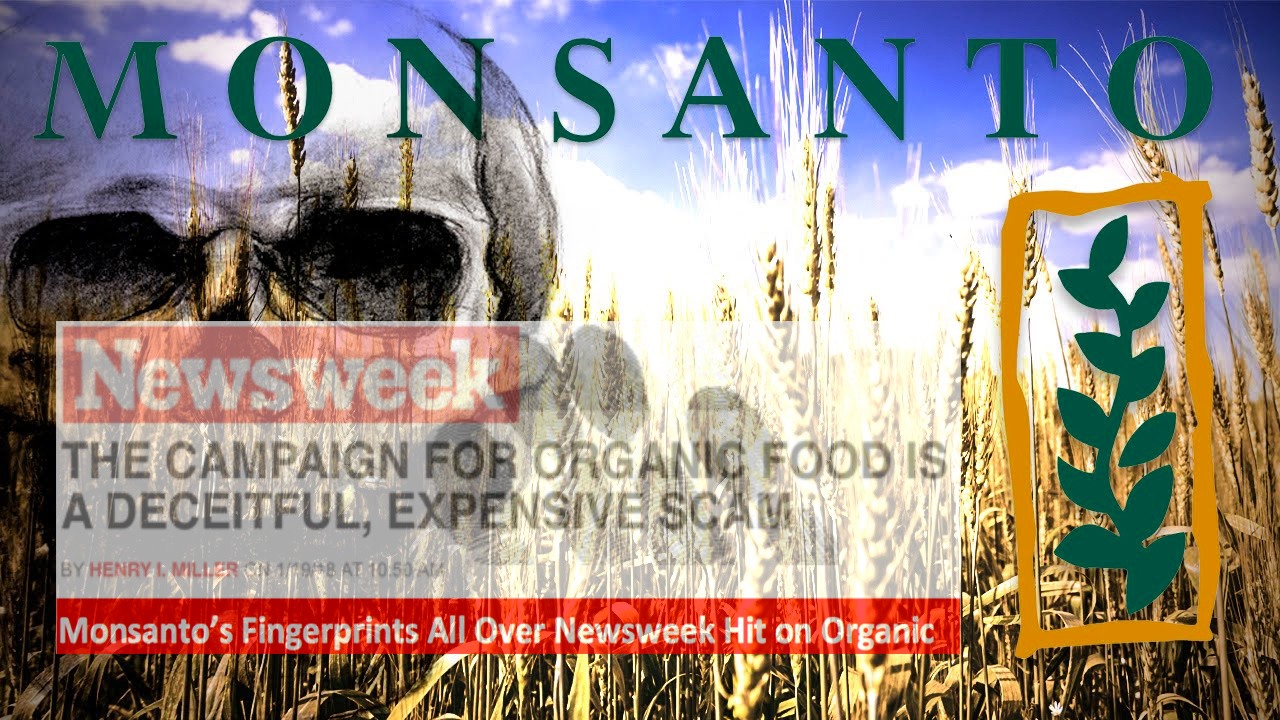
Monsanto’s Fingerprints All Over Newsweek’s Hit on Organic Food

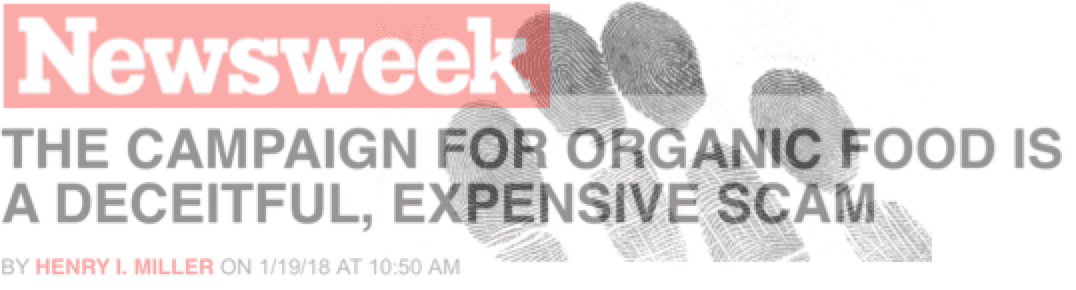
(USRTK by Stacy Malkan) “The campaign for organic food is a deceitful, expensive scam,” according to a Jan. 19 Newsweek article authored by Dr. Henry I. Miller of the Hoover Institution.

If that name sounds familiar – Henry I. Miller – it may be because the New York Times recently revealed a scandal involving Miller: that he had been caught publishing an article ghostwritten by Monsanto under his own name in Forbes. The article, which largely mirrored a draft provided to him by Monsanto, attacked the scientists of the World Health Organization’s cancer panel (IARC) for their decision to list Monsanto’s top-selling chemical, glyphosate, as a probable human carcinogen.

Update: Newsweek’s bizarre response

Recommended: Sugar Leads to Depression – World’s First Trial Proves Gut and Brain are Linked (Protocol Included)

Reporting on an email exchange released in litigation with Monsanto over cancer concerns, the Times’Danny Hakim wrote:

“Monsanto asked Mr. Miller if he would be interested in writing an article on the topic, and he said, ‘I would be if I could start from a high-quality draft.’

The article appeared under Mr. Miller’s name, and with the assertion that ‘opinions expressed by Forbes Contributors are their own.’ The magazine did not mention any involvement by Monsanto in preparing the article …

Forbes removed the story from its website on Wednesday and said that it ended its relationship with Mr. Miller amid the revelations.”

The opinion wire Project Syndicate followed suit, after first adding a disclaimer to Miller’s commentaries noting that they would have been rejected if his collaboration with Monsanto had been known.

Desperate to Disparage Organic

The ghostwriting scandal has hardly slowed Miller down; he has continued to spin promotional content for the agrichemical industry from outlets such as Newsweek and The Wall Street Journal, without disclosing to readers his relationship with Monsanto.

Yet Miller’s Newsweek hit on organic food has Monsanto’s fingerprints in plain sight all over it.

For starters, Miller uses pesticide industry sources to make unsubstantiated (and ludicrous) claims about organic agriculture – for example, that organic farming is “actually more harmful to the environment” than conventional agriculture, or that organic allies spent $2.5 billion in a year campaigning against genetically engineered foods in North America.

Recommended: Detox Cheap and Easy Without Fasting – Recipes Included

The source on the latter inaccurate claim is Jay Byrne, a former director of corporate communications for Monsanto (not identified as such in the Newsweek article), who now directs a PR firm called v-Fluence Interactive.

Email exchanges reveal how Monsanto works with people like Jay Byrne – and with Byrne specifically – to push exactly this type of attack against Monsanto’s foes while keeping corporate involvement a secret.

According to emails obtained by my group US Right to Know, Byrne played a key role in helping Monsanto set up a corporate front group called Academics Review that published a report attacking the organic industry as a marketing scam – the exact theme in Miller’s Newsweek article.

Recommended: How to Make the Healthiest Smoothies – 4 Recipes

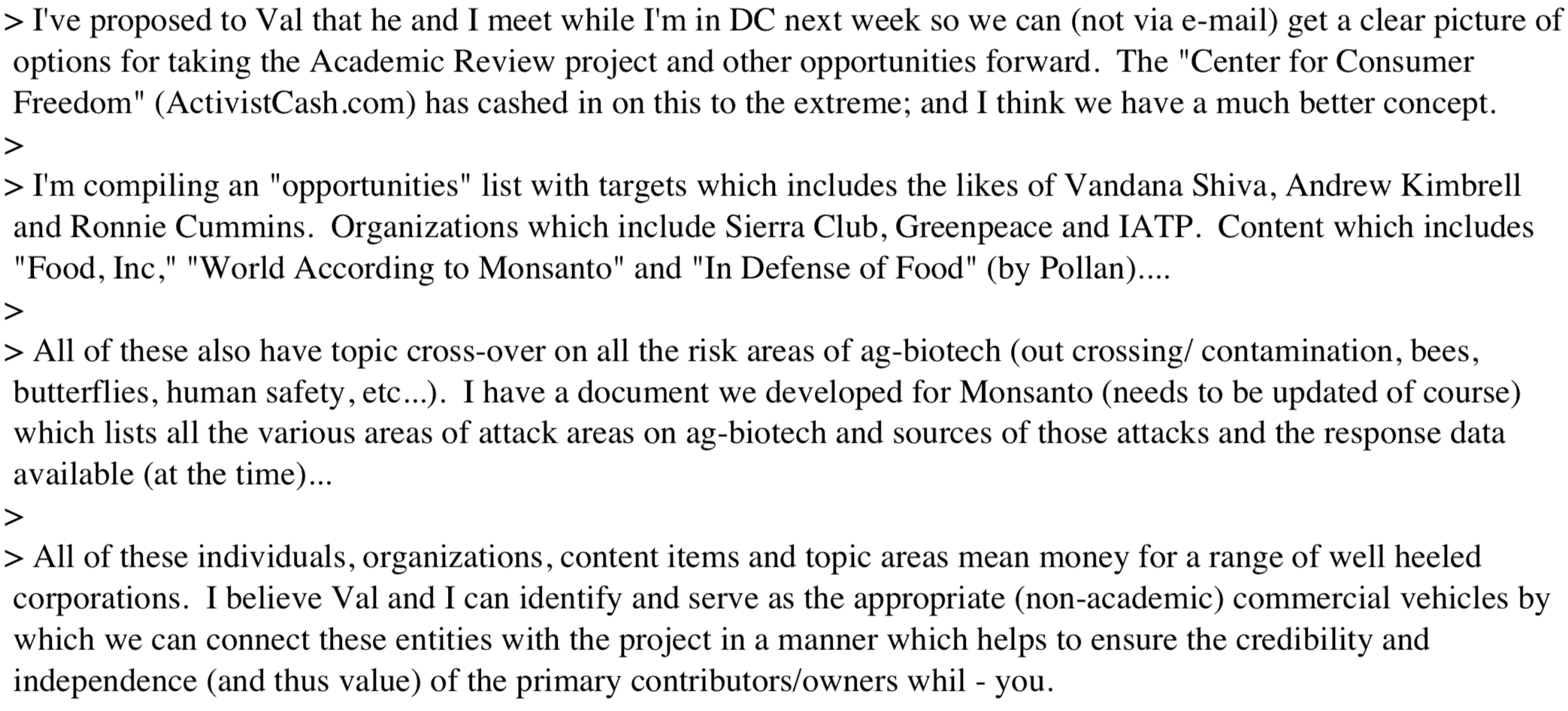
Jay Byrne’s hit list of Monsanto foes. 

The concept of the front group – explained in the emails I reported here – was to create a credible-sounding platform from which academics could attack critics of the agrichemical industry while claiming to be independent, yet secretly receiving funds from industry groups. Wink, wink, ha, ha.

“The key will be keeping Monsanto in the background so as not to harm the credibility of the information,” wrote a Monsanto executive involved in the plan.

Byrne’s role, according to the emails, was to serve as a “commercial vehicle” to help obtain corporate funding. Byrne also said he was compiling an “opportunities” list of targets – critics of the agrichemical industry who could be “inoculated” from the academics’ platform.

Several people on Byrne’s “opportunities” hit list, or later attacked by Academics Review, were targets in Miller’s Newsweek article, too.

Miller’s Newsweek piece also tried to discredit the work of New York Times’ reporter Danny Hakim, without disclosing that it was Hakim who exposed Miller’s Monsanto ghostwriting scandal.

Recommended: Start Eating Like That and Start Eating Like This – Your Guide to Homeostasis Through Diet

As with other recent attacks on the organic industry, all fingers point back to the agrichemical corporations that will lose the most if consumer demand continues to rise for foods free of GMOs and pesticides.

Monsanto’s “Independent Academic” Ruse

Henry Miller has a long history of partnering with – and pitching his PR services to – corporations that need help convincing the public their products aren’t dangerous and don’t need to be regulated.

And Monsanto relies heavily on people with scientific credentials or neutral-sounding groups to make those arguments – people who are willing to communicate the company script while claiming to be independent actors. This fact has been established by reporting in the New York TimesLe MondeWBEZ, the Progressiveand many other outlets in recent years.

A newly released Monsanto document provides more details about how Monsanto’s propaganda and lobbying operation works, and the key role Henry Miller plays within it.

This 2015 “preparedness plan” – released by lawyers in the glyphosate cancer lawsuits – lays out Monsanto’s PR strategy to “orchestrate outcry” against the IARC cancer scientists for their report on glyphosate. The first external deliverable: “Engage Henry Miller.”

The plan goes on to name four tiers of “industry partners” – a dozen trade groups, academic groups and independent-seeming front groups such as the Genetic Literacy Project – that could help “inoculate” against the cancer report and “protect the reputation … of Roundup.”

Miller delivered for Monsanto with a March 2015 article in Forbes – the article later revealed as Monsanto’s writing – attacking the IARC scientists. The industry partners have been pushing the same arguments through various channels again and again, ever since, to try to discredit the cancer scientists.

Much of this criticism has appeared to the public as a spontaneous uprising of concern, with no mention of Monsanto’s role as the composer and conductor of the narrative: a classic corporate PR hoodwink.

Recommended: Holistic Guide to Healing the Endocrine System and Balancing Our Hormones

As more documents tumble into the public realm – via the Monsanto Papers and public records investigations – the “independent academic” ruse will become harder to maintain for industry surrogates like Henry I. Miller, and for media and policy makers to ignore.

For now, Newsweek is not backing down. Even after reviewing the documents that substantiate the facts in this article, Newsweek Opinion Editor Nicholas Wapshott wrote in an email, “I understand that you and Miller have a long history of dispute on this topic. He flatly denies your assertions.”

Neither Miller nor Wapshott have responded to further questions.

Stacy Malkan is co-director of the consumer watchdog and transparency group, US Right to Know. She is author of the book, “Not Just a Pretty Face: The Ugly Side of the Beauty Industry” (New Society, 2007). Disclosure: US Right to Know is funded in part by the Organic Consumers Association which is mentioned in Miller’s article and appears on Byrne’s hit list.

Newsweek and USA Today Have Bizarre Standards for Opinion Writers

(USRTK by Stacy Malkan) Facts don’t matter in commentaries printed by Newsweek so long as the writer “seems genuine.” That’s the takeaway from a troubling email exchange with Newsweek Opinion Editor Nicholas Wapshott in response to concerns and questions I raised about a recent commentary attacking the organic industry.

The organic hit piece in Newsweek carried the byline of Henry I. Miller, who lost his platform at Forbes last year after the New York Times revealed that Miller had published an article in Forbes under his own name that was actually written by Monsanto.

In his recent Newsweek article, Miller spent several paragraphs attacking Danny Hakim, the New York Timesreporter who revealed that ghostwriting scandal; but Miller didn’t disclose to readers either the scandal or his collaborations with Monsanto.

Yet Monsanto’s fingerprints were all over Miller’s Newsweek article, as I reported here. Miller used pesticide industry sources to make false claims about organic farming and attacked people who were named on a target list that had been developed by Monsanto and Jay Byrne, Monsanto’s former director of corporate communications, who was quoted in Miller’s piece with no mention of the Monsanto affiliation.

None of this appears to bother Newsweek Opinion Editor Nicholas Wapshott, according to an on-the-record email exchange.

Miller ‘Flatly Denies’ Facts 

On Jan. 22, I emailed Wapshott to raise concerns that Newsweek continues to publish Miller’s commentaries without disclosing his relationship with Monsanto, and asked if he was aware that:

1) The New York Times reported in August that Miller had been caught publishing an article ghostwritten by Monsanto under his own name in Forbes, in violation of Forbes’ policy. Forbes ended its relationship with Miller and deleted all his articles from the site.

2) A 2015 internal Monsanto PR plan (recently released by lawyers involved in litigation against Monsanto) lists “Engage Henry Miller” as one of its first action items.

3) A source Miller used in his Newsweek article, Jay Byrne, is a former Monsanto employee (not identified as such). According to emails I reported here, Byrne worked with Monsanto to set up a front group of “independent” academics, secretly funded by industry, who attacked the organic industry as a “marketing scam,” the same theme in Miller’s Newsweek article.

4) Miller has a long history of partnering with – and pitching his PR services to – corporations that need help convincing the public their products aren’t dangerous and don’t need to be regulated.

Wapshott responded, “Hi Stacy, I understand that you and Miller have a long history of dispute on this topic. He flatly denies your assertions. Nicholas”

I wrote back to ask for clarification.

Hi Nicholas, to clarify:

Miller denies he published a column ghostwritten by Monsanto under his own name in Forbes and that Forbes has since deleted all his articles? (NYT story, Retraction Watch story)

Miller denies the Monsanto’s PR plan to address the IARC cancer rating of glyphosate lists “Engage Henry Miller” on page 2, item 3?

Miller denies that Jay Byrne, the former Monsanto employee not identified as such in his Newsweek article, was involved with setting up Academics Review as a front group? (Byrne has not denied writing these emails.)

Miller and I have disagreed yes, we were on opposite sides of a political campaign to label GMOs, but the above facts are facts, and provable. Do you think it’s fair to your readers to continue to publish his work without disclosing his ties to Monsanto?

Wapshott responded, “I think so. I have met Miller and he seems genuine. And I find it hard to believe that his flat denial is a lie. We would need a full trial to determine the truth and those resources are, thank goodness, beyond our means.”

Jumbled Mix of Conflict Disclosures

I wrote back to Wapshott once more, pointing out that a trial is not necessary in the Miller case, since the facts have been established by reporting in the New York Times and corroborated by Forbes’ spokeswoman Mia Carbonell, who told the Times:

“All contributors to Forbes.com sign a contract requiring them to disclose any potential conflicts of interest and only publish content that is their own original writing. When it came to our attention that Mr. Miller violated these terms, we removed his blog from Forbes.com and ended our relationship with him.”

Does Newsweek have a similar policy to require writers to disclose potential conflicts of interest and use only their own writing? 

Newsweek editors have yet to respond to my query about disclosure policies. But the problem of weak, confused or non-existent conflict-of-interest disclosures is widespread in the media.

For a 2015 article in CJR, Paul Thacker asked 18 media organizations that cover science to describe their disclosure standards for both journalists and the sources they use in their stories, and 14 responded.

“The responses present a jumbled mix of policies,” Thacker wrote. “Some draw a bright line — preventing journalists from having financial ties to any outside sources. Others allow some expenses and speaking fees. To complicate matters further, some organizations have written rules, while others consider incidents on a case-by-case basis. Standards advocated by professional societies also seem to differ.”

Some outlets apply different standards to reporters and columnists, as I learned when I asked why Washington Post food columnist Tamar Haspel can take speaking fees from agrichemical industry groups while writing about that industry as part of her regular column beat. Reporters at Washington Post aren’t allowed to do that, but in the case of columnists, the editor decides.

Recommended: Sugar Leads to Depression – World’s First Trial Proves Gut and Brain are Linked (Protocol Included)

It’s all very murky. And some outlets are clearly crossing a bright line by publishing the views of groups and people who work with corporations to promote pro-industry science views without telling readers about the corporate collaboration.

Henry Miller’s attack on organic food in Newsweek is one example. Another is USA Today’s regular publication of science columns from the American Council on Science and Health, a front group for the tobacco, chemical, fossil fuel, pharmaceutical and other industries seeking to discredit scientific information about the harm of their products.

USA Today Lends Platform to Corporate Front Group  

In February 2017, two dozen health, environmental, labor and public interest groups wrote to the editors of USA Today asking the paper to stop publishing science columns by the American Council on Science and Health (ACSH), or at least provide full disclosures about who funds the group.

Leaked financial documents reveal that ACSH solicits money from corporations to defend and promote their products; for example, ACSH spins science on fracking, e-cigarettes, toxic cosmetics and agrichemical industry products, and solicits funding from those industries in exchange. Recent reporting establishes that ACSH works with Monsanto on messaging campaigns.

Recommended: Detox Cheap and Easy Without Fasting – Recipes Included

USA Today should not be helping this group promote its false identity as a credible, independent source on science,” the two dozen groups wrote to the editors. “Your readers deserve accurate information about what and whom this group represents, as they reflect on the content of the columns.”

Nearly a year later, USA Today is still publishing columns by ACSH staff and still failing to notify its readers about ACSH’s funding from corporations whose agenda they promote.

In an email response dated March 1, 2017, USA Today Editorial Page Editor Bill Sternberg explained:

“To the best of our knowledge, all of the columns in question were authored or co-authored by Alex Berezow, a longtime member of USA TODAY’s Board of Contributors. Mr. Berezow has written some 25 op-eds for us since 2011, and we consider him to be a credible voice on scientific issues. He holds a PhD in microbiology from the University of Washington, was the founding editor of RealClearScience and has contributed to a number of mainstream outlets.”

Berezow is now a senior fellow at ACSH, and his “@USAToday contributor” status appears in his bio on Twitter, where he frequently attacks critics of the pesticide industry, for example this recent vile tweet featuring a sexually graphic illustration of a nurse giving a patient a coffee enema.

Does USA Today really want to be associated with this type of science communication?

Recommended: Start Eating Like That and Start Eating Like This – Your Guide to Homeostasis Through Diet

Integrity and Transparency in Science Reporting

News outlets can do better than these examples at Newsweek and USA Today, and they must do better. They can start by refusing to publish columns by corporate front groups and PR surrogates who pose as independent science thinkers.

Recommended: How to Make the Healthiest Smoothies – 4 Recipes

They can implement clear and strong policies that require all columnists and journalists to disclose potential conflicts of interest for themselves and the sources they cite in their work.

At a time when the public is questioning the legitimacy of the news media, it is more important than ever for all publications to follow the highest standards of journalistic ethics and serve the public with as much truth and transparency as possible.