Breakthrough In Explosive Lawsuit Against Monsanto

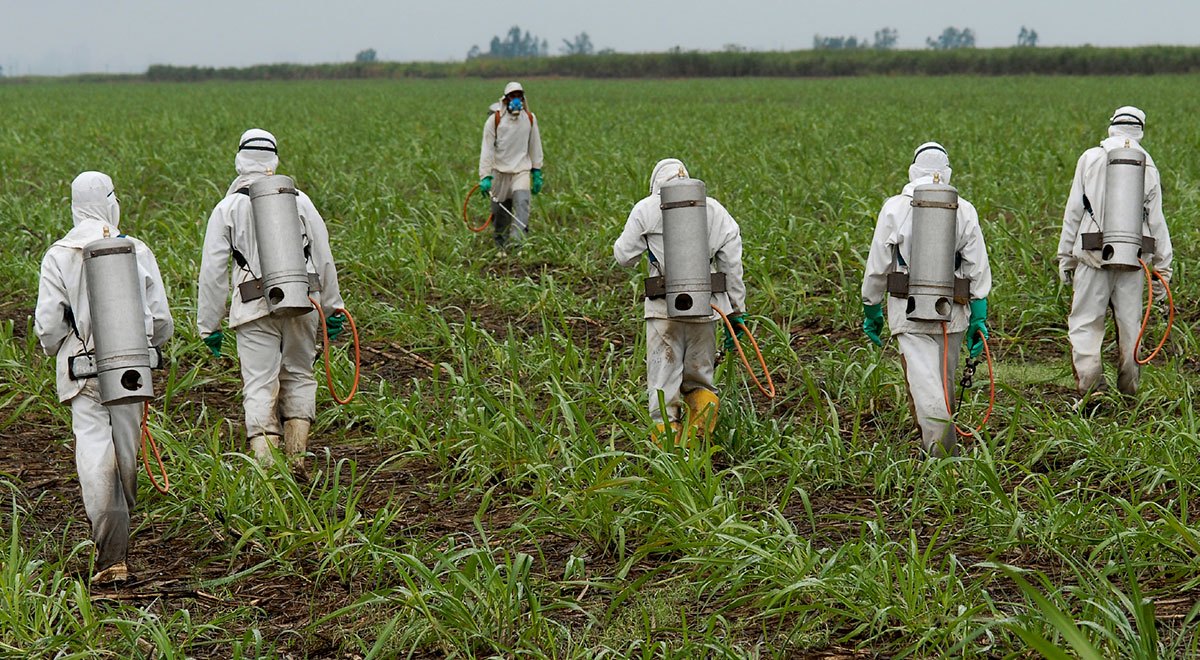
(Natural Blaze By Jon Rappoport) A San Francisco lawsuit against Monsanto and its weedkiller, Roundup, is moving forward. And it’s just received a new green light from the judge in the case.

Monsanto’s lawyers are bracing for a deep level of attack, which they were hoping to avoid. The judge has ruled the jury can hear testimony on this issue: Monsanto suppressed evidence that Roundup causes cancer.

Reporter Carey Gillam has the story (The Guardian, 5/22): “At the age of 46, DeWayne Johnson is not ready to die. But with cancer spread through most of his body, doctors say he probably has just months to live. Now Johnson, a husband and father of three in California, hopes to survive long enough to make Monsanto take the blame for his fate.”

“On 18 June, Johnson will become the first person to take the global seed and chemical company to trial on allegations that it has spent decades hiding the cancer-causing dangers of its popular Roundup herbicide products – and his case has just received a major boost.”

Related: How to Avoid GMOs in 2018 – And Everything Else You Should Know About Genetic Engineering

“Last week Judge Curtis Karnow issued an order clearing the way for jurors to consider not just scientific evidence related to what caused Johnson’s cancer, but allegations that Monsanto suppressed evidence of the risks of its weed killing products. Karnow ruled that the trial will proceed and a jury would be allowed to consider possible punitive damages.”

“’The internal correspondence noted by Johnson could support a jury finding that Monsanto has long been aware of the risk that its glyphosate-based herbicides are carcinogenic … but has continuously sought to influence the scientific literature to prevent its internal concerns from reaching the public sphere and to bolster its defenses in products liability actions’, [Judge] Karnow wrote.” [Yes, the Judge in the case wrote that statement.]

“Johnson’s case, filed in San Francisco county superior court in California, is at the forefront of a legal fight against Monsanto. Some 4,000 plaintiffs have sued Monsanto alleging exposure to Roundup caused them, or their loved ones, to develop non-Hodgkin lymphoma (NHL). Another case is scheduled for trial in October, in Monsanto’s home town of St Louis, Missouri.”

“How the Johnson lawsuit plays out could be a bellwether for how other plaintiffs proceed. If Johnson prevails, there could be many more years of costly litigation and hefty damage claims. If Monsanto successfully turns back the challenge, it could derail other cases and lift pressure on the firm.”

Related: Doctors Against GMOs – Hear From Those Who Have Done the Research

“According to the court record, Johnson had a job as a groundskeeper for the Benicia unified school district where he applied numerous treatments of Monsanto’s herbicides to school properties from 2012 until at least late 2015. He was healthy and active before he got the cancer diagnosis in August 2014. In a January deposition, Johnson’s treating physician testified that more than 80% of his body was covered by lesions, and that he probably had but a few months to live.”

How will Monsanto proceed? First, they’ll argue that Johnson’s cancer could have been caused by other factors. They’ll throw the kitchen sink at the jury. It could have been genetics. It could have been lifestyle. It could have been causes that are still unknown to researchers. It could have been starlight from a galaxy far, far away. Monsanto’s lawyers will try to bury the jury in reams of supposition.

Second, they’ll show the jury an EPA (Environmental Protection Agency) finding that Roundup does not cause cancer. Like the FDA, the EPA has sided with major corporations in efforts to protect them. Monsanto will claim: “The federal government has asserted Roundup is safe, and that’s the end of our responsibility. The federal government is the final arbiter.” Which is to say: the truth isn’t the final arbiter.

Third, Monsanto will execute a series of acrobatic moves to prove they never suppressed evidence that Roundup causes cancer. They were simply “considering all relevant safety issues.” They were “posing various scenarios.” Their internal memos were “temporary work product” on the way to making a final judgment about Roundup’s safety. They were raising valid concerns about flawed studies that claimed Roundup was dangerous.

If all else fails, Monsanto might try to settle with Johnson—and then claim the $$ payout was simply a way to show compassion for his unfortunate condition—and move on—continuing to offer the public a fine and safe product (Roundup). No guilt admitted.

In the extreme—and I need to raise this question—might Monsanto, behind the scenes, secretly and illegally offer Johnson’s lawyer and his client a very large sum to present a weak case in court and let Monsanto win the case?

You decide.

If Monsanto has intentionally hidden the dire effects of Roundup for decades, while people have gotten sick and died, what wouldn’t they do?

Among the myriad scandals and crimes of Monsanto, here is one that sheds light on the mindset of the company. Axisoflogic.com reports (3/22/12): “In 2001, 3,600 inhabitants of the city of Anniston, Alabama, attacked Monsanto for PCB [a chlorine chemical] contamination. According to a report, declassified by the U.S. Agency of Environmental Protection (EPA), Monsanto for almost forty years dumped thousands of tons of contaminated waste in a stream and an open garbage dump in the heart of a black neighborhood in the city.”

“The way The Washington Post reported the story is instructive: ‘Monsanto documents — many emblazoned with warnings such as ‘CONFIDENTIAL: Read and Destroy’ — show that for decades, the corporate giant concealed what it did and what it knew. In 1966, Monsanto managers discovered that fish submerged in that creek turned belly-up within 10 seconds, spurting blood and shedding skin as if dunked into boiling water. They told no one.”

“Monsanto was finally convicted in 2002 of having polluted ‘the territory of Anniston and the blood of its people with the PCB’. The firm was ordered to pay $ 700 million in damages and to guarantee the cleaning-up of the city. No legal action was brought against the company officials.”

(To read about Jon’s mega-collection, The Matrix Revealedclick here.)

The author of three explosive collections, THE MATRIX REVEALEDEXIT FROM THE MATRIX, and POWER OUTSIDE THE MATRIX, Jon was a candidate for a US Congressional seat in the 29th District of California. He maintains a consulting practice for private clients, the purpose of which is the expansion of personal creative power. Nominated for a Pulitzer Prize, he has worked as an investigative reporter for 30 years, writing articles on politics, medicine, and health for CBS Healthwatch, LA Weekly, Spin Magazine, Stern, and other newspapers and magazines in the US and Europe. Jon has delivered lectures and seminars on global politics, health, logic, and creative power to audiences around the world. You can sign up for his free NoMoreFakeNews emails here or his freeOutsideTheRealityMachine emails here.
Merger From Hell Approved By DOJ, Warnings Of Agrichemical Chokehold On Food System

(NaturalBlaze by Andrea Germanos) Watchdog groups sounded alarms on Monday after the Wall Street Journal reported that the proposed mega-merger of Bayer and Monsanto has cleared its final regulatory hurdle in the United States.

The reported approval from the Justice Department came “after the companies pledged to sell off additional assets,” the Journalreported, and despite concerns raised by hundreds of food and farm groups. It also comes weeks after the European Commission gave its thumbs up.

Related: Understanding and Detoxifying Genetically Modified Foods

“The approval of the third supersized seed merger, after ChemChina-Syngenta and Dow-DuPont,” said Wenonah Hauter, executive director of Food & Water Watch, “leaves farmers vulnerable to price gouging for seeds and other supplies and strengthens the hold a few dominant corporations have over the entire food system.”

“The Justice Department’s rubber stamping of these three seed mega-mergers transforms the already concentrated agrichemical and seed market, effectively reducing the number of competitors from six to three,” she added.

Because it will make it harder for farmers to acquire non-genetically modified seeds to plant, it “makes it harder for agriculture to get off the GMO-chemical treadmill that just keeps increasing in speed,” she said.

With its reported stamp of approval, the pending merger shows that “the federal government is not taking the impact of corporate control of our food supply seriously. It’s time for Congress to establish a moratorium on mega-mergers in the food system,” Hauter argued.

Related: Foods That Are GMO

Jason Davidson, food and technology campaign associate with Friends of the Earth, was equally critical in his reaction to the development.

“The Department of Justice has decided that corporate profits matter more than the interests consumers and farmers. This decision will massively increase the power of major agrichemical companies that already have a stranglehold on our food system,” he declared in a statement.

He went on to lament that “American farmers will see increased seed prices, fewer options, and decreased bargaining power.” Echoing Hauter’s warning, he argued. “This merger from hell will further entrench the failing model of toxic, chemical-intensive agriculture, which is poisoning people and the planet.”

Related: Doctors Against GMOs – Hear From Those Who Have Done the Research

A recent poll found that nearly 94 percent of farmers expressed concern that a Bayer-Monsanto merger would have a negative impact on independent farmers and their communities. It also found that 89 percent of farmers said they believe the merger would lead to increased pressure for chemically-dependent farming.

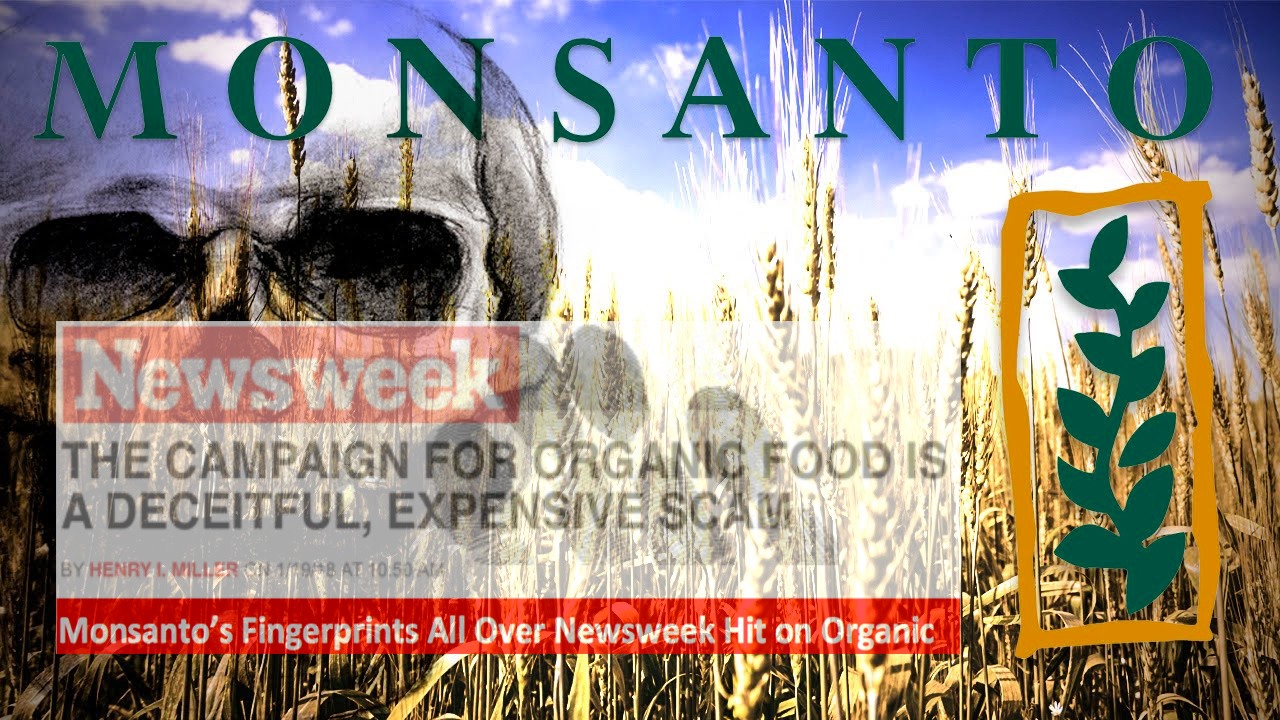
Monsanto’s Fingerprints All Over Newsweek’s Hit on Organic Food

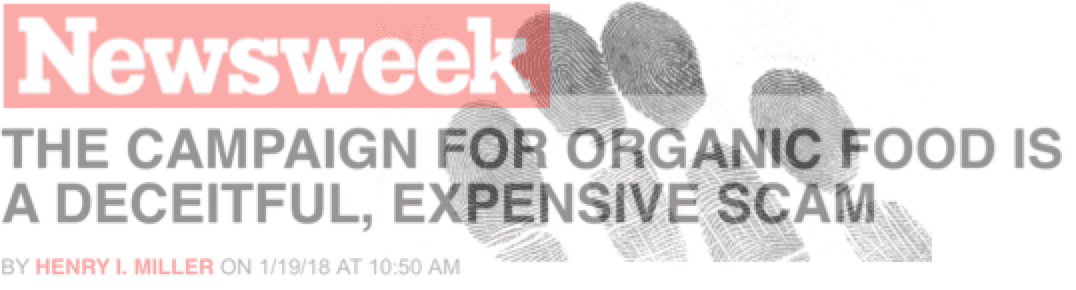
(USRTK by Stacy Malkan) “The campaign for organic food is a deceitful, expensive scam,” according to a Jan. 19 Newsweek article authored by Dr. Henry I. Miller of the Hoover Institution.

If that name sounds familiar – Henry I. Miller – it may be because the New York Times recently revealed a scandal involving Miller: that he had been caught publishing an article ghostwritten by Monsanto under his own name in Forbes. The article, which largely mirrored a draft provided to him by Monsanto, attacked the scientists of the World Health Organization’s cancer panel (IARC) for their decision to list Monsanto’s top-selling chemical, glyphosate, as a probable human carcinogen.

Update: Newsweek’s bizarre response

Recommended: Sugar Leads to Depression – World’s First Trial Proves Gut and Brain are Linked (Protocol Included)

Reporting on an email exchange released in litigation with Monsanto over cancer concerns, the Times’Danny Hakim wrote:

“Monsanto asked Mr. Miller if he would be interested in writing an article on the topic, and he said, ‘I would be if I could start from a high-quality draft.’

The article appeared under Mr. Miller’s name, and with the assertion that ‘opinions expressed by Forbes Contributors are their own.’ The magazine did not mention any involvement by Monsanto in preparing the article …

Forbes removed the story from its website on Wednesday and said that it ended its relationship with Mr. Miller amid the revelations.”

The opinion wire Project Syndicate followed suit, after first adding a disclaimer to Miller’s commentaries noting that they would have been rejected if his collaboration with Monsanto had been known.

Desperate to Disparage Organic

The ghostwriting scandal has hardly slowed Miller down; he has continued to spin promotional content for the agrichemical industry from outlets such as Newsweek and The Wall Street Journal, without disclosing to readers his relationship with Monsanto.

Yet Miller’s Newsweek hit on organic food has Monsanto’s fingerprints in plain sight all over it.

For starters, Miller uses pesticide industry sources to make unsubstantiated (and ludicrous) claims about organic agriculture – for example, that organic farming is “actually more harmful to the environment” than conventional agriculture, or that organic allies spent $2.5 billion in a year campaigning against genetically engineered foods in North America.

Recommended: Detox Cheap and Easy Without Fasting – Recipes Included

The source on the latter inaccurate claim is Jay Byrne, a former director of corporate communications for Monsanto (not identified as such in the Newsweek article), who now directs a PR firm called v-Fluence Interactive.

Email exchanges reveal how Monsanto works with people like Jay Byrne – and with Byrne specifically – to push exactly this type of attack against Monsanto’s foes while keeping corporate involvement a secret.

According to emails obtained by my group US Right to Know, Byrne played a key role in helping Monsanto set up a corporate front group called Academics Review that published a report attacking the organic industry as a marketing scam – the exact theme in Miller’s Newsweek article.

Recommended: How to Make the Healthiest Smoothies – 4 Recipes

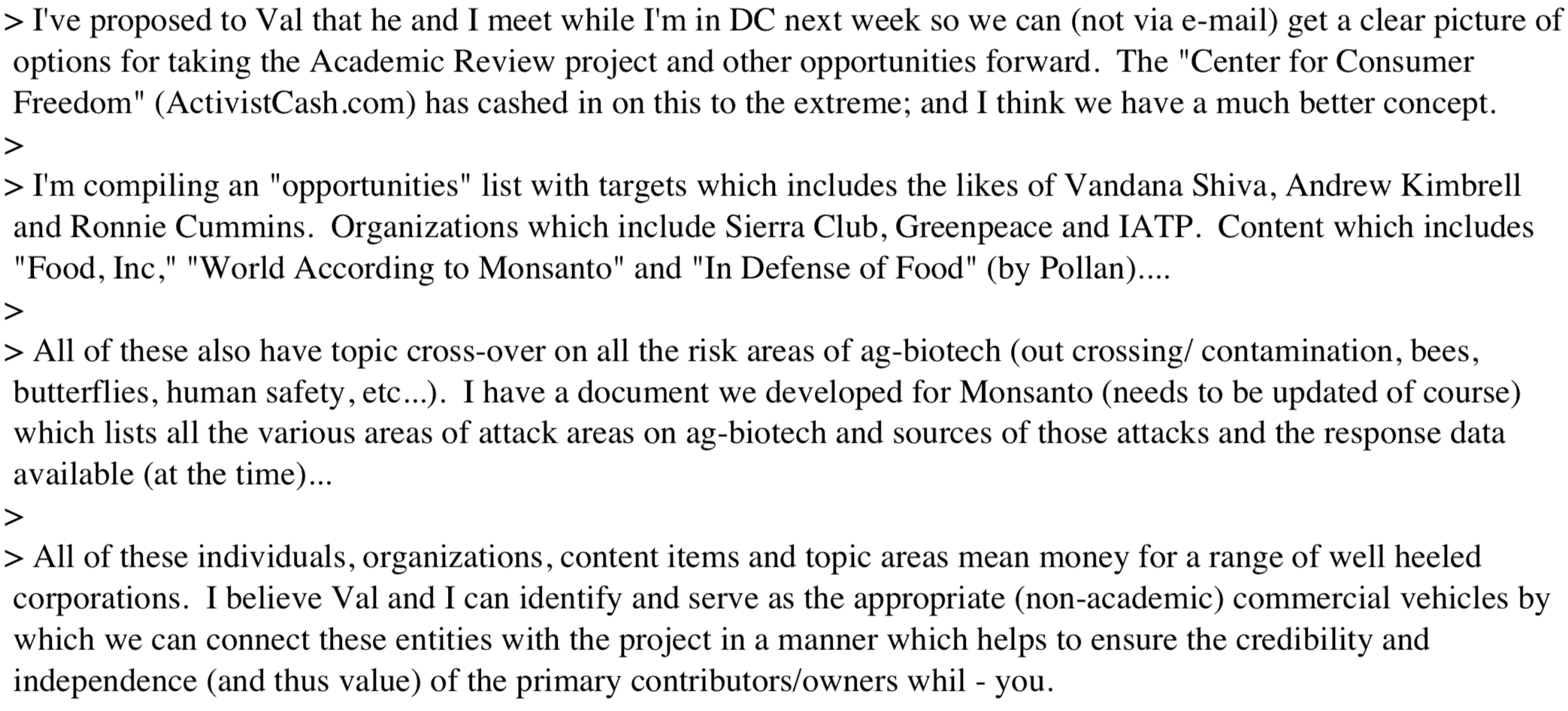
Jay Byrne’s hit list of Monsanto foes. 

The concept of the front group – explained in the emails I reported here – was to create a credible-sounding platform from which academics could attack critics of the agrichemical industry while claiming to be independent, yet secretly receiving funds from industry groups. Wink, wink, ha, ha.

“The key will be keeping Monsanto in the background so as not to harm the credibility of the information,” wrote a Monsanto executive involved in the plan.

Byrne’s role, according to the emails, was to serve as a “commercial vehicle” to help obtain corporate funding. Byrne also said he was compiling an “opportunities” list of targets – critics of the agrichemical industry who could be “inoculated” from the academics’ platform.

Several people on Byrne’s “opportunities” hit list, or later attacked by Academics Review, were targets in Miller’s Newsweek article, too.

Miller’s Newsweek piece also tried to discredit the work of New York Times’ reporter Danny Hakim, without disclosing that it was Hakim who exposed Miller’s Monsanto ghostwriting scandal.

Recommended: Start Eating Like That and Start Eating Like This – Your Guide to Homeostasis Through Diet

As with other recent attacks on the organic industry, all fingers point back to the agrichemical corporations that will lose the most if consumer demand continues to rise for foods free of GMOs and pesticides.

Monsanto’s “Independent Academic” Ruse

Henry Miller has a long history of partnering with – and pitching his PR services to – corporations that need help convincing the public their products aren’t dangerous and don’t need to be regulated.

And Monsanto relies heavily on people with scientific credentials or neutral-sounding groups to make those arguments – people who are willing to communicate the company script while claiming to be independent actors. This fact has been established by reporting in the New York TimesLe MondeWBEZ, the Progressiveand many other outlets in recent years.

A newly released Monsanto document provides more details about how Monsanto’s propaganda and lobbying operation works, and the key role Henry Miller plays within it.

This 2015 “preparedness plan” – released by lawyers in the glyphosate cancer lawsuits – lays out Monsanto’s PR strategy to “orchestrate outcry” against the IARC cancer scientists for their report on glyphosate. The first external deliverable: “Engage Henry Miller.”

The plan goes on to name four tiers of “industry partners” – a dozen trade groups, academic groups and independent-seeming front groups such as the Genetic Literacy Project – that could help “inoculate” against the cancer report and “protect the reputation … of Roundup.”

Miller delivered for Monsanto with a March 2015 article in Forbes – the article later revealed as Monsanto’s writing – attacking the IARC scientists. The industry partners have been pushing the same arguments through various channels again and again, ever since, to try to discredit the cancer scientists.

Much of this criticism has appeared to the public as a spontaneous uprising of concern, with no mention of Monsanto’s role as the composer and conductor of the narrative: a classic corporate PR hoodwink.

Recommended: Holistic Guide to Healing the Endocrine System and Balancing Our Hormones

As more documents tumble into the public realm – via the Monsanto Papers and public records investigations – the “independent academic” ruse will become harder to maintain for industry surrogates like Henry I. Miller, and for media and policy makers to ignore.

For now, Newsweek is not backing down. Even after reviewing the documents that substantiate the facts in this article, Newsweek Opinion Editor Nicholas Wapshott wrote in an email, “I understand that you and Miller have a long history of dispute on this topic. He flatly denies your assertions.”

Neither Miller nor Wapshott have responded to further questions.

Stacy Malkan is co-director of the consumer watchdog and transparency group, US Right to Know. She is author of the book, “Not Just a Pretty Face: The Ugly Side of the Beauty Industry” (New Society, 2007). Disclosure: US Right to Know is funded in part by the Organic Consumers Association which is mentioned in Miller’s article and appears on Byrne’s hit list.

Newsweek and USA Today Have Bizarre Standards for Opinion Writers

(USRTK by Stacy Malkan) Facts don’t matter in commentaries printed by Newsweek so long as the writer “seems genuine.” That’s the takeaway from a troubling email exchange with Newsweek Opinion Editor Nicholas Wapshott in response to concerns and questions I raised about a recent commentary attacking the organic industry.

The organic hit piece in Newsweek carried the byline of Henry I. Miller, who lost his platform at Forbes last year after the New York Times revealed that Miller had published an article in Forbes under his own name that was actually written by Monsanto.

In his recent Newsweek article, Miller spent several paragraphs attacking Danny Hakim, the New York Timesreporter who revealed that ghostwriting scandal; but Miller didn’t disclose to readers either the scandal or his collaborations with Monsanto.

Yet Monsanto’s fingerprints were all over Miller’s Newsweek article, as I reported here. Miller used pesticide industry sources to make false claims about organic farming and attacked people who were named on a target list that had been developed by Monsanto and Jay Byrne, Monsanto’s former director of corporate communications, who was quoted in Miller’s piece with no mention of the Monsanto affiliation.

None of this appears to bother Newsweek Opinion Editor Nicholas Wapshott, according to an on-the-record email exchange.

Miller ‘Flatly Denies’ Facts 

On Jan. 22, I emailed Wapshott to raise concerns that Newsweek continues to publish Miller’s commentaries without disclosing his relationship with Monsanto, and asked if he was aware that:

1) The New York Times reported in August that Miller had been caught publishing an article ghostwritten by Monsanto under his own name in Forbes, in violation of Forbes’ policy. Forbes ended its relationship with Miller and deleted all his articles from the site.

2) A 2015 internal Monsanto PR plan (recently released by lawyers involved in litigation against Monsanto) lists “Engage Henry Miller” as one of its first action items.

3) A source Miller used in his Newsweek article, Jay Byrne, is a former Monsanto employee (not identified as such). According to emails I reported here, Byrne worked with Monsanto to set up a front group of “independent” academics, secretly funded by industry, who attacked the organic industry as a “marketing scam,” the same theme in Miller’s Newsweek article.

4) Miller has a long history of partnering with – and pitching his PR services to – corporations that need help convincing the public their products aren’t dangerous and don’t need to be regulated.

Wapshott responded, “Hi Stacy, I understand that you and Miller have a long history of dispute on this topic. He flatly denies your assertions. Nicholas”

I wrote back to ask for clarification.

Hi Nicholas, to clarify:

Miller denies he published a column ghostwritten by Monsanto under his own name in Forbes and that Forbes has since deleted all his articles? (NYT story, Retraction Watch story)

Miller denies the Monsanto’s PR plan to address the IARC cancer rating of glyphosate lists “Engage Henry Miller” on page 2, item 3?

Miller denies that Jay Byrne, the former Monsanto employee not identified as such in his Newsweek article, was involved with setting up Academics Review as a front group? (Byrne has not denied writing these emails.)

Miller and I have disagreed yes, we were on opposite sides of a political campaign to label GMOs, but the above facts are facts, and provable. Do you think it’s fair to your readers to continue to publish his work without disclosing his ties to Monsanto?

Wapshott responded, “I think so. I have met Miller and he seems genuine. And I find it hard to believe that his flat denial is a lie. We would need a full trial to determine the truth and those resources are, thank goodness, beyond our means.”

Jumbled Mix of Conflict Disclosures

I wrote back to Wapshott once more, pointing out that a trial is not necessary in the Miller case, since the facts have been established by reporting in the New York Times and corroborated by Forbes’ spokeswoman Mia Carbonell, who told the Times:

“All contributors to Forbes.com sign a contract requiring them to disclose any potential conflicts of interest and only publish content that is their own original writing. When it came to our attention that Mr. Miller violated these terms, we removed his blog from Forbes.com and ended our relationship with him.”

Does Newsweek have a similar policy to require writers to disclose potential conflicts of interest and use only their own writing? 

Newsweek editors have yet to respond to my query about disclosure policies. But the problem of weak, confused or non-existent conflict-of-interest disclosures is widespread in the media.

For a 2015 article in CJR, Paul Thacker asked 18 media organizations that cover science to describe their disclosure standards for both journalists and the sources they use in their stories, and 14 responded.

“The responses present a jumbled mix of policies,” Thacker wrote. “Some draw a bright line — preventing journalists from having financial ties to any outside sources. Others allow some expenses and speaking fees. To complicate matters further, some organizations have written rules, while others consider incidents on a case-by-case basis. Standards advocated by professional societies also seem to differ.”

Some outlets apply different standards to reporters and columnists, as I learned when I asked why Washington Post food columnist Tamar Haspel can take speaking fees from agrichemical industry groups while writing about that industry as part of her regular column beat. Reporters at Washington Post aren’t allowed to do that, but in the case of columnists, the editor decides.

Recommended: Sugar Leads to Depression – World’s First Trial Proves Gut and Brain are Linked (Protocol Included)

It’s all very murky. And some outlets are clearly crossing a bright line by publishing the views of groups and people who work with corporations to promote pro-industry science views without telling readers about the corporate collaboration.

Henry Miller’s attack on organic food in Newsweek is one example. Another is USA Today’s regular publication of science columns from the American Council on Science and Health, a front group for the tobacco, chemical, fossil fuel, pharmaceutical and other industries seeking to discredit scientific information about the harm of their products.

USA Today Lends Platform to Corporate Front Group  

In February 2017, two dozen health, environmental, labor and public interest groups wrote to the editors of USA Today asking the paper to stop publishing science columns by the American Council on Science and Health (ACSH), or at least provide full disclosures about who funds the group.

Leaked financial documents reveal that ACSH solicits money from corporations to defend and promote their products; for example, ACSH spins science on fracking, e-cigarettes, toxic cosmetics and agrichemical industry products, and solicits funding from those industries in exchange. Recent reporting establishes that ACSH works with Monsanto on messaging campaigns.

Recommended: Detox Cheap and Easy Without Fasting – Recipes Included

USA Today should not be helping this group promote its false identity as a credible, independent source on science,” the two dozen groups wrote to the editors. “Your readers deserve accurate information about what and whom this group represents, as they reflect on the content of the columns.”

Nearly a year later, USA Today is still publishing columns by ACSH staff and still failing to notify its readers about ACSH’s funding from corporations whose agenda they promote.

In an email response dated March 1, 2017, USA Today Editorial Page Editor Bill Sternberg explained:

“To the best of our knowledge, all of the columns in question were authored or co-authored by Alex Berezow, a longtime member of USA TODAY’s Board of Contributors. Mr. Berezow has written some 25 op-eds for us since 2011, and we consider him to be a credible voice on scientific issues. He holds a PhD in microbiology from the University of Washington, was the founding editor of RealClearScience and has contributed to a number of mainstream outlets.”

Berezow is now a senior fellow at ACSH, and his “@USAToday contributor” status appears in his bio on Twitter, where he frequently attacks critics of the pesticide industry, for example this recent vile tweet featuring a sexually graphic illustration of a nurse giving a patient a coffee enema.

Does USA Today really want to be associated with this type of science communication?

Recommended: Start Eating Like That and Start Eating Like This – Your Guide to Homeostasis Through Diet

Integrity and Transparency in Science Reporting

News outlets can do better than these examples at Newsweek and USA Today, and they must do better. They can start by refusing to publish columns by corporate front groups and PR surrogates who pose as independent science thinkers.

Recommended: How to Make the Healthiest Smoothies – 4 Recipes

They can implement clear and strong policies that require all columnists and journalists to disclose potential conflicts of interest for themselves and the sources they cite in their work.

At a time when the public is questioning the legitimacy of the news media, it is more important than ever for all publications to follow the highest standards of journalistic ethics and serve the public with as much truth and transparency as possible.

Over 1 Million Call On DOJ To Block Bayer-Monsanto Merger

(NaturalBlaze) WASHINGTON – Over 1 million petition signatures were delivered today by farming, consumer and environmental groups  to the U.S. Department of Justice calling on the department to block the proposed merger of Bayer (BAYN) and Monsanto (MON). The signatures were delivered as two new reports revealed irreversible impacts from the merger on consumers and farmers.

Tuesday, Friends of the Earth, SumOfUs and the Open Markets Institute released an analysis, “Bayer-Monsanto Merger: Big Data, Big Agriculture, Big Problems“, which  explores the implications of a combined Big Data, chemical and seed platform owned by Bayer and Monsanto and how it may impact competition and farmer choice. The release of the analysis coincides with a hearing Tuesday on technology in agriculture and data-driven farming in the U.S. Senate Committee on Commerce, Science, & Transportation.

 Related: Understanding and Detoxifying Genetically Modified Foods

Consumer Federation of America released a report today, “Mega-Mergers in the U.S. Seed and Agrochemical Sector the Political Economy of Tight Oligopolies on Steroids and the Squeeze on Farmers and Consumers.” The report uses the concept of a “tight oligopoly on steroids” to examine how the unique characteristics of the Bayer-Monsanto merger magnify their market power in the seed/agrochemical sector and squeeze farmers and consumers.

On Tuesday, at the National Press Club, a panel of experts discussed the findings of these reports and explored the latest research indicating irreversible impacts from the merger to consumers, farmers and competition in the face of record-low commodity prices and struggles in rural America.

“The opportunity for every farmer, every business and every entrepreneur to have a fair shot at an open and just market is the core principle that built America and its people’s prosperity,” said Joe Maxwell, executive director of Organization for Competitive Markets. “Our government’s unwillingness to enforce our anti-monopoly laws and allow these mega-mergers to go forward is threatening our very democracy.”

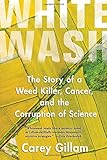
Whitewash: The Story of a Weed Killer, Cancer, and the Corruption of Science

Whitewash: The Story of a Weed Killer, Cancer, and the Corruption of Science

“Bayer and Monsanto’s toxic mega-merger is a danger to our planet and everyone living on it,” said Erich Pica, president with Friends of the Earth. “Over 1 million Americans have called on the Department of Justice to protect our farmers and families from the consolidation of corporate power. Bayer and Monsanto’s merger is a direct threat to the future of people and our environment. The Justice Department must put on the breaks and stop this merger.”

“A merger between Bayer and Monsanto is a five-alarm threat to our food supply and to farmers around the world,” explained Angus Wong, Campaign Manager with SumOfUs. “This new mega corporation would be the world’s biggest seed maker and pesticide company, defying important antitrust protections, giving it unacceptable control over critical aspects of our food supply – undermining consumer choice and the freedom and stability of farmers worldwide.”