The US Opioid Epidemic — A War of a Different Kind

(Dr. Mercola) The opioid epidemic — which between 2002 and 2015 alone claimed an estimated 202,600 Americans’ lives1 — shows absolutely no signs of leveling off or declining. On the contrary, recent statistics suggest the death toll is still trending upward, with more and more people abusing these powerful narcotics. The most common drugs involved in prescription opioid overdose deaths include2 methadone, oxycodone (such as OxyContin®) and hydrocodone (such as Vicodin®).

This dangerous class of drugs promises relief from pain and is filling a hole in human hearts and souls everywhere. According to the most recent data3 from the U.S. Centers for Disease Control and Prevention (CDC), overdose cases admitted into emergency rooms increased by more than 30 percent across the U.S. between July 2016 and September 2017. Overdose cases rose by:4

  • 30 percent among men
  • 31 percent among 24- to 35-year-olds
  • 36 percent among 35- to 54-year-olds
  • 32 percent among those 55 and older
Related: Trump Wants Death Penalty For Dangerous Drug Dealers – But who Are the Dangerous Ones?

In the Midwest region — Illinois, Indiana, Iowa, Kansas, Michigan, Minnesota, Missouri, Nebraska, North Dakota, Ohio, South Dakota and Wisconsin — overdose cases rose by 70 percent and opioid-related mortality by 14 percent. Large cities also saw a 54 percent increase in overdose cases in that same timeframe. According to CDC officials, the results are “a wake-up call to the fast-moving opioid overdose epidemic.’’

‘The Opioid Diaries’

Curiously, opioid abuse appears to be a uniquely American problem. As noted in a recent write-up in New York Magazine,5 the U.S. “pioneered modern life. Now epic numbers of Americans are killing themselves with opioids to escape it.” I’ve written about opioid misuse and addiction on many occasions in recent years, and it seems one cannot discuss this issue enough. Many are still unaware of the dangers involved with filling that first prescription.

As an indication of the need for awareness, the March 5 issue of Time magazine, “The Opioid Diaries,”6 is aimed at exposing the national crisis. For the first time in the magazine’s history, an entire issue is devoted to a single photo essay — the work of photojournalist James Nachtwey, who has documented stories for Time for over three decades. In “The Opioid Diaries,” Nachtwey’s photos detail the stark reality of this all-American crisis.

He and editor Paul Moakley spent months traversing the U.S., interviewing over 200 people along the way. As noted by a deputy sheriff who has seen more than his fair share of the fallout of this epidemic, opioid addiction doesn’t discriminate. “It’s not just the guy who’s never worked a day in his life,” he says. “It’s airline pilots. It’s teachers. I’m sure there’s law enforcement, firemen out there hooked on it. It’s Joe Citizen that’s dying.”

Related: Opioids No Better than NSAIDs for Chronic Back or Arthritis Pain

A Country in Crisis

Here are some statistics about the U.S. opioid epidemic that really ought to get everyone’s attention:

Leading cause of death for younger Americans

Drug overdoses are now the leading cause of death among Americans under the age of 50.7

Annual death toll greater than entire Vietnam War

Preliminary data for 2016 reveals the death toll from drug overdoses may be as high as 65,000,8 a 19 percent increase from 2015; the largest annual increase of drug overdose deaths in U.S. history, and a number that exceeds both the AIDS epidemic at its peak and the death toll of the Vietnam War in its entirety.9

That much-opposed war claimed the lives of 58,000 American troops. Now, we’re suffering a death toll exceeding that of the Vietnam War each and every year, courtesy of a drug addiction epidemic created by the pharmaceutical industry.

Deadlier than breast cancer

Opioids, specifically, killed 33,000 in 2015,10,11,12 and 42,249 in 2016, which is over 1,000 more deaths than were caused by breast cancer that same year.13

Synthetic opioid abuse skyrocketing

Deadly overdoses involving fentanyl, an incredibly potent synthetic opioid, rose by 50 percent between 2013 and 2014 and another 72 percent between 2014 and 2015. Over 20,000 of the drug overdose deaths in 2016 were attributed to fentanyl and other synthetic opioids.14 In Rhode Island, New Hampshire and Massachusetts, fentanyl was responsible for at least 70 percent of all opioid-related deaths between July and December 2016.15

While some users will buy fentanyl on purpose, others buy tainted wares and end up taking it without knowing the risks. This is a critical problem, as fentanyl is so potent just a few grains can be deadly.

An inexpensive fentanyl test strip can check for the presence of the drug, and trials where test strips have been given to users show they’re more likely to cut back on the amount they’re taking when they know it’s tainted with fentanyl. As such, fentanyl testing can be employed as “a point-of-care test within harm-reduction programs” aimed at lowering the death toll.16

Significant factor in unemployment rates

Opioid abuse has been identified as a significant factor in rising unemployment among men, accounting for 20 percent of the increase in male unemployment between 1999 and 2015.17 Nearly half of all unemployed men between the ages of 25 and 54 are using opioids on a daily basis.18

Americans use vast majority of global opioid supplies

Americans consume 99 percent of the hydrocodone sold worldwide, and 81 percent of all oxycodone — approximately 30 times more than medically necessary for the population size of the U.S.19 A number of different statistics convey this massive overuse.

For example, in a five-year span, between 2007 and 2012, 780 million hydrocodone and oxycodone pills were shipped to West Virginia, which has just 1.8 million residents.20 More than 1 in 5 Americans insured by BlueCross BlueShield were prescribed an opioid in 2015, and insurance claims involving opioid dependence rose by nearly 500 percent between 2010 and 2016.21

Declining life expectancy

Life expectancy for both men and women in the U.S. has declined two years in a row,22,23 and this decline is largely attributable to the opioid crisis. Just as the opioid epidemic, declining life expectancy is a uniquely American phenomenon. No other developed countries has experienced this decline in life expectancy.

A Story of Misery

There are compelling reasons to suspect the opioid epidemic was purposely engineered by the drug companies that make them, and that these same companies have, and continue to, shy away from doing what’s necessary to curb the use of opioid pain killers for financially-driven reasons.

Related: NSAIDs Study Shows Side Effects are Worse Than Original Ailments

Moreover, while this was not likely planned, the industry’s misleading promotion of narcotic pain relievers appears to have coincided with a growing trend of emotional pain and spiritual disconnect, and opioids satisfy people’s need not only for physical pain relief but also psychological and existential pain relief. As noted by New York Magazine:24

The scale and darkness of this phenomenon is a sign of a civilization in a more acute crisis than we knew, a nation overwhelmed by a warp-speed, postindustrial world, a culture yearning to give up, indifferent to life and death, enraptured by withdrawal and nothingness …

[U]nless you understand what users get out of an illicit substance, it’s impossible to understand its appeal, or why an epidemic takes off, or what purpose it is serving in so many people’s lives. And it is significant, it seems to me, that the drugs now conquering America are downers: They are not the means to engage in life more vividly but to seek a respite from its ordeals … And some part of being free from all pain makes you indifferent to death itself.”

The article cites a number of firsthand accounts of the experience opioids provides — the blissful serenity of being able to stand apart from one’s psychological pain in addition to physical pain; the sensation of being connected to some deeper wellspring of peace. These are experiences typically derived from spiritual practices, and hint at a widespread lack of connectedness to the divine in general.

An Epic Failure of Government

While the drug industry deserves a large portion of the blame for creating the opioid epidemic, the U.S. government also mismanaged the situation right from the start by supporting drug companies’ efforts to make narcotic pain killers more readily available for people with nonlethal pain conditions, and its slow reaction to the problem has only allowed matters to worsen. In a recent Washington Post article, columnist David Von Drehle writes:25

“With the possible exception of alcohol, no substance on Earth has a longer track record of disastrous addiction than opium and its derivatives … Yet despite centuries of hard-won knowledge, pharmaceutical companies and prescribing physicians were allowed to make such opioids as Percocet and OxyContin widely available as treatments not just for acute pain, but for chronic discomfort.

Their fantasy of benign long-term opioid use is the root of the epidemic. Nearly 80 percent of heroin users report that prescription pain relievers were their gateway drugs … Such a failure of epic proportions by a generation of public-health officials merits a major congressional investigation to reduce the chance that anything like it ever happens again.”

Related: U.S. Life Expectancy To Decline, CDC Blames Pharmaceutical Companies

The U.S. government is further exacerbating drug use by tightening restrictions on less harmful and far safer non-narcotic alternatives such as medical marijuana, CBD oil and kratom. As noted by New York Magazine, “The iron law of prohibition, as first stipulated by activist Richard Cowan in 1986, is that the more intense the crackdown, ‘the more potent the drugs will become.’ In other words, the harder the enforcement, the harder the drugs.”

History Tells Us Prohibition Doesn’t Work

During the prohibition of alcohol, people didn’t turn to beer making. They started making hard liquor — moonshine. The same thing is happening now, as heroin — the street version of opioids — is being replaced with fentanyl, a synthetic opioid that is up to 100 times stronger than heroin. Users buy what they can get, and so the spiral of drug abuse and death continues spinning out of control.

“The critical Office of National Drug Control Policy has spent a year without a permanent director,” New York Magazine writes. “Its budget is slated to be slashed by 95 percent, and … Kellyanne Conway — Trump’s ‘opioid czar’ — has no expertise in government, let alone in drug control.

Although Trump plans to increase spending on treating addiction, the overall emphasis is on an even more intense form of prohibition, plus an advertising campaign. Attorney General Jeff Sessions even recently opined that he believes marijuana is really the key gateway to heroin — a view so detached from reality it beggars belief …

One of the few proven ways to reduce overdose deaths is to establish supervised injection sites that eventually wean users off the hard stuff while steering them into counseling, safe housing, and job training …

[W]e would have to contemplate actually providing heroin to addicts in some cases, and we’d have to shift much of the current spending on prohibition, criminalization, and incarceration into a huge program of opioid rehabilitation … We would, in short, have to end the war on drugs.”

Making Drug Use Safer Doesn’t Work Either

On the other hand, the safer you make drug use, the more drugs will be misused. That’s exactly what a recent study looking the variations in timing of expanded access to naloxone found. Naloxone is a drug that can reverse an overdose if administered quickly enough.

In 2013, states began expanding access to the drug beyond trained medical professionals, and more than 40 states now have expanded access, making it available to police officers, nonmedical emergency responders, teachers and even family and friends of the addicts themselves.

Related: NSAIDs Study Shows Side Effects are Worse Than Original Ailments

While the idea behind expanded access was to prevent deaths, by lowering the risk opioid-related overdoses shot up even more. As mentioned earlier, overdoses increased by more than 30 percent in the 14 months leading up to September 2017.

Worse, mortality increased by 14 percent in the Midwest after naloxone access was expanded, in large part due to increased use of fentanyl, which typically requires multiple doses of naloxone. Even with multiple doses, it doesn’t always work. Expanded access to naloxone has also led to more opioid-related crime, including the illegal possession and sale of opioids.

Common Pain Meds Are Just as Effective as Opioids, Study Finds

Evidence suggests opioid makers such as Purdue Pharma, owned by the Sackler family, knew exactly what they were doing when they claimed opioids — which are chemically very similar to heroin — have an exceptionally low addiction rate when taken by people with pain.

In fact, the massive increase in opioid sales has been traced back to an orchestrated marketing plan aimed at misinforming doctors about the drug’s addictive potential. The drug’s general effectiveness against pain has also been vastly exaggerated by drug manufacturers. In April 2016, the U.S. Centers for Disease Control and Prevention published a paper in which it noted that:26

“Most placebo-controlled, randomized trials of opioids have lasted six weeks or less, and we are aware of no study that has compared opioid therapy with other treatments in terms of long-term (more than 1 year) outcomes related to pain, function, or quality of life.

The few randomized trials to evaluate opioid efficacy for longer than six weeks had consistently poor results. In fact, several studies have showed that use of opioids for chronic pain may actually worsen pain and functioning, possibly by potentiating pain perception …”

More recently, government-funded research27,28,29 published in the journal JAMA earlier this month confirmed that patients taking opioids did not experience better pain-related function than those taking far safer, non-narcotic pain relievers. The study is the first to compare opioids against non-opioid pain medication for people with chronic back pain or osteoarthritic pain in the hip or knee.

Contrary to popular belief, patients who took Tylenol, ibuprofen or lidocaine actually reported less pain intensity than those taking an opioid drug such as morphine, Vicodin or oxycodone. Not surprisingly, however, opioid users were far more likely to experience adverse side effects. According to the authors:

“Treatment with opioids was not superior to treatment with non-opioid medications for improving pain-related function over 12 months. Results do not support initiation of opioid therapy for moderate to severe chronic back pain or hip or knee osteoarthritis pain … Overall, opioids did not demonstrate any advantage over non-opioid medications that could potentially outweigh their greater risk of harms.”

Treating Your Pain Without Drugs

It seems we’re not going to get anywhere with this epidemic until or unless we begin to address deeper societal issues. Most areas have lost a sense of community, and social media has only deepened the gulf between us. In many ways, the opioid epidemic appears to mirror a deeper, psychological and spiritual disconnect.

Related: Why Chronic Pain is Such a Pain and What You Can Do about It

It’s important to recognize and address our human need for life purpose, a sense of community and shared values. There are no quick fixes to existential despair. It will require a shift in mindset across society as a whole. With an eye on the big picture, it appears we really need to find ways to reinfuse meaning into our lives.

With regard to physical pain, we clearly need to have compassion. But the most compassionate treatment isn’t necessarily a narcotic pain reliever. A number of studies have already confirmed that opioids do not work well at all for chronic pain. Most recently, they were found to be no more effective than Tylenol and ibuprofen over the long term. Opioids really must be a drug of last resort, and should almost never be considered for chronic long-term use. It’s important for both doctors and patients to recognize this.

That said, considering the health risks associated with opioid painkillers, I strongly urge you to exhaust other options before resorting to these drugs. The good news is there are many natural alternatives to treating pain, including the following:

Medical cannabis

Medical marijuana has a long history as a natural analgesic and is now legal in 28 states. You can learn more about the laws in your state on medicalmarijuana.procon.org.30

Kratom

Kratom (Mitragyna speciose) is a plant remedy that has become a popular opioid substitute.31 In August 2016, the DEA issued a notice saying it was planning to ban kratom, listing it as Schedule 1 controlled substance.

However, following massive outrage from kratom users who say opioids are their only alternative, the agency reversed its decision.32 Still, its scheduling remains uncertain, as the U.S. Food and Drug Administration recently declared kratom an opioid.33

Kratom is safer than an opioid for someone in serious and chronic pain. However, it’s important to recognize that it is a psychoactive substance and should be used with great care. There’s very little research showing how to use it safely and effectively, and it may have a very different effect from one person to the next. The other issue to address is that there are a number of different strains available with different effects.

Also, while it may be useful for weaning people off opioids, kratom is in itself addictive. So, while it appears to be a far safer alternative to opioids, it’s still a powerful and potentially addictive substance. So please, do your own research before trying it.

Low-Dose Naltrexone (LDN)

Naltrexone is an opiate antagonist, originally developed in the early 1960s for the treatment of opioid addiction. When taken at very low doses (LDN, available only by prescription), it triggers endorphin production, which can boost your immune function and ease pain.

Curcumin: A primary therapeutic compound identified in the spice turmericcurcumin has been shown in more than 50 clinical studies to have potent anti-inflammatory activity. Curcumin is hard to absorb, so best results are achieved with preparations designed to improve absorption. It is very safe and you can take two to three every hour if you need to.
Astaxanthin: One of the most effective oil-soluble antioxidants known, astaxanthin has very potent anti-inflammatory properties. Higher doses are typically required for pain relief, and you may need 8 milligrams or more per day to achieve results.
Boswellia: Also known as boswellin or “Indian frankincense,” this herb contains powerful anti-inflammatory properties, which have been prized for thousands of years. This is one of my personal favorites, as it worked well for many of my former rheumatoid arthritis patients.
Bromelain: This protein-digesting enzyme, found in pineapples, is a natural anti-inflammatory. It can be taken in supplement form, but eating fresh pineapple may also be helpful. Keep in mind most of the bromelain is found within the core of the pineapple, so consider eating some of the pulpy core when you consume the fruit.
Cayenne cream: Also called capsaicin cream, this spice comes from dried hot peppers. It alleviates pain by depleting your body’s supply of substance P, a chemical component of nerve cells that transmit pain signals to your brain.
Cetyl myristoleate (CMO): This oil, found in dairy butter and fish, acts as a joint lubricant and anti-inflammatory. I have used a topical preparation of CMO to relieve ganglion cysts and a mild case of carpal tunnel syndrome.
Evening primrose, black currant and borage oils: These oils contain the fatty acid gamma-linolenic acid, which is useful for treating arthritic pain.
Ginger: This herb is anti-inflammatory and offers pain relief and stomach-settling properties. Fresh ginger works well steeped in boiling water as a tea, or incorporated into fresh vegetable juice.

Real Food Is a Potent Ally Against Depression

(Dr. Mercola) According to the World Health Organization, depression is now the leading cause of ill health and disability worldwide,1,2 affecting an estimated 322 million people globally, including more than 16 million Americans, 6 million of which are seniors.3 Statistics also reveal we’re not being particularly effective when it comes to prevention and treatment. Worldwide, rates of depression increased by 18 percent between 2005 and 2015.4

If you or someone you love is struggling with depression or some other mental health problem, remember that your diet is a foundational aspect that must not be overlooked. As noted in a 2015 study5 published in the medical journal Lancet:

“Although the determinants of mental health are complex, the emerging and compelling evidence for nutrition as a crucial factor in the high prevalence and incidence of mental disorders, suggests that diet is as important to psychiatry as it is to cardiology, endocrinology and gastroenterology.”

Related: Sugar Leads to Depression – World’s First Trial Proves Gut and Brain are Linked (Protocol Included)

The Compelling Link Between Food and Mood

Recent research6,7,8 looking at the effects of the antihypertensive DASH diet on mental health concluded this kind of dietary pattern, which is low in sugar and high in fresh fruits and vegetables, can help reduce the risk of depression in seniors. Overall, people who followed the DASH diet were 11 percent less likely to develop depression over the following six years, whereas those following a standard Western diet, high in red meat and low in fruits and vegetables, had the highest rates of depression.

It’s worth noting that while many conventional experts recommend the DASH diet, it is not necessarily ideal for optimal health, as it also promotes whole grains and low-fat foods, including low-fat dairy. Healthy fats, including saturated animal and plant fats and animal-based omega-3, are quite crucial for optimal brain health. I believe the reason the DASH diet produces many beneficial results is because it is low in sugar and high in unprocessed foods — not because it’s low in fat.

Other studies have shown that unprocessed foods, especially fermented foods, help optimize your gut microbiome, thereby supporting optimal mental health,9,10 whereas sugar, wheat (gluten) and processed foods have been linked to a greater risk for depression, anxietyand even suicide. The primary information highway between your gut and your brain is your vagus nerve, which connects the two organs.11

Related: Natural Remedies for Depression

Your gut also communicates to your brain via the endocrine system in the stress pathway (the hypothalamus, pituitary and adrenal axis), and by producing mood-boosting neurotransmitters like serotonin, dopamine and gamma-aminobutyric acid or GABA. These communication links help explain why your gut health has such a significant impact on your mental health.

The Strong Link Between Sugar and Depression

A number of food ingredients can cause or aggravate depression, but one of the most significant is sugar, particularly refined sugar and processed fructose.12 For example, in one study, men consuming more than 67 grams of sugar per day were 23 percent more likely to develop anxiety or depression over the course of five years compared to those whose sugar consumption was less than 40 grams per day (which is still far higher than the 25 grams per day recommended for optimal health).13

This held true even after accounting for other contributing factors, such as socioeconomic status, exercise, alcohol use, smoking, other eating habits, body weight and general physical health. Lead author Anika Knüppel,14 a research student in the department of epidemiology and public health at University College London, commented on the findings, saying:15

“Sweet food has been found to induce positive feelings in the short-term. People experiencing low mood may eat sugary foods in the hope of alleviating negative feelings. Our study suggests a high intake of sugary foods is more likely to have the opposite effect on mental health in the long-term.”

Research16 published in 2002, which correlated per capita consumption of sugar with prevalence of major depression in six countries, also found “a highly significant correlation between sugar consumption and the annual rate of depression.” A Spanish study17 published in 2011 linked depression specifically to consumption of baked goods.

Those who ate the most baked goods had a 38 percent higher risk of depression than those who ate the least. This makes sense when you consider baked goods contain both processed grains and added sugars.

Related: Healthy Alternative Sugars and More

How Sugar Wreaks Havoc on Your Mood and Mental Health

Sugar has been shown to trigger depression and other mental health problems through a number of different mechanisms, including the following:

Feeding pathogens in your gut, allowing them to overtake more beneficial bacteria.
Suppressing activity of a key growth hormone in your brain called brain-derived neurotrophic factor (BDNF). BDNF levels are critically low in both depression and schizophrenia, and animal models suggest this may actually be a causative factor.
Triggering a cascade of chemical reactions in your body that promote chronic inflammation, which over the long term disrupts the normal functioning of your immune system and wreaks havoc on your brain.
Contributing to insulin and leptin resistance, which also plays a significant role in your mental health.
Affecting dopamine, a neurotransmitter that fuels your brain’s reward system18 (hence sugar’s addictive potential19,20,21) and is known to play a role in mood disorders.22
Damaging your mitochondria, which can have bodywide effects. Your mitochondria generate the vast majority of the energy (adenosine triphosphate or ATP) in your body.

When sugar is your primary fuel, excessive reactive oxygen species (ROS) and secondary free radicals are created, which damage cellular mitochondrial membranes and DNA. As your mitochondria are damaged, the energy currency in your body declines and your brain will struggle to work properly.

Healthy dietary fats, on the other hand, create far fewer ROS and free radicals. Fats are also critical for the health of cellular membranes and many other biological functions, including and especially the functioning of your brain.

Among the most important fats for brain function and mental health are the long-chained animal-based omega-3 fatsDHA and EPA. Not only are they anti-inflammatory, but DHA is actually a component in every cell of your body, and 90 percent of the omega-3 fat found in brain tissue is DHA.

Eating Real Food Is Key

A paper23 published in Nutritional Neuroscience last year looked at evidence from laboratory, population research and clinical trials to create “a set of practical dietary recommendations for the prevention of depression, based on the best available current evidence.” According to this paper, the published evidence reveals five key dietary recommendations for the prevention of depression:

  • Following a “traditional” dietary pattern such as the Mediterranean, Norwegian or Japanese diet
  • Increasing consumption of antioxidant-rich fruits, vegetables, legumes, wholegrain cereals, nuts and seeds (note that autoimmune diseases are rampant and whole grains and legumes are loaded with lectins and best avoided. See my interview with Dr. Steven Gundry for more details)
  • Eating plenty of omega-3-rich foods
  • Replacing unhealthy processed foods with real, wholesome nutritious foods
  • Avoiding processed foods, fast food, commercial baked goods and sweets

Processed Foods Are Problematic in More Ways Than One

Three brain- and mood-wrecking culprits you’ll automatically avoid when avoiding processed foods are added sugars, artificial sweeteners24 and processed vegetable oils — harmful fats known to clog your arteries and cause mitochondrial dysfunction. Gluten also appears to be particularly problematic for many. If you’re struggling with depression or anxiety, you’d be well-advised to experiment with a gluten-free diet.

Certain types of lectins, especially wheat germ agglutinin (WGA), are also known for their psychiatric side effects. WGA can cross your blood brain barrier25 through a process called “adsorptive endocytosis,” pulling other substances with it. WGA may attach to your myelin sheath26 and is capable of inhibiting nerve growth factor,27 which is important for the growth, maintenance and survival of certain target neurons.

Processed foods are also a significant source of genetically engineered (GE) ingredients and toxic herbicides like Roundup. In addition to being toxic and potentially carcinogenic, glyphosate, the active ingredient in Roundup, has been shown to preferentially decimate beneficial gut microbes. Many grains need to dry in the field before being harvested, and to speed that process, the fields are doused with glyphosate a couple of weeks before harvest.

As a result of this practice, called desiccation, grain-based products tend to contain rather substantial amounts of glyphosate. This reason alone is enough to warrant a grain-free diet, but if you do choose to eat whole grain products, make sure it’s organic to avoid glyphosate contamination.

Your beverage choices may also need an overhaul, as most people drink very little pure water, relying on sugary beverages like sodas, fruit juices, sports drinks, energy drinks and flavored water for their hydration needs. None of those alternatives will do your mental health any favors.

Anti-Inflammatory Diet Protects and Supports Good Mental Health

As mentioned above, one of the mechanisms by which good nutrition bolsters mental health is by cutting down inflammation in your body, and a high-sugar diet is exceptionally inflammatory. A number of studies have linked depression with chronic inflammation.28,29

For example, a study30 published in the Journal of Clinical Psychiatry in 2016 concluded that depressed patients had 46 percent higher levels of the inflammatory marker C-reactive protein in their blood. Interestingly, they also had 16 percent lower levels of low fractional exhaled nitric oxide, which adds further support for doing exercises that boost nitric oxide cycling, such as the Nitric Oxide Dump exercise. As explained in the study:

“Nitric oxide (NO), in addition to being an inflammatory mediator, is also a neurotransmitter at the neuron synapses. It modulates norepinephrine, serotonin, dopamine and glutamate and thus is speculated to play a role in the pathogenesis of depression. Nitric oxide is also currently seen as a marker of airway inflammation and can be measured during exhalation.

Fractional exhaled nitric oxide (FeNO) may represent both constitutive and inducible NO. Small studies suggest that subjects with depressed mood have low levels of FeNO … Subjects with depression also have low levels of plasma and platelet NO. The low systemic levels of NO have been postulated to be responsible for the increased risk of cardiovascular events observed in subjects with depression, as NO produces vasodilatation …

In summary, this large population-based study found that depression is associated with high levels of CRP and low levels of FeNO. These findings corroborate the premise that inflammation could play a role in the pathophysiology of major depression and that major depression may be seen as a psychoneuroimmunological disorder.”

Related:

Four Powerful Dietary Interventions

In addition to transitioning from a diet of processed fare to real food, consider:

Implementing a cyclical ketogenic diet, high in healthy fats, low in net carbs with moderate amounts of protein. This kind of diet will optimize your mitochondrial function, which has significant implications for mental health. In fact, one noticeable effect of nutritional ketosis is mental clarity and a sense of calm. The reason for this welcome side effect has to do with the fact that when your body is able to burn fat for fuel, ketones are created, which is the preferred fuel for your brain.

Intermittent fasting will also help optimize your brain function and prevent neurological problems by activating your body’s fat-burning mode, preventing insulin resistance and reducing oxidative stress and inflammation, the latter of which has been identified as a causative factor in depression.31,32

While you may achieve some of the benefits from intermittent fasting simply by respecting the time boundaries, regardless of the foods you consume, it is far better if you consume high-quality unprocessed food.

Since you’ll be eating less, it’s vitally important that you get proper nutrition. Healthy fats are essential because intermittent fasting pushes your body to switch over to fat-burning mode. Particularly if you begin to feel tired and sluggish, it may be a sign that you need to increase the amount of healthy fat in your diet.

Water fasting. Once you’re starting to burn fat for fuel, gradually increase the length of your daily intermittent fasting to 20 hours per day. After a month of 20-hour daily fasting, you’re likely in good metabolic shape and able to burn fat as fuel. At that point, you can try a four or five-day water-only fast.

I now do a quarterly five-day fast, as I believe this is one of the most powerful metabolic health interventions out there. A five-day fast will effectively clean out senescent cells that have stopped duplicating due to aging or oxidative damage, which would otherwise clog up your optimal biologic function by causing and increasing inflammation.

Exercise and get regular movement throughout your day. Exercise is one of the most effective antidepressant strategies out there, beating most medical interventions for depression.

Electromagnetic Field Exposures Could Be Wreaking Havoc With Your Mental Health

Another foundational strategy to prevent or treat depression and anxiety is to limit exposure to electromagnetic fields (EMFs). Studies have linked excessive EMF exposure to an increased risk of both depression and suicide.33 Addiction to or “high engagement” with mobile devices can also trigger depression and anxiety, according to recent research from the University of Illinois.34

Research35 by Martin Pall, Ph.D., reveals a previously unknown mechanism of biological harm from microwaves emitted by cellphones and other wireless technologies, which helps explain why these technologies can have such a potent impact on your mental health. Embedded in your cell membranes are voltage gated calcium channels (VGCCs), which are activated by microwaves. When activated, a cascade of biochemical effects occurs that result in the creation of extremely destructive hydroxyl free radicals.

Hydroxyl free radicals decimate mitochondrial and nuclear DNA, their membranes and proteins. The end result is mitochondrial dysfunction, which we now know is at the heart of most chronic disease. The tissues with the highest density of VGCCs are your brain, the pacemaker in your heart and male testes. Hence, health problems such as Alzheimer’s, anxiety, depression, autism, cardiac arrhythmias and infertility can be directly linked to excessive microwave exposure.

So, if you struggle with anxiety or depression, be sure to limit your exposure to wireless technologies, in addition to addressing your diet and exercise. Simple measures include turning your Wi-Fi off at night, not carrying your cellphone on your body and not keeping portable phones, cellphones and other electric devices in your bedroom. The electric wiring inside your bedroom walls is probably the most important source to address.

Your best bet here is to turn off the power to your bedroom at night. This will work if there are no adjacent rooms. If there are, you may need to shut those rooms off also. The only way to know would be to measure the electric fields. For additional lifestyle guidelines that can help prevent and/or treat depression, see the nondrug solutions section at the end of this previous article on depression.

Are Air Fryers Healthy?

(By Dr. Mercola) As you may imagine, I am not a fan of fried food. For that reason, I admit I have not paid much attention to the air fryer craze. Although these gadgets have been around for years, they have skyrocketed in popularity in recent months. Given the traffic on Amazon, Google and Pinterest alone, it’s clear air fryers are capturing the interest of people who love the taste of fried food but not all the calories associated with traditional deep frying.

As part of their central marketing message, air fryers promise to provide you with a faster, healthier and less messy fried-food experience right in your kitchen. Before you rush out to buy one, let’s take a few minutes to consider an important question both critics and fans of this kitchen appliance should be asking: Are air fryers healthy?

Related: Detox Cheap and Easy Without Fasting – Recipes Included

What Is an Air Fryer and How Does It Work?

Air fryers — a kitchen gadget that has been steadily capturing the imagination of fried-food lovers in recent years — promise great-tasting crispy food, fast, and with half the calories and fat of foods fried using traditional methods. The chief selling point is the use of hot air and a little oil instead of multiple cups of hot oil to cook food quickly and crisply.

Given their similar air circulation method, some compare air fryers to mini convection ovens. Check out the video above for more details on the innerworkings of air fryers. According to Women’s Health,1 hundreds of models of air fryers popped up on Amazon, Google and Pinterest in 2017, with peak consumer interest coinciding with the Christmas shopping season. The U.K.-based Alternative Daily offers the following details about air fryers:2

“An air fryer can ‘fry’ foods with just half a spoonful of oil. Instead of using fat and oil to fry foods, this appliance was designed to fry without needing to dunk food in oil. In fact, most foods [prepared] within this cooking device require no oil at all — just hot air. Based on Rapid Air Technology, air fryers blow superheated air to cook foods that are traditionally fried in oil.

Whether you want to make fish and chips, chicken or even donuts, air that’s up to 200 degrees C (400 degrees F) begins to circulate, creating a browned, crispy surface. In just 10 to 12 minutes, for instance, you can cook a batch of fries, using just half a spoonful of oil. And, that’s just the beginning. From cakes to nuggets [and] burgers to steaks, foods can be rapidly cooked to achieve the same results when frying, toasting, baking or roasting.”

Related: Start Eating Like That and Start Eating Like This – Your Guide to Homeostasis Through Diet

Is Air-Fried Food Good for You?

While most conventional health experts agree air frying is somewhat healthier than deep frying, the reality is fried food is still fried food and not something you should ever consider to be a healthy dietary choice. As featured in Women’s Health, Natalie Rizzo, a New York-based registered dietitian (RD), suggests air frying saves calories and fat, but in terms of your health what really matters isn’t cutting calories and fat but making sure the calories and fat you consume come from whole food (and not whole food that’s been heated to high temperatures in any sort of fryer).

“With an air fryer, Rizzo says, you can prepare a somewhat healthier version of nearly any traditionally fried food. You can use to it to create a crispy coating on anything you would normally fry, like french fries, chicken fingers or even veggies.”3 By Rizzo’s account, the cooking process using an air fryer is relatively simple: Brush oil on the foods you are about to fry and set the air fryer heat to the desired temperature.

While noting the temperature varies according to the type of food you are cooking, Rizzo says “usually the 300- to 400-degree F range (150 to 200 degrees C) is typical.” To me, that high temperature range is an immediate red flag and my first caution about air fryers. As explained later in this article, heating certain types of foods beyond 250 degrees F may produce a neurotoxic compound called acrylamide.

Naturally, as Rizzo explains, you would not expect fried food — regardless of whether it emerges from an air fryer or deep fat fryer — to be as healthy as raw food or food prepared using non-frying preparation methods. I believe eating most foods in their raw, natural, whole-food state (or as close to whole as possible) is almost always your healthiest option.

Related: How to Make the Healthiest Smoothies – 4 Recipes

With respect to cooked foods, blanching, sautéing and steaming are far superior to frying. In fact, lightly cooking some foods, such as asparagus, spinach and tomatoes, makes their nutrients more bioavailable. The antioxidant lycopene in tomatoes, for example, has enhanced bioavailability when heated.4 Because fried food falls short as a health food 100 percent of the time, it’s heartening Rizzo wisely cautions against adopting the air frying cooking method as a lifestyle choice.

I agree with her that using an air fryer on a regular basis would be unwise because it will likely give you a false sense of “healthy eating.” As such, there is no point in owning an air fryer; it will serve only to tempt you to overconsume certain unhealthy foods. Most of those unhealthy foods, by the way, are likely to be highly processed. That said, the belief air-fried foods will be healthier for you solely because the preparation method is perceived to be healthier is quite simply a myth.

Neurotoxic Chemical Acrylamide Lurks in Fried Foods

As mentioned, one of the biggest cautions about eating fried foods has to do with the way frying changes certain foods into probable carcinogens. If you regularly enjoy fried foods, particularly those heated in such a way as to create a browned or charred surface, you need to know about a toxic compound called acrylamide.

Related: Holistic Guide to Healing the Endocrine System and Balancing Our Hormones

In 2002, researchers discovered this cancer-causing and potentially neurotoxic chemical, which is created when carbohydrate-rich foods are cooked at high temperatures. This includes carbs that are baked, fried, grilled, roasted or toasted. Acrylamide is the byproduct of a chemical reaction that occurs at high temperatures between sugars and the amino acid asparagine.

While the toxic chemical can develop in a variety of foods cooked or processed at temperatures above 250 degrees F, carbohydrate-heavy foods are by far the most vulnerable. The presence of acrylamide is particularly noticeable when plant-based foods are heated to the point of a noticeable browning or charring. While not every single food within these categories is affected by acrylamide, the categories of food most likely to produce it include:5

  • Cocoa products: baking chocolate, cocoa mix, chocolate bars, chocolate milk mix and chocolate pudding and pie filling
  • Coffee: roasted coffee beans and ground coffee powder, as well as chicory-based coffee substitutes, which contain two to three times more acrylamide than real coffee
  • Grains: bread crust, breakfast cereal, cookies, crackers, crisp bread, toast and various processed snacks
  • Potatoes: chips and french fries, as well as other fried or roasted potato foods

How Much Acrylamide Is in Your Diet?

Since 2013, the U.S. Food and Drug Administration (FDA) has advised consumers to reduce their intake of acrylamide-containing foods, noting about 40 percent of the calories consumed as part of the average American diet is laced with this toxic byproduct. To cut acrylamides from your diet, the agency recommends:6

  • Avoiding fried foods
  • Baking bread, muffins and other baked goods, as well as potatoes, to a light golden color rather than dark brown or blackened
  • Opting for untoasted or lightly toasted bread
  • Storing potatoes at room temperature, because storing potatoes in the refrigerator can increase acrylamide during cooking

Rather than the fridge, store potatoes in a dark, dry closet or pantry. You can further reduce acrylamide formation in potatoes by soaking them in water for 15 to 30 minutes prior to cooking. While the FDA makes no mention of avoiding processed foods that are “browned,” such as cookies, crackers, potato chips, roasted nuts (and nut butters) and snack mixes, you should know they may also contain acrylamide due to being processed at high temperatures.

Health Risks Associated With Acrylamide

The findings related to the potential health risks of a diet heavy in acrylamide are mixed. Animal-based research7 suggests acrylamide “is capable of inducing genotoxic, carcinogenic, developmental and reproductive effects in tested organisms.” About the potential harmful effects of acrylamide, the National Cancer Institute says:8

“Studies in rodent models have found that acrylamide exposure increases the risk for several types of cancer. In the body, acrylamide is converted to a compound called glycidamide, which causes mutations in and damage to DNA. However, a large number of epidemiologic studies (both case-control and cohort studies) in humans have found no consistent evidence that dietary acrylamide exposure is associated with the risk of any type of cancer.

One reason for the inconsistent findings from human studies may be the difficulty in determining a person’s acrylamide intake based on their reported diet. The National Toxicology Program’s report on carcinogens considers acrylamide to be reasonably anticipated to be a human carcinogen, based on studies in laboratory animals given acrylamide in drinking water.”

Based on the research completed to date involving lab animals, the American Cancer Society calls attention to the following agencies, each of which has weighed in with potential concerns about acrylamide for humans:9

  • International Agency for Research on Cancer (IARC): As part of the World Health Organization, the IARC seeks to identify causes of cancer. It has classified acrylamide as a “probable human carcinogen.”
  • National Toxicology Program (NTP): Formed from parts of several different U.S. government agencies, including the Centers for Disease Control and Prevention, Food and Drug Administration and the National Institutes of Health, the NTP, in its 2014 report on carcinogens, classified acrylamide as “reasonably anticipated to be a human carcinogen.”
  • U.S. Environmental Protection Agency (EPA): As owner of the integrated risk information system, an electronic database containing information on human health effects from environmental exposures, the EPA classifies acrylamide as “likely to be carcinogenic to humans.”

The Best and Healthiest Oils to Use for Cooking

While some air fryers live up to their claims of using up to 75 percent less oil than traditional deep-frying methods,10 it’s important to remember that not all cooking oils are created equal, even if you are using less of them. Most oils used for cooking, in fact, are heavily processed and some may even be hydrogenated or partially hydrogenated, which means they are full of trans fats. According to the American Heart Association, regular consumption of trans fats:11

  • Lowers your HDL (good) cholesterol level
  • Increases your risk of developing heart disease and stroke
  • Is associated with a higher risk of developing Type 2 diabetes

In addition, I always advise you to steer clear of canola oil, corn oil, cottonseed oil and soybean oil, as well as any foods containing them or cooked in them. As you may already know, these are the primary oils used to prepare most fried and processed foods, as well as nearly all fast food. While these oils do not have trans fats, when heated they may degrade to even more dangerous toxic oxidation products, including cyclic aldehydes.

Another reason to avoid these oils is the fact that many are genetically engineered (GE). GE foods can damage your health and are among the worst foods on the planet. Healthier oils include coconut oil, olive oil, organic grass fed raw butter, clarified butter called ghee and sesame oil. Take note that coconut oil is the only one useful for high-heat cooking, including frying, although ghee can also be used for cooking.

While you may be tempted to use olive oil for cooking or frying, its chemical structure and large amount of unsaturated fats make it very susceptible to oxidative damage. For that reason, only use olive oil (and sesame oil) cold, such as for drizzling over salads. (For some new salad ideas, check out my healthy salad recipes.)

If you choose to use an air fryer, be aware of the possibility of increased free radicals from even small amounts of oil. As noted by Alternative Daily, “Even if little oil is used, the type of oil, the temperature, the food that’s be[ing] cooked and aeration all influence the formation of free radicals. If you’re a fan of air frying, at least use oils that do not oxidize easily, such as coconut oil.” For more information about cooking oils, check out my Healthiest Cooking Oils infographic.

Final Thoughts About Air Fryers

Given the unhealthy nature of fried food, I would not consider an air fryer to be a must-have kitchen gadget, especially if one of your goals is to optimize your health. More often than not, you will likely be air frying processed foods using toxic oils, resulting in a manner of eating that simply cannot be considered part of a healthy lifestyle.

Furthermore, though I did not mention it previously, I also have concerns about the types of plastics and nonstick coatings used in some air fryers. Depending on the model you choose, you may also be risking toxic exposures to bisphenol-A (BPA) and nonstick coatings, which I strongly caution against.

To wrap up my thoughts on this subject, I will close with a comment I read in one of the air fryer online reviews. If you have any lingering doubts, it may be the final piece of advice you need to help you decide if you should purchase an air fryer. The reviewer said, “Air fryers have the added benefit of making fried food healthier, but if fried food is not a staple within your diet, you probably will not benefit from owning an air fryer.”12

‘The Big Fat Surprise’ — Saturated Fat and Cholesterol Are Important Parts of a Healthy Diet

Some food without sugar

(By Dr. Mercola) Saturated fat and cholesterol have been wrongfully vilified as the culprits of heart disease for more than six decades. Meanwhile, research has repeatedly identified refined carbs, sugar and trans fats found in processed foods as the real enemy. The first scientific evidence linking trans fats to heart disease while exonerating saturated fats was published in 1957 by the late Fred Kummerow,1 biochemist and author of “Cholesterol Is Not the Culprit: A Guide to Preventing Heart Disease.”

Related: Candida, Gut Flora, Allergies, and Disease

Story at-a-glance

  • Refined carbs, sugar and trans fats found in processed foods are the primary dietary culprits causing heart disease, not saturated fat or cholesterol
  • While the dangers of trans fats are now becoming widely recognized, the recommended replacement — vegetable oils — may actually be even more harmful
  • When heated, vegetable oils degrade into extremely toxic oxidation products, including cyclic aldehydes, which cause severe inflammation and may damage your gastrointestinal tract
  • Concomitant with low-fat diets becoming the cultural norm, heart disease rates have soared, clearly demonstrating saturated fat is not a contributing factor
  • Studies have confirmed that higher cholesterol levels are associated with better health and longer life

Unfortunately, Kummerow’s science was overshadowed by Ancel Keys’ Seven Countries Study,2,3 which linked saturated fat intake with heart disease. The rest, as they say, is history. Later reanalysis revealed cherry-picked data was responsible for creating Keys’ link, but by then the saturated fat myth was already firmly entrenched.

Keys’ biased research launched the low-fat myth and reshaped the food industry for decades to come. As saturated fat and cholesterol were shunned, the food industry switched to using trans fats (found in margarine, vegetable shortening and partially hydrogenated vegetable oils) and sugar instead.

Related: Gluten, Candida, Leaky Gut Syndrome, and Autoimmune Diseases

The Big Fat Surprise

Investigative journalist Nina Teicholz was one of the first major investigative journalists to break the story on the dangers of trans fats in a 2004 Gourmet magazine article.4 In the video above, Joe Rogan interviews Teicholz on her 2014 book, “The Big Fat Surprise: Why Butter, Meat and Cheese Belong in a Healthy Diet,” which grew out of that initial exposé.

In it, not only does she dismantle the belief that saturated fat and cholesterol make you fat and cause disease, she also reveals that while the dangers of trans fats are now becoming widely recognized, the recommended replacement — vegetable oils — may actually be even more harmful. She also delves into the politics and shady underbelly of nutritional science, revealing how the food industry has manipulated the scientific discussion and built a largely false foundation for the nutritional recommendations we’re given.

Corruption is not the sole problem, though. Teicholz notes there is a very strong tendency to “fall in love” with your own ideas and beliefs, and this is as true for scientists as it is for regular people. And, when you strongly believe something to be true, you will tend to find the evidence you’re looking for and ignore anything that refutes it. So, it’s really a human psychology problem.

Related: Holistic Guide to Healing the Endocrine System and Balancing Our Hormones

Scientists are not supposed to fall into this all-too-human trap. “They’re taught to distrust their beliefs [and] shoot down their own hypothesis,” Teicholz says, “but in the case of nutrition science, that didn’t happen … They cherry-picked the evidence and completely ignored and actively suppressed, even, anything that contradicted their ideas.” This certainly included Keys, who was passionately wed to his hypothesis that saturated fat caused heart disease.

Busting the Low-Fat Myth

Teicholz points out the fact that saturated fat has been a healthy human staple for thousands of years, and how the low-fat craze has resulted in massive sugar consumption that has increased inflammation and disease.5 The American Heart Association (AHA) started encouraging Americans to limit dietary fat, particularly animal fats, to reduce their risk of heart disease in 1961, and maintains this position to this day.

Just last summer, the AHA sent out a presidential advisory to cardiologists around the world, reiterating its 1960s advice to replace butter and coconut oil with margarine and vegetable oils to protect against heart disease. Yet historical data clearly shows this strategy is not working, because concomitant with low-fat diets becoming the cultural norm, heart disease rates have soared. The AHA also ignores research demonstrating the low-fat, low-cholesterol strategy does more harm than good. For example:

  1. In 2012, researchers at the Norwegian University of Science and Technology examined the health and lifestyle habits of more than 52,000 adults ages 20 to 74, concluding that lower cholesterol levels increase women’s risk for heart disease, cardiac arrest and stroke. Overall, women with “high cholesterol” (greater than 270 mg/dl) actually had a 28 percent lower mortality risk than women with “low cholesterol” (less than 183 mg/dl).6
  2. In 2013, prominent London cardiologist Aseem Malhotra argued in the British Medical Journal that you should ignore advice to reduce your saturated fat intake, because it’s actually increasing your risk for obesity and heart disease.7
  3. A 2014 meta-analysis published in the Annals of Internal Medicine, using data from nearly 80 studies and more than a half-million people, found those who consume higher amounts of saturated fat have no more heart disease than those who consume less. They also did not find less heart disease among those eating higher amounts of unsaturated fat, including both olive oil and corn oil.8,9

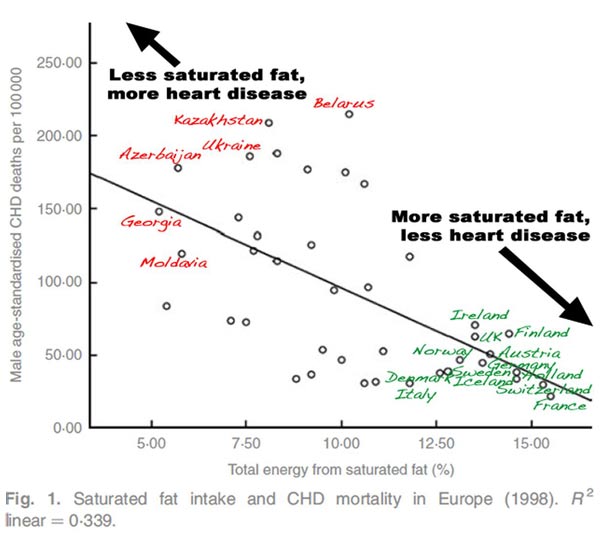
The following graph, from a British Journal of Nutrition study published in 2012, also shows how Europeans who eat the least saturated fats have the highest risk of heart disease, whereas those who eat the most have the lowest rates of heart disease — the complete opposite of conventional thinking and AHA claims.

Related: How to Detoxify and Heal the Lymphatic System
British journal of nutrition
Source: British Journal of Nutrition, 2012 Sep;108(5):939-42

Your Body Needs Saturated Fat and Cholesterol

Cholesterol is not only beneficial for your body, it’s absolutely vital for optimal functioning. For example, cholesterol is needed for the construction of your cell membranes and helps regulate the protein pathways required for cell signaling. Having insufficient amounts of cholesterol may negatively impact your brain health, hormone levels, heart disease risk and more.

Related: Start Eating Like That and Start Eating Like This – Your Guide to Homeostasis Through Diet

Your body also needs saturated fats to function properly. One way to understand this need is to consider the foods ancient humans consumed. Many experts believe we evolved as hunter-gatherers and have eaten a variety of animal products for most of our existence on Earth. To suggest that saturated fats are suddenly harmful to us makes no sense, at least not from an evolutionary perspective.

Reducing saturated fat to extremely low levels, or shunning it altogether, also doesn’t make sense when you consider its health benefits and biological functions, which include but are not limited to:

Providing building blocks for cell membranes, hormones and hormone-like substances Facilitating mineral absorption, such as calcium Acting as carriers for fat-soluble vitamins A, D, E and K
Converting carotene into vitamin A Helping to lower cholesterol levels (palmitic and stearic acids) Antiviral activity (caprylic acid)
Optimal fuel for your brain Providing satiety Modulating genetic regulation and helping prevent cancer (butyric acid)

High-Carb Versus High-Fat Diets

As noted by Teicholz, by eliminating saturated fat and cholesterol-rich foods we’ve also eliminated many of the most nutrient-dense foods from our diet — eggs and liver being just two examples — and this also has its repercussions for human health and development. Vitamins A, D, E and K are fat-soluble, which means you need the fat that comes naturally in animal foods along with the vitamins in order to absorb those vitamins.

Additionally, fat is very satiating, so you’re far less likely to overeat on a high-fat diet than a high-carb diet. Most people who complain about “starving” all the time are likely just eating too many carbs (quick-burning fuel) and not enough fat (slow-burning fuel).

Then there’s carb-addiction, of course, which further fuels the cycle of hunger and overeating. What’s worse, when you eat a high-carb diet for a long time, it blocks or shuts down your body’s ability to burn fat, which means all of your body fat remains right where it is, as it cannot be accessed for fuel.

By shifting your diet from high-carb to high-fat, you eventually regain the metabolic flexibility to burn both types of fuel — fat and sugar — which solves most of these problems; the hunger and cycle of overeating, weight gain, inflammation and related disease processes. Cyclical ketogenic diets are very effective for this, as is intermittent fasting and longer water fasts for those who are overweight.

The Problem With Vegetable Oils

As mentioned earlier, Teicholz’s book also delves into a new nutritional twist that has developed as the dangers of trans fats have been exposed and accepted. While the U.S. Food and Drug Administration has removed partially hydrogenated oils — the primary source of trans fats — from the list of “generally recognized as safe” ingredients, the vegetable oils (such as peanut, corn and soy oil) that have replaced them may have even more harmful health ramifications.

When heated, vegetable oils degrade into extremely toxic oxidation products. According to Teicholz, more than 100 dangerous oxidation products have been found in a single piece of chicken fried in vegetable oils. As early as the 1940s, animal experiments showed animals would develop cirrhosis of the liver or enlarged liver when fed vegetable oils. When fed heated vegetable oils, they died prematurely.

Cyclic aldehydes are among the most toxic of these byproducts, and animal research has shown even low levels of exposure cause serious inflammation, which is associated with heart disease and Alzheimer’s. Findings like these make the AHA’s recommendation to use margarine and vegetable oils all the more troubling.

In her book, Teicholz also cites research in which aldehydes were found to cause toxic shock in animals by damaging the gastrointestinal tract. We now know a lot more about the role your gut plays in your health, and the idea that aldehydes from heated vegetable oils can damage your gastric system is frighteningly consistent with the rise we see in immune problems and gastrointestinal-related diseases.

How a Cyclical Ketogenic Diet Can Improve Your Health

Two-thirds of the American population is overweight or obese,10 more than half of all Americans struggle with chronic illness,11 1 in 5 deaths in the U.S. is obesity-related12 and 1 in 4 deaths is related to heart disease.13 Saturated dietary fats and cholesterol are not to blame for these statistics. The evidence is actually quite clear: Excessive net carbohydrate intake is the primary culprit behind these disease statistics, primarily by decimating your mitochondrial function.

To address this, you need to eat a diet that allows your body to burn fat as its primary fuel rather than sugars, and to become an efficient fat burner, you actually have to eat fat. In my latest book, “Fat for Fuel,” I detail a cyclical or targeted ketogenic diet, which has been scientifically shown to optimize metabolic and mitochondrial health. A primary difference between this program and other ketogenic diets is the cyclical component.

It’s important to realize that the “metabolic magic” in the mitochondria occurs during the refeeding phase, not during the starvation phase. If you’re constantly in ketosis, you’re missing out on one of the most valuable benefits of the ketogenic diet. Basically, once you have established ketosis, you then cycle healthy carbs back in. As a general rule, I recommend adding 100 to 150 grams of carbs on the day or days each week that you do strength training. Some of the most important benefits of this kind of eating program are:

Weight loss

By rebalancing your body’s chemistry, weight loss and/or improved weight management becomes nearly effortless. Studies have shown a ketogenic diet can double the weight lost compared to a low-fat diet.14

Reduced inflammation

When burned for fuel, dietary fat releases far fewer reactive oxygen species and secondary free radicals than sugar. Ketones are also very effective histone deacetylase inhibitors that effectively reduce inflammatory responses. In fact, many drugs are being developed to address immune related inflammatory diseases that are HDAC inhibitors.

A safer and more rational strategy is to use a ketogenic diet, as it is one of the most effective ways to drive down your inflammation level through HDAC inhibition.

Reduced cancer risk

While all cells (including cancer cells) can use glucose for fuel, cancer cells lack the metabolic flexibility to use ketones, while regular cells thrive on these fats. Once your body enters a state of nutritional ketosis, cancer cells are more susceptible to being removed by your body through a process called autophagy. A cyclical ketogenic diet is a fundamental, essential tool that needs to be integrated in the management of nearly every cancer.

Increased muscle mass

Ketones spare branched-chain amino acids, thereby promoting muscle mass.15 However, make sure to implement cyclic ketosis. Chronic ketosis may eventually result in muscle loss as your body is impairing the mTOR pathway, which is important for anabolic growth. mTOR needs to be stimulated, just not consistently, as many people do with high protein diets.

Lowered insulin levels

Keeping your insulin level low helps prevent insulin resistance, Type 2 diabetes and related diseases. Research has demonstrated that diabetics who eat a low-carb ketogenic diet are able to significantly reduce their dependency on diabetes medication and may even reverse the condition.16

Lowering insulin resistance will also reduce your risk of Alzheimer’s. Recent research strengthens the link between insulin resistance and dementia even further, particularly among those with existing heart disease.17,18,19

Mental clarity

One of the first things people really notice once they start burning fat for fuel is that any former “brain fog” lifts, and they can suddenly think very clearly. As mentioned earlier, ketones are a preferred fuel for your brain; hence, the improved mental clarity.

Increased longevity

One of the reasons you can survive a long time without food is due to the process of ketosis, which spares protein breakdown.20 A fairly consistent effect seen in people on a ketogenic diet is that blood levels of leucine and other important structural proteins go up, allowing these proteins to perform a number of important signaling functions.

Ketones also mimic the life span extending properties of calorie restriction21 (fasting), which includes improved glucose metabolism; reduced inflammation; clearing out malfunctioning immune cells;22 reduced IGF-1, one of the factors that regulate growth pathways and growth genes and which is a major player in accelerated aging; cellular/intracellular regeneration and rejuvenation (autophagy and mitophagy).23

Are Homeopathic Products Now Illegal?

(By Dr. Mercola) About 5 million U.S. adults and 1 million U.S. children use homeopathy every year, and the remedies are known to be “generally safe and unlikely to cause severe adverse reactions,” according to the U.S. National Institutes of Health’s National Center for Complementary and Integrative Health.1 Yet, if the U.S. Food and Drug Administration (FDA) continues on its latest crusade, this natural health modality may soon be much harder to come by.

In a draft guidance document released in December 2017, the FDA takes aim at homeopathic remedies, or as they put it, “drug products labeled as homeopathic.”23 In a reversal of a long-standing decision to treat homeopathic remedies differently from other drugs, the FDA has now labeled virtually all of these products as “new drugs” that are “subject to FDA enforcement action at any time.”

Recommended: Sugar Leads to Depression – World’s First Trial Proves Gut and Brain are Linked (Protocol Included)

FDA Declares Homeopathic Drugs Illegal, Plans to Ramp up Enforcement Actions

While deaths from drugs like opioids are now a public health crisis, homeopathy has maintained a much lower, and presumably safer, profile. Yet, the FDA is using its limited resources to target the latter, citing a need to “protect consumers who choose to use homeopathic products.” Why now? The FDA also cited a “large uptick in products labeled as homeopathic that are being marketed for a wide array of diseases and conditions,” to the extent that homeopathic products are now a close to $3 billion industry.4

Perhaps that’s $3 billion too much for Big Pharma, FDA’s cozy partner in crime. “[I]n one fell swoop, the FDA has declared that virtually every single homeopathic drug on the market is being sold illegally,” the Alliance for Natural Health USA (ANH USA) wrote5 — and it’s not an exaggeration. In essence, the FDA’s guidance reads:6

  1. Any homeopathic drug that has not been considered “generally recognized as safe and effective” (GRAS/E) is considered a new drug
  2. FDA has not determined that any homeopathic drugs are GRAS/E
  3. A new drug cannot be marketed unless it goes through the FDA’s approval process
  4. No homeopathic drugs have gone through FDA approval nor can any producer afford to take them through the approval process

The FDA then states that it’s proposing a “new, risk-based enforcement approach” and first plans to target the “unapproved drug products labeled as homeopathic that have the greatest potential to cause risk to patients.” This includes:7

Recommended: Detox Cheap and Easy Without Fasting – Recipes Included
Products with reported safety concerns Products that contain or claim to contain ingredients associated with potentially significant safety concerns
Products for routes of administration other than oral and topical Products intended to be used for the prevention or treatment of serious and/or life-threatening diseases and conditions
Products for vulnerable populations Products that do not meet standards of quality, strength or purity as required under the law

FDA Does About-Face, ‘Penalizes an Entire Industry’

The draft guidance is a complete turnaround from the FDA’s prior stance on homeopathic remedies, which stated, under the 1988 Compliance Policy Guide (CPG) 400.400, Conditions Under Which Homeopathic Drugs May be Marketed, they did not need to get FDA approval prior to coming on the market. Instead, the ingredients in homeopathic remedies were to be verified by the Homeopathic Pharmacopoeia of the United States (HPUS). As noted by law firm Venable:8

Essentially, the HPUS creates a monograph for homeopathic drugs to follow, not dissimilar to the OTC drug monographs that FDA has developed for allopathic drugs. Accordingly, by virtue of an ingredient’s inclusion in the HPUS, the ingredient has already been closely examined and determined to be safe and effective by the HPCUS [Homeopathic Pharmacopoeia Convention of the United States].

Compliance with the HPUS functions as a premarket review of safety and effectiveness in the homeopathic context. By classifying homeopathic drugs as unapproved new drugs, the FDA is requiring a second showing of safety and effectiveness, a step that is unnecessary, not to mention impractical, given that the Agency intends to hold homeopathic products to an allopathic standard that is inappropriate, given the nature of homeopathic products.”

Further, it was by the FDA’s own deliberate decision that homeopathic drugs were excluded from former drug approval processes and intended to be a separate category. Venable continued:9

“The FDA deliberately excluded homeopathic drugs from both the Drug Efficacy Study Implementation (DESI) review (the process by which all drugs approved between 1938 and 1962 were retrospectively evaluated by the FDA for effectiveness) and the OTC Drug Review in 1972 (the process used to develop OTC drug monographs for allopathic drugs), deciding instead in the latter case to regulate homeopathic products separately because of their uniqueness.

By withdrawing the CPG and classifying all homeopathic drugs as unapproved drugs subject to FDA drug approval, the FDA is now requiring higher regulatory thresholds for OTC homeopathic drugs than are applicable to allopathic OTC drugs, many of which are permitted to be sold pursuant to the FDA monograph system. This move in effect penalizes an entire industry for the Agency’s 1972 decision.”

Recommended: Start Eating Like That and Start Eating Like This – Your Guide to Homeostasis Through Diet

FTC Targeted Homeopathy in 2016

The FDA isn’t the first government agency to target this centuries’ old natural medicine system. In a notice filed in November 2016, the FTC stated that in order for homeopathic remedies to claim they are effective, their makers must provide proof. If no proof is provided, the remedies must state there is “no scientific evidence that the product works.”

In order to not mislead consumers, the FTC further stated that homeopathic remedies lacking sufficient proof must communicate to consumers that “the product’s claims are based only on theories of homeopathy from the 1700s that are not accepted by most modern medical experts.”10 Dana Ullman, MPH, CCH, one of the leading advocates for homeopathy in the U.S., said at the time:11

“Considering the longtime safety history of homeopathic medicines, it is surprising and even shocking that the FTC would consider proposing new regulations now.

One cannot help but wonder who or what is pulling their strings … policies … commonly result from powerful economic forces at play … it is clear that this governmental agency is ignoring important scientific evidence, and one must wonder if they are protecting Big Pharma from competition more than protecting the consumer.”

Does Homeopathy Work?

Based on the theory that “like cures like,” or the Law of Similars, homeopathy was founded by German physician Dr. Samuel Hahnemann. The idea is that health conditions can be healed by treating a person with minute doses of a substance that would produce similar symptoms to their health condition if given in larger doses.

Homeopathy’s other guiding principle is that of the minimum dose, which is based on the premise that the more a substance is diluted, the more potent homeopathic remedy it becomes, known as the “law of infinitesimals.” Homeopathic remedies may be made from plants, minerals or other substances and are commonly administered in pellet form, dissolved under the tongue. A number of intriguing studies suggest homeopathy is effective and safe for a variety of ailments, including flu. According to Ullman:

“The use of a homeopathic medicine called Oscillococcinum is an example of a remedy that can be effective for many people with the flu, though clinical experience suggests that it is most effective when used within 48 hours of getting flu symptoms. Although most homeopathic medicines are made from the plant or mineral kingdom, Oscillococcinum is unusual in that it is made from the heart and liver of a duck.”

Recommended: How to Make the Healthiest Smoothies – 4 Recipes

In one study, nearly twice as many patients who were given Oscillococcinum recovered from the flu within 48 hours as those given a placebo.12 Further, Ullman noted:

A different group of researchers conducted a randomized, double-blind study involving 372 patients (188 treated with Oscillococcinum and 187 with placebo) of both sexes, ranging in age from 12 to 60, who presented rectal temperature ≥ 100.4 F, muscle pains, headache, or at least one of the following symptoms: shivering, chest pain, spine pain, coughing, irritation of nasal mucosa or feeling of malaise.13

Patients received three tubes of Oscillococcinum or placebo each day (morning, noon and night) for three days. The results of this trial show a highly statistically significant difference between the two groups, for what concerns disappearance of symptoms after 48 hours (19.2 percent in the Oscillococcinum group versus 17.1 percent in the placebo group) and improvement in symptoms (43.7 percent versus 38.6 percent for placebo).”

Additional research shows homeopathy’s promising role in the following conditions:

In patients with allergies, those using homeopathy reported improvements in nasal airflow compared with a placebo group.

With homeopathic treatment, the researchers described a “clear, significant and clinically relevant improvement in nasal inspiratory peak flow, similar to that found with topical steroids.”14

Homeopathy significantly reduced the severity and duration of chemotherapy-induced stomatitis (swelling and sores in the mouth) in children.15
Homeopathic medicine was effective in treating acute childhood diarrhea, decreasing both the duration of the diarrhea and the number of stools per day.16,17 Homeopathy has positive effects in children with attention deficit hyperactivity disorder (ADHD), particularly in the areas of behavioral and cognitive functions.18
Homeopathy lessened tender point pain and improved quality of life in people with fibromyalgia.19 Homeopathic was effective in treating the early stages of vitiligo in a report of 14 cases20

FDA Continues to Crack Down on Natural Substances, Protect Big Pharma

The FDA’s new push to regulate homeopathic products is eerily reminiscent of their recent crackdown on the plant kratom. Leaves from the kratom tree have been used for pain relief for hundreds of years, but scientists now know they contain compounds that target the brain similarly to opioids, helping to relieve pain. It appears the plant may be safer than opioids for pain relief and could even act as a tool to help those suffering from opioid withdrawal.

Recommended: Holistic Guide to Healing the Endocrine System and Balancing Our Hormones

In November 2017, however, rather than targeting the prescription opioids that are the root of the opioid epidemic, the FDA issued a public health advisory regarding risks associated with kratom use, suggesting that its usage could “expand the opioid epidemic.” What this comes down to, for some, is the right to choose what form of “medicine” to put in your body. As Dr. Lee Hieb, an orthopedic surgeon and past president of the Association of American Physicians and Surgeons, wrote in WND:21

“I’m not here to tout any particular over-the-counter remedy, but who gave the FDA total ability to limit what we can take into our bodies, while virtually forcing us to be given what they prescribe? It’s none of their business whether a ‘homeopathic remedy’ is worthless.

That’s an issue of commerce and truth in advertising. I, for one, want the freedom to research and decide for myself what supplements to take, even if my supplements ultimately do me no good. (Many do a great deal of good as Big Pharma knows only too well.)”

People have the right to choose their treatment, and doctors (many of whom admit to prescribing placebos to their patients) also retain the right to offer treatments they deem useful, whether it be homeopathy or another remedy.

As for the FDA’s new draft guidance on homeopathic drugs, it’s attempting to discredit such remedies’ proven healing powers before their mechanisms of action have even been fully understood. If you want to express your opinion on the matter, the FDA is accepting comments from the public until March 30, 2018.