Autism Rates Up Again – Not Born With It

(Natural Blaze) By Brian S. Hooker, Science Advisor, Focus for Health and Board Member, World Mercury Project.

Recently, the newest U.S. autism prevalence numbers were released by the CDC.  It was not good news.  Among children born in 2004 and 2006, the prevalence of autism had increased from 1 in 68 to 1 in 59, respectively.  Leading the nation in terms of autism prevalence was New Jersey with a rate of 1 in 35 children and 1 in 22 boys.  In other words, nearly 5% of boys in New Jersey have autism spectrum disorder as defined by the new DSM V criteria. Of the children with autism in the U.S., 56% had an evaluated IQ of 85 or less, meaning they possessed intellectual disability, with the majority of those children having an IQ of less than 70.

Many in the scientific community have posited that autism is genetically determined, and researchers have searched the genome looking for the cause of this disorder.  However, the over 400 genes that have been attributed to autism risk were found to contribute to only a fraction of autism cases.  Climbing down this flimsy branch of genetics, researchers and lauding media contrived the phrase “individuals born with autism.”

Related: Doctors Against Vaccines – Hear From Those Who Have Done the Research

Looking at prevalence alone, we are seeing a dramatic and chilling increase in numbers of autism cases, especially in the past 18 years since CDC started to officially count autism numbers in the U.S.  In 2000, the prevalence was 1 in 250, then 1 in 133 (2006) followed by 1 in 88 (2012), 1 in 68 (2014) and now 1 in 59.  Historic data also consistently show that the rate of autism in the 1980’s was near 1 in 2000 children.  It is clear that we are in an ever-increasing epidemic of this often profoundly debilitating developmental disorder, where the majority of these children will never be able to live independently throughout their lifetime.

These wonderful kids were born normally, developed normally for the first one year to 18 months of life, and then regressed into the isolated, painful and disabling world of autism.

Let’s go back to the “individuals born with autism” phrase that I take issue with.  It is the experience of my family and many, if not most families of children with autism, that these wonderful kids were born normally, developed normally for the first one year to 18 months of life, and then regressed into the isolated, painful and disabling world of autism.  They were not born with it but experienced a significant decline in function after an environmental stressor.

Related: Autism, Gut Health, Obesity, the MMR Vaccine, and Andrew Wakefield

Just prior to the release of the CDC’s autism prevalence numbers, an important paper by Dr. Sally Ozonoff and her colleagues at the prestigious UC Davis MIND Institute was quietly published in the journal Autism Research.  The paper, entitled “Onset Patterns in Autism: Variation across Informants, Methods, and Timing” was the culmination of a prospective study tracking the onset of autistic symptoms as evaluated by special education practitioners and parents.  This was done with the gold standard autism assessment instrument Autism Diagnostic Observation Schedule (ADOS), including assessments of frequency and quality of eye contact, shared affect, and overall social engagement by highly trained examiners.

Related: How To Detoxify and Heal From Vaccinations – For Adults and Children
Among those children diagnosed with autism, 88% showed a decline of function (i.e., regression) from an average to above average performance during the first assessments, as compared to those children who did not end up with an autism diagnosis.

147 infants with a family history of ASD and 83 without such a history were evaluated during 7 extensive practitioner assessments held periodically within the first three years of life.  If these children were born with autism they would have shown signs at the very beginning of life. But they did not.

Among those children diagnosed with autism, 88% showed a decline of function (i.e., regression) from an average to above average performance during the first assessments, as compared to those children who did not end up with an autism diagnosis.  In addition, the examiners saw a higher rate of regression than that reported even by parents (88% compared to 69%, respectively), using assessment instrument findings that were based on parental ratings and interviews.  Also, when retrospective instruments were used for reporting (which are hampered by recall bias), incidence of regression was roughly 40%, much lower than that seen in the arguably more accurate prospective study.

California First State Ever To Prescribe Specific Meals To Chronically Ill Patients

(Natural Blaze by Heather Callaghan) California has become the first state to prescribe specific – and presumably healthier – meals to chronically ill patients. The newly launched pilot program will treat low-income and at-risk Medicaid patients with “specially tailored meals that are proven to offer relief from chronic illnesses and diseases.”

Wait – Is this finally an admission that specific foods have an ameliorative effect on disease?

The “Food is Medicine” 3-year program draws on how certain illnesses require special diets that can be hard to orchestrate, especially for poorer patients. Congestive heart failure, for instance, requires people to consume less than one teaspoon of salt per day. While this can already be hard to actually measure throughout your daily meals, it can also be hard for low-income patients to find cheap foods that are low in sodium.

Over the course of the next three years, the state will be giving funding to hunger relief charities in San Francisco, the North Bay Area, Santa Clara County, Los Angeles, and San Diego. The charities and pantries, all of which are a part of the Food is Medicine coalition, will be providing specially prepared meals to 1,000 state Medicaid patients who suffer from congestive heart failure, cancer, diabetes, chronic obstructive pulmonary disease, and renal disease.

Gov. Jerry Brown (D) first approved the program back in June 2017, but legislators celebrated the actual launch of the program last Sunday.

Recommended: Start Eating Like That and Start Eating Like This – Your Guide to Homeostasis Through Diet

Important to note: while some people may scoff that the program is worried about salt for its patients, keep in mind that low-income people have little to choose from if they are to fill grocery carts and bellies. Processed food is nothing if not loaded with obscene doses of table salt. All this processed salt greatly displaces the precious amount of potassium that heart patients – and all people – need on a daily basis.

There are very few Americans who get the daily recommended 4,700 mg of potassium needed for detoxification and heart health. It comes from fresh, whole foods like dark leafy greens, potatoes, bananas and dates. On top of that, a single meal at a restaurant could easily top 1,200 mg of sodium! We might make a tasty human-jerky if aliens ever invaded… (but I digress!)

This program was inspired by a previous initiative by the Metropolitan Area Neighborhood Nutrition Alliance in Philadelphia. That stands for MANNA — get it?

Their study gave patients three medically tailored meals during six months and as a result they experienced a dramatic drop in monthly healthcare costs, from $38,937 per month to $28,183 per month all together. That was a 55% lower drop compared to the control group.

Recommended: Detox Cheap and Easy Without Fasting – Recipes Included

Likewise, more U.S. hospitals are using fresh food for their patients with great results.

Senator Mike McGuire said:

We couldn’t be more excited to turn this local success story into a statewide program that will improve the health of those who need it most while reducing costs for taxpayers over the long term.

The bottom line: We believe, over the next three years, we’ll demonstrate enhanced health outcomes for chronically ill Medi-Cal patients and save millions in health care costs.

We really couldn’t tell what types of foods the patients will be given – but any step in this direction is a giant step up from abysmal hospital food – which is thinly veiled GMO hog slop.

Recommended: How to Avoid GMOs in 2018 – And Everything Else You Should Know About Genetic Engineering

My only “beef” is that this type of program should become the norm for ALL patients and that’s an order that should have been placed long before yesterday. It’s hard not to notice that the real motivation seems to be making sure the hospitals aren’t incurring too many costs – but at least they are finally listening, one way or another.

Survey Claiming Millennials Like GMOs Ridiculously Biased And Manipulated

(Natural Blaze by Heather Callaghan) Millennials lead the charge against GMOs and have more in common with their grandparents than their parents’ generation. Millennials are reviving the art of gardening, local food, and food preservation so it shouldn’t be surprising to find thousands of them at the March Against Monsanto. Yet a new survey is attempting to influence the public that it is millennials who love GMOs.

A new survey, according to the Telegraph, declared that “Millennials ‘have no qualms about GM crops’ unlike older generation”. Most people read headlines and headlines like this cast a major influence. All the propaganda is right in the title. First, it is falsely claiming that millennials have embraced genetic engineering of their food. Second, by mentioning the “older generation” and claiming they are against GMOs, the survey casts a subtle message that if you don’t accept GMOs you are stodgy and archaic, instead of hip and open-minded like the supposed millennials.

But is that what the survey was about at all??

Must Read: How to Avoid GMOs in 2018 – And Everything Else You Should Know About Genetic Engineering

GM Watch reports on the survey commissioned by the GM industry body, the Agricultural Biotechnology Council (ABC), carried out by the polling firm Populus. At first, the actual survey wasn’t made available with any links, which means journalists wrote articles without even checking. But then….:

…perhaps in response to queries from skeptical members of the public, Populus put the survey tables online, under “New Farming Techniques“.

It turns out that the skeptics were right. The questions were appallingly biased.

All the questions in the poll were preceded by some information: “Technology is increasingly being developed to tackle the challenges of 21st century farming and food security. Innovative techniques have been designed to provide the best possible data collection and management to allow greater precision across the food production process. The benefits of these techniques include: allowing more targeted weed, pest and disease control, reducing energy usage, delivering higher yields and overall allowing for more sustainable and productive farming. To what extent would you support or oppose the following farming techniques?”

This clearly is intended to suggest that all of the techniques people were then asked about deliver some or all of these benefits, but in the case of GM and gene editing, that is a matter of huge public controversy. So the introduction cannot by any stretch of the imagination be seen as a neutral piece of information.

Only after being given this information were people asked, in the GM question, what they thought about “Plant breeding using gene editing to make crops more nutritious, pest and disease resistant”.

Not only is the question biased but it is strange that the answers are interpreted as sweeping, uncritical support for GMO crops among millennials. “No qualms?” There was no room for qualms in the survey!

GM Watch says that Populus – a member of the British Polling Council – violated rules for conducting polls. A Council stipulation states that complete wording of the question asked must be made public the same time the survey results come out – not several days later, in this instance.

Recommended: Best Supplements To Kill Candida and Everything Else You Ever Wanted To Know About Fungal Infections

The Council says that a reputable organization ideally would not contain any serious bias in their questionnaire and “introduce bias into a survey by means of question-wording.”

By these standards, the survey should be held to the light for what appears to be some sneaky info maneuvering.

What would have happened if a decidedly anti-gmo group had manipulated data and presented it to the media the way that Populus has done?

USDA Wants Deceptively Cute Images For GMO Labels, But Cuts The Phrase “Genetically Modified”

(Natural Blaze) The public comment period is now open on the U.S. Department of Agriculture’s just unveiled proposal for food labeling of products using GMOs—a plan that would have labels without the words “genetically modified” or “genetically engineered,” but instead adorned with cheerful images.

The images are just as insulting to consumers as the law, which the chemical and junk food industry lobbyists spent $400 million to pass.” –Katherine Paul, Organic Consumers Association

According to Wenonah Hauter, executive director of Food & Water Watch, the proposal represents “a gift to industry from our now Secretary of State, Mike Pompeo, who authored the legislation to squash the Vermont GMO labeling law and mandatory labels.”

The proposal follows President Barack Obama’s 2016 signature on an industry-approved bill—dubbed the DARK Act—that required national labeling standard rules, and which critics blasted for having loopholees and lacking a mandate for adequate GMO labels. That law, which pre-empted Vermont’s first-of-its-kind labeling law, also required a deadline for the final rules by July 29, 2018, hence the USDA’s rollout this week.

Among the problems with the proposal, says Hauter, is that the “rule refers to GMOs as ‘bioengineered,’ or BE foods. This is a deceptive strategy because most consumers don’t know what that means.”

Andrew Kimbrell, executive director at Center for Food Safety, agreed, saying, “USDA’s exclusion of the well-established terms, GE and GMO, as options will confuse and mislead consumers, and the agency must instead allow the use of those terms.”

As for the images that will bear the acronym BE—”Wait ’till you see them,” writes Katherine Paul, associate director of the Organic Consumers Association. “All bright and cheery, with sunburst and smiley-faced images—but without ‘GMO’ appearing anywhere on the labels.”

“The images are just as insulting to consumers as the law, which the chemical and junk food industry lobbyists spent $400 million to pass—under the specious name of the ‘Safe and Affordable Food Labeling Act,’” Paul said.

The problems go beyond the symbol, say food safety groups.

“One of the many loopholes,” Hauter added, is that it “would allow a company that knowingly sells canned GMO sweetcorn to use a label that says ‘may be bioengineered’ because less than 85 percent of sweetcorn grown is genetically engineered.”

In addition, it would allow companies to use electronic QR codes, instead of a clear symbol, which would necessitate consumers having a clear internet connection, a smart phone, and the time for the hassle it would take to scan them.

“USDA should not allow QR codes,” Kimbrell said bluntly. “USDA’s own study found that QR codes are inherently discriminatory against one third of Americans who do not own smartphones, and even more so against rural, low income, and elderly populations or those without access to the internet. USDA should mandate on-package text or symbol labeling as the only fair and effective means of disclosure for GE foods.”

In sum, the groups say, the proposal leaves consumers in the dark.

“This is a ‘Call to Action’ to all Americans who have waited for decades to finally have GE foods labeled,” says Kimbrell. “Now is the time to tell the Trump administration to do the right thing and meaningfully label these foods.”

This article (USDA Wants Deceptively Cute Images for GMO Labels, But Cuts the Phrase Genetically Modified) appeared first at Common Dreams and is licensed under a Creative Commons Attribution-Share Alike 3.0 License. (Image: Organic Consumers Association)

China No Longer Accepting World’s Garbage, Time For A National Recycling Program

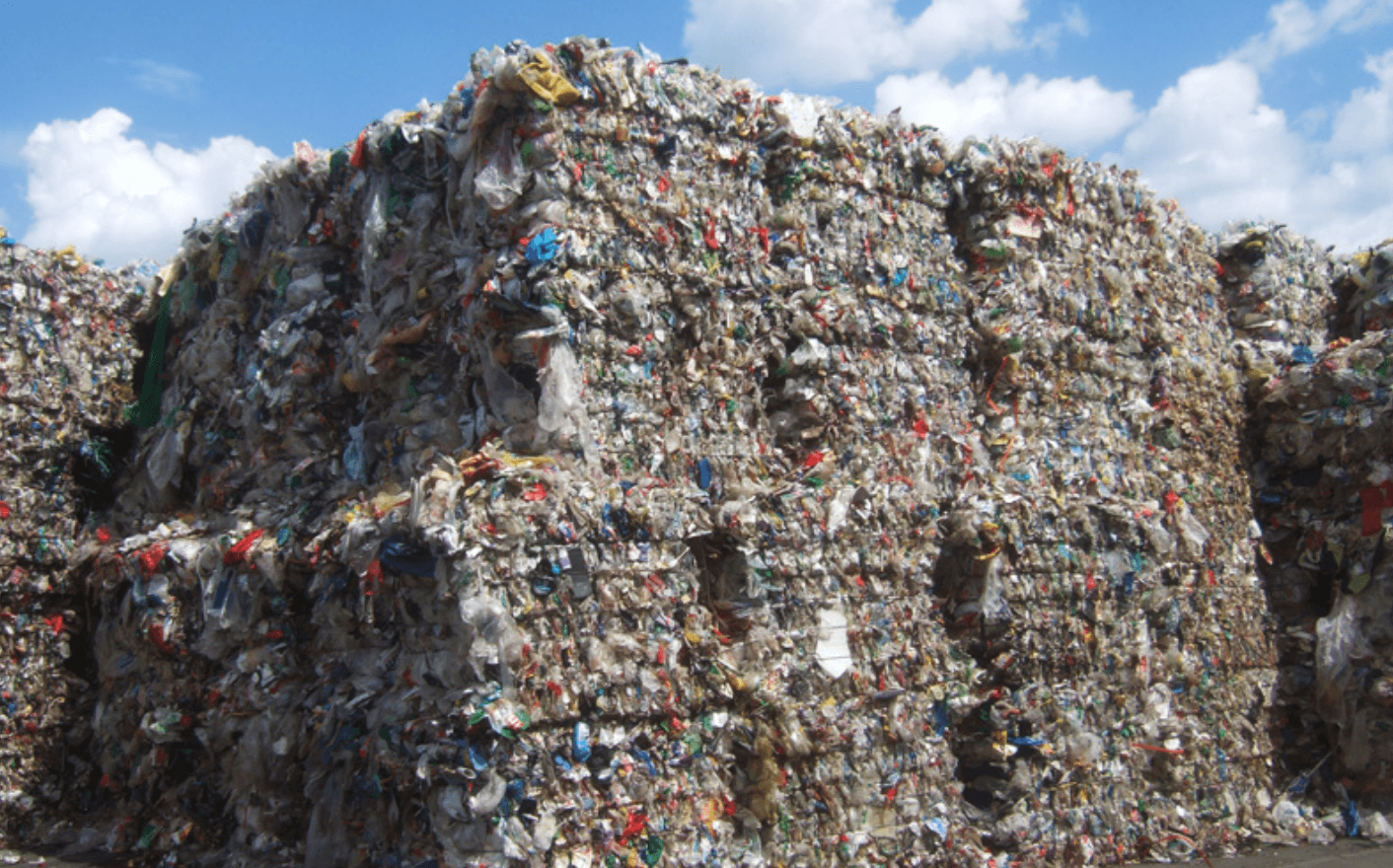
(Natural Blaze by Brandon Turbeville) In 2017, China announced that it would no longer be accepting much of the world’s trash in the coming year. In January, it followed through with that announcement and stopped accepting 24 types of waste which includes plastics, mining slap, garbage textiles, and plastics. China’s stated reason for no longer accepting the waste is its own concerns over pollution domestically.

This new policy has caused shockwaves in the United States, Ireland, Germany, Canada, and a number of European countries who are now rushing to figure out a solution to their growing piles of trash that had previously just been sent overseas.

If sanity were to prevail of course, the United States and fellow countries would immediately begin developing methods of recycling and industries/services to do just that domestically. A national recycling program would be a perfect solution that would not only recycle the material that is now piling up but also clean up the American environment and create good-paying jobs.

In other words, a national recycling program funded by low- to zero-percent interest credit from a nationalized Federal Reserve that would see the entire country’s garbage recycled and sold at a profit as well as the recycling of material already buried in landfills.

Instead, however, the United States is attempting to force China to accept its trash by using the World Trade Organization’s enforcement mechanism for the “Free Trade” and the “Global Economy” that has ruined the living standards of virtually every country that has embraced it. The U.S. is arguing that China’s new policy is causing a “fundamental disruption in global supply chains for scrap materials.”

As Reuters reported,

“China’s import restrictions on recycled commodities have caused a fundamental disruption in global supply chains for scrap materials, directing them away from productive reuse and toward disposal,” a U.S. representative told the meeting, according to a trade official in Geneva.

[…]

We request that China immediately halt implementation and revise these measures in a manner consistent with existing international standards for trade in scrap materials, which provide a global framework for transparent and environmentally sound trade in recycled commodities.”

Fix your vision naturally without glasses (Ad)

But sanity is not something the WTO is known for enforcing. Still, China is defending its policy, however. As EcoWatch reports:

The concerns are neither reasonable nor have any legal basis,” Foreign Ministry spokesperson Hua Chunying said at a daily press briefing in response to the U.S. official’s remark.

“It’s very hypocritical of the U.S. to say China is breaching its WTO duty,” Hua said. She noted that if the U.S. thought it legitimate to restrict exports of high-tech and high-value-added products, then China’s ban on foreign waste imports was not illegal.

“Restricting and banning the imports of solid waste is an important measure China has taken to implement the new development concept, improve environmental quality and safeguard people’s health,” Hua said, adding that the Basel Convention allows countries the right to restrict the entry of foreign waste.

“We hope that the U.S. can reduce and manage hazardous waste and other waste of its own and take up more duties and obligations.”