World Famous Psychiatrist Says: More Psychiatric Drug Treatment Means More Shootings Will Happen

(Natural Blaze by Jon Rappoport) Listen to this man. You’d better listen.

His name is Peter Breggin. He is a world famous psychiatrist. He has been called the conscience of his profession.

Here is an excerpt from his bio:

“Peter R. Breggin MD is a Harvard-trained psychiatrist and former Consultant at NIMH [National Institute of Mental Health] who has been called ‘The Conscience of Psychiatry’ for his many decades of successful efforts to reform the mental health field. His work provides the foundation for modern criticism of psychiatric diagnoses and drugs, and leads the way in promoting more caring and effective therapies. His research and educational projects have brought about major changes in the FDA-approved Full Prescribing Information or labels for dozens of antipsychotic and antidepressant drugs. He continues to education the public and professions about the tragic psychiatric drugging of America’s children.”

Recommended: Holistic Guide to Healing the Endocrine System and Balancing Our Hormones

“Dr. Breggin has authored dozens of scientific articles and more than twenty books, including medical books and the bestsellers Toxic Psychiatry and Talking Back to Prozac. Two more recent books are Medication Madness: The Role of Psychiatric Drugs in Cases of Violence, Suicide and Crime and Psychiatric Drug Withdrawal: A Guide for Prescribers, Therapists, Patients and their Families.”

“Dr. Breggin has unprecedented and unique knowledge about how the pharmaceutical industry too often commits fraud in researching and marketing psychiatric drugs. He has testified many times in malpractice, product liability and criminal cases, often in relation to adverse drug effects…”

Here is an explosive excerpt from Dr. Breggin’s recent column at Mad In America: “Psychiatrist Says: More Psychiatry Means More Shootings”:

“In the early 1990s, a federal court-appointed me to be the scientific expert for all of the combined product liability cases that were brought against Eli Lilly throughout the country concerning Prozac-induced violence, suicide and crime. Since then I have been involved in many cases in which judges and juries, and even prosecuting attorneys, have determined that psychiatric drugs have caused or substantially contributed to violence. For a lengthy list, see the Legal Section on my website [www.breggin.com].”

“In 2003/2004, I wrote a scientific review article about antidepressant-induced suicide, violence and mania which the FDA distributed to all its advisory committee members. This took place as the FDA Advisory Committee members prepared to review new warnings to be put in the Full Prescribing Information for all antidepressants.”

Recommended: Sugar Leads to Depression – World’s First Trial Proves Gut and Brain are Linked (Protocol Included)

“In my peer-reviewed paper [about the effects of antidepressants], I wrote: ‘Mania with psychosis is the extreme end of a stimulant continuum that often begins with lesser degrees of insomnia, nervousness, anxiety, hyperactivity and irritability and then progresses toward more severe agitation, aggression, and varying degrees of mania.”

“In words very close to and sometimes identical to mine, the FDA one year later required the manufacturers of every antidepressant to put the following observations in the Warnings section of the Full Prescribing Information:”

“’All patients being treated with antidepressants for any indication should be monitored appropriately and observed closely for clinical worsening, suicidality, and unusual changes in behavior, especially during the initial few months of a course of drug therapy, or at times of dose changes, either increases or decreases. The following symptoms, anxiety, agitation, panic attacks, insomnia, irritability, hostility, aggressiveness, impulsivity, akathisia (psychomotor restlessness), hypomania, and mania, have been reported in adult and pediatric patients being treated with antidepressants for major depressive disorder as well as for other indications, both psychiatric and nonpsychiatric’.”

“These adverse drug effects—including agitation, irritability, hostility, aggressiveness, akathisia, and impulsivity—are an obvious prescription for violence. Akathisia, which I also described in my article, is a psychomotor agitation that is strongly associated with violence.”

“The FDA Medication Guide for antidepressants warns clinicians, patients and families to be on the alert for the following:

  • acting on dangerous impulses
  • acting aggressive or violent
  • feeling agitated, restless, angry or irritable
  • other unusual changes in behavior or mood”

“This list (above) of antidepressant adverse effects from the Medication Guide should make clear that antidepressants can cause violence.”

“The FDA also acknowledges the risk of both psychosis and aggression from the stimulant drugs used to treat ADHD…”

“In the study of violence reports to the FDA, any predisposition toward violence in the patients themselves was largely ruled out because some of the most violence-inducing drugs were not psychiatric drugs, and were being given to a more general population. Some of the violence-inducing drugs were antibiotics, including Lariam (Mefloquine), which Sgt. Robert Bales was taking when he slaughtered 16 helpless, innocent villagers in Afghanistan.”

“[The authorities] do not foresee that the psychiatric strategy for treatment will sometimes lead to tragic outcomes like the school shootings. Nor do they realize that the overall evidence of harm from psychiatric drugs is infinitely greater than the evidence for good effects, as scientist Peter Gøtzsche has confirmed in Deadly Psychiatry and Organized Denial.”

“Calling for more spending on mental health and on psychiatry will make matters worse, probably causing many more shootings than it prevents.”

Recommended: Gluten, Candida, Leaky Gut Syndrome, and Autoimmune Diseases

“Not only do psychiatric drugs add to the risk of violence, but psychiatric treatment lulls the various authorities and the family into believing that the patient is now ‘under control’ and ‘less of a risk.’ Even the patient may think the drugs are helping, and continue to take them right up to the moment of violence.”

“Even when some of their patients signal with all their might that they are dangerous and need to be stopped, mental health providers are likely to give drugs, adding fuel to the heat of violent impulses, while assuming that their violence-inducing drugs will reduce the risk of serious aggression.”

NOTE: DR. BREGGIN ISSUES THIS WARNING: “Most psychiatric drugs can cause withdrawal reactions, including life-threatening emotional and physical reactions. So it is not only dangerous to start psychiatric drugs, it can also be dangerous to stop them. Withdrawal from psychiatric drugs should be done carefully under experienced clinical supervision. Methods for safely withdrawing from psychiatric drugs are discussed in Dr. Breggin’s book: Psychiatric Drug Withdrawal: A Guide for Prescribers, Therapists, Patients and Their Families.”

My comments: The tragedy of many mass shootings—many more than are highlighted by the press—is mirrored by the tragedy of psychiatric drug treatment.

Overwhelmingly, psychiatrists bury their heads in the sand, as they continue to dose patients with compounds that cause horrendous effects, including violence.

The psychiatric solution to mass shootings—more diagnosis and more drugs—becomes the cause for increased shootings.

Many mainstream reporters are aware of this, but they are constrained from telling the whole truth. Their media outlets are relying on pharmaceutical advertising for their very existence.

Legal authorities make it very difficult, if not impossible, to obtain information about which psychiatric drugs shooters were taking before they went on their rampages. Case in point, Sandy Hook, 2012—the (purported) killer, Adam Lanza, had been under psychiatric treatment. But an assistant attorney general for the state of Connecticut stated that the list of Lanza’s meds would not be disclosed, because that “can cause a lot of people to stop taking their medications.” Better for patients to keep taking those drugs—and then some of them will violently go off on innocent persons.

Recommended: Hypothyroidism – Natural Remedies, Causes, and How To Heal the Thyroid

In conversations with attorneys over the years, I’ve been told that judges, police officers, and prosecutors avoid the “psychiatric drug issue.” They don’t want to touch it. After all, friendly psychiatrists are part of the legal system. They often testify at trials. Further, “medical experts” will lash out and go on the attack against law enforcement if an attempt is made to link a violent crime to the effects of psychiatric drugs. (Dr. Breggin has managed to break through this code of silence. He is one of the only psychiatrists who has been able to testify in court about the true effects of psychiatric drugs.)

At the federal level, lobbyists for drug companies are crawling all over Washington DC. They exert an astonishing level of influence on law makers and bureaucrats. The issue of psychiatric drug-induced murder is obviously not on the list of permitted issues for open and extensive discussion.

Then there is the FDA. This is the agency tasked with approving every medical drug as safe and effective before it can be released for public use. The FDA will never admit its decisions have been fueling mass shootings across America. The Agency views the pharmaceutical industry as its partner. Placing warnings on informational drug inserts (as described above by Dr. Breggin) easily escapes the attention of psychiatric patients. Doctors who prescribe the drugs may or may not read those warnings. Even if they do read them, the drugs are THE solution to “mental disorders.” Very few doctors will seek other means of treatment.

The public is in the middle of a psychiatric plague. Learning the truth is the first step forward.

After that, we MUST preserve the right to refuse medication.

Freedom and life itself hang in the balance.

(To read about Jon’s mega-collection, The Matrix Revealedclick here.)

Interested In Muscle? Eat Whole Eggs Rather Than Egg Whites

(Natural Blaze by Natasha Longo) Egg yolks contain over 80 percent of the overall vitamins and minerals that can be found within the egg as a whole. The yolk also contains enzymes which help the body absorb the protein in the white. People who consume protein from whole eggs or from egg whites after engaging in exercise differ dramatically in how their muscles build protein, a process called protein synthesis, during the post-workout period, researchers report in a new study.

For years, this misunderstood food — low in calories, containing every single vitamin (A, B, D, E, K) except C, and nearly perfect in protein — was once shunned for threats to cholesterol intake.

Specifically, the post-workout muscle-building response in those eating whole eggs is 40 percent greater than in those consuming an equivalent amount of protein from egg whites, the team found.

The discovery, reported in the American Journal of Clinical Nutrition, suggests that the widespread practice of throwing away egg yolks to maximize one’s dietary protein intake from eggs is counterproductive, said Nicholas Burd, a University of Illinois professor of kinesiology and community health who led the research. The USDA National Institute of Food and Agriculture Hatch project supported this research.

The yolks also contain protein, along with key nutrients and other food components that are not present in egg whites, Burd said. And something in the yolks is boosting the body’s ability to utilize that protein in the muscles.

Egg yolks actually contain all the healthy, fatty acids that are contained within the egg. It is a nucleus of wholesome goodness that supplied our ancestors with their sustenance since before they were upright. When you strip away the egg yolk and eat only the white, you’re completely missing out on the benefits of those fatty acids like the Omega-3 fats.

Another reason to avoid separating the egg from the yolk relates to biotin. Avidin is a component in egg whites that bonds with biotin, preventing the nutrient’s absorption.

“This study suggests that eating protein within its most natural food matrix tends to be more beneficial to our muscles as opposed to getting one’s protein from isolated protein sources,” he said.

In the study, 10 young men engaged in a single bout of resistance exercise and then ate either whole eggs or egg whites containing 18 grams of protein. Researchers administered infusions of stable-isotope-labeled leucine and phenylalanine (two important amino acids) to participants. This allowed the scientists to maintain and precisely measure amino acid levels in participants’ blood and muscles.

The U. of I. Poultry Research Farm developed eggs for the study that also were isotopically labeled with leucine. This allowed for precise tracking of where the food-derived amino acids ended up after participants ingested them.

The team took repeated blood and muscle biopsy samples to assess how the egg-derived amino acids were appearing in the blood and in protein synthesis in muscles before and after the resistance exercise and eating.

“By using those labeled eggs, we saw that if you ate the whole egg or the egg whites, the same amount of dietary amino acids became available in your blood,” Burd said. “In each case, about 60 to 70 percent of the amino acids were available in the blood to build new muscle protein. That would suggest that getting one’s protein from whole eggs or just from the whites makes no difference, as the amount of dietary amino acids in the blood after eating generally gives us an indication of how potent a food source is for the muscle-building response.”

But when the researchers directly measured protein synthesis in the muscle, they found a very different response.

“We saw that the ingestion of whole eggs immediately after resistance exercise resulted in greater muscle-protein synthesis than the ingestion of egg whites,” Burd said.

Previous studies suggest this difference has nothing to do with the difference in energy content of whole eggs and egg whites — whole eggs containing 18 grams of protein also contain about 17 grams of fat, whereas egg whites have no fat. Studies from Burd’s lab and others show that simply adding fat to an isolated protein source in the diet after exercise does not boost protein synthesis.

“There’s a lot of stress on protein nutrition in modern society, and research is showing that we need more protein in the diet than we once thought to maintain health,” Burd said. “As world population grows, we need cost-effective and sustainable strategies for improving the use of protein in the diet. This work is showing that consuming egg protein in its natural matrix has a much greater benefit than getting isolated protein from the same source.”

Recommended:

Can Road Salt And Other Pollutants Disrupt Our Circadian Rhythms?

(Natural Blaze by Jennifer Marie HurleyRensselaer Polytechnic InstituteEvery winter, local governments across the United States apply millions of tons of road salt to keep streets navigable during snow and ice storms. Runoff from melting snow carries road salt into streams and lakes, and causes many bodies of water to have extraordinarily high salinity.

At Rensselaer Polytechnic Institute, my colleague Rick Relyea and his lab are working to quantify how increases in salinity affect ecosystems. Not surprisingly, they have found that high salinity has negative impacts on many species. They have also discovered that some species have the ability to cope with these increases in salinity.

But this ability comes at a price. In a recent study, Rick and I analyzed how a common species of zooplankton, Daphnia pulex, adapts to increasing levels of road salt. We found that this exposure affected an important biological rhythm: The circadian clock, which may govern Daphnia‘s feeding and predation avoidance behaviors. Since many fish prey on Daphnia, this effect could have ripples throughout entire ecosystems. Our work also raises questions about whether salt, or other environmental pollutants, could have similar impacts on the human circadian clock.

Related: Earthing – Ground Your Body for Optimal Health

Daily biological rhythms and the circadian clock

In studying how road salt affects aquatic ecosystems, the Relyea lab showed that Daphnia pulex can adapt to handle moderate exposures in as little as two and a half months. These levels ranged from 15 milligrams of chloride (a building block of salt) per liter of water to a high of 1,000 milligrams per liter – a level found in highly contaminated lakes in North America.

However, an organism’s ability to adapt to something in its environment can also be accompanied by negative trade-offs. My lab’s collaboration with Rick’s began in an effort to identify these trade-offs in salt-adapted Daphnia.

In my lab, we study how our circadian rhythms allow us to keep track of time. We investigate how the molecules in our cells work together to tick like a clock. These circadian rhythms allow an organism to anticipate 24-hour oscillations in its environment, such as changes from light (daytime) to dark (nighttime), and are essential to an organism’s fitness.

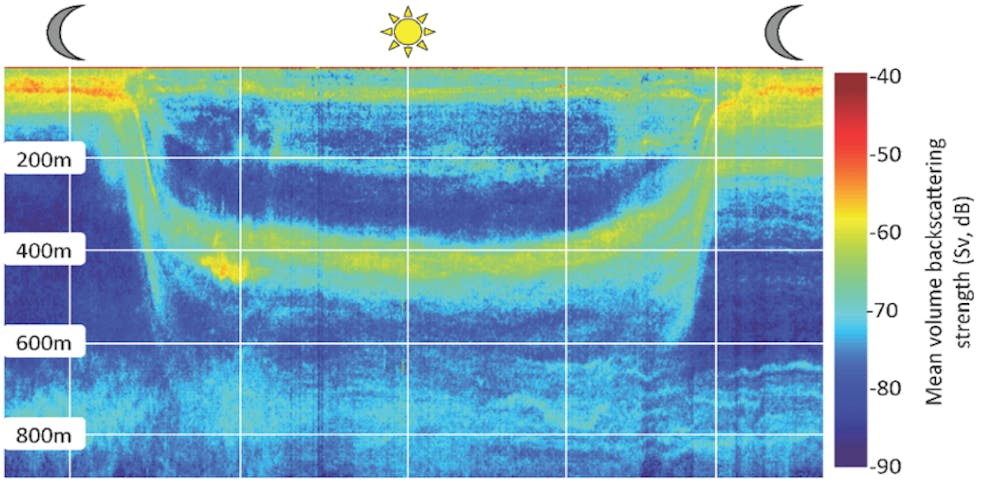
Rick and I hypothesized that adaptation to high salinity could disrupt Daphnia’scircadian rhythms based on recent evidence showing that other environmental contaminants can disrupt circadian behavior. One important behavior in Daphniathat may be controlled by the circadian clock is the diel vertical migration – the largest daily biomass migration on Earth, which occurs in oceans, bays and lakes. Plankton and fish migrate down to deeper water during the day to avoid predators and sun damage, and back up toward the surface at night to feed.

Echogram illustrating the ascending and descending phases of diel vertical migration, in which organisms ascend and descend through the water column. The color scale reflects acoustic scattering by concentrations of organisms at different depths.
DEEP SEARCH – BOEM, USGS, NOAA

Related: The Health Benefits of Epsom Salt Baths

Given what we know about circadian function, it would be logical to assume that exposure to pollution would not affect an organism’s circadian rhythms. While circadian clocks can incorporate environmental information to tell the time of day, they are heavily buffered against most environmental effects.

To understand the importance of this buffering, imagine that the timing of an organism’s day length responded to environmental temperature. Heat speeds up molecular reactions, so on hot days the organism’s 24-hour rhythm could become 20 hours, and on cold days it might become 28 hours. In essence, the organism would have a thermometer, not a clock.

Adaptation to pollution affects key circadian genes

To determine whether clock disruption is a trade-off to pollutant adaptation, we first had to establish that Daphnia is governed by a circadian clock. To do this, we identified genes in Daphnia that are similar to two genes, known as period and clock, in an organism that serves as a circadian model system: Drosophila melanogaster, the common fruit fly.

We tracked the levels of period and clock in Daphnia, keeping the organisms in constant darkness to ensure that a light stimulus did not affect these levels. Our data showed that the levels of period and clock varied over time with a 24-hour rhythm – a clear indication that Daphnia have a functional circadian clock.

Recommended: How to Cure Lyme Disease, and Virtually Any Other Bacterial Infection, Naturally

We also tracked the same genes in populations of Daphnia that had adapted to increased salinity. Much to my surprise, we discovered that the daily variation of period and clock levels deteriorated directly with the level of salinity the Daphniawere adapted to. In other words, as Daphnia adapted to higher salinity levels, they showed less variation in the levels of period and clock over the day. This demonstrated that Daphnia’s clock is indeed affected by pollutant exposure.

Daphnia and other plankton are among the most abundant organisms on Earth and play critical ecological roles.

We currently don’t understand what causes this effect, but the relationship between salinity levels and decreased variation in the levels of period and clock offers a clue. We know that exposure to pollutants causes Daphnia to undergo epigenetic regulation – chemical changes that affect the function of their genes, without altering their DNA. And epigenetic changes often show a gradual response, becoming more pronounced as the causal factor increases. Therefore, it is likely that high salinity is inducing chemical changes through these epigenetic mechanisms in Daphnia to suppress the function of its circadian clock.

The broad effects of circadian clock disruptions

We know that environmental conditions can affect what the clock regulates in many species. For example, changing the sugar that the fungus Neurospora crassa grows on changes which behaviors the clock regulates. But to our knowledge, this study is the first to show that genes of an organism’s core clock can be directly impacted by adapting to an environmental contaminant. Our finding suggests that just as the gears of a mechanical clock can rust over time, the circadian clock can be permanently impacted by environmental exposure.

This research has important implications. First, if Daphnia’s circadian clock regulates its participation in the diel vertical migration, then disrupting the clock could mean that Daphnia do not migrate in the water column. Daphnia are key consumers of algae and a food source for many fish, so disrupting their circadian rhythms could affect entire ecosystems.

Second, our findings indicate that environmental pollution may have broader effects on humans than previously understood. The genes and processes in Daphnia’s clock are very similar to those that regulate the clock in humans. Our circadian rhythms control genes that create cellular oscillations affecting cell function, division and growth, along with physiological parameters such as body temperature and immune responses.

Must Read: How to Detoxify and Heal the Lymphatic System

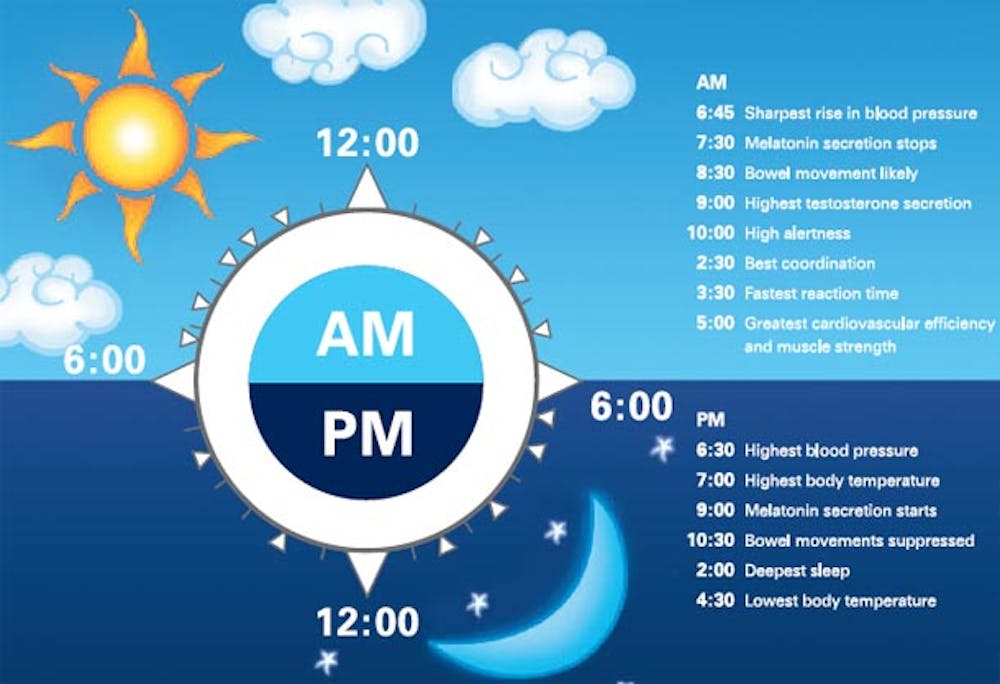
The human circadian clock regulates the cycles of many bodily functions. NIH

When these rhythms are disrupted in humans, we see increased rates of cancer, diabetes, obesity, heart disease, depression and many other diseases. Our work suggests that exposure to environmental pollutants may be depressing the function of human clocks, which could lead to increased rates of disease.

The ConversationWe are continuing our work by studying how the disruption of Daphnia’s clock affects its participation in the diel vertical migration. We are also working to determine the underlying causes of these changes, to establish whether and how this could happen in the human brain. The impacts we have found in Daphnia show that even a simple substance such as salt can have extremely complex effects on living organisms.

Easy Two Ingredient Turmeric Bombs To Fight Inflammation

(Natural Blaze) Inflammation is considered one of the most formidable causes of disease! Quell the pain and inflammation with your own DIY supplement superfood. Try these easy and sweet 2-ingredient turmeric bombs.

We would like to offer one important suggestion! If you can stomach it – add as much black pepper as possible.

Related: How to Optimize Curcumin Absorption – With Golden Milk Tea Recipe

Black pepper is proven to increase absorption of turmeric’s benefits by a whopping 2,000%!! You wouldn’t want to miss out on that important bioavailability.

Turmeric is known to fight pain, high blood sugar/blood pressure, inflammation, candida and so much more! But it’s difficult to get enough in your diet unless you take supplements – and those can be pricey.

Related: How To Use Turmeric To Kill Cancer

Ingredients – what you will need:

  • 1/2 cup ground turmeric
  • 3 tbs  raw honey
  • Cookie sheet & parchment paper or baking mat.
  • Optional – but highly recommended! Black pepper.

Stir ingredients until peanut butter consistency.

Roll into balls and line on parchment paper on cookie sheet.

Freeze.

Enjoy!

Related: Candida and Inflammation

Watch the video directions below or step-by-step photo instructions at Natural Living Ideas, where this recipe first surfaced.

Common Food Ingredient Leads To Alzheimer’s

(Natural Blaze) One of the world’s most common food ingredients is finally being outed as a big, fat fraud. We hope you are sitting down for this one!

This polyunsaturated oil is touted as healthy by the big food industries, fast food industries, the natural health communities (!), and even our regulatory agencies.

We’re talking about canola oil! One of the worst food creations in modern history if you can even call it a food product. A study came out showing that canola oil was like battery acid to the cardiovascular system – and no one listened. Cooked polyunsaturated oils were recently linked to cancer….nothing but crickets.

This oil is everywhere – in most restaurants, in pretty much all fast food items, every packaged snack you can think of, in everything you can store in a cabinet and worst of all – in nearly all natural health snack goods. 

Canola oil was recently linked to declining memory, learning deficits and… obesity!

Natasha Longo reports:

After the public health scare in the 1970s over animal fats, sales of vegetable oils of all types increased. It was the established wisdom that those oils high in polyunsaturated fatty acids were especially beneficial. However, more research into vegetable oils continues to surface showing their damaging effects on health. A new study published online in the journal Scientific Reports shows that consumption of canola oil in the diet with worsened memory, worsened learning ability and weight gain.

[…]

….In the journal Scientific Reports by researchers at the Lewis Katz School of Medicine at Temple University (LKSOM) associates the consumption of canola oil in the diet with worsened memory, worsened learning ability and weight gain in mice which model Alzheimer’s disease. The study is the first to suggest that canola oil is more harmful than healthful for the brain.

Canola oil contains a long-chain fatty acid called erucic acid, which is especially irritating to mucous membranes; canola oil consumption has been correlated with development of fibrotic lesions of the heart, CNS degenerative disorders, lung cancer, and prostate cancer, anemia, and constipation.

Not only are canola, soybean and corn oil now coming from genetically modified crops, but their processing is beyond toxic to human metabolism.

Any health claims for the brain regarding canola oil appear to be patently false according to the lead study author, Domenico Pratico, MD, who also directs an Alzheimer’s center at LKSOM.

Pratico and Elisabetta Laurett originally used this same Alzheimer’s mouse model while investigating olive oil earlier this year. They actually found that “Alzheimer mice fed a diet enriched with extra-virgin olive oil had reduced levels of amyloid plaques and phosphorylated tau and experienced memory improvement.” They were actually checking to see if canola oil could do the same.

The report continues:

The researchers started by dividing the mice into two groups at six months of age, before the animals developed signs of Alzheimer’s disease. One group was fed a normal diet, while the other was fed a diet supplemented with the equivalent of about two tablespoons of canola oil daily.

The researchers then assessed the animals at 12 months. One of the first differences observed was in body weight — animals on the canola oil-enriched diet weighed significantly more than mice on the regular diet. Maze tests to assess working memory, short-term memory, and learning ability uncovered additional differences. Most significantly, mice that had consumed canola oil over a period of six months suffered impairments in working memory.

Examination of brain tissue from the two groups of mice revealed that canola oil-treated animals had greatly reduced levels of amyloid beta 1-40. Amyloid beta 1-40 is the more soluble form of the amyloid beta proteins. It generally is considered to serve a beneficial role in the brain and acts as a buffer for the more harmful insoluble form, amyloid beta 1-42.

As a result of decreased amyloid beta 1-40, animals on the canola oil diet further showed increased formation of amyloid plaques in the brain, with neurons engulfed in amyloid beta 1-42. The damage was accompanied by a significant decrease in the number of contacts between neurons, indicative of extensive synapse injury. Synapses, the areas where neurons come into contact with one another, play a central role in memory formation and retrieval.

“Amyloid beta 1-40 neutralizes the actions of amyloid 1-42, which means that a decrease in 1-40, like the one observed in our study, leaves 1-42 unchecked,” Dr. Pratico explained. “In our model, this change in ratio resulted in considerable neuronal damage, decreased neural contacts, and memory impairment.”

In other words, long-term consumption of canola oil – which is what most Americans are currently doing – is not beneficial to the brain at all.

“Even though canola oil is a vegetable oil, we need to be careful before we say that it is healthy,” Dr. Pratico said. “Based on the evidence from this study, canola oil should not be thought of as being equivalent to oils with proven health benefits.”

They want to conduct shorter duration studies to see when is the shortest amount of time for “exposure necessary to produce observable changes in the ratio of amyloid beta 1-42 to 1-40 in the brain and alter synapse connections.”

Pratico concludes:

We also want to know whether the negative effects of canola oil are specific for Alzheimer’s disease. There is a chance that the consumption of canola oil could also affect the onset and course of other neurodegenerative diseases or other forms of dementia.

There you have it – if you don’t want to chance it with your memory and Alzheimer’s, then drop that french fry and step away from the snack section at the health food store. At the very least, canola oil’s damaging health effects have already been established for the heart, inflammation and obesity.