Do Biodegradable Bags Really Help the Environment?

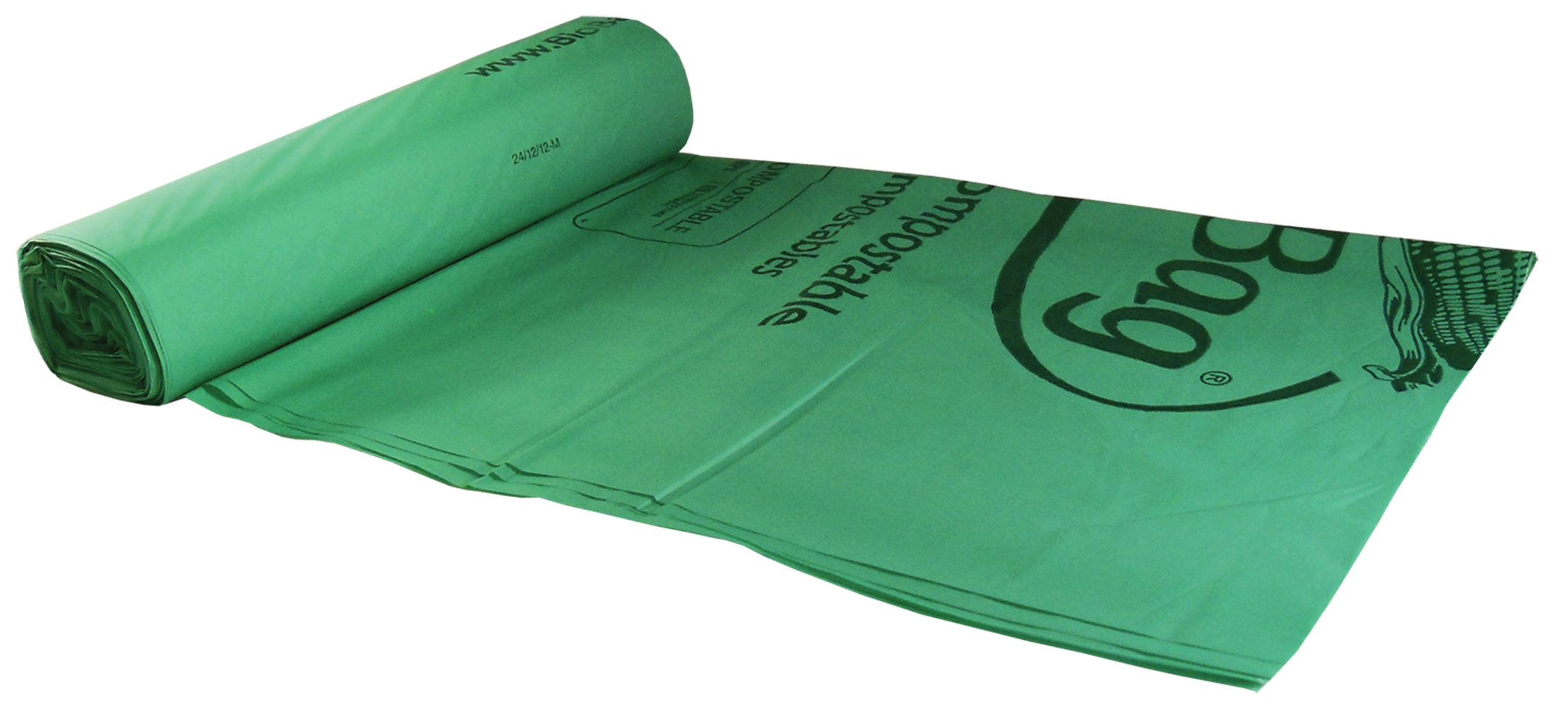
Bags labeled “biodegradable” and “compostable” are available in 3, 13, and 96-gallon sizes from Amazon, product manufacturers, and your local grocery store. There are small to large compostable bags for everything from kitchen trash to leaf bags, even small pick-up bags to tidy up after your dog. Advertising on the packages claim that these bags degrade like apples or autumn leaves and disintegrate in landfills. But are these claims true? And are you really doing the earth a favor when you spend twice the money for a “green” bag? Well, maybe yes; maybe no.

Undefined Terms – What Is Biodegradable? Or Compostable?

Poly bags touted as “biodegradable” are petro plastic bags contain additives that cause the plastic to become brittle and then break into pieces. When exposed to air and light, these pieces get smaller and smaller until they cannot be seen. Did they biodegrade or is this a case of out-of-sight-out-of-mind? Are the bits becoming plastic dust, waiting for an opportunity to enter the food chain at a microbial level? Frankly, no one has studied the consequences of degraded poly bags and come up with a definitive answer.

The State of California has decided that the term “biodegradable” is essentially meaningless. On October 8, 2012, Governor Jerry Brown signed a bill that prohibits the sale of plastic bags labeled with the term “’biodegradable,’ ‘degradable,’ or ‘decomposable,’ or any form of those terms.”  Furthermore, “…while scientific technical standards exist to verify that a product is ‘compostable,’ there are no such standards to verify if a product is ‘biodegradable’ because the conditions and timeframe inherent in the claim of ‘biodegradability’ are too vague.”

Compostable bags (American Society for Testing and Materials – ASTM D6400) are primarily made of small amounts of biodegradable polyester resins (made from petroleum products) added to renewable resources such as vegetation starch. It’s complicated, but suffice it to say that a bag made from corn is not all corn or it would not “hold together” as a useful film. Scientists have made a lot of progress developing these “bioglues” – biodegradable plasticizers – that give bioplastics the flexibility, stability and durability of petro plastics.

Low Demand, High Cost

Right now the demand for compostable bags is small; around one percent of plastic bag orders.  Because these bags are niche products, biofilm resins are expensive and bag manufacturing is limited. This drives up the price of compostable bags. Economics 101 and bag manufacturers say that prices will fall as demand increases. But does this mean that we should use more compostable bags to boost production and lower cost? Would this have a positive effect on the environment? Again, it’s complicated.

At this point, the starch component in compostable bags is primarily corn, potatoes, beets, tapioca, or other food crops. Aren’t those things we should be eating…or distilling? Agriculture requires water, fertilizer and fossil fuels for cultivation. Companies are working on ways to manufacture bioplastics using biomass (such as switchgrass and corn stalks), algae, bacteria, and solid waste.  But as with Marty McFly’s hoverboard, we’re not there yet.

“Green” Bags with No Place To Go

The biggest barrier to widespread use of compostable bags is lack of infrastructure for collecting and recycling organic waste. A 2013 study by Columbia University showed that the U.S. generated a total of 389 million tons of municipal solid waste (1.3 short tons per capita). Although food waste and yard trimmings make up 28% of this waste, only 6.3% is composted.

Many communities collect recyclables, including paper, plastic, cans and glass in bins separate from trash receptacles. But very few provide well-promoted organics recycling programs with distinct collection bins and lists of acceptable materials. Unless you do yard composting, you probably rely on an infrastructure that streams organics directly to local landfills.

Compostable bag manufacturers who don’t keep their fingers crossed behind their backs always disclose on the package that the product only fully degrades at a commercial composting facility. If the bag escapes into the natural world, it will trash up the landscape and come apart slowly or very, very slowly depending on climate. In a yard compost pile, it will come apart slowly or very, very slowly depending on climate and your due diligence. In a septic tank or other anaerobic digestor, it will degrade so slowly it will muck up the works. If the bag is sealed in a landfill without water, air, and robust microorganisms, it won’t degrade for centuries. And as it degrades, it will yield methane gas.

Recyclers complain bitterly when compostable bags are mixed with incoming plastic bags. A single compostable bag can contaminate a whole batch of petro plastic material. So if customers are careless with disposal, these bags can cause more trouble than they’re worth, eco-wise.

All of this begs the question: What’s the point of using compostable bags unless the material inside them is headed directly to a commercial composting facility? And the answer, of course, is that there is no point. The best you can do is re-use plastic bags or buy bags made of recycled plastic. Or go a step further and support public policies to develop a community composting infrastructure that will meet the challenge of sustainability.

Sources:

EWG’s Updated Guide to Healthy Cleaning

The Environmental Working Group (EWG) is a non-profit organization dedicated to protecting public health and the environment. They recently updated the EWG’s Guide to Healthy Cleaning, a database of more than 2,700 cleaners that can be found on their website. It includes the following product categories :

  • 288 Air Fresheners
  • 507 All Purpose
  • 227 Bathroom
  • 368 Dishwashing
  • 166 Floor Care
  • 155 Furniture
  • 93 Kitchen
  • 817 Laundry
  • 82 Other

The recent update included more than 400 additional products from 85 companies. The EWG states the following:

  • Almost three-fourths of common cleaners contain ingredients that may have worrisome effects on respiratory health.
  • More than one-fourth received scores indicating moderate to high health concerns because they contain ingredients or possible impurities that have been linked to increased cancer risk.
  • One-fifth of products got scores indicating moderate to high health concern because they have ingredients associated with developmental, endocrine or reproductive harm.
  • Almost half of the products were rated “poor” on disclosure because their ingredients are not adequately listed on product labels and company websites.

The database has an interesting and informative layout. Products are graded (A,B,C,D, and F) and their principle ingredients are graded as well, a layout that teaches consumers which additives are dangerous to the body or the environment and why.

Surprisingly, many well-known “green” labels earned Fs. For example, Whole Foods 365 Brand Cleaners run the gamut with individual products earning As, Bs, Cs, Ds, and Fs.

The database lists 7 Trader Joe’s products. One earned a B, 3 earned a D, and 3 earned an F.

There are 35 Seventh Generation products listed. Although only one earned an F, with 12 Ds, 37% are ranked D and below.

So line up your cleaning products and look them up. You may be in for some surprises. You may decide it’s time to simplify and use all natural products like vinegar, baking soda, and lemons to clean your home. Check out the article below to learn more.

Related Reading:

Clay-Free Cat Litter for Pet Sustainability

Do our feline companions really have tiny carbon paw prints?

Cats clean themselves and cover their poop. They aren’t fossil-fuel-needy. No gas-guzzling trips to doggie day care or dog parks for them. We seldom buy our cats manufactured collars, leashes, or chew toys.  And just try dressing up your cat in a polyester costume!

The only thing an indoor cat really wants from you is love, attention, and meat. Not as much meat as dogs; nonetheless some eco-system straining meat. No wonder you see so few online posts about greening up cats. By their very nature cats live near zero waste lives. Or do they?

Cats have surpassed dogs as the most popular pets in U.S. households. We host 96 million cats versus 83 million dogs. Cats have fastidious toilet habits, but require a litter box with granular “stuff” to fulfill their missions.  And they need a willing human partner to buy litter, clean the box, and dispose of the waste.  That would be you. And here’s where you can make a real difference in sustainable stewardship.

The average cat produces 1/3 lb. of waste and used litter per day or 120 lb. per year. If you have three cats, that’s 1 lb. per day, 7 lb. per week, or 365 lb. per year. That’s quite a load of ballast in the trash bag.  And that’s not counting deep box cleanings that involve dumping and replacing all of the litter.

Statistically speaking, 96 million U.S. cats generate around 500,000 dump trucks full of waste and used litter a year. Because some cats spend time outdoors, there’s no way to be sure how much kitty fallout is trashed.  Whatever the amount, it’s clear that indoor cats are hardly near-zero-waste pets. Each year millions of tons of feline waste, litter, and plastic collection bags stream into waste management systems.

A smattering of cities, mostly Canadian, accept pet waste, litter, and bedding for composting or biodigestion processing as part of their organics recycling systems. These cities include Calgary and Red Deer, Alberta; Halifax, Nova Scotia; and Toronto, Ontario.   While community-wide programs offer the best solution for pet waste sustainability, chances are good that when you dispose of cat waste, the material will simply be hauled to a sealed landfill where it will degrade slowly and emit methane.

Downsides of Clay Litter

It’s easy to see why clumping clay litter is appealing to cat lovers. Cleaning up chunks of compacted clay is easier and more economical than waiting for the clay to reek of urine then dumping the entire litterbox.  To combat odor, manufacturers often add fragrance to litter, although these products are trending to “fragrance free” (baking soda or “natural odor elimination” or “botanical ingredients”).

The downside? Critics say that clumping clay litter is unfriendly to the earth because a major constituent, sodium bentonite, is obtained through strip mining. Sodium bentonite absorbs urine and swells to 15 to 18 times its dry size, so it is often used in sealing and grouting materials.  Non-clumping clay litters often consist of quartz silica, crystalline silica or silica gel, sands which simply absorb moisture. Crystalline silica, or silica dust, is treated as a known carcinogen under California’s Proposition 65. Cats ingest these materials when they lick their paws or breathe litter dust into their lungs. Ingredients are listed on clay litter packaging, but simply ditching clay is easier than deciphering the contents.

Inexpensive Alternative

Our cat Max has been clay-free for five years. When we adopted Max as a kitten, the staff told us that he was healthy but had been treated for a respiratory illness when he entered the shelter.  After we brought him home he seemed fine, but his eyes watered constantly and he had occasional sneezing fits to clear his sinuses.  When we eliminated clay litter, his sneezing stopped and his eyes watered less frequently.

When looking for a clay-free alternative for Max, we considered do-it-yourself natural litters like wood shavings, sand and soy-ink newspaper strips, but they were inconvenient and required frequent changing. We checked out environmentally friendly options on the market, like corn, wheat, wood, and paper-based litters. But for the most part, these products were more expensive than clay.

We finally found a great choice that didn’t break the bank: small animal bedding. You can buy these natural pine pellets in 35 lb. (1 cu. ft.) bags at your local feed store for around $6.00. We mixed the pellets with Max’s clay litter, gradually eliminating the clay. I’m not sure that approach was necessary. He’s a pretty resilient guy and now seems to love the scent when we add fresh pine pellets.

If you decide to try this bedding, examine the bag carefully before purchasing. If you don’t see much sawdust, you’ll know that the plastic bag was properly sealed and kept dry through transport and storage.  Don’t confuse bedding pellets with the bagged pellets used to fuel heaters. Fuel pellets are often smaller and more likely to slip through slotted litter scoopers.  This is a key consideration when cleaning a litterbox with pellets – a process that’s easy but very different from scooping clay litter.

Cleaning a pellet litterbox takes some finesse and requires a deep, extra wide (5 in.) scooper. Here’s how to do it.  Lift out the poop and deposit it into a holding bag or bin.  Then carefully scoop out some of the lightly clumped urine-soaked sawdust dampened pellets.  Shake the scooper back and forth over the holding container.  Tapping the side of the scooper to the side of the litter box will help sift out the loose sawdust more quickly.   You can then recycle the intact pellets left in the scooper by returning them to the litter box. (I’ve posted a link to another cleaning approach for pellets,  the All Pine Self-cleaning Litterbox, at the bottom of this article.)

Pine pellets stay fresh and need little replenishing when used as litter. To enhance the natural freshness, you might want to sprinkle in bokashi mix (EM-impregnated grains used to ferment organics).  I’ve found that using the pellets in combination with bokashi mix and cleaning Max’s litterbox twice a day has eliminated the need for trashing an entire box of used litter.

Choosing any organic-based litter helps to tamp the brakes on clay litter manufacturing, distribution, and sales, but there’s an even better reason for switching litters.  An elegant reason.  A reason guaranteed to generate good eco vibes and keep you from sliding back to clay for the sake of convenience. All you need to do is go one step further. Now that you’re using organic litter, you can recycle the whole enchilada.

Closing the Litter Sustainability Loop

If you own or have access to property with trees, bushes, and other ornamental plants, recycling your cat’s waste and litter will provide them with a nutritious soil amendment. And yes, it is safe to process this material, and send the waste back to nature.

Some cats, particularly outdoor cats that hunt rodents or eat raw foods, can be primary hosts of feline-specific parasites. The most stubborn and dangerous is the protozoan parasite Toxoplasma gondii.  An estimated 11% of Americans have dormant Toxoplasma cysts in their brains and in some countries, the rate is 90%. Healthy immune systems keep the parasite at bay.  But infants, pregnant women, and people with compromised immune systems who come in direct contact with cat feces can become afflicted with toxoplasmosis, a serious and occasionally fatal disease.

Because there’s always a chance of spreading germs, use due diligence when recycling feline poop. Wash your hands. Keep equipment used to process pet waste separate from equipment used for growing fruits, vegetables, and herbs.

That said, cat waste mixed with corn, wheat, paper, and wood-based litter can be composted like any other organic material. Follow the instructions available through your local agricultural extension. You may need to add food scraps or other “green” material to the pile to offset the abundant “brown” litter.  But including the litter is a plus because it serves as a carbon bulking agent and the ammonia in the urine will help with degradation.

Your back yard compost pile will probably not heat up to the sustained 122 degrees required to kill carnivore poo pathogens. So let finished cat poo compost lie dormant (“season“) for at least 18 months before using it to enrich soil. Never use it on or near edible gardens because contaminated compost might cling to harvested foods.

Another recycling option is simply burying the waste and litter – either loose or in open paper bags – at least six inches deep in an area that does not drain into waterways. You can plant landscaping over the buried pet waste after letting it degrade for six or more months.  Install new plantings well above buried waste. Raw manure and litter are too strong for direct exposure to young roots. You can also bury waste and litter in very small pockets around mature shrub or tree roots.  The material will degrade and provide nutrients to the soil.

While “flushable” cat litter is available, flushing is not a good disposal option for kittens or cats who might be infected with T. Gondii. This persistent parasite can be fatal to marine mammals.  If you’re not sure if your cat is a T. Gondii carrier, don’t recycle feline waste using do-it-yourself pet waste septic bins or commercial systems such as Dog Dooleys that might drain into watersheds.

Since most infected cats show no symptoms, only a test will reveal contagion. If your cat tests positive for antibodies to T. gondii and you keep the cat indoors afterwards, it’s unlikely that your pet will shed infectious oocysts. Flushing and septic bins are safe options only for cats that are not infected.

You may also want to explore the possibilities of recycling pet waste via vermicompost (worms) or bokashi (fermentation). These are trickier methods that, like composting and burial, require a yard and plants that will benefit from the fertile residue. But if you’re determined, curious, and game for a new adventure, you can find online videos and instructions that will point you in the right direction.

By sending your household’s cat waste back to nature, you’ll shift consumer dollars from clay to organic litter, help divert waste from landfills, improve the soil, and take your cat to near zero waste.

Pet Population

U.S. Humane Society, 96 million cats in the U.S.

Dump truck math / cats

96M cats X .3 = 28,800,000 lbs. per day or 10,368,000,000 lbs. per year or 5,184,000 tons per year or 5.2M tons of cat waste per year 5,200,000 tons divided by 500,000 = 10.4 tons, average dump truck capacity

Community Disposal Systems:
Sources:

Eco-Friendly Death – The Green Trend In The Funeral Industry

A funeral is usually your last chance to leave your mark on the world, so why not make it an eco-friendly one? Green funerals are becoming ever more popular. Here’s what you need to know for planning your green service.

What Is An Eco-Friendly Funeral?

There’s no one way to plan a green funeral, but the goal is always the same. Eco-friendly services aim to reduce their impact on the environment as much as possible, whether by using sustainable resources or by reducing the relative carbon footprint of the event. Many of the elements, such as natural burials, have been around since the first pioneers of America.

Why Is This Important?

For those not yet familiar with the concept of a green burial, it can be surprising just how much a toll a regular service can take on the environment. Take a tombstone, for instance, as these are made from unsustainable resources such as marble or stone. Once you add in transport costs, you’re only increasing your carbon footprint. The rise in green funerals has seen a decrease in the need for wooden and metal caskets. So much so, in fact, the metal needed to meet casket demand has almost halved.

What Happens To The Body?

Typically, funeral service providers embalm the body, but this is seldom the case with green alternatives. Many people do not want their body to lie in the ground unused, preserved by various chemicals and toxins. Instead, they are buried as they are with a biodegradable casket so that their remains are used by the earth over time. In fact, many are forgoing burials altogether. A 2014 study by the National Funeral Directors Association concluded that 46.7% of funerals that year involved cremation, with estimates that this figure will rise to 71% by 2030. Cremations offer many green benefits, such as not taking up land space and, of course, carbon-heavy ashes.

What Marker Is Left Behind?

As mentioned already, tombstones are not very green. Although the traditional marker of choice, a survey by the Green Burial Council found they’re the least popular choice for eco-friendly ceremonies. Alternatives include planting a tree, a bench, wooden marker, or even natural stones. There’s also a shift away from grand structures such as mausoleums. This also applies to cremations, too, as you can leave a marker or memorial wall if you wish. As for the urn itself, there are many bio-urns available, in case you want to plant a tree or bush. Similarly, if you’re planning on having your ashes scattered, why spend money on an expensive urn? Like caskets, urns often utilize natural resources such as marble or metal, which are hard to replace.

What Are The Personal Benefits?

There are, arguably, two main benefits to green funerals. The first is that an environmentally conscious approach offers peace in one’s final moments, ensuring their last act isn’t selfish. Secondly, and perhaps more importantly for funeral planners,  there are many cost saving features. Cremations don’t cost as much as funerals. The NFDA estimates cremations cost an average of $6,078 compared to $7,181 for a burial service, and when you cut out the costs of embalming ($659), casket (over $2000, if made of metal) and other surplus features, you can generally cut down on quite a large amount of expenditure. Further cuts can always be made by using local suppliers for flowers, food, and more. Not only will this help bring down costs, it also boosts the local businesses and economy!

It’s clear to see why eco-friendly funerals are the greenest trend in the industry right now. Aside from saving the bereaved money, these services enable people to ensure their last goodbyes help the environment. For many, it may prove comforting to know a loved one’s final moments are being used to help the world.

Sources:

Eco-Friendly Landscaping: Helping Ensure the Future

For many people, landscaping is a form of personal and artistic expression. It’s also a desire to improve the quality of life for the entire community. Lush beautiful gardens are a delight to those taking neighborhood strolls, and more than one life-long friendship has begun with appreciation of natural beauty freely shared and the exchange of gardening secrets. Landscaping is also a great way to incorporate more of the beauty of nature into urban environments.

A combination of events such as increasing energy and water costs and global warming have caused homeowners to consider the far-reaching benefits of eco-friendly landscaping. To make your landscaping more eco-friendly, there are a number of things you can do. Eco-friendly landscaping doesn’t just reduce global warming and the cost of yard maintenance, though. It usually reduces the amount of work required for upkeep, which leaves more time for enjoying your yard.

Replacing Traditional Lawns

According to the U.S. Environmental Protection Agency, “…maintenance over a 20-year span for a non-native turf grass landscape can cost almost seven times more than the cumulative costs of maintenance for a native prairie or wetland.” The high cost of maintaining a traditional lawn isn’t just economic, though. Research shows that lawn maintenance produces greenhouse gases that contribute to global warming.

The fertilizer and pesticides commonly used are also a source of potential pollution of groundwater. As public awareness of the negative environmental impact of traditional lawn maintenance has increased, many states have begun providing information for their residents on how they can make their own home environments as healthy as they are welcoming.

For those who love greenery and the look of a lawn, one alternative is planting clover. Clover contains natural insect repellents and competes well against weeds, reducing the need for pesticides.

Native Plants

One way to reduce water costs and honor the particular environment you’ve chosen as your home is by using plants that are native to your area. Native plants require less maintenance and they have developed a natural resistance to common pests and diseases, reducing the need to use pesticides. An additional benefit is that they attract beneficial insects and local wildlife.

Xeriscaping is a set of seven design principles introduced in Colorado to help people utilize native plants to help conserve water. Some critics claim that these principles limit their choices too much. However, if plants native to your area don’t provide enough variety, there are many disease-resistant plants available that provide beauty as well as variety.

Garden Plots

Growing concerns about the health effects of genetically modified foods is another reason many people are choosing to replace at least part of their lawns with low-maintenance garden plots that produce fresh organic fruits and vegetables. According to experts, drip irrigation systems deliver water directly to your plants with 90 percent efficiency, compared to the 50 to 70 percent efficiency of traditional sprinkler systems.

This new trend has led many communities to begin gardening cooperatives in which each member grows one or two items, and everyone comes together to trade items after the harvest. One advantage is that everyone is able to enjoy a wide variety of fresh vegetables without the difficult task of creating multiple soil conditions and planting and watering schedules for different plants. Fruit trees provide shade in addition to fresh fruit, and also raise real estate values. Deciduous trees that drop their leaves in the fall can help cool your home in the summer and provide compost for flower beds. Trees typically don’t require much maintenance so there’s really no reason you should skip on planting some in your garden!

Natural Pesticides

Unlike chemical pesticides, natural pesticides won’t seep into the ground water causing contamination of drinking water. One natural pesticide, made from the pyrethrum plant (Chrysanthemum cinerariaefolium) is rated highly effective against a large number of insects.

Another natural pesticide can be made by soaking ground onions or garlic in warm water overnight. After straining, the liquid is sprayed on flowers and fruit trees. This natural insecticide is especially effective against aphids and apple borers.

These examples of eco-friendly landscaping prove that we can help preserve the earth without sacrificing beauty or variety.

Sources: