Chinese Herb Shows Promise Against Tooth Decay

(Dr. Mercola) Your dental health is an important component of your physical health. While often ignored or overlooked, dental issues such as cavities and root canals can have a significant systemic influence, and the state of your soft tissues and teeth often offer a clear reflection of what’s going on in the rest of your body.

Tooth decay is often misconstrued as a “fluoride insufficiency,” but nothing could be further from the truth. The health of your teeth is largely dependent on your diet, which affects not only your gut microbiome but also your oral microbiome. Like your bones, your teeth also need certain nutrients to remain strong and healthy.

Interestingly, Chinese researchers recently discovered that water extract of the herb Galla chinensis has potent anticaries effects, effectively inhibiting acid production caused by caries-associated bacteria and increasing teeth’s resistance to acid.1,2

The Anticaries Activity of Galla Chinensis

Galla Chinensis3 (Wu Bei Zi, also known as Chinese gall or Chinese sumac) — one of hundreds of Chinese herbs tested by this research team — was found to have “strong potential to prevent dental caries due to its antibacterial capacity and tooth mineralization benefit.”4 The herb also has antiviral, anticancer, hepatoprotective, antidiarrheal and antioxidant activities.

According to the authors, “Galla chinensis water extract has been demonstrated to inhibit dental caries by favorably shifting the demineralization/remineralization balance of enamel and inhibiting the biomass and acid formation of dental biofilm.” Unfortunately, it’s still far too early to start using the herb in dental applications, because the researchers have yet to identify the active ingredient responsible for these anticaries activities. As reported by ScienceBlog:5

“In the present study, several Galla chinensis extracts with different main ingredients were obtained and determined by liquid chromatography-mass spectrometry analysis. The antibacterial capacity was determined using the polymicrobial biofilms model, which can generate reproducible plaque-like biofilms that occur in vivo.

The effect of inhibiting tooth demineralization was tested using an in vitro pH-cycling regime, which mimicked the periodic pH change in mouth. ‘Medium molecular weight gallotannins are the most active constituent in terms of caries prevention’ concluded Xuelian Huang, Ph.D., DDS, the lead author.”

Dietary Guidelines for Strong, Healthy Teeth

While Galla chinensis may someday be added to dental products as an aid against tooth decay, your best answer is already at hand. If you want to have healthy teeth, you must start from the inside out, and that means cleaning up your diet.

Much of the dietary advice for oral health is founded on the findings of the late Dr. Weston A. Price,6 a Cleveland dentist who sought to determine what makes for good dental health by studying indigenous tribes who, he said, had “fine teeth” and few chronic health problems. While studying the oral health and diets of various native tribes, he noticed distinct similarities:

  • The foods were natural, unprocessed and organic (and contained no sugar except for the occasional bit of honey or maple syrup)
  • The people ate foods that grew in their native environment. In other words, they ate locally grown, seasonal foods
  • Many of the cultures ate unpasteurized dairy products, and all of them ate fermented foods 
  • A significant portion of the food was eaten raw
  • All of the cultures ate animal products, including animal fat, full-fat butter and organ meats

When Price analyzed his findings, he found the native diets contained 10 times the amount of fat-soluble vitamins, and at least four times the amount of calcium, other minerals and water-soluble vitamins as that of Western diets at that time. Their diets were also rich in enzymes because they ate fermented and raw foods (enzymes help you to digest cooked foods).

Importantly, the native diets also had at least 10 times more omega-3 fat than modern diets and far less omega-6 fats. Today, there’s ample evidence showing diets lacking in omega-3 fats while being heavy on omega-6s from vegetable oils (now found in most processed foods), are a recipe for disaster.

Modern research supports Price’s early observations, showing that even moderate amounts of omega-3 fats may help ward off gum disease. In one study,7 researchers divided nearly 9,200 adults into three groups based on their omega-3 consumption. Dental exams showed those in the middle and upper third for consumption of the omega-3 fats DHA and EPA were 23 percent to 30 percent less likely to have gum disease.

What About Fluoride?

While fluoride is commonly touted as the best prophylactic and answer to caries-prone teeth, the evidence to support these claims is flimsy at best. Dental caries is caused by demineralization of your teeth (enamel and dentin) by the acids formed during the bacterial fermentation of dietary sugars. Demineralization is countered by the deposit of minerals from your saliva, or remineralization, which is a slow process, and fluoride is said to prevent dental caries by enhancing this mineralization.

Alas, your teeth do not actually rely on fluoride for remineralization. In fact, fluoride serves no beneficial biological role in the human body at all. It does, however, cause harm. For example, evidence shows fluoride is an endocrine disruptor that can affect your bones, brain, thyroid gland, pineal gland and even your blood sugar levels. Importantly, it’s a known neurotoxin, shown to lower IQ in children.

Recommended Reading: Fluoride – Less Is Too Much

Research8 has also concluded that the protective shield fluoride forms on teeth is up to 100 times thinner than previously believed. It has long been believed that fluoride changes the main mineral in tooth enamel, hydroxyapatite, into a more decay-resistant material called fluorapatite. However, the researchers found that the fluorapatite layer formed in this way is only 6 nanometers thick — meaning it would take almost 10,000 such layers to span the width of a human hair.

As noted by the authors, “ … [I]t has to be asked whether such narrow … layers really can act as protective layers for the enamel.” Considering the systemic toxicity of fluoride and its questionable effectiveness as an anticaries aid, I personally see no reason to use it. There are far safer and more effective ways to protect your teeth from cavities.

Poor Diet Is the Primary Cause of Dental Decay

By far, excess dietary sugar is the most significant factor in driving dental decay. Other primary causes of tooth decay cited in the medical literature include:

  • Children going to bed with a bottle of sweetened drink in their mouth, or sucking at will from such a bottle during the day
  • Poor dental hygiene and poor access to and use of dental health services, usually related to socioeconomic status
  • Mineral deficiencies, like magnesium, which can weaken bones and teeth9
  • Vitamin K2 is crucial for bone mineralization and unless you consume grass fed organic animal products and nonpasteurized fermented foods on a regular basis, there is a good chance you might be deficient in this important nutrient
  • More than 600 medications promote tooth decay by inhibiting saliva

Research10 published in 2014 shows there is a robust log-linear relationship of dental caries to sugar intakes, meaning your risk of cavities increases the more sugar you eat — and this was found to be true despite regular use of fluoridated water and/or fluoridated toothpaste. According to this study, to minimize your risk of cavities, sugar should make up no more than 3 percent of your total energy intake (with 5 percent noted as a “pragmatic” or more realistic goal).

Recommended Reading: Heal Gum Disease and Cavities Naturally – Step by Step

In an interview with Medical Research, Aubrey Sheiham, Professor Emeritus of dental public health, University College London, explained that current approaches are really missing the boat when it comes to preventing cavities:11

“Current approaches to controlling dental caries are failing to prevent high levels of caries in adults in all countries and this relates to the current high level of sugar intake across the globe. Thus, for multiple reasons, including obesity and diabetes prevention, we need to adopt a new and radical policy of progressive sugar reduction. The progressive accumulation of dental caries, despite widespread use of fluoride, shows that sugars intakes should be <3 percent to minimize the disability and cost of dental caries in a population.”

Foods That Fight Bad Breath

Certain dietary choices can also contribute to or prevent a common side effect of poor oral health, namely bad breath (halitosis), caused by oral bacteria that produce foul-smelling sulfur compounds during protein breakdown. Clearly, if you struggle with bad breath, you need to address your overall diet and/or daily oral hygiene. That said, the following foods may also help fight bad breath:12

  • Cinnamon, thanks to the presence of antimicrobial cinnamic aldehyde, which helps prevent odor-causing bacteria
  • Water. Dry mouth promotes microbial growth that can lead to bad breath. Making sure you’re well-hydrated by drinking more water can help stimulate saliva production
  • Strawberries. Their high water content and vitamin C help deter odor-causing bacteria
  • Green tea contains antioxidants that help deter and destroy odor-causing bacteria
  • Parsley, apple and spinach — all three of which contain polyphenols that help break down foul-smelling sulfur compounds

Coconut Oil Is Excellent for Oral Health

Coconut oil is a powerful inhibitor of a large variety of pathogenic organisms, from viruses to bacteria to protozoa, largely due to its naturally high lauric acid content. Your body converts lauric acid into monolaurin, a monoglyceride that can destroy lipid-coated viruses — including herpes, influenza and measles — as well as gram-negative bacteria and protozoa.

Researchers in Ireland found that coconut oil treated with enzymes (in a process similar to digestion) strongly inhibits the growth of most Streptococcus bacteria strains; microbes commonly found in your mouth can lead to plaque buildup, cavities and gum disease. This included Streptococcus mutans, the acid-producing bacterium identified as a major cause of tooth decay.13

While the product used in this study was a special enzyme-treated formulation, natural organic coconut oil can have similarly beneficial effects. Not only can you create your own toothpaste from coconut oil, baking soda and natural, unprocessed salt, you can also use coconut oil for oil pulling.

Oil Pulling Explained

Oil pulling14 is a practice dating back thousands of years, having its origins in Ayurvedic medicine. Basically, it involves rinsing your mouth with coconut oil, much like you would with a mouthwash. The oil is worked around your mouth by pushing, pulling and drawing it through your teeth for a period of 15 minutes. In the beginning, your cheeks and jaw may tire after just a few minutes, so you may need to work your way up to 15, but it’s well worth the effort.

This process allows the oil to “pull out” bacteria, viruses, fungi and other debris from between your teeth and gums. When done, spit out the oil in the toilet or outdoors to avoid clogging your sink, and rinse your mouth with water. Do not swallow the oil.

When done correctly, oil pulling has a significant cleansing, detoxifying and healing effect, not only for your mouth and sinuses but for the rest of your body as well. Anecdotally, oil pullers have reported relief from systemic health problems such as arthritis, diabetes and even heart disease.

Scientifically, oil pulling has been shown to significantly reduce plaque formation and gingivitis (gum disease) with consistent use.15,16,17According to Bruce Fife, naturopathic physician and expert in the healing effects of coconut, the cleansing effect of oil pulling can be understood with the following analogy:18

“It acts much like the oil you put in your car engine. The oil picks up dirt and grime. When you drain the oil, it pulls out the dirt and grime with it, leaving the engine relatively clean. Consequently, the engine runs smoother and lasts longer. Likewise, when we expel harmful substances from our bodies our health is improved and we run smoother and last longer.”

On a side note, Manuka honey from New Zealand, which is well-known for its potent medicinal properties, has also been shown to be effective in reducing plaque.19 Researchers found Manuka honey worked as well as chemical mouthwash, and better than the cavity fighting sugar alcohol, xylitol. This is most likely due to the honey’s antibacterial properties. Clinical trials have shown that Manuka honey can effectively eradicate more than 250 clinical strains of bacteria, including antibiotic-resistant varieties.

Take Control of Your Oral Health

Proper dental hygiene is important for optimal health, as discussed by Dr. Bill Osmunson in the interview above. When it comes to preventing cavities, drinking fluoridated water and brushing your teeth with fluoridated toothpaste are not the answer you’re looking for. The key is your diet, along with daily dental health care in the form of tooth brushing and flossing.

You can learn more about proper brushing and flossing techniques by following the hyperlinks provided. Practicing twice daily brushing and flossing, along with regular cleanings by your biological dentist and hygienist, will ensure that your teeth and gums are as healthy as they can be.

Recommended Reading: Fight Cavities and Gingivitis Naturally With Homemade DIY Oral Health

You may also try oil pulling to enhance your dental hygiene routine. Importantly, by avoiding sugars and processed foods and replacing them with fresh whole foods, healthy fats and fermented foods, you prevent the proliferation of the bacteria that cause tooth decay in the first place. To recap, here are some basic guidelines for optimizing your dental health, safely and naturally:

  • Avoid fluoridated water and fluoridated toothpaste
  • Minimize your sugar and grain consumption and avoid processed foods. To really minimize your risk of cavities, limit dietary sugars to 3 percent of your total energy intake or less
  • Increase consumption of fresh vegetables, fermented foods and high-quality animal-based omega-3 fats
  • Practice good daily oral hygiene and get regular cleanings from a mercury-free dentist
  • Consider oil pulling with coconut oil, which is a powerful inhibitor of a large variety of pathogenic organisms
Vaccine Deficient Employees Fired to Gain Healthcare Funding

(Dr. Mercola) Mandatory influenza vaccinations for healthcare workers — who really benefits from this draconian measure? While public health officials tell you that mandatory flu shots for all healthcare workers will protect patients from influenza, there’s virtually no good scientific evidence to support such claims.

If health and safety were really the chief aim of this forced vaccination policy, why not mandate vitamin D testing and optimization, since vitamin D supplementation has been shown to be 10 times more effective than getting a flu shot if you are vitamin D deficient?1,2

Even if you’re not deficient in vitamin D, studies evaluating the “number needed to treat” (NNT) reveal it is estimated that one person would be spared from getting sick with influenza for every 33 people taking a vitamin D supplement (NNT = 33), whereas 40 people would have to receive the flu vaccine in order to prevent a single case of the flu (NNT = 40).3

But, what would the financial incentive be for that? Unfortunately, it appears mandating annual flu shots for healthcare workers is little more than a for-profit scheme transformed into oppressive health policy and law by drug industry insiders and powerful lobbyists.

Health Care Personnel Fired for Vaccine Refusal

Over the past few years, a number of healthcare workers have been threatened and gotten the boot for refusing to get an annual flu shot; most recently, just before Thanksgiving, Duluth-based Essentia Health — a company founded in 2003 that owns and operates 15 hospitals and 75 medical clinics located in Minnesota, Wisconsin, North Dakota and Idaho — added their name to the list.

In addition to owning hospitals and clinics, the company also owns and operates fitness and therapy centers, rehabilitation centers, long-term care facilities, assisted/independent living facilities, medical equipment and supply centers and pharmacies.4 They made headlines when it was first reported that they had fired some 50 employees who refused to get an annual flu shot.5,6,7 A few days later The BMJ reported that a total of Essentia Health 69 employees had been let go.8

Hundreds more workers were warned their jobs were in jeopardy unless they get the flu shot. Minnesota employees were particularly disturbed by the requirement, as state law does not mandate influenza vaccinations for healthcare workers. Still, Essentia decided to extend the mandate to its Minnesota workers, as well.

According to Dr. Rajesh Prabhu, Essentia’s chief patient safety officer, the 69 workers were fired because they refused vaccination and did not meet Essentia’s strict criteria qualifications for either a medical or religious vaccine exemption.9

The problem is the medical exemption defined by federal public health officials is so narrow that more than 99 percent of people do not qualify for it. A personal history of many autoimmune and neurological disorders — or even serious reactions to previous vaccinations — are not considered contraindications to vaccination according to federal health officials, and often those government guidelines are the ones used by companies like Essentia to deny medical exemptions to vaccination.

Scot Harvey, a night and weekend administrator at an Essentia hospital in Duluth said he refused the flu vaccine because he had suffered severe fatigue and other symptoms after receiving government-mandated vaccines during his military service. His vaccine exemption request was denied by company officials, and he became one of the 69 employees fired for vaccine refusal. Harvey spoke out in an article in the Star Tribune:10

“Harvey said … the form limited exemptions to medically documented vaccine allergies or histories of Guillain-Barre Syndrome following vaccinations … A registered nurse, Harvey said his stance might make it harder to find work. But he felt it was an issue of free choice. ‘If nobody stands up and says, ‘Hey, this isn’t right,’ he said, ‘then next year everybody in health care is going to have to have a flu shot, and then everybody in every job is going to have to have a flu shot.'”

Workers’ Unions Object to Mandatory Vaccination Requirement

In an interview with Minnesota Public Radio, Harvey added, “I don’t see how an employer can have the right to decide what I have to do to my body in order to keep a job.”11 Surgical technologist Paula Bullyan, who has worked for more than 15 years for a Duluth hospital now owned by Essentia, expressed a similar sentiment. She said that whether or not to receive the flu vaccine is “my choice, and they’re taking away my choice, to either receive or to take an injection into my body that I do not want.”12

Jen Hutzell, a cleaner and care aide at the Oak Crossing long-term care facility in Detroit Lakes owned by Essentia, told the Star Tribune she sought a vaccine exemption based on previous experience with the flu vaccine. The Star Tribune reported: 13 “Hutzell said the only year she suffered flu-like illnesses was 1995 — the one year she received a flu shot in order to be around her newborn son, who was born prematurely and needed intensive care. ‘That was the sickest year of my life,’ she said.”

Several workers’ unions have objected to the policy. The Minnesota Nurses Association (MNA) and the American Federation of State County and Municipal Employees have filed complaints with the National Labor Relations Board, and MNA has announced its intent to file grievances on behalf of fired nurses. According to the article featured in the Star Tribune:14

“As many as 400 doctors, nurses or other workers hadn’t been vaccinated as of Nov[ember] 15, when Essentia reported 97 percent compliance among its 15,000 employees. But many of those holdouts got shots or filed exemptions before the company’s Nov[ember] 20 deadline. Prabhu said 99 percent of Essentia’s workers have now complied …”

Vaccine Mandate Based on Flawed and Weak Evidence

Earlier this year, published research called into question the scientific evidence used to push for mandatory flu vaccination of all hospital personnel. As reported by STAT News,15 “The study … concludes that the research used to justify mandatory flu shots for health sector workers is flawed, and that the policies cannot plausibly produce the benefits that had widely been assumed,” adding that:

“[T]he methodology of the studies produced results that don’t stand up to scrutiny … None of the studies were conducted in hospitals; all took place in long-term care facilities. One the studies, from Britain, calculated that one influenza death would be averted for every eight staff members vaccinated.

But if that were correct, vaccinating the estimated 1.7 million health care workers employed in long-term care in the United States should prevent 212,500 flu deaths a year among residents. There’s an obvious problem though, the paper noted. Nowhere near that many people die from flu in the U.S. …

The study … does not refute that vaccination could have some impact on reducing transmission from infected health care workers to patients. But it clearly shows there’s no well-conducted study that demonstrates that at this time. Our public policy should be guided as such,’ said Michael Osterholm, director of the University of Minnesota’s Center for Infectious Diseases Research and Policy. …”

Other studies have concluded that vaccinating all healthcare workers does not decrease incidence of or mortality from influenza among patients, which essentially renders the practice useless.

After the largest flu-vaccination campaign in Canadian history, a Canadian-led study published in 2010 by the Cochrane Collaboration,16a well respected international network of researchers who analyze the scientific evidence and methodology used in clinical trials, concluded that vaccinating nursing home workers had no effect on lab-confirmed influenza cases among the elderly residents of nursing homes.

Lead researcher Dr. Roger Thomas explained, “What troubled us is that [flu vaccinations] had no effect on laboratory-confirmed influenza. What we were looking for is proof that influenza … is decreased. Didn’t find it. We looked for proof that pneumonia is reduced. Didn’t find it. We looked for proof deaths from pneumonia are reduced. Didn’t find it.”

Flu Vaccine Can Cause Serious Problems and May Do Seniors More Harm Than Good

An influenza vaccine study published in 200517 warned that, rather than saving lives, the influenza vaccine may actually be useless in preventing influenza in a significant number of senior citizens,18 an age group that for decades has been strongly advised to get a flu shot every year. According to the authors of this study:

We could not correlate increasing vaccination coverage after 1980 with declining mortality rates in any age group. Because fewer than 10 percent of all winter deaths were attributable to influenza in any season, we conclude that observational studies substantially overestimate vaccination benefit.”

Pregnant women are a “high risk” group told by public health officials and doctors to get a flu shot during any trimester because influenza-related complications during pregnancy have been associated with increased risk of death for the mother and developing fetus.

However, a study published this year19 found pregnant women who had received a pandemic H1N1-containing influenza vaccination (pH1N1) and were given another flu shot during pregnancy, were more likely to suffer miscarriage within 28 days after receiving the second influenza vaccination. Most miscarriages occurred during the first trimester, but some took place in the second trimester.

The median fetal age at the time of miscarriage was seven weeks. Pregnant women who received concurrent pH1N1-containing flu vaccines had a nearly eightfold higher risk of miscarriage than those who did not receive the vaccine. Despite such risks, pregnant health care workers have been, and will likely continue to be, fired for refusing influenza vaccine.20

Fear of Financial Penalties Drive Mandatory Vaccination Policy

Public health officials and owners of hospitals, clinics and other medical facilities insist that mandatory vaccination policies for healthcare workers protect patients — a claim that remains unsupported by credible science.

A far greater incentive for companies to force flu shots on health care workers appears to be the financial penalties hospitals and other medical care facilities face from the federal government if their vaccination rates are too low. Since 2013, hospitals have been required to report influenza vaccination rates among hospital personnel under the federal Medicare quality care reporting program.

The average flu vaccination coverage rate for health care workers has historically hovered around the 70 percent mark, although some healthcare facilities have reported rates as low as 20 percent.21

The goal of officials at the U.S. Centers for Disease Control and Prevention (CDC) is to achieve a 90 percent health care worker vaccination rate by 2020,22 and a key strategy for meeting this goal is to tie a health care facility’s employee flu vaccination rate to the facility’s Medicare and Medicaid reimbursements from the federal government.23

In other words, health care facilities participating in the Centers for Medicare and Medicaid Services Inpatient Prospective Payment System Hospital Inpatient Quality Reporting Program that fail to meet a 90 percent employee flu vaccination rate now get reimbursed 2 percent LESS from Medicare and Medicaid.

This is a drop in funding that can translate into hundreds of thousands of dollars each year.24 This loss of federal funding, far more so than any concern for patient welfare, is a more likely explanation for why hospitals are now choosing to fire essential medical personnel refusing a flu shot rather than allow them to simply wear a mask during flu season, as was done in the past.

Elizabeth Fowler, the Health Insurance Executive Who Drafted Obamacare

So, who came up with this strategy? A key “mastermind” behind the Patient Protection and Affordable Care Act, abbreviated as ACA, but colloquially known as Obamacare, was Elizabeth Fowler, chief health policy counsel to the Democratic chairman of the Senate Finance Committee, Max Baucus. Evidence suggests Fowler drafted the entire legislation.25,26

As reported by The Guardian in 2012, before joining Baucus’ office, Fowler was vice president for public policy and external affairs at WellPoint, the largest health insurance provider in the U.S. “Watch the five-minute Bill Moyers report from 2009 …  on the key role played in all of this by Liz Fowler and the ‘revolving door’ between the health insurance/lobbying industry and government officials at the time this bill was written and passed,” The Guardian wrote.27

I’ve included the video in question above. As offensive as it is to allow a former health insurance industry executive to write the nation’s health care bill, the Obama Administration chose Fowler as the overseer of the implementation of the bill as well. According to her bio,28she also “played a key role in the 2003 Medicare Prescription Drug, Improvement and Modernization Act.”

Fowler, a poster child for the revolving doors between industry and government, then went on to become special assistant to the president for health care and economic policy at the National Economic Council before taking a senior executive position with pharmaceutical giant Johnson & Johnson, as vice president of its global health policy, government affairs and policy group. As noted by The Guardian:

“The pharmaceutical giant that … hired Fowler actively supported the passage of Obamacare through its membership in the Pharmaceutical Researchers and Manufacturers of America (PhRMA) lobby. Indeed, PhRMA was one of the most aggressive supporters — and most lavish beneficiaries — of the health care bill drafted by Fowler.

Mother Jones’ James Ridgeway proclaimed “Big Pharma” the “big winner” in the health care bill. And now, Fowler will receive ample rewards from that same industry as she peddles her influence in government and exploits her experience with its inner workings to work on that industry’s behalf …”

US Federal Government — Bought and Paid for by Industry

https://youtu.be/azfHBPqi2Zo

The documentary “Bought,”29 embedded above for your convenience, reveals how the U.S. government has been overtaken by the food and healthcare industries. While these may seem like two distinctly separate industries that have little in common, they are actually inextricably linked, and you cannot effectively address one without addressing the other.

Filmmaker Jeff Hays described his film, “[T]he film covers how our entire health care system, from education to practice has been Bought … three story lines converge on Wall Street, in a tale of corruption, greed and shocking lack of conscience.”

Forced vaccinations are part and parcel of this larger scheme where industries write the rules and profit from public health policies, such as recommendations for universal use of all federally recommended vaccines and state mandatory vaccination laws that restrict or eliminate vaccine exemptions.

If you think mandatory vaccination requirements are as bad as they can possibly get, think again. It’s just the beginning. Once we give up our right to exercise informed consent to vaccination and choose which vaccines we or our children do or do not use, you can be sure other basic human rights will be swiftly removed as well.

It’s just a matter of time. In some states, children now cannot get an education in a public or private school — from kindergarten through college — unless they’ve received all federally recommended childhood vaccines and boosters.

Before you know it, you won’t be able to get an education or work anywhere unless you’re fully up-to-date on all government recommended and mandated vaccinations. It is also probable that, in the future, you won’t be able to travel without proving you have gotten a certain number of vaccines. It may sound unlikely, but plans are already in motion to make these nightmare scenarios a reality. After that, say hello to forced medical care and forced prescription drug use.

In drafting the Affordable Care Act, Fowler — a former health insurance executive — helped make sure you have no choice when it comes to buying health insurance; you either buy it or you pay a fine. That’s what happens when Congress allows industry insiders to write the nation’s laws, and why the revolving doors between government and industry need to be closed.

The fact that these revolving doors exist is also why we must fight to retain the legal right to take control of our health and make our own health choices, especially when it comes to medical and vaccine risk-taking.

Flu Vaccine Is Not Worth the Risk to Your Health

As shown in my “2017 to 2018 Flu Vaccine Update,” numerous studies have shown the flu vaccine simply does not work, so why force healthcare workers to risk their own health? After all, the risks of harm and failure are quite real. Influenza vaccinations are actually among the leading cases in the federal vaccine injury compensation program (VICP). There are more adults receiving compensation for influenza vaccine injuries, such as Guillain-Barre Syndrome (GBS), than any other injury covered by the VICP.

“You can be, literally, completely paralyzed from the neck down and not be able to do anything if you get a very severe case of GBS following vaccination,” Barbara Loe Fisher, president and co-founder of the National Vaccine Information Center, warns. “People need to wake up and understand that you need to get information about not only influenza but the risks and failures associated with these flu vaccines.

There are many manufacturers now who are manufacturing flu vaccines, because it’s such a lucrative market now that the government has said that every year, every single American from the age of 6 months through the year of death, has to get a flu shot.”

As time goes on scientists are also discovering there’s a lot we don’t understand about infectious diseases and how viruses mutate and vaccines work. For example, the influenza vaccine used during the 2012- 2013 flu season was found to be ineffective, but not due to mutations in the circulating virus.

Instead, researchers concluded the vaccine did not work due to mutations in the egg-adapted H3N2 vaccine strainthe lab-altered influenza virus strain used in the vaccine. This mutation of the vaccine strain virus ultimately caused the vaccine to be a mismatch to the most prevalent influenza strain circulating that year.30

A study31 published in 2013 also showed that getting vaccinated against one strain of influenza raises your risk of severe infection from a related but different influenza strain. So, are annual flu shots making the health of Americans better or worse? And is mandating annual flu shots for healthcare workers really in the best interest of patients and the public health?

Based on the evidence, one could easily argue that this employment requirement places essential healthcare personnel at an ever-increasing risk for severe health complications, while doing very little, if anything, to protect the health of patients in their care. Ultimately, the only real winners, and the ones whose risk is zero, are the pharmaceutical companies marketing vaccines and other companies and special interest groups that profit from vaccine mandates for children and adults.

My Routine Doctor Visit Turned Into A Hostage Situation Over Vaccines

(Natural Blaze by Dana A.) Almost 10 years ago when my children were toddlers I took my oldest daughter who was four to Matthews Children’s Clinic in Matthews, NC for strep throat.

We had just moved to NC and I had only been to this office a few times and saw a male doctor. I believe it was on a Monday when I took my oldest in. Then about three days later my youngest daughter also came down with it. The male doctor was not available and I didn’t think it was a big deal to see a different doctor because it was to me a clear case of strep.

I had stopped vaccinating my children because of a reaction my oldest had to them prior to my move to NC and the male doctor never asked nor suggested vaccines.

Related: One Million Receive Faulty Dengvaxia Vaccine Which May Cause Dengue Rather Than Prevent it

The female doctor came into the exam room and asked why we were there. I told her strep and about how my oldest was just in the other day. Upon taking the throat swab she asked if I wanted to get my daughter up to date on her vaccines. I replied “not today”. That was the end of the discussion… so I thought. The doctor left the room with the swab.

Shortly after she returned with a full needle in hand… READY TO INJECT!! Open, tip not covered and full. She came into the room, shut the door, spread out in front of it BLOCKING it, and said “she’s not leaving until she’s up to date”.

Can you imagine!! Panic and fear. I was shocked and terrified. I looked at my daughter who was sitting on the table playing and was trying to form some thoughts in my mind on what to do and not freak her out even though I was freaking out. I couldn’t think at first. I was blindsided and unprepared.

Related: How To Detoxify and Heal From Vaccinations – For Adults and Children

Thank the Angels for knocking me out of it. I grabbed my phone that was sitting there and said “if you don’t let us pass I’m calling the police”.

She looked at me, huffed, turned and stormed out of the room slamming the door on her way out.

I grabbed my daughter and went to the front desk where they were already waiting to check me out. I was young and scared. I was also ashamed that we were not vaccinating back then I didn’t know anyone who wasn’t and had no support. So I thought I was alone and even though I knew I was doing the right thing for my kids I still felt ashamed by society and now this doctor. I just paid the co-pay and left.

My daughter was NOT treated for strep either. No prescription or anything. I was left humiliated and with a sick kid.

About the Author

Dana A. Victim of modern medicine. Forced into becoming a natural healer for my children and family due to negligence of doctors. Activist for Informed Consent.

This article (My Routine Doctor Visit Turned Into A Hostage Situation Over Vaccines) was submitted to and first published at Natural Blaze. It can be reshared with attribution but MUST include link to homepage, bio, intact links and this message.

American Heart Association President Suffers Heart Attack at 52

(Dr. Mercola) In the health paradox of the year, 52-year-old cardiologist John Warner, president of the American Heart Association (AHA), recently suffered a heart attack in the middle of a health conference.1,2 In a statement, the association reported Warner was in stable condition after having a stent placed to open a blocked artery. Part of Warner’s speech at the Scientific Sessions conference in Anaheim, California, centered around his own family’s struggle with heart disease.

“After my son was born and we were introducing him to his extended family, I realized something very disturbing: There were no old men on either side of my family. None. All the branches of our family tree cut short by cardiovascular disease,” Warner said in his speech.3

“Together we can make sure old men and old women are regulars at family reunions, that people live long enough and healthy enough to enjoy walks and fishing trips with their grandchildren and maybe even their great-grandchildren. In other words, I look forward to a future where … children grow up surrounded by so many healthy, beloved, elderly relatives that they couldn’t imagine life any other way.”

The AHA’s CEO, Nancy Brown, said in a statement:4 “John wanted to reinforce that this incident underscores the important message that he left us with in his presidential address … that much progress has been made, but much remains to be done.”

Many AHA Recommendations Worsen Heart Health

In all likelihood, Warner followed AHA recommendations, many of which are actually recipes for heart disease disaster. Of the foods scientifically proven to cause heart disease and clogged arteries, excess sugar and industrially processed omega-6 vegetable oils, found in nearly all processed foods, compete for space at the top the list. And what kinds of foods does the AHA recommend to protect your heart?

Recommended Reading: Lower Cholesterol and Prevent Heart Disease Without Drugs

Not only does it support ample grain consumption, it also recommends eating harmful fats such as canola, corn, soybean and sunflower oil.5 “Blends or combinations of these oils, often sold under the name ‘vegetable oil,’ and cooking sprays made from these oils are also good choices,” the AHA says. Meanwhile, the association still insists saturated fats are to be avoided.

Just this past summer the AHA shocked health experts around the world by sending out a worldwide advisory6 saying saturated fats such as butter and coconut oil should be avoided to cut your risk of heart disease, and that replacing these fats with margarine and vegetable oil might cut your heart disease risk by as much as 30 percent. Overall, the AHA recommends limiting your daily saturated fat intake to 6 percent of daily calories or less.7

This is as backward as it gets, and if Warner was following this long-outdated advice, it’s no wonder he suffered a heart attack. In fact, it is to be expected. As noted by American science writer Gary Taubes in his extensive rebuttal to the AHA’s advisory,8 with this document, the AHA reveals its longstanding prejudice — and the method by which it reaches its flawed conclusions.

In short, the AHA simply excluded any and all contrary evidence. After this methodical cherry-picking, they were left with just four clinical trials published in the 1960s and early ‘70s — the eras when the low-fat myth was born and grew to take hold. The problem is nutritional science has made significant strides since then, and a number of significant studies have firmly disproven the hypothesis that saturated fat causes heart disease, finding no association whatsoever.

In related news, the AHA recently issued new guidelines on blood pressure,9 moving the goal post for heart health yet again. Now you’re considered hypertensive if your blood pressure is above 130 over 80. Previous guidelines started hypertension at 140 over 90. This means an estimated 30 million Americans will qualify for the designation of having high blood pressure, and of those, an estimated 1 in 5 are likely to receive the recommendation to take blood pressure medication.

Flawed Fat Recommendations Have Been Followed With Disastrous Consequences

Since the 1950s, when vegetable oils began being promoted over saturated fats like butter, Americans have dutifully followed this advice, dramatically increasing consumption of vegetable oil. Soybean oil, for example, has risen by 600 percent while butter, tallow and lard consumption has been halved. We’ve also dramatically increased sugar consumption, which has also been implicated as a primary contributor to heart disease and other chronic health problems.10

While following this advice, Americans have gotten fatter and sicker. Heart disease rates have not improved even though people have been following the AHA’s “heart healthy diet.” Common sense tells us if the AHA’s advice hasn’t worked in the last 65 years, it’s not likely to start working now. Modern research is just now starting to reveal what actually happens at the molecular level when you consume vegetable oil and margarine, and it’s not good.

Recommended Reading: Best Cooking Oils – Health Benefits, Smoke Point, Which to Use and Avoid

For example, Dr. Sanjoy Ghosh,11 a biologist at the University of British Columbia, has shown your mitochondria cannot easily use polyunsaturated fatty acids (PUFAs) for fuel due to the fats’ unique molecular structure. Other researchers have shown the PUFA linoleic acid hinders mitochondrial function and can even cause cell death.12

PUFAs are also not readily stored in subcutaneous fat. Instead, PUFAs tend to get deposited in your liver, where they contribute to fatty liver disease, and in your arteries, where they contribute to atherosclerosis.

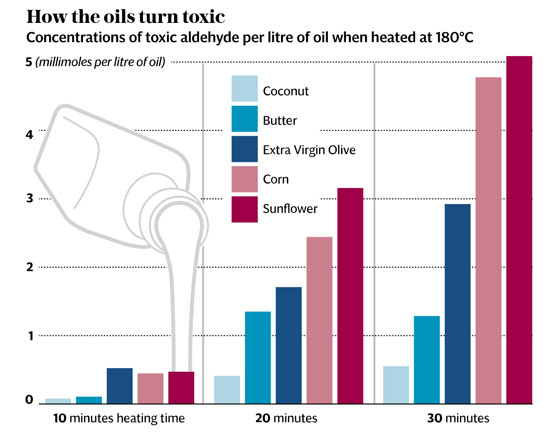
According to Frances Sladek,13 Ph.D., a toxicologist and professor of cell biology at UC Riverside, PUFAs behave like a toxin that builds up in tissues because your body cannot easily rid itself of it. Making matters worse, when vegetable oils like sunflower oil and corn oil are heated, cancer-causing chemicals like cyclic aldehydes are also produced.14

how the oils turn toxic
Source: The Telegraph November 7, 2015

Vegetable Oils Are Anything But Healthy

Other research confirms such findings by linking fried foods to an increased risk of death. For example, eating fried potatoes more than twice a week has been shown to double a person’s risk of death compared to never eating fried potatoes.15 Animal and human research has also found vegetable oils promote:

  • Obesity and fatty liver16
  • Lethargy and prediabetic symptoms17
  • Chronic pain/idiopathic pain syndromes (meaning pain with no discernible cause)18
  • Migraines19
  • Crohn’s disease and ulcerative colitis20

According to Dr. Cate Shanahan,21 a family physician and author of “Deep Nutrition: Why Your Genes Need Traditional Food,” the idea that PUFAs are healthier than saturated fats falls flat when you enter the field of biochemistry, because it’s “biochemically implausible.” In other words, the molecular structure of PUFA is such that it’s far more prone to react with oxygen, and these reactions disrupt cellular activity and cause inflammation.22 Oxidative stress and inflammation, in turn, are hallmarks not only of heart disease and heart attacks but of most chronic diseases.23,24

“[T]he folks at the AHA claim saturated fat is pro-inflammatory and causes arterial plaque and heart attacks — but there is no biochemically plausible explanation for their argument,” she told me in an emailed rebuttal to the AHA advisory.“Saturated fat is very stable, and will not react with oxygen the way PUFA fat does, not until the fundamental laws of the universe are altered.

Our bodies do need some PUFA fat, but we need it to come from food like walnuts and salmon or gently processed (as in cold pressed, unrefined) oils like flax and artisanal grapeseed, not from vegetable oils because these are refined, bleached and deodorized, and the PUFA fats are molecularly mangled into toxins our body cannot use.”

Open Letter to AHA President

In an open letter to AHA president Warner, Dr. William Davis, a New York cardiologist and author of The New York Times best seller “Wheat Belly, Lose the Wheat, Lose the Weight, and Find Your Path Back to Health,” writes, in part:

“If you ignore the nonsense that AHA policy dictates, you can absolutely gain control over cardiovascular risk. But you will NOT find the answers in any AHA policy. I learned these lessons practicing as an interventional cardiologist, then abandoning this ridiculous way of managing coronary disease to devote my efforts to early detection and prevention.

So, I thought I would articulate some of these thoughts in an open letter to Dr. Warner as he recovers from his procedure … Dr. Warner — … There are a number of reasons why someone like you — deeply-entrenched in the conventional world of heart disease management and what passes for prevention — highlights the miserable failure that the modern coronary care paradigm represents:

1) We are trapped by the outdated but profitable lipid hypothesis … 2) We know from abundant data that small oxidation- and glycation-prone LDL particles are highly atherogenic … are potent triggers of the inflammation cascade … and are triggered to abundant degrees in some genotypes upon consumption of the amylopectin A of grains …

[Y]es, the food that the American Heart Association advises to fill the diet with — and sugars … I am hoping that, now that this disease has touched you personally, your eyes will be opened to the corrupt and absurd policies of conventional coronary care and the American Heart Association.”

The Magic Pill Myth Needs to End

Davis goes on to note that heart disease is a multifactorial problem that cannot be solved with a pill.

Thinking that a statin drug … [is] sufficient to prevent coronary events is absurd and overly-simplistic, like thinking that taking Aricept for dementia will stop the disease — of course, it does no such thing,” he writes, adding, “There are no drugs to ‘treat’ many of the contributors to coronary atherogenesis. But there are many non-drug strategies to identify, then correct, such causes.”

Nondrug prevention strategies suggested by Davis include:

Avoiding any and all dietary factors that provoke insulin resistance, glycation and formation of small, dense LDL particles. Importantly, this would include avoiding the harmful fats recommended by the AHA such as margarine and processed vegetable oils, and keeping your total daily fructose consumption below 25 grams per day.

Optimizing your vitamin D level.

Optimizing your omega-3 fat intake: An omega-3 index of 10 percent or greater is associated with “dramatic reduction in cardiovascular events,” Davis notes. Indeed, a 2010 analysis25 found that while diets higher in omega-6 fats (found in ample amounts in vegetable oils) and lower in omega-3s increased the risk of nonfatal myocardial infarction and death from heart disease by 13 percent; a mixed diet of both omega-3 and omega-6 fats reduced these risks by 22 percent.

Meanwhile, the AHA recommends higher intakes of omega-6, saying26 “Aggregate data from randomized trials, case-control and cohort studies, and long-term animal feeding experiments indicate that the consumption of at least 5 percent to 10 percent of energy from omega-6 PUFAs reduces the risk of coronary heart disease relative to lower intakes.

The data also suggest that higher intakes appear to be safe and may be even more beneficial.”This statement runs counter to a large body of research suggesting the converse — specifically, that reducing omega-6 fats and increasing omega-3 is better for your heart.

Addressing your thyroid function.

Optimizing your gut microbiome to address dysbiosis caused by excess sugar, chlorinated and fluoridated water, and exposure to antibiotics, pesticides and common heartburn drugs.

Stent Placement No Better Than Placebo

Research also does not support the routine procedure of coronary artery angioplasty and stent placement. In fact, recent research suggests up to 50 percent of all stent placements may be unnecessary.27 Moreover, the effectiveness of this procedure is right on par with placebo. In a recent study published in The Lancet, researchers from Imperial College London investigated the difference between patients who had received a stent for stable angina and those who underwent a placebo intervention.28

In the short video above, lead author and interventional cardiologist Dr. Rasha Al-Lamee, describes the study and its results. Two hundred participants with severe single vessel blockage were recruited from five sites across the U.K.29 During the initial six weeks, all patients underwent an exercise test followed by intensive medical treatment.

At that point, they were randomly assigned to two groups. The first underwent a percutaneous intervention (PCI) during which coronary angioplasty was performed and a stent was placed. The second group also underwent a PCI procedure with an angiogram but without a balloon angioplasty or stent placement.30

For the following six weeks, neither the patient nor the physician knew if the patient received the stent. At the conclusion of the six weeks, patients again underwent an exercise test and were questioned about their symptoms. The researchers found both groups experienced nearly identical improvements in exercise tolerance and no difference in reported improvements of their symptoms.31 From the data, Al-Lamee commented:32

“Surprisingly, even though the stents improved blood supply, they didn’t provide more relief of symptoms compared to drug treatments, at least in this patient group. It seems that the link between opening a narrowing coronary artery and improving symptoms is not as simple as everyone had hoped.”

A New Way of Looking at Heart Disease

In this interview, Dr. Thomas Cowan, family physician, founding member of the Weston A. Price Foundation and author of “Human Heart, Cosmic Heart: A Doctor’s Quest to Understand, Treat and Prevent Cardiovascular Disease,” reveals how your heart and circulatory system works. This understanding may go a long way toward changing the way you understand heart disease.

He makes a strong case for heart disease being rooted in mitochondrial dysfunction and believes plaque formation alone cannot explain a heart attack.”[Conventionally], it’s all about the plaque,” Cowan says“My point in the book is that it’s NOT about the plaque.” The conventional view is that your heart functions like a pump — a pressure propulsion system caused by the muscular contraction of the ventricles.

Cowan explains that your heart is actually better described as a hydraulic ram — a vortex-creating machine — where the primary mover of blood is the interaction occurring between the negatively charged vessel walls and the positively charged water in your blood. Importantly, the following three natural energies result in a separation of charges that improve blood flow:

1. Sunlight charges up your blood vessels, which increases the flow of blood. When the sun’s rays penetrate your skin, it causes a massive increase of nitric oxide that acts as a vasodilator. As much as 60 percent of your blood can be shunted to the surface of your skin through the action of nitric oxide.

This helps absorb solar radiation, which then causes the water in your blood to capture the energy and become structured. This is a key component for a healthy heart. The ideal is to be exposed to the sun while grounding, meaning walking barefoot. This forms a biological circuit that makes it work even better.

2.Negative ions from the Earth, also known as earthing or grounding. This also charges up your blood vessels, creates a separation of charges, creates more positive ions and allows the blood to flow upward, against gravity.

3.The field effect or touch from another living being, such as laying on of hands.

A Healthy Heart Is the Result of a Healthy Lifestyle

As noted by Cowan, “The best thing is to be, more or less, with shorts or naked on the beach, with the saltwater, which acts as an electrical conductor, holding hands with somebody you love. That’s how you structure the water [in your blood vessels].” Sun exposure, grounding and skin-to-skin contact are three heart disease prevention strategies that, ideally, everyone should be doing, and it doesn’t get a whole lot easier or less expensive than this.

That said, your heart health is really dependent on your diet — what you eat and when you eat. In my view, the best treatment for heart disease is to work your way up to an intermittent fasting schedule where you’re fasting for 20 hours a day. When you do eat, make sure you eat real food, and consider a cyclical ketogenic diet, high in healthy fats, low in net carbs with moderate protein.

Recommended Reading: Five Best Fruits and Vegetables for Heart Health

Once you’re comfortable with this intermittent fasting schedule, start doing a monthly five-day water fast. This really is the most powerful metabolic intervention I know of, and I feel it’s one of the healthiest things I now do for my own health. Senescent cells, which have stopped replicating, play a distinct role in aging and disease. Once replication stops, these cells need to be removed from your body, or else they start clogging it up, causing severe inflammation and immune dysfunction.

Fasting very effectively gets rid of senescent cells — a process known as autophagy. Fasting also stimulates the production of stem cells, which help with regeneration and healing.

While a five-day fast may sound intimidating, if you’re used to 20-hour daily intermittent fasting for a month before starting your five-day fast, then the hunger that typically strikes on the second day of fasting is dramatically reduced and will typically not be at all bothersome. Fasting is also a powerful remedy for insulin resistance, which is a major underlying factor of heart disease.

Other important lifestyle strategies to protect your heart include getting enough CoQ10, getting regular exercise, making sure you get enough sleep (which is really important for mitochondrial health) and avoiding electromagnetic fields. To learn more about these, please read “CoQ10 — The No. 1 Supplement Recommended by Cardiologists,” “Here’s What Losing Sleep Does to Your Heart” and “The Real Dangers of Electronic Devices and EMFs.”

Last but not least, the following exercise, which requires only two to three minutes, three times a day, is a super-simple way to boost your heart health. It prompts your body to release nitric oxide, which will help relax your blood vessels and improve your blood pressure.

Researchers Warn How Pesticides Are Secretly Growing Antibiotic Resistance

(NaturalBlaze by Heather Callaghan) The first team of researchers ever to discover that the world’s most popular pesticides and herbicides increase the antibiotic resistance crisis have conducted another study to prove once and for all a frightening truth we must respond to.

Researchers at the University of Canterbury in New Zealand have confirmed once again that active ingredients of the commonly used herbicides, Roundup, Kamba and 2,4-D (glyphosate, dicamba and 2,4-D, respectively), each alone cause antibiotic resistance at concentrations well below label application rates.

Related: How to Detoxify From Antibiotics and Other Chemical Antimicrobials

GMWatch reports:

Professor Jack Heinemann of the School of Biological Sciences in UC’s College of Science said the key finding of the research was that “bacteria respond to exposure to the herbicides by changing how susceptible they are to antibiotics used in human and animal medicine.”

The herbicides studied are three of the most widely used in the world, Prof Heinemann said. They are also used on crops that have been genetically modified to tolerate them.

The effect was not seen at herbicide concentrations that are presently allowed for food (called Maximum Residue Limits, MRL). However, the effect was seen at concentrations well below those applied to plants (application rates). Therefore, the authors believe, the effect is most likely to arise in farm workers in rural areas and in children in urban settings who are exposed to herbicides, if they are also on antibiotics.

Heinemann said,

They are among the most common manufactured chemical products to which people, pets and livestock in both rural and urban environments are exposed. These products are sold in the local hardware store and may be used without training, and there are no controls that prevent children and pets from being exposed in home gardens or parks. Despite their ubiquitous use, this University of Canterbury research is the first in the world to demonstrate that herbicides may be undermining the use of a fundamental medicine – antibiotics.

Related: Understanding and Detoxifying Genetically Modified Foods

We reported on their previous research that discovered the same effects of pesticides on antibiotic resistance. A Monsanto spokesman at the time responded that the research couldn’t determine whether it was the active ingredients or the surfactants used in pesticides that actually made antibiotic resistance worse.

This research is a response to Monsanto’s claims to prove once and for all that both the active ingredients in pesticides and the surfactants are responsible for contributing to antibiotic resistance.

So now the scientists have even more bad news:

In addition, the new paper finds that added ingredients (surfactants) that are commonly used in some herbicide formulations and processed foods also cause antibiotic resistance. An antibiotic resistance response was caused by both the tested surfactants, Tween80 and CMC. Both are also used as emulsifiers in foods like ice cream and in medicines, and both cause antibiotic resistance at concentrations allowed in food and food-grade products.

Commenting on the regulatory implications of his team’s findings, Prof Heinemann said: “The sub-lethal effects of industrially manufactured chemical products should be considered by regulators when deciding whether the products are safe for their intended use.”

This discovery has much wider implications that we will have to handle in a future article…

Related: Gluten, Candida, Leaky Gut Syndrome, and Autoimmune Diseases

“The United States, for example, estimates that more than two million people are sickened every year with antibiotic-resistant infections, with at least 23,000 dying as a result. By 2050, resistance is estimated to add 10 million annual deaths globally with a cumulative cost to the world economy of US$100 trillion. In other words, roughly twice the population of New Zealand will be lost annually to antibiotic resistance,” said Prof Heinemann.
The biggest problem with our regulatory agencies is that they only study lethal or acute toxicity levels. They don’t focus on sub-lethal effects like how pesticides can kill ecologically important microbes. They focus on the effects of chemicals on humans and animals but not other organisms. Lastly, they do not consider the bigger picture such as cumulative and long-term effects of chemicals or what they do in combination.

Heinemann concludes:

Where this information is sought, it is usually only for people or animals. We are unaware of any regulator ever considering the risk of sub-lethal effects on bacteria. That is what makes this new research so important.

More emphasis needs to be placed on antibiotic stewardship compared to new antibiotic discovery. Otherwise, new drugs will fail rapidly and be lost to humanity.

Genetically engineered crops have increased the use of these pesticides. Pesticides aside, many have fears that the introduction of genetic engineering into the ecology will have grave ramifications. Norway, for instance, has banned GE salmon over fears of antibiotic resistance. And, earlier this year, an illegal GE bacteria found its way into an EU feedlot and it, too, was found to be resistant to antibiotics showing once again how reckless and unstable Big Biotech’s use of this technology really is.