UN, Amnesty International Coming – The World is Watching the Dakota Access Pipeline – Timeline of Events

On Friday, October 28, 2016, The United Nations and Amnesty International each announced their plans to send delegations of human rights observers to investigate reports of human rights violations of protesters opposing the North Dakota Access pipeline. This action comes one day after heavily armed authorities surrounded protesters and reportedly used pepper spray, tear gas, and a sound cannon before arresting 141 protesters, bringing the total number of arrests to more than 400.

The Dakota Access Pipeline, a 3.7 billion dollar project, which is currently more than half completed, is being built to transport 470,000 barrels of oil a day across four states: North Dakota, South Dakota, Iowa, and Illinois. In southern Illinois, it will link with existing pipelines.

On January 25, 2016, Dakota Access announced it had received permit approval to build their pipeline from the North Dakota Public Service Commission. Seven months later, July 27, 2016, the Standing Rock Sioux Tribe filed its first legal action to try and block the pipeline.

…North Dakota’s governor, Jack Dalrymple, activated 100 National Guard Troops…

In September, Standing Rock Chairman Dave Archambault II addressed the United Nations Human Rights Council, calling on the council to help stop construction. He argued that two legally binding treaties, the 1851 Treaty of Traverse de Sioux and the 1868 Treaty of Fort Laramie are being violated. “The oil companies and the government of the United States have failed to respect our sovereign rights,”Archambault said.

The Standing Rock Sioux Tribe view the pipeline as a threat to their water supply and a threat to sacred lands and burial sites. Thousands have participated in peaceful demonstrations against the pipeline, but many have been met with violence. There have been many reports of beatings, pepper spray, tear gas, mace, attack dogs, rubber bullets, horses injured from shootings, and the use of compression grenades, and a sound cannon along with arrests where protestors are forced to endure strip searches along with cavity searches. Archambault was arrested. Amy Goodman, a journalist, and documentarian Deia Schlosberg were arrested.

Schlosberg filmed activists who manually shut off the safety valves to stop the flow of oil in Minnesota, Montana, North Dakota and Washington state, was charged with three felonies: conspiracy to theft of property, conspiracy to theft of services, and conspiracy to tampering with or damaging a public service. The maximum prison sentence for the three charges would equal 45 years. She was held for 48 hours without access to a lawyer and her film was confiscated. The charges are still standing.

Journalist Amy Goodman was arrested twice. She was first charged with criminal trespass on September 8 after reporting on the September 3rd violence between security guards and protestors. Reports from the sheriff’s office said 3 workers were injured by protesters. Witnesses said the security workers used pepper spray on 30 protesters and 12 were bitten by pit bulls that were released to attack men, women, and children. Goodman’s charges were dropped only to be replaced with a charge of engaging in a riot. The judge rejected the case due to lack of evidence.

On August 31st, the United Nations Permanent Forum on Indigenous Issues said the “world is watching” and made the following statement:

For indigenous peoples, the environment is a living entity that contains our life sources as well as our sacred sites and heritage. The environment is an important part of our lives and any threats to it impacts our families, ancestors and future generations. It is therefore imperative that the United States respects and recognizes the intrinsic, inter-related rights of Sioux and their spiritual traditions, history, philosophy, and especially their rights to their lands and territories.” – ABC News

On September 8, the day before the court’s ruling, North Dakota’s governor, Jack Dalrymple, activated 100 National Guard Troops to assist local law enforcement if protests become violent.

On September 9, a federal judge denied the Standing Rock Sioux Tribe’s request for a temporary injunction. On the same day, the Department of Justice, Department of the Interior and Department of the Army released a joint statement saying,

The Army will not authorize constructing the Dakota Access pipeline on U.S. Army Corps of Engineers land bordering or under Lake Oahe until it can determine whether it will need to reconsider any of its previous decisions regarding the Lake Oahe site under the National Environmental Policy Act (NEPA) or other federal laws. Therefore, construction of the pipeline on Army Corps land bordering or under Lake Oahe will not go forward at this time. The Army will move expeditiously to make this determination, as everyone involved — including the pipeline company and its workers — deserves a clear and timely resolution. In the interim, we request that the pipeline company voluntarily pause all construction activity within 20 miles east or west of Lake Oahe.” – ABC News

The tribe appealed the September 9th ruling, but its appeal was denied on October 9th.

On October 25th, tribal leaders called on the U.S. Attorney General, Loretta Lynch to investigate civil rights violations. The Department of Justice released a statement about how they were working with both sides to defuse tensions, support peaceful protests, and maintain public safety. Two days later protesters set up a roadblock that closed down a state highway resulting an escalation in violent intervention and arrests.

The fear of environmental harm from this pipeline is not unfounded. The Center for Effective Government claims ruptures and leaks are a daily occurrence. On their site they state the following:

Since 2010, over 3,300 incidents of crude oil and liquefied natural gas leaks or ruptures have occurred on U.S. pipelines. These incidents have killed 80 people, injured 389 more, and cost $2.8 billion in damages. They also released toxic, polluting chemicals in local soil, waterways, and air.”

“One of the largest spills happened in North Dakota in 2013 when lightning struck a pipeline, which leaked over 840,000 gallons of crude onto a wheat field.”

On October 20th, a Pennsylvania pipeline burst, leaking 55,000 gallons of gasoline into Wallis Run, a tributary of a creek that drains into the Susquehanna River. The spill endangered the drinking water of six million people. The pipeline is owned by Sunoco, the same company behind the Dakota pipeline access.

Does the Standing Rock Sioux Tribe have the right to protect their land and their water? Do they have the right to demand that the U.S. government honor their treaties and laws? Or will we continue to allow corporations and corporate greed to rule our country? Will we assist them in stripping citizens, especially native Americans, of their constitutional rights as we plunder the land and its resources? Didn’t we learn not to use the National Guard against our own people after the massacre at Kent State when National Guardsmen shot and killed four unarmed students?

Hopefully, the added publicity from celebrity activists like Shailene Woodley, who was charged with criminal trespassing and engaging in a riot and Mark Ruffalo and the involvement of Jessie Jackson and Jill Stein will continue to sway public opinion. Even Bernie Sanders has made it clear that he supports the protesters.

Now that the UN and Amnesty International are involved, the whole world really is watching.

Recommended Reading:
Sources:

Does Hillary Clinton Oppose Marijuana Legalization?

Leaked emails show that Hillary Clinton spoke out against legalizing marijuana in a paid speech that was given more than two years ago, and in March 2014, in an email to Ursula Burns, Xerox’s chairman and CEO, Clinton used Wall Street terminology to express her opposition to ending cannabis prohibition.

BURNS: So long means thumbs up, short means thumbs down; or long means I support, short means I don’t. I’m going to start with — I’m going to give you about ten long-shorts.

CLINTON: Even if you could make money on a short, you can’t answer short.

BURNS: You can answer short, but you got to be careful about letting anybody else know that. They will bet against you. So legalization of pot?

CLINTON: Short in all senses of the word.

Other excerpts from the 80-page document published by Wikileaks (hacked from Podesta’s email account), show Clinton admitting that she is “far removed” from the typical struggles of the middle class. She says that politicians should have separate positions on issues in public and in private, a stance her critics have long suspected.

U.S. Sen. Bernie Sanders, who supports legalization and has introduced legislation to end federal marijuana prohibition, seems to have shifted Hillary’s public position. Clinton has pledged to reschedule marijuana under the Controlled Substances Act if elected, and many doubt this would have happened if it weren’t for Senator Sanders.

While Clinton has made no secret that she’s not ready to endorse full marijuana legalization, she now seems to be taking a wait-and-see approach, watching the results of new legislation in states like Colorado and Washington before she makes up her mind.

These remarks were made two-and-a-half years ago, just two months after legal marijuana sales began in Colorado, so it is not unlikely that Clinton’s personal view of legalization has evolved.

The leaked emails showing such strong opposition, and recent comments from the candidate’s daughter, Chelsea, last month, have cannabis advocates and much of the public concerned.

Libertarian Party candidate Gary Johnson and Jill Stein of the Green Party both support ending cannabis prohibition.

To see what else Hillary Clinton has said about cannabis law reform, check out Marijuana.com’s comprehensive guide to the candidates.

Recommended Reading:
Sources:

Grow Your Own Chicken with SuperMeat

Do you remember the movie Back to the Future Part II? Grandma brings over a 3 inch Pizza Hut pizza, pops it into a Black & Decker hydrator, and poof, it grows into a full-size, extra-large pizza. Well, 2015 has come and gone, and while many of the movie’s technological predictions have come to pass, the Black & Decker hydrator and hoverboards that hover weren’t among them. But something new is in the works that would be worthy of any futuristic scenario. Imagine popping a piece of animal tissue into your  SuperMeat machine and growing a chicken breast. Restaurants will do it. Grocery stores will do it. And you will be able to do it at home, too!  It won’t be as fast as Grandma’s pizza, of course, but you won’t have to kill an animal to chow down on chicken tenders.

According to SuperMeat, a new Israeli start-up company, the benefits are profound. First of all, it will stop the slaughter and inhumane treatment of animals. If you don’t know what is going on in today’s industrialized meat production, we are raising sick animals in horrific inhumane and overcrowded conditions, feeding them GMO foods and antibiotics, and denying them any quality of life before butchering them, again, in inhumane ways.

Growing meat from tissue samples will have a tremendous environmental impact if it replaces current conventional practices. Compared to today’s meat industry, SuperMeat says this new technology will require:

  • 99% less land
  • 96% fewer greenhouse gases
  • 96% less water

Putting an end to conventional practices will greatly protect our water sources as well. Runoff waste from factory farming pollutes rivers, streams, and groundwater.

It will be so much cheaper to grow tissue than it is to raise and slaughter an animal, the lower costs alone will help solve world hunger. In addition, land currently used to grow crops to feed livestock can be used to feed people. It is often said that eliminating meat consumption would easily allow us to feed the world.

SuperMeat also claims their product will be healthier than conventional meat because we will have control over its production.

SuperMeat is in its initial start-up phase. They are currently seeking investors. CEO and Co-Founder, Koby Barak expects their meat growing device will reach the marketplace within five years.

Sources:

San Francisco Bans Polystyrene, AKA Styrofoam

On Tuesday, June 28th San Francisco unanimously passed an ordinance banning the sale of products made from polystyrene, also known as Styrofoam, the name-brand of polystyrene produced by the Dow Chemical Company.

The law goes into effect on January 1, 2017. At which time it will be illegal to sell polystyrene packing materials like foam peanuts, day-use coolers, Styrofoam beach toys, and those trays for meat and fish packaging.

San Francisco is working towards their goal of “zero waste” by 2020. In 2007, the city prohibited the use of polystyrene for to-go restaurant food containers. Today more than 100 cities have similar laws in place restricting or banning polystyrene. Americans still use an estimated 25 billion foam cups each year.

By 2050, we are on track to have more plastic in our oceans than fish. Much of that plastic will be styrofoam.

Critics of the new ban point out that polystyrene is recyclable, that the city could make money recycling polystyrene. Though San Francisco residents can recycle polystyrene free of charge, it rarely gets recycled. Robert Reed, a local project manager for a company that helps cities manage solid waste, says that few people bring in Styrofoam, and even when they do, it’s typically not in good enough condition to be repurposed. “The few buyers who exist demand that the material be very clean,” Reed says in an email. “They don’t even want dust on it.”

Styrofoam has been a big issue for environmentalists, and this is considered a big win. It’s likely to be a model for other cities and the country going forward.

References:


South Carolina Businesses Educate Future Beekeepers

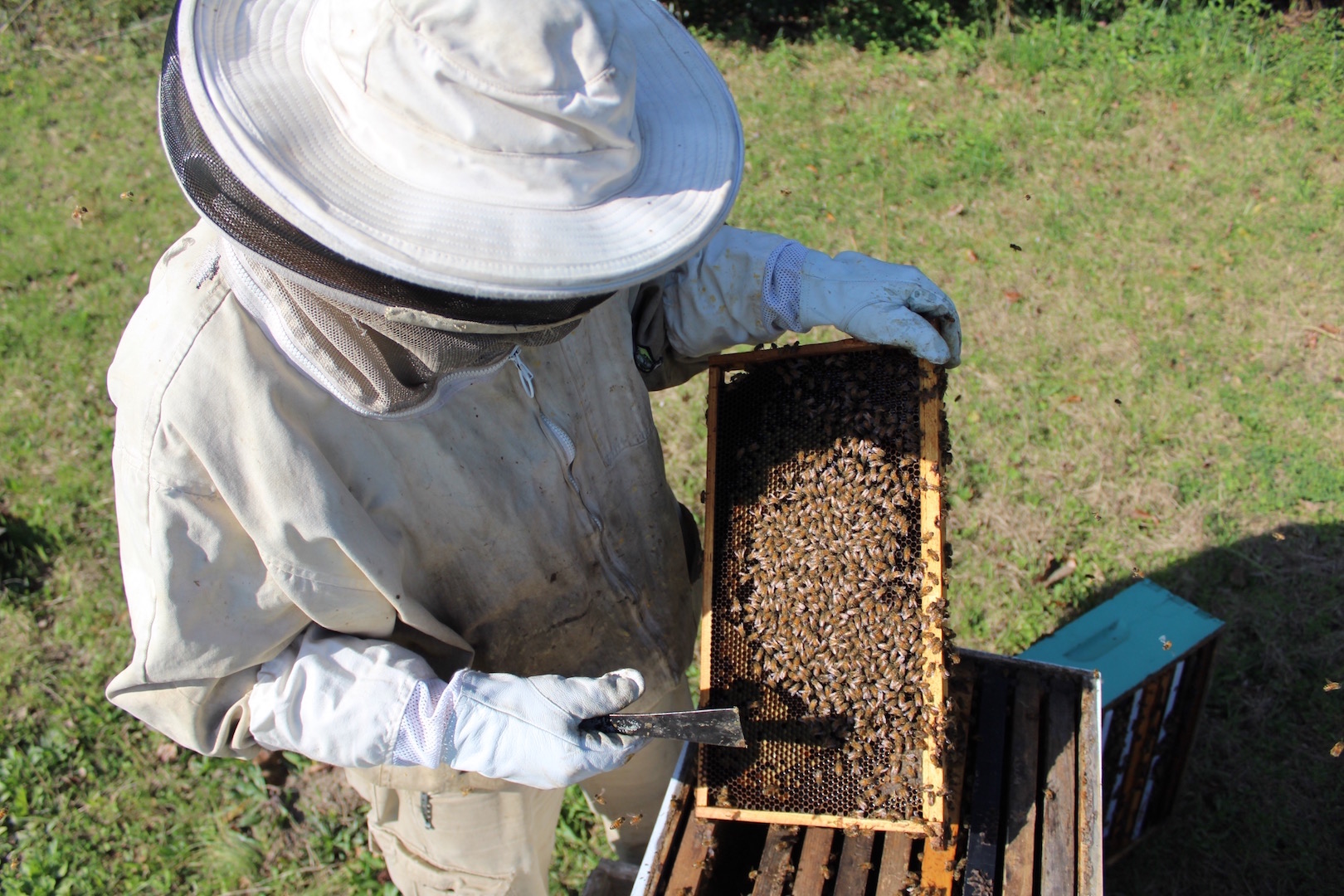
Most people would flee from a dark cloud of honeybees buzzing around them. Scott Derrick relishes the frenetic buzz – at least when he’s dressed in a full-body protective suit.

The 39-year-old Blythewood man is a beekeeper and a businessman. Derrick spent 18 years creating flavors for Lance foods and fragrances for Yankee Candle and Bath & Body Works before trading his corporate job for more time at home with his family and a new hobby of beekeeping.

“My grandfathers kept honeybees when I was younger, and it always intrigued me. But I never got to do much with them because I was so young. And that memory always sat in the back of my mind. So I just started one day,” Derrick said.

In 2004, Derrick started a honeybee removal service called Blythewood Bee Supply Co. Since then, he’s climbed into attics, up trees, and into other uncomfortable spaces to remove buzzing hives plaguing residents.

Around this time, Derrick also translated his olfactory abilities into products for beekeepers.

After three years of trial-and-error experiments, he had a eureka moment. Using a honeybee pheromone called nasonov, Derrick created a spray called Swarm Commander to attract honeybees to a designated area. It is now sold across the United States and internationally in Australia, New Zealand, and Sweden.

Derrick also began selling protective suits, smokers, hive frames and his pheromone liquids through an online store. But as orders piled up, so did the complaints from his family that the house smelled like Swarm Commander.

He had to expand.

Derrick opened a successful brick-and-mortar shop in Blythewood a month ago, making it the third beekeeping supply store to open in the Midlands. It has become the meeting place for the Blythewood Beekeepers Association, a group he started two years ago for the area’s beekeepers.

Danny Cannon, owner of Bee Trail Farm, said the new store has made bee season “less stressful” because he can get supplies faster if he forgets something.

Tom Dukes, a Lexington resident and novice beekeeper, said the shop offers a better alternative to mail-order products because “you need products fast when you need to attract a swarm or need to get rid of bees in the attic.”

Derrick loves that he is able to help his clients. But it is his love for the honeybee that drives his work.

“Honeybees are so important to the human race. Our diets would be so different without them because they pollinate our fruits and vegetables,” he said.

Saving the Honeybee

About three-fourths of the world’s food crops depend on pollination, according to a report released by the United Nations Intergovernmental Science-Policy Platform on Biodiversity and Ecosystem Services. And more than 40 percent of invertebrate pollinators – bees and butterflies – are “facing extinction.”

Honeybees are not native to the Americas and were first brought to North America by English settlers in 1622. Although not native to the American landscape, wild colonies of bees spread quickly as white settlers moved out across the continent.

Since the 1940s, the number of managed honeybee colonies in the United States has declined from 5 million to 2.5 million because of various threats – invasive species, diseases, pesticides, and habitat destruction, according to the U.S. Department of Agriculture.

“Varroa mites are the biggest threat for honeybees,” said Dr. Keith Delaplane, director of the University of Georgia’s Honey Bee Program. “And we have environmental degradation occurring. Not just through coal mining, but also through urbanization and crop sterilization. We just seem to be reaching a tipping point.”

The declining health of honeybee colonies was heightened by the arrival of new diseases and pests in the 1980s, according to the USDA. And in the 1990s, the Varroa mite, which was introduced from eastern Asia, created more concern as it began to kill colonies.

In 2006, a more mysterious and alarming threat appeared as beekeepers across the United States reported colony losses of 30 to 90 percent. It was due to colony collapse disorder (CCD), a disease defined as a colony that has randomly died except for the queen and immature bees. Researchers have not yet found a cause.

South Carolina’s managed honeybee colonies have a history of devastation and reform.

In 2011, an average colony loss of 22.9 percent was reported, according to the Bee Informed Partnership’s National Management Survey, which is part of a USDA-sponsored research program. In 2012, an average colony loss of 41.4 percent was reported, making South Carolina 13th out of 5o states with the worst colony loss. And in 2013, the last year data was made available, an average colony loss of 29.5 percent was reported.

Pesticide use, Varroa mites, and colony collapse disorder are major threats to South Carolina’s honeybee colonies, said Tom Ballou, president of the Mid-State Beekeepers Association.

He added that pesticide use is the “biggest problem in South Carolina” and that it’s “causing honeybees to starve.”

Derrick blames large corporations such as Bayer and Monsanto for their use of neonicotinoids, an insecticide used to control various pests, a charge the corporations deny.

“Seeds are coded with these products and they’re destroying our honeybees. Until the government stops being reactionary, change will be tough,” Derrick said. “We need to ban neonicotinoids like Europe did.”

In 2013, the European Union banned the use of three types of neonicotinoids after several studies linked the insecticide to honeybee colony collapse.

Today, two-thirds of the world’s crops are exposed to neonicotinoids, including 90 percent of corn and 60 percent of soybean acres.

Bayer CropScience produces some of the most widely used neonicotinoids in the world and considers them safe. Monsanto, the world’s largest seed producer, uses Bayer’s neonicotinoids on some of its seeds. Monsanto is known for its herbicide Roundup and its genetically modified seeds that are resistant to it.

David Fischer, director of pollinator safety at Bayer CropScience, responded to criticism in a 2012 Forbes article addressing the use of neonicotinoids.

In his response, published on his blog and Bayer’s website, Fischer said: “The idea that it all started in 2006 and coincided with the introduction of neonicotinoid insecticides is a myth … there is no credible scientific evidence demonstrating a link between the use of neonicotinoid insecticides and the occurrence of widespread honey bee colony losses, including CCD.”

A study conducted by the Environmental Protection Agency (EPA) earlier this year found that neonicotinoids didn’t harm honeybees or their hives when used on corn, berries, and tobacco but did cause harm when used on cotton plants and citrus trees.

Gus Lorenz, associate head of entomology at the University of Arkansas, said he and other researchers were disappointed by the EPA study and worried that “science has gone out the door.”

He said his research conducted in the mid-South shows that “neonicotinoids pose no threat to honeybees” because there is “very little” pesticide present when plants begin to bloom.

Jay Evans, research leader for the USDA’s Bee Research Lab, said “diseases have had a bigger impact on honeybees just because there are so many (diseases) in different parts of the country. It doesn’t mean that the pesticides don’t have an impact … I believe honeybees are sensitive to them (neonicotinoids) for sure. Now, I think the key work has to do with exposure rates and ingestion and whether or not they have relevant levels of insecticides.”

Some researchers need more data.

Janet Knodel, extension entomologist at North Dakota State University, said neonicotinoids applied during bloom could be “deadly to honeybees” but that she is “on-the-fence” until she sees more data. She said “withdrawing insecticides right away without an alternative is not the right solution” because it leaves growers without protection against pests.

There is one threat that South Carolina beekeepers didn’t see coming– regulation.

West Columbia considered an ordinance last year that would require the city’s beekeepers to hold a permit. It also sought to implement lot size regulations – 7,500 square feet for one hive and 5,000 square feet for an additional hive. The ordinance was abandoned after the Mid-State Beekeepers Association formed a grassroots response to educate the city’s planning committee.

Solutions have been organized on a statewide and national scale to solve the honeybee conundrum.

President Obama established the first-ever federal pollinator strategy last June. Because of this, the Agricultural Department announced $8 million in incentives to farmers in five states who designate parts of their land for honeybees. The Agricultural Department also provided $3 million to reseed Midwest pastures with alfalfa and clover, providing food for honeybees.

In South Carolina, Clemson University and the South Carolina Agriculture Department established an online program in 2014 that allows the state’s beekeepers and farmers to compare notes on the locations of hives and areas designated for pesticide to avoid poisoning.

The South Carolina Beekeepers Association holds yearly conferences that includes input from researchers such as Dr. Juliana Rangel of Texas A&M’s Honey Bee Lab and Jerry Hayes of Monsanto’s Beelogics. Also, many of the state’s local associations hold beekeeping courses. 

Educating the people

South Carolina businesses are addressing the honeybee issue through education.

Derrick recently started teaching beginner courses to residents interested in beekeeping. His first class, held on March 19, included a history of the honeybee, information about the threats and solutions, and beekeeping basics.

“Honeybees are social insects and beekeepers are social people. So they’re kind of a perfect match,” Derrick said. “And the number of interested residents who have come through the doors has been astounding. So I think businesses like mine can help bring back the honeybee.”

Interested residents who attended the class feel more confident about starting their own hives.

“I went to get more information so that I could have a better than average chance at sustainable success,” said Hugh Staples, owner of a Columbia landscaping business. “I feel better equipped than I did before because of his willingness to stop and answer my questions, which a lot of people don’t do because of a tight schedule. But he did.”

South Carolina businesses have been holding courses since the 1990s.

Bee Well Honey Farm and Supply in Pickens, South Carolina, has been holding instructional classes for interested residents and veteran beekeepers since it was founded in 1999.

Kerry Owens, owner of Bee Well Honey Farm and Supply, said courses are “great for promoting the honeybees” and that they have the potential to become a family hobby.

Other companies, including The Carolina Honey Bee Co. in Travelers Rest, South Carolina, and Bee Trail Farm in Lexington, South Carolina, also hold courses.

There are several benefits that beekeeping can provide to humans and the environment, according to Utah State University’s backyard beekeeping guide.

Beekeepers can collect up to $200 worth of honey from each hive they maintain. And those who eat the honey are provided health benefits such as anti-inflammatory, antiviral, and antioxidant effects. Also, keeping bees is good for the environment because it aids in the pollination of nearby fruits, vegetables, and plants.

Despite being an enthusiast, Derrick teaches his students to have less interaction with their honeybees – a more natural approach to beekeeping.

“They need to adapt to the threats. If we continue to treat them with chemicals and give them a crutch, they won’t adapt. We’re enabling them to die,” Derrick said. “Some bee colonies will clean the mites off of each other. Why do they do it? Because we got out of the way.”

One Beehive at a Time

As flowers bloom across the Palmetto state and bees begin to buzz, Derrick is preparing to hold more classes and handle more shipments of supplies as he also worries about the store.

The company has already outgrown the 1,800 square foot store with its expanding inventory, which includes honey, smokers, pheromone sprays, hive frames, hives, protective clothing, pest control, and live honeybee queens.

He’s already making his five-year plan.

“I want a 5,000 square foot building added behind the shop where we can make our own woodenwares. And I want to purchase the property behind the shop to raise about 20 hives so that I can provide more bees to residents and get more honey,” Derrick said.

Customers can also expect to see new products on the shelves in the near future as Derrick is currently experimenting. He’s “sworn to secrecy” about the products.

Derrick may also expand his focus to other bee species such as the Mason bee, a species that spends most of its time alone in its mud compacted nest.

“I know honeybees will survive because they’ve suffered through more than man,” he said. “And more people are starting to understand why they should be helping them.”

This story originally appeared on Dateline Carolina, a University of South Carolina publication. 

Recommended Reading: