A Hospital Charged $1,877 to Pierce a 5-Year-Old’s Ears. This Is Why Health Care Costs So Much.

(ProPublicaThis story was co-published with NPR’s Shots blog. 

Two years ago, Margaret O’Neill brought her 5-year-old daughter to Children’s Hospital Colorado because the band of tissue that connected her tongue to the floor of her mouth was too tight. The condition literally called being “tongue-tied,” made it hard for the girl to make “th” sounds.

It’s a common problem with a simple fix: an outpatient procedure to snip the tissue.

During a pre-operative visit, the surgeon offered to throw in a surprising perk. Should we pierce her ears while she’s under?

O’Neill’s first thought was that her daughter seemed a bit young to have her ears pierced. Her second: Why was a surgeon offering to do this? Wasn’t that something done free at the mall with the purchase of a starter set of earrings?

Recommended: Start Eating Like That and Start Eating Like This – Your Guide to Homeostasis Through Diet

“That’s so funny,” O’Neill recalled saying. “I didn’t think you did ear piercings.”

The surgeon, Peggy Kelley, told her it could be a nice thing for a child, O’Neill said. All she had to do is bring earrings on the day of the operation. O’Neill agreed, assuming it would be free.

Her daughter emerged from surgery with her tongue newly freed and a pair of small gold stars in her ears.

Only months later did O’Neill discover her cost for this extracurricular work: $1,877.86 for “operating room services” related to the ear piercing — a fee her insurer was unwilling to pay.

At first, O’Neill assumed the bill was a mistake. Her daughter hadn’t needed her ears pierced, and O’Neill would never have agreed to it if she’d known the cost. She complained in phone calls and in writing.

The hospital wouldn’t budge. In fact, O’Neill said it dug in, telling her to pay up or it would send the bill to collections. The situation was “absurd,” she said.

“There are a lot of things we’d pay extra for a doctor to do,” she said. “This is not one of them.”

Kelley and the hospital declined to comment to ProPublica about the ear piercing.

Surgical ear piercings are rare, according to the Health Care Cost Institute, a nonprofit that maintains a database of commercial health insurance claims. The institute could only find a few dozen possible cases a year in its vast cache of billing data. But O’Neill’s case is a vivid example of health care waste known as overuse.

Into this category fall things like unnecessary tests, higher-than-needed levels of care or surgeries that have proven ineffective.

Recommended: How to Make the Healthiest Smoothies – 4 Recipes

Wasteful use of medical care has “become so normalized that I don’t think people in the system see it,” said Dr. Vikas Saini, president of The Lown Institute, a Boston think tank focused on making health care more effective, affordable and just. “We need more serious studies of what these practices are.”

Experts estimate the U.S. health care system wastes $765 billion annually — about a quarter of all the money that’s spent. Of that, an estimated $210 billion goes to unnecessary or needlessly expensive care, according to a 2012 report by the National Academy of Medicine.

Listen to the Story

ProPublica has been documenting the ways waste is baked into the system. Hospitals throw away new supplies and nursing homes discard still-potent medication. Drugmakers combine cheap ingredients to create expensive specialty pills and arbitrary drug expiration dates force hospitals and pharmacies to toss valuable drugs.

We also reported how drug companies make oversize eyedrops and vials of cancer drugs, forcing patients to pay for medication they are unable to use. In response, a group of U.S. senators introduced a bill this month to reduce what they called  “colossal and completely preventable waste.”

But any discussion of waste needs to look how health care dollars are thrown away on procedures and care that patients don’t need — and how hard it is to stop it.


Just ask Christina Arenas.

Arenas, 34, has a history of noncancerous cysts in her breasts so last summer when her gynecologist found some lumps in her breast and sent her for an ultrasound to rule out cancer, she wasn’t worried.

But on the day of scan, the sonographer started the ultrasound, then stopped to consult a radiologist. They told her she needed a mammogram before the ultrasound could be done.

Arenas, an attorney who is married to a doctor, told them she didn’t want a mammogram. She didn’t want to be exposed to the radiation, or pay for the procedure. But sitting on the table in a hospital gown, she didn’t have much leverage to negotiate.

Recommended: How to Detoxify From Chemotherapy and Repair the Body
Christina Arenas of Washington, D.C., went to the doctor for a breast ultrasound but said she was required to get more imaging tests than she needed, including the mammogram on her computer.(Allison Shelley for ProPublica)

So, she agreed to a mammogram, followed by an ultrasound. The findings: no cancer. As Arenas suspected, she had cysts, fluid-filled sacs that are common in women her age.

The radiologist told her to come back in two weeks so they could drain the cysts with a needle, guided by yet another ultrasound. But when she returned she got two ultrasounds: one before the procedure and another as part of it.

The radiologist then sent the fluid from the cysts to pathology to test it for cancer. That test confirmed — again — that there wasn’t any cancer. Her insurance whittled the bills down to $2,361, most of which she had to pay herself because of her insurance plan.

Arenas didn’t like paying for something she didn’t think she needed and resented the loss of control. “It was just kind of, ‘Take it or leave it.’ The whole thing. You had no choice as to your own care.”

Arenas, sure she’d been given care she didn’t need, discussed it with one of her husband’s friends who is a gynecologist. She learned the process could have been more simple and affordable.

Arenas complained to The George Washington Medical Faculty Associates, the large Washington, D.C., doctor group that provided her treatment. Her request to have the bill reduced was denied. Then bill collectors got involved, so she demanded a refund and threatened legal action.

She said she never got to speak to anyone. Her demand was routed to an attorney, who declined her request because there was “no inappropriate care.” She also complained to her insurance company and the Washington, D.C., attorney general’s office, but they declined to help reduce the bill.

Overtreatment related to mammograms is a common problem. The national cost of false-positive tests and overdiagnosed breast cancer is estimated at $4 billion a year, according to a 2015 study in Health Affairs. Some of this is fueled by anxious patients, some by doctors who know that missing a cancer diagnosis can be grounds for a medical malpractice lawsuit. But advocates, patients and even some doctors note the screenings can also be a cash cow for physicians and hospitals.

Recommended: The Power of Our Hormones and How To Balance Them

With Arenas’ permission, we shared her case with experts, including Dr. Barbara Levy, vice president of health policy for the American College of Obstetricians and Gynecologists and three radiologists.

Levy said there’s a standard way to treat a suspected breast cyst that’s efficient and cost-effective. If the lump is large, as in Arenas’ case, a doctor should first use a needle to try and drain it. If the fluid is clear and the lump goes away there’s no cause for concern or extra testing. If the fluid is bloody or can’t be drained, or the mass is solid, then medical imaging tests can determine if it’s cancerous.

However, doctors often choose to order imaging tests rather than drain apparent cysts, Levy said. “We’re so afraid the next one might be cancer even though the last 10 weren’t,” she said. “So, we overtest.”

Levy and the radiologists agreed that at least some of Arenas’ care seemed excessive. But their opinions varied, which shows why it can be difficult to reduce unnecessary care. Standards are often open-ended, so they allow for a wide range of practices and doctors have autonomy to take the route they think is best for patients.

Recommended: Gluten, Candida, Leaky Gut Syndrome, and Autoimmune Diseases

The American College of Radiology recommends an ultrasound for a 32-year-old — Arenas’ age at the time of the procedure — with an unidentified breast mass. Mammograms are also an option, but “most benign lesions in young women are not visualized by mammography,” the guidelines state.

Arenas reviews her medical bills. Experts called the care to treat her breast cysts “excessive.” (Allison Shelley for ProPublica)

Dr. Phillip Shaffer, a radiologist who’s practiced for decades in Columbus, Ohio, said he didn’t think Arenas needed the mammogram. “I wouldn’t do it,” he said. “If I did an ultrasound and saw cysts, I’d say you have cysts. In 32-year-olds the mammogram does almost nothing.”

Dr. Jay Baker, chair of the American College of Radiology breast imaging communications committee, agreed that the ultrasound alone would have “almost certainly” identified the cyst. But, he said, maybe something about the lumps concerned Arenas’ radiologist, so a mammogram was ordered.

None of the radiologists consulted by ProPublica could explain why two ultrasounds on the return visit would be necessary. According to Arenas’ medical records, the practice told one reviewer that two were done to make sure the cysts hadn’t changed.

Recommended: How To Detoxify and Heal From Vaccinations – For Adults and Children

Shaffer didn’t buy it. “They just billed her twice for one thing,” he said.

Levy, the gynecologist, said it’s “excessive” to do two ultrasounds. And, she said, there was no need to send clear fluid to pathology.

Arenas offered to waive her privacy rights so the practice that provided her treatment could speak to ProPublica. Officials from the practice declined to comment. Her medical records show that in response to reviews by her insurance company and the attorney general’s office, her doctors said the care was appropriate.

Since then she has her cysts drained without images in her gynecologist’s office for about $350. But Arenas said on two occasions she’s used a needle at home to do it herself. (Doctors do not recommend this approach.) She admits it was an extreme choice, but at the time she worried she would be subjected to more unnecessary tests.

“I was taken advantage of because I was a captive audience,” she said.


In a brick-and-glass office park just outside Roanoke, Virginia, Missy Conley and Jeanne Woodward have battled on behalf of hundreds of patients who believe they’ve been overtreated or overcharged. The two work for Medliminal, a company that challenges erroneous and inflated medical bills on behalf of consumers in exchange for a share of the savings.

Recommended: What Causes Chronic Inflammation, and How To Stop It For Good

The two women excitedly one-up each other with their favorite outrages. How about the two cases involving unnecessary pregnancy tests? One of the patients was 82 —decades past her childbearing years. The other involved a younger woman who no longer had a uterus.

Another case involved an uninsured man who fell off his mountain bike and hurt his shoulder. The first responders pressured him to take an air ambulance to a hospital when it would have been faster for his friends to drive him. He got charged $44,000 for the whirlybird. Such unexpectedly pricey flights — and the aggressive billing that comes with them — have been featured in stories by NPRThe New York Times and The Atlantic.

Medliminal gets dozens of calls a week from consumers who are fed up with the medical system.

Woodward, a nurse and certified medical auditor, regularly sees patients billed for unnecessary lab tests. A man with diabetes may only need his glucose measured, but the doctor may order a bundle of 14 unnecessary tests, she said. The extra tests inflate the tab.

Recommended: Hypertension – How To Lower Your Blood Pressure Quickly and Naturally

If there’s a billing dispute it can take months of phone calls and emails to get a case resolved, said Conley, who gained an insider’s knowledge during years working for insurance companies.

Patients fighting bills on their own often give up and pay the bill or let it go to collections, she said. “The whole system is broken,” Conley said.

Saini, president of The Lown Institute, said profit is a major driver of overuse.

“Providers are getting constant messages from superiors or partners to maximize revenue,” Saini said. “In this system we have, that’s not a crime. That’s business as usual.”

Patients aren’t true health care consumers because they typically can’t shop by price and they often don’t have control over the care they receive, Saini said. The medical evidence may support multiple paths for providing care, but patients are unable to tell what is or is not discretionary, he said. Time pressure adds urgency, which makes it difficult to discuss or research various options.

“It’s sort of this perfect storm where no one is really evil but the net effect is predatory,” Saini said.

Once the service or treatment is provided, the bill is on its way, with little forgiveness.


In 2015, Dr. Dong Chang, the director of the medical intensive care unit at Harbor-UCLA Medical Center, a public hospital in Los Angeles, decided to see whether the care being delivered in his ICU was appropriate.

Recommended: How to Kill Fungal Infections

Resources were scarce in his ICU, and he suspected it might be possible to manage them better. So, he and his colleagues reviewed the records of all the patients in the unit over the course of a year to see whether the patients might have been either too sick, or too healthy, to benefit from intensive care.

The results shocked them. They determined the care may not have been beneficial to more than half of the patients. “ICU care is inefficient, devoting substantial resources to patients less likely to benefit,” their study, published in the February edition of JAMA Internal Medicine, concluded.

Dr. Dong Chang, director of the medical intensive care unit at Harbor-UCLA Medical Center, has found that many patients are too sick or too healthy to benefit from intensive care. (Jenna Schoenefeld for ProPublica)

Chang and his team also reviewed the use of intensive care at 94 hospitals in two states, Maryland and Washington, focusing on four common conditions that can lead to treatment in an intensive care unit.

They found wide variation in the types of patients hospitals determined needed intensive care.  One hospital put 16 percent of patients with diabetic ketoacidosis, a serious condition that can result in a coma, in intensive care, while another hospital did so with 81 percent of such patients. The range for patients with pulmonary embolisms was from 5 percent to 44 percent and for those with congestive heart failure, it was 4 percent to 49 percent.

Chang attributes the difference to doctors using intensive care based on their habits, hunches or training. Profit, he said, may also be a motive, but it didn’t appear to be a driving force.

“We really don’t have good standards and a good discussion going on about who should receive ICU care,” Chang said.

The unnecessary intensive care can also be harmful. The study found intensive care patients underwent more invasive procedures, like the insertion of catheters, including central lines, which carry the risk of infection. Overuse of the ICU is bad for patients who don’t need it, Chang said. Survival rates were also no better at the hospitals that used intensive care the most.

Reducing unneeded intensive care stays would save big money. Intensive care costs about $10,000 for a typical stay and accounts for 4 percent of national health care expenditures, according to research cited by Chang’s team.

If the hospitals in Maryland and Washington with the highest rates of intensive care use had behaved more like those with lower use, it would save around $137 million, the study estimated. That’s the savings for fewer than 100 hospitals in two states. There are about 4,000 hospitals nationwide, suggesting that reducing unnecessary intensive care use could save billions of dollars a year.

Chang hesitated to call the overuse of intensive care “wasted” health care spending. He said the medical literature calls it “non-beneficial” care, which is maybe a nicer way of saying the same thing.


For O’Neill, her dispute of the fee for her daughter’s ear piercing was a trip into the hell of medical billing.

O’Neill is an attorney, so she knows how to weed through fine print. But it took her untold hours and phone calls to the hospital and her insurance company to root out the issue. The hospital had initially billed her insurer for the $1,877.86 for “operating room services” related to the ear piercing. The company rightly rejected payment for the cosmetic procedure. So, the hospital billed the family, according to her medical and billing records and correspondence.

The surgeon billed the family an additional $110, which O’Neill paid.

The operative report describes the piercing in obscure technical terms: “The bilateral lobules were prepped with betadine and a 18 gauge was used to pierce the left lobule in the planned position …”

Recommended: Natural Remedies for Depression

O’Neill said she got nowhere in several conversations with the manager of the hospital’s team that deals with payments directly from consumers. Then in mid-July, O’Neill wrote a letter to the manager explaining that they were at an impasse and urged the hospital to cancel the bill.

In early August, ProPublica contacted the hospital and surgeon to inquire about the ear piercing. The hospital spokeswoman replied in an email that, generally speaking, ear piercings during surgery are rare and only done at the request of a family. (The medical records say O’Neill requested the ear piercing.) It would not result in a separate operating room charge, she wrote.

The spokeswoman’s explanation didn’t jibe with the hospital’s bill, which even listed the billing code for ear piercing. She declined to discuss O’Neill’s case or explain the discrepancy.

In mid-August, the self-pay manager sent O’Neill a letter saying, “the remaining balance of $1,877.86” would be removed “as a one-time courtesy adjustment.”

The manager added that the hospital hadn’t done anything wrong. The account was “correctly documented, coded, charged and billed according to industry standards,” she wrote.

Recommended: Detox Cheap and Easy Without Fasting – Recipes Included

And that’s just the problem. The hospital’s $1,877 bill for the ear piercing was within industry standards.

As for O’Neill, she and her daughter had to endure one additional insult. The surgeon’s piercing of one ear was off-kilter so it had to be redone. This time O’Neill had it done at the mall, for about 30 bucks.

Have you seen examples of wasted health care spending? Share them with Marshall.
American Heart Association President Suffers Heart Attack at 52

(Dr. Mercola) In the health paradox of the year, 52-year-old cardiologist John Warner, president of the American Heart Association (AHA), recently suffered a heart attack in the middle of a health conference.1,2 In a statement, the association reported Warner was in stable condition after having a stent placed to open a blocked artery. Part of Warner’s speech at the Scientific Sessions conference in Anaheim, California, centered around his own family’s struggle with heart disease.

“After my son was born and we were introducing him to his extended family, I realized something very disturbing: There were no old men on either side of my family. None. All the branches of our family tree cut short by cardiovascular disease,” Warner said in his speech.3

“Together we can make sure old men and old women are regulars at family reunions, that people live long enough and healthy enough to enjoy walks and fishing trips with their grandchildren and maybe even their great-grandchildren. In other words, I look forward to a future where … children grow up surrounded by so many healthy, beloved, elderly relatives that they couldn’t imagine life any other way.”

The AHA’s CEO, Nancy Brown, said in a statement:4 “John wanted to reinforce that this incident underscores the important message that he left us with in his presidential address … that much progress has been made, but much remains to be done.”

Many AHA Recommendations Worsen Heart Health

In all likelihood, Warner followed AHA recommendations, many of which are actually recipes for heart disease disaster. Of the foods scientifically proven to cause heart disease and clogged arteries, excess sugar and industrially processed omega-6 vegetable oils, found in nearly all processed foods, compete for space at the top the list. And what kinds of foods does the AHA recommend to protect your heart?

Recommended Reading: Lower Cholesterol and Prevent Heart Disease Without Drugs

Not only does it support ample grain consumption, it also recommends eating harmful fats such as canola, corn, soybean and sunflower oil.5 “Blends or combinations of these oils, often sold under the name ‘vegetable oil,’ and cooking sprays made from these oils are also good choices,” the AHA says. Meanwhile, the association still insists saturated fats are to be avoided.

Just this past summer the AHA shocked health experts around the world by sending out a worldwide advisory6 saying saturated fats such as butter and coconut oil should be avoided to cut your risk of heart disease, and that replacing these fats with margarine and vegetable oil might cut your heart disease risk by as much as 30 percent. Overall, the AHA recommends limiting your daily saturated fat intake to 6 percent of daily calories or less.7

This is as backward as it gets, and if Warner was following this long-outdated advice, it’s no wonder he suffered a heart attack. In fact, it is to be expected. As noted by American science writer Gary Taubes in his extensive rebuttal to the AHA’s advisory,8 with this document, the AHA reveals its longstanding prejudice — and the method by which it reaches its flawed conclusions.

In short, the AHA simply excluded any and all contrary evidence. After this methodical cherry-picking, they were left with just four clinical trials published in the 1960s and early ‘70s — the eras when the low-fat myth was born and grew to take hold. The problem is nutritional science has made significant strides since then, and a number of significant studies have firmly disproven the hypothesis that saturated fat causes heart disease, finding no association whatsoever.

In related news, the AHA recently issued new guidelines on blood pressure,9 moving the goal post for heart health yet again. Now you’re considered hypertensive if your blood pressure is above 130 over 80. Previous guidelines started hypertension at 140 over 90. This means an estimated 30 million Americans will qualify for the designation of having high blood pressure, and of those, an estimated 1 in 5 are likely to receive the recommendation to take blood pressure medication.

Flawed Fat Recommendations Have Been Followed With Disastrous Consequences

Since the 1950s, when vegetable oils began being promoted over saturated fats like butter, Americans have dutifully followed this advice, dramatically increasing consumption of vegetable oil. Soybean oil, for example, has risen by 600 percent while butter, tallow and lard consumption has been halved. We’ve also dramatically increased sugar consumption, which has also been implicated as a primary contributor to heart disease and other chronic health problems.10

While following this advice, Americans have gotten fatter and sicker. Heart disease rates have not improved even though people have been following the AHA’s “heart healthy diet.” Common sense tells us if the AHA’s advice hasn’t worked in the last 65 years, it’s not likely to start working now. Modern research is just now starting to reveal what actually happens at the molecular level when you consume vegetable oil and margarine, and it’s not good.

Recommended Reading: Best Cooking Oils – Health Benefits, Smoke Point, Which to Use and Avoid

For example, Dr. Sanjoy Ghosh,11 a biologist at the University of British Columbia, has shown your mitochondria cannot easily use polyunsaturated fatty acids (PUFAs) for fuel due to the fats’ unique molecular structure. Other researchers have shown the PUFA linoleic acid hinders mitochondrial function and can even cause cell death.12

PUFAs are also not readily stored in subcutaneous fat. Instead, PUFAs tend to get deposited in your liver, where they contribute to fatty liver disease, and in your arteries, where they contribute to atherosclerosis.

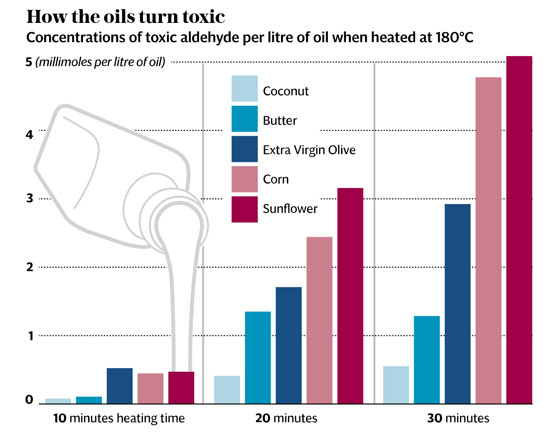
According to Frances Sladek,13 Ph.D., a toxicologist and professor of cell biology at UC Riverside, PUFAs behave like a toxin that builds up in tissues because your body cannot easily rid itself of it. Making matters worse, when vegetable oils like sunflower oil and corn oil are heated, cancer-causing chemicals like cyclic aldehydes are also produced.14

how the oils turn toxic
Source: The Telegraph November 7, 2015

Vegetable Oils Are Anything But Healthy

Other research confirms such findings by linking fried foods to an increased risk of death. For example, eating fried potatoes more than twice a week has been shown to double a person’s risk of death compared to never eating fried potatoes.15 Animal and human research has also found vegetable oils promote:

  • Obesity and fatty liver16
  • Lethargy and prediabetic symptoms17
  • Chronic pain/idiopathic pain syndromes (meaning pain with no discernible cause)18
  • Migraines19
  • Crohn’s disease and ulcerative colitis20

According to Dr. Cate Shanahan,21 a family physician and author of “Deep Nutrition: Why Your Genes Need Traditional Food,” the idea that PUFAs are healthier than saturated fats falls flat when you enter the field of biochemistry, because it’s “biochemically implausible.” In other words, the molecular structure of PUFA is such that it’s far more prone to react with oxygen, and these reactions disrupt cellular activity and cause inflammation.22 Oxidative stress and inflammation, in turn, are hallmarks not only of heart disease and heart attacks but of most chronic diseases.23,24

“[T]he folks at the AHA claim saturated fat is pro-inflammatory and causes arterial plaque and heart attacks — but there is no biochemically plausible explanation for their argument,” she told me in an emailed rebuttal to the AHA advisory.“Saturated fat is very stable, and will not react with oxygen the way PUFA fat does, not until the fundamental laws of the universe are altered.

Our bodies do need some PUFA fat, but we need it to come from food like walnuts and salmon or gently processed (as in cold pressed, unrefined) oils like flax and artisanal grapeseed, not from vegetable oils because these are refined, bleached and deodorized, and the PUFA fats are molecularly mangled into toxins our body cannot use.”

Open Letter to AHA President

In an open letter to AHA president Warner, Dr. William Davis, a New York cardiologist and author of The New York Times best seller “Wheat Belly, Lose the Wheat, Lose the Weight, and Find Your Path Back to Health,” writes, in part:

“If you ignore the nonsense that AHA policy dictates, you can absolutely gain control over cardiovascular risk. But you will NOT find the answers in any AHA policy. I learned these lessons practicing as an interventional cardiologist, then abandoning this ridiculous way of managing coronary disease to devote my efforts to early detection and prevention.

So, I thought I would articulate some of these thoughts in an open letter to Dr. Warner as he recovers from his procedure … Dr. Warner — … There are a number of reasons why someone like you — deeply-entrenched in the conventional world of heart disease management and what passes for prevention — highlights the miserable failure that the modern coronary care paradigm represents:

1) We are trapped by the outdated but profitable lipid hypothesis … 2) We know from abundant data that small oxidation- and glycation-prone LDL particles are highly atherogenic … are potent triggers of the inflammation cascade … and are triggered to abundant degrees in some genotypes upon consumption of the amylopectin A of grains …

[Y]es, the food that the American Heart Association advises to fill the diet with — and sugars … I am hoping that, now that this disease has touched you personally, your eyes will be opened to the corrupt and absurd policies of conventional coronary care and the American Heart Association.”

The Magic Pill Myth Needs to End

Davis goes on to note that heart disease is a multifactorial problem that cannot be solved with a pill.

Thinking that a statin drug … [is] sufficient to prevent coronary events is absurd and overly-simplistic, like thinking that taking Aricept for dementia will stop the disease — of course, it does no such thing,” he writes, adding, “There are no drugs to ‘treat’ many of the contributors to coronary atherogenesis. But there are many non-drug strategies to identify, then correct, such causes.”

Nondrug prevention strategies suggested by Davis include:

Avoiding any and all dietary factors that provoke insulin resistance, glycation and formation of small, dense LDL particles. Importantly, this would include avoiding the harmful fats recommended by the AHA such as margarine and processed vegetable oils, and keeping your total daily fructose consumption below 25 grams per day.

Optimizing your vitamin D level.

Optimizing your omega-3 fat intake: An omega-3 index of 10 percent or greater is associated with “dramatic reduction in cardiovascular events,” Davis notes. Indeed, a 2010 analysis25 found that while diets higher in omega-6 fats (found in ample amounts in vegetable oils) and lower in omega-3s increased the risk of nonfatal myocardial infarction and death from heart disease by 13 percent; a mixed diet of both omega-3 and omega-6 fats reduced these risks by 22 percent.

Meanwhile, the AHA recommends higher intakes of omega-6, saying26 “Aggregate data from randomized trials, case-control and cohort studies, and long-term animal feeding experiments indicate that the consumption of at least 5 percent to 10 percent of energy from omega-6 PUFAs reduces the risk of coronary heart disease relative to lower intakes.

The data also suggest that higher intakes appear to be safe and may be even more beneficial.”This statement runs counter to a large body of research suggesting the converse — specifically, that reducing omega-6 fats and increasing omega-3 is better for your heart.

Addressing your thyroid function.

Optimizing your gut microbiome to address dysbiosis caused by excess sugar, chlorinated and fluoridated water, and exposure to antibiotics, pesticides and common heartburn drugs.

Stent Placement No Better Than Placebo

Research also does not support the routine procedure of coronary artery angioplasty and stent placement. In fact, recent research suggests up to 50 percent of all stent placements may be unnecessary.27 Moreover, the effectiveness of this procedure is right on par with placebo. In a recent study published in The Lancet, researchers from Imperial College London investigated the difference between patients who had received a stent for stable angina and those who underwent a placebo intervention.28

In the short video above, lead author and interventional cardiologist Dr. Rasha Al-Lamee, describes the study and its results. Two hundred participants with severe single vessel blockage were recruited from five sites across the U.K.29 During the initial six weeks, all patients underwent an exercise test followed by intensive medical treatment.

At that point, they were randomly assigned to two groups. The first underwent a percutaneous intervention (PCI) during which coronary angioplasty was performed and a stent was placed. The second group also underwent a PCI procedure with an angiogram but without a balloon angioplasty or stent placement.30

For the following six weeks, neither the patient nor the physician knew if the patient received the stent. At the conclusion of the six weeks, patients again underwent an exercise test and were questioned about their symptoms. The researchers found both groups experienced nearly identical improvements in exercise tolerance and no difference in reported improvements of their symptoms.31 From the data, Al-Lamee commented:32

“Surprisingly, even though the stents improved blood supply, they didn’t provide more relief of symptoms compared to drug treatments, at least in this patient group. It seems that the link between opening a narrowing coronary artery and improving symptoms is not as simple as everyone had hoped.”

A New Way of Looking at Heart Disease

In this interview, Dr. Thomas Cowan, family physician, founding member of the Weston A. Price Foundation and author of “Human Heart, Cosmic Heart: A Doctor’s Quest to Understand, Treat and Prevent Cardiovascular Disease,” reveals how your heart and circulatory system works. This understanding may go a long way toward changing the way you understand heart disease.

He makes a strong case for heart disease being rooted in mitochondrial dysfunction and believes plaque formation alone cannot explain a heart attack.”[Conventionally], it’s all about the plaque,” Cowan says“My point in the book is that it’s NOT about the plaque.” The conventional view is that your heart functions like a pump — a pressure propulsion system caused by the muscular contraction of the ventricles.

Cowan explains that your heart is actually better described as a hydraulic ram — a vortex-creating machine — where the primary mover of blood is the interaction occurring between the negatively charged vessel walls and the positively charged water in your blood. Importantly, the following three natural energies result in a separation of charges that improve blood flow:

1. Sunlight charges up your blood vessels, which increases the flow of blood. When the sun’s rays penetrate your skin, it causes a massive increase of nitric oxide that acts as a vasodilator. As much as 60 percent of your blood can be shunted to the surface of your skin through the action of nitric oxide.

This helps absorb solar radiation, which then causes the water in your blood to capture the energy and become structured. This is a key component for a healthy heart. The ideal is to be exposed to the sun while grounding, meaning walking barefoot. This forms a biological circuit that makes it work even better.

2.Negative ions from the Earth, also known as earthing or grounding. This also charges up your blood vessels, creates a separation of charges, creates more positive ions and allows the blood to flow upward, against gravity.

3.The field effect or touch from another living being, such as laying on of hands.

A Healthy Heart Is the Result of a Healthy Lifestyle

As noted by Cowan, “The best thing is to be, more or less, with shorts or naked on the beach, with the saltwater, which acts as an electrical conductor, holding hands with somebody you love. That’s how you structure the water [in your blood vessels].” Sun exposure, grounding and skin-to-skin contact are three heart disease prevention strategies that, ideally, everyone should be doing, and it doesn’t get a whole lot easier or less expensive than this.

That said, your heart health is really dependent on your diet — what you eat and when you eat. In my view, the best treatment for heart disease is to work your way up to an intermittent fasting schedule where you’re fasting for 20 hours a day. When you do eat, make sure you eat real food, and consider a cyclical ketogenic diet, high in healthy fats, low in net carbs with moderate protein.

Recommended Reading: Five Best Fruits and Vegetables for Heart Health

Once you’re comfortable with this intermittent fasting schedule, start doing a monthly five-day water fast. This really is the most powerful metabolic intervention I know of, and I feel it’s one of the healthiest things I now do for my own health. Senescent cells, which have stopped replicating, play a distinct role in aging and disease. Once replication stops, these cells need to be removed from your body, or else they start clogging it up, causing severe inflammation and immune dysfunction.

Fasting very effectively gets rid of senescent cells — a process known as autophagy. Fasting also stimulates the production of stem cells, which help with regeneration and healing.

While a five-day fast may sound intimidating, if you’re used to 20-hour daily intermittent fasting for a month before starting your five-day fast, then the hunger that typically strikes on the second day of fasting is dramatically reduced and will typically not be at all bothersome. Fasting is also a powerful remedy for insulin resistance, which is a major underlying factor of heart disease.

Other important lifestyle strategies to protect your heart include getting enough CoQ10, getting regular exercise, making sure you get enough sleep (which is really important for mitochondrial health) and avoiding electromagnetic fields. To learn more about these, please read “CoQ10 — The No. 1 Supplement Recommended by Cardiologists,” “Here’s What Losing Sleep Does to Your Heart” and “The Real Dangers of Electronic Devices and EMFs.”

Last but not least, the following exercise, which requires only two to three minutes, three times a day, is a super-simple way to boost your heart health. It prompts your body to release nitric oxide, which will help relax your blood vessels and improve your blood pressure.

The Robot That Could Revolutionise Home Care for Elderly People

The Conversation(Independent) Not all robots will take over human jobs. My colleagues and I have just unveiled a prototype care robot that we hope could take on some of the more mundane work of looking after elderly and disabled people and those with conditions such as dementia.

Recommended Reading: How to Improve Brain Health and Reduce the Risk of Alzheimer’s

This would leave human carers free to focus on the more personal parts of the job. The robot could also do things humans don’t have time to do now, like keeping a constant check on whether someone is safe and well, while allowing them to keep their privacy.

Our robot, named Stevie, is designed to look a bit (but not too much) like a human, with arms and a head but also wheels. This is because we need it to exist alongside people and perform tasks that may otherwise be done by a human. Giving the robot these features help people realise that they can speak to it and perhaps ask it to do things for them.

Stevie can perform some of its jobs autonomously, for example reminding users to take medication. Other tasks are designed to involve human interaction. For example, if a room sensor detects a user may have fallen over, a human operator can take control of the robot, use it to investigate the event and contact the emergency services if necessary.

Stevie can also help users stay socially connected. For example, the screens in the head can facilitate a Skype call, eliminating the challenges many users face using telephones. Stevie can also regulate room temperatures and light levels, tasks that help to keep the occupant comfortable, and reduce possible fall hazards.

None of this will mean we won’t need human carers anymore. Stevie won’t be able to wash or dress people, for example. Instead, we’re trying to develop technology that helps and complements human care. We want to combine human empathy, compassion, and decision-making with the efficiency, reliability and continuous operation of robotics.

One day, we might might be able to develop care robots that can help with more physical tasks, such as helping users out of bed. But these jobs carry much greater risks to user safety and we’ll need to do a lot more work to make this happen.

Recommended Reading: Seven Easy Exercises That are Key to Good Health

Stevie would provide benefits to carers as well as elderly or disabled users. The job of a professional care assistant is incredibly demanding, often involving long, unsocial hours in workplaces that are frequently understaffed. As a result, the industry suffers from extremely low job satisfaction. In the US, more than 35 per cent of care assistants leave their jobs every year. By taking on some of the more routine, mundane work, robots could free carers to spend more time engaging with residents.

Of course, not everyone who is getting older or has a disability may need a robot. And there is already a range of affordable smart technology that can help people by controlling appliances with voice commands or notifying caregivers in the event of a fall or accident.

Smarter than smart

But for many people, this type of technology is still extremely limited. For example, how can someone with hearing problems use a conventional smart hub such as the Amazon Echo, a device that communicates exclusively through audio signals? What happens if someone falls and they are unable to press an emergency call button on a wearable device?

Stevie overcomes these problems because it can communicate in multiple ways. It can talk, make gestures, and show facial expressions and display text on its screen. In this way, it follows the principles of universal design, because it is designed to adapt to the needs of the greatest possible number of users, not just the able majority.

We hope to have a version of Stevie ready to sell within two years. We still need to refine the design, decide on and develop new features and make sure it complies with major regulations. All this needs to be guided by extensive user testing so we are planning a range of pilots in Ireland, the UK and the US starting in summer 2018. This will help us achieve a major milestone on the road to developing robots that really do make our lives easier.

Researchers Warn How Pesticides Are Secretly Growing Antibiotic Resistance

(NaturalBlaze by Heather Callaghan) The first team of researchers ever to discover that the world’s most popular pesticides and herbicides increase the antibiotic resistance crisis have conducted another study to prove once and for all a frightening truth we must respond to.

Researchers at the University of Canterbury in New Zealand have confirmed once again that active ingredients of the commonly used herbicides, Roundup, Kamba and 2,4-D (glyphosate, dicamba and 2,4-D, respectively), each alone cause antibiotic resistance at concentrations well below label application rates.

Related: How to Detoxify From Antibiotics and Other Chemical Antimicrobials

GMWatch reports:

Professor Jack Heinemann of the School of Biological Sciences in UC’s College of Science said the key finding of the research was that “bacteria respond to exposure to the herbicides by changing how susceptible they are to antibiotics used in human and animal medicine.”

The herbicides studied are three of the most widely used in the world, Prof Heinemann said. They are also used on crops that have been genetically modified to tolerate them.

The effect was not seen at herbicide concentrations that are presently allowed for food (called Maximum Residue Limits, MRL). However, the effect was seen at concentrations well below those applied to plants (application rates). Therefore, the authors believe, the effect is most likely to arise in farm workers in rural areas and in children in urban settings who are exposed to herbicides, if they are also on antibiotics.

Heinemann said,

They are among the most common manufactured chemical products to which people, pets and livestock in both rural and urban environments are exposed. These products are sold in the local hardware store and may be used without training, and there are no controls that prevent children and pets from being exposed in home gardens or parks. Despite their ubiquitous use, this University of Canterbury research is the first in the world to demonstrate that herbicides may be undermining the use of a fundamental medicine – antibiotics.

Related: Understanding and Detoxifying Genetically Modified Foods

We reported on their previous research that discovered the same effects of pesticides on antibiotic resistance. A Monsanto spokesman at the time responded that the research couldn’t determine whether it was the active ingredients or the surfactants used in pesticides that actually made antibiotic resistance worse.

This research is a response to Monsanto’s claims to prove once and for all that both the active ingredients in pesticides and the surfactants are responsible for contributing to antibiotic resistance.

So now the scientists have even more bad news:

In addition, the new paper finds that added ingredients (surfactants) that are commonly used in some herbicide formulations and processed foods also cause antibiotic resistance. An antibiotic resistance response was caused by both the tested surfactants, Tween80 and CMC. Both are also used as emulsifiers in foods like ice cream and in medicines, and both cause antibiotic resistance at concentrations allowed in food and food-grade products.

Commenting on the regulatory implications of his team’s findings, Prof Heinemann said: “The sub-lethal effects of industrially manufactured chemical products should be considered by regulators when deciding whether the products are safe for their intended use.”

This discovery has much wider implications that we will have to handle in a future article…

Related: Gluten, Candida, Leaky Gut Syndrome, and Autoimmune Diseases

“The United States, for example, estimates that more than two million people are sickened every year with antibiotic-resistant infections, with at least 23,000 dying as a result. By 2050, resistance is estimated to add 10 million annual deaths globally with a cumulative cost to the world economy of US$100 trillion. In other words, roughly twice the population of New Zealand will be lost annually to antibiotic resistance,” said Prof Heinemann.
The biggest problem with our regulatory agencies is that they only study lethal or acute toxicity levels. They don’t focus on sub-lethal effects like how pesticides can kill ecologically important microbes. They focus on the effects of chemicals on humans and animals but not other organisms. Lastly, they do not consider the bigger picture such as cumulative and long-term effects of chemicals or what they do in combination.

Heinemann concludes:

Where this information is sought, it is usually only for people or animals. We are unaware of any regulator ever considering the risk of sub-lethal effects on bacteria. That is what makes this new research so important.

More emphasis needs to be placed on antibiotic stewardship compared to new antibiotic discovery. Otherwise, new drugs will fail rapidly and be lost to humanity.

Genetically engineered crops have increased the use of these pesticides. Pesticides aside, many have fears that the introduction of genetic engineering into the ecology will have grave ramifications. Norway, for instance, has banned GE salmon over fears of antibiotic resistance. And, earlier this year, an illegal GE bacteria found its way into an EU feedlot and it, too, was found to be resistant to antibiotics showing once again how reckless and unstable Big Biotech’s use of this technology really is.

EPA Refuses to Ban Neurotoxic Pesticide Found in 87 Percent of Newborns

(Mercola) Exposure to pesticides, herbicides and insecticides has dramatically increased since the introduction of genetically engineered (GE) crops. Urine output of glyphosate, the active ingredient in the herbicide Roundup, shot up by more than 1,200 percent between 1993 and 2016.1 Unfortunately, glyphosate is not the only chemical of concern.

Chlorpyrifos (sold under the trade name Lorsban) — an organophosphate insecticide known to disrupt brain development and cause brain damage, neurological abnormalities, reduced IQ and aggressiveness in children — is another.,3 In adults, the chemical has been linked to Parkinson’s disease4,5 and lung cancer.6

Chlorpyrifos has been in use since 1965, and is commonly used on staple crops such as wheat and corn, as well as fruits and vegetables, including nonorganic citrus, apples, cherries, strawberries, broccoli, cauliflower and dozens of others. Since the chemical has a half-life of several months and can remain on sprayed foods for up to several weeks,7 nonorganic foods are a major source of exposure.

Importantly, nonorganic, non-grass fed meats are likely to be loaded with this chemical, since conventional feed consists primarily of genetically and/or conventionally-raised grains such as corn. This is yet another reason to make sure you feed your family grass fed meats and animal products, especially your young children. Chlorpyrifos is also a commonly found water contaminant, and has even been found in indoor air.8

Children experience greater exposure to chemicals pound-for-pound than adults, and have an immature and porous blood-brain barrier that allows greater chemical exposures to reach their developing brain. Needless to say, the results can be devastating and, indeed, many agricultural and industrial chemicals have been found to affect children’s brain function and development specifically.

Recommended Reading: Staying Healthy In This Toxic World

Decadelong Effort to Ban Chlorpyrifos Fall Through

Permissible uses of chlorpyrifos was limited in the year 2000, at which time the chemical was banned for use in homes, schools, day care facilities, parks, hospitals, nursing homes and malls. However, agricultural use remained, and it can still be used on golf courses and road medians.

Scientists at the U.S. Environmental Protection Agency (EPA) actually pushed for a complete ban on chlorpyrifos, as its dangers are well-documented, and the chemical is in fact classified as a neurotoxin, as it disrupts communication between brain cells. Research shows that living within 1 mile of chlorpyrifos-treated fields increases a woman’s risk of having an autistic child by 300 percent.9,10

Recommende Reading: Top 5 Foods that Detox Heavy Metals and Toxins – With Protocol

A petition to ban chlorpyrifos on food was filed over a decade ago, and the lack of response from the EPA finally led to a federal court ordering the EPA to issue a decision.11 Forced to act, Scott Pruitt, President Trump-appointed head of the EPA,12 issued an order denying the petition to revoke all tolerances for chlorpyrifos on food in March 2017.13,14 As noted by NPR:15

“That’s despite the agency’s earlier conclusion, reached during the Obama administration, that this pesticide could pose risks to consumers. It’s a signal that toxic chemicals will face less restrictive regulation by the Trump administration. In its decision, the EPA didn’t exactly repudiate its earlier scientific findings. But the agency did say that there’s still a lot of scientific uncertainty about the risks of chlorpyrifos …

Patti Goldman, from the environmental group Earth Justice, calls the decision “unconscionable,” and says that her group will fight it in court … ‘Based on the harm that this pesticide causes, the EPA cannot, consistent with the law, allow it in our food.'”

87 Percent of Newborns Have Chlorpyrifos in Their Cord Blood

Considering Pruitt’s history of championing industry interests and the evidence showing other EPA officials have has taken an active role in protecting chemical giants against rulings that would impact their bottom line, his decision to keep chlorpyrifos on the market does raise suspicions. As noted by USA Today,16 Pruitt “filed more than a dozen lawsuits seeking to overturn some of the same regulations he is now charged with enforcing.”

Evidence also suggests Dow Chemical, the maker of chlorpyrifos, pressured government agencies to ignore incriminating studies (see next section). The EPA’s earlier conclusion that chlorpyrifos posed a risk to consumers was largely based on research17 showing that exposure to the chemical caused measurable differences in brain function. In one study, compared to children whose exposure to the chemical was negligible, children with high levels of exposure had lower IQ at age 7.18

Research19 published in 2014 showed that pregnant women exposed to chlorpyrifos during their second trimester had a 60 percent higher risk of giving birth to an autistic child. Studies have also shown that genetic differences can make some people far more vulnerable to chlorpyrifos than others.

Moreover, according to the U.S. Centers for Disease Control and Prevention, chlorpyrifos is metabolized in the human body into 3,5,6-trichloro-2-pyridinol (TCPy),20 which is even more toxic than the original insecticide. Disturbingly, California’s biomonitoring program found TCPy in 82 percent of Californians sampled in 2012, including pregnant women.21

Another 2012 study,22 which measured chlorpyrifos levels in maternal and cord plasma of women and children living in an agricultural community, found measurable levels in 70.5 percent of maternal blood samples and 87.5 percent of cord blood samples. According to the authors:

“Blood organophosphate pesticide levels of study participants were similar in mothers and newborns and slightly higher than those reported in other populations. However, compared to their mothers, newborns have much lower quantities of the detoxifying PON1 enzyme suggesting that infants may be especially vulnerable to organophosphate pesticide exposures.”

Dow Chemical Requested Evidence to Be ‘Set Aside’

Government-funded studies also reveal that chlorpyrifos poses serious risks to 97 percent of endangered animals in the U.S.23,24 This alone ought to be cause enough to ban this chemical, but it appears industry pressure worked its usual magic.

On April 13, 2017, a legal team representing Dow Chemical and two other organophosphate manufacturers sent letters to the three agencies responsible for joint enforcement of the Endangered Species Act25,26 — the U.S. Fish and Wildlife Service, the National Marine Fisheries Service and the Department of Commerce — asking them to “set aside” these incriminating findings, as the companies believe they are flawed. As reported by USA Today:

“Over the past four years, federal scientists have compiled … more than 10,000 pages indicating the three pesticides under review — chlorpyrifos, diazinon and malathion — pose a risk to nearly every endangered species they studied. Regulators at the three federal agencies … are close to issuing findings expected to result in new limits on how and where the highly toxic pesticides can be used …

The EPA’s recent biological evaluation of chlorpyrifos found the pesticide is ‘likely to adversely affect’ 1,778 of the 1,835 animals and plants accessed as part of its study, including critically endangered or threatened species of frogs, fish, birds and mammals … In a statement, the Dow subsidiary that sells chlorpyrifos said its lawyers asked for the EPA’s biological assessment to be withdrawn because its ‘scientific basis was not reliable.'”

Pruitt claims he’s “trying to restore regulatory sanity to EPA’s work.” I would argue the definition of sanity is first not to abandon the EPA’s mandate to protect the public health and, further, not to give developmentally crippling toxins a free pass and ignoring loads of unbiased research documenting its toxicity.

At present, the EPA is also in the process of reassessing atrazine, another pernicious and exceptionally toxic agricultural chemical. It remains to be seen whether the agency will finally take a firm stand against this pernicious toxin, or let it slide like chlorpyrifos and glyphosate.

Toxic Exposures Have Robbed Americans of 41 Million IQ Points

Problems with cognitive function that are not severe enough for diagnosis are becoming even more common than neurobehavioral development disorders. In 2012, David Bellinger, Ph.D., professor of neurology at Harvard Medical School, published a study funded by the National Institutes of Health where he calculated the impact of toxic exposures on children’s IQ.27

He determined that based on a population of 25.5 million children, aged birth to 5, those born to mothers exposed to organophosphates, mercury or lead during pregnancy suffered a combined loss of 16.9 million IQ points. Researchers calculated a collective loss of 41 million IQ points in the U.S. from the same exposures.28 Conventional farmers are reluctant to stop using pesticides as this will put their crops at risk, and pesticide makers will not support a ban for obvious reasons.

But at what point do we say enough is enough? How many children have to be sacrificed for financial profits? Considering the lack of proactive measures from government and industry, it’s up to each and every one of us to be proactive in our own lives. One of the most effective ways to reduce your exposure to toxic pesticides, herbicides and insecticides is to buy certified organic foods, or better yet, foods certified biodynamic.

Environmental Toxins Kill 1.7 Million Children Annually, Worldwide

Untested chemicals should not be presumed safe.29 The World Health Organization (WHO) has stated that environmental pollution, including but not limited to toxic exposures, kills 1.7 million children every year.30 The top five causes of death for children under 5 are related to their environment.

A recent report from CHEMTrust, a British charity working internationally to prevent man-made chemicals from triggering damage to wildlife or humans, found current chemical testing is not adequately picking up chemicals that cause developmental neurotoxicity.31Their “No Brainer” report32 evaluated the impact of chemicals on the development of a child’s brain.

The report praised the European Food Safety Authority for work on risk assessment of pesticides and recommended their approach be expanded to include chemicals from other sources.33

They also recommended chemicals used for food contact material be routinely tested and screened for developmental neurotoxicity. The report also called for a taskforce to identify and develop better ways to screen chemicals before use. Without a doubt, the U.S. needs to follow suit and take a stronger stance against chemicals suspected of neurotoxicity.

How to Protect Your Family From Toxic Pesticides

According to a U.S. Department of Agriculture report on pesticide residues in food,34 in 2014, 41 percent of samples had no detectable pesticide residues. The following year, a mere 15 percent of all the food samples tested were free from pesticide residues. That just goes to show how rapidly and dramatically our pesticide exposure has increased.

Here’s a summary of commonsense recommendations that will help reduce your exposure to pesticides, and help you eliminate toxins you may already have been exposed to:

As a general rule, your safest bet is to grow your own food, followed by buying certified organic or, better yet, biodynamic produce, and grass fed or pastured meats and animal products. See the listing below for sources where you can locate farm-fresh foods locally. If you cannot afford an all-organic/biodynamic diet, focus on buying grass fed and organic pastured meats first.

Next, familiarize yourself with average pesticide loads and buy (or grow) organic varieties of produce known to carry the highest amounts of pesticides. You can find a quick rundown in the Consumer Reports video above.35 Another excellent source, which is updated annually, is the Environmental Working Group’s (EWG) shopper’s guide36 to pesticides in produce.

Filtering your drinking water is also important. To remove pesticides, look for a filter certified by the NSF International to meet American National Standards Institute Standard 53 for volatile organic compounds reduction. This will ensure the filter is capable of significantly reducing pesticides.37 Most activated carbon filters will meet this requirement and get the job done.

Carefully wash all nonorganic produce to remove surface pesticides. According to a recent study,38 the most effective cleaning method, by far, is to wash your produce using a mixture of tap water and baking soda. Soaking apples in a 1 percent baking soda solution for 12 to 15 minutes was found to remove 80 percent of the fungicide thiabendazole and 96 percent of the insecticide phosmet.

Lastly, if you know you have been exposed to pesticides, eating fermented foods and/or using a low-EMF far infrared sauna can be helpful, especially if combined with an optimal supplemental detox regimen including binders to catch the toxins that are mobilized from the fats. The lactic acid bacteria formed during the fermentation of kimchi has been shown to help your body break down pesticides.

Recommended Reading: Stop Eating Like That and Start Eating Like This – Your Guide to Homeostasis Through Diet

Where to Find Organic Farm-Fresh Foods

If you live in the U.S., the following organizations can help you locate wholesome farm-fresh foods in your area:

Demeter USA

Demeter-USA.org provides a directory of certified Biodynamic farms and brands. This directory can also be found on BiodynamicFood.org.

American Grassfed Association

The goal of the American Grassfed Association is to promote the grass fed industry through government relations, research, concept marketing and public education.

Their website also allows you to search for AGA approved producers certified according to strict standards that include being raised on a diet of 100 percent forage; raised on pasture and never confined to a feedlot; never treated with antibiotics or hormones; born and raised on American family farms.

EatWild.com

EatWild.com provides lists of farmers known to produce raw dairy products as well as grass fed beef and other farm-fresh produce (although not all are certified organic). Here you can also find information about local farmers markets, as well as local stores and restaurants that sell grass fed products.

Weston A. Price Foundation

Weston A. Price has local chapters in most states, and many of them are connected with buying clubs in which you can easily purchase organic foods, including grass fed raw dairy products like milk and butter.

Grassfed Exchange

The Grassfed Exchange has a listing of producers selling organic and grass fed meats across the U.S.

Local Harvest

This website will help you find farmers markets, family farms and other sources of sustainably grown food in your area where you can buy produce, grass fed meats and many other goodies.

Farmers Markets

A national listing of farmers markets.

Eat Well Guide: Wholesome Food from Healthy Animals

The Eat Well Guide is a free online directory of sustainably raised meat, poultry, dairy and eggs from farms, stores, restaurants, inns, hotels and online outlets in the United States and Canada.

Community Involved in Sustaining Agriculture (CISA)

CISA is dedicated to sustaining agriculture and promoting the products of small farms.

FoodRoutes

The FoodRoutes “Find Good Food” map can help you connect with local farmers to find the freshest, tastiest food possible. On their interactive map, you can find a listing for local farmers, CSAs and markets near you.

The Cornucopia Institute

The Cornucopia Institute maintains web-based tools rating all certified organic brands of eggs, dairy products and other commodities, based on their ethical sourcing and authentic farming practices separating CAFO “organic” production from authentic organic practices.

RealMilk.com

If you’re still unsure of where to find raw milk, check out Raw-Milk-Facts.com and RealMilk.com. They can tell you what the status is for legality in your state, and provide a listing of raw dairy farms in your area. The Farm to Consumer Legal Defense Fund39 also provides a state-by-state review of raw milk laws.40 California residents can also find raw milk retailers using the store locator available at www.OrganicPastures.com.