Dementia Now the Top Cause of Death Among Women in the UK

(Natural News) A recent report by the Public Health England revealed that Alzheimer’s disease and dementia are now the leading causes of death among women in the United Kingdom. According to the report, the country’s overall life expectancy for women has shown a significant increase in years, which is now 83.1 years. However, these added years are characterized by poor health. As per the report, women are expected to live about a quarter of their lives being ill.

The report also noted that while other diseases exhibited a relative decline, the rates of Alzheimer’s disease and dementia have doubled since 2001. In fact, the cognitive diseases were accounted for 15.3 percent of deaths among British women.

Related Reading: Increase Your Cognitive Power – A Simple User’s Manual For Your Brain

“Good public health is not defined by health policy alone. Our health profiles show a high-quality education, a well-designed and warm home, a good job, and a community to belong to are just as important. The more we consider the impact of all policies on population health, the sooner we can focus on preventing poor health instead of only dealing with its consequences, especially for those from the most deprived communities,” Duncan Selbie, chief executive of Public Health England, was quoted as saying on The Daily Express website.

“To achieve the same successes as we have with other health conditions like heart disease and cancer, we need dementia research to remain a national priority. We have been able to make promising steps forward, thanks to a renewed focus, but we are not there yet,” said Dr. Matthew Norton, director of policy at Alzheimer’s Research U.K.

The latest figure was consistent with an Office for National Statistics report released late last year. According to the report, more women died from Alzheimer’s disease and dementia in 2015 compared with men. Report data showed that the cognitive conditions accounted for 41,283 dementia deaths in women in 2015, which equates to 15.2 percent of all female deaths in that year. This was significantly higher than the 13.4 percent recorded in 2014.

Related: Beat Alzheimer’s Disease Naturally

“These figures once again call attention to the uncomfortable reality that currently, no one survives a diagnosis of dementia. Dementia is not an inevitable part of ageing, it’s caused by diseases that can be fought through research, and we must bring all our efforts to bear on what is now our greatest medical challenge,” Alzheimer’s Research U.K. official Hilary Evans told BBC.com.

Are vaccines to blame for the increasing rates of dementia?

Exposure to heavy metals — such as mercury and aluminum — by way of vaccines and medicines have long been associated with an increased risk of developing dementia and other neurological conditions. In fact, an analysis published in the Journal of Alzheimer’s Disease revealed that long-term mercury exposure was linked to the onset of Alzheimer’s disease symptoms including confusion, impaired memory, and cognitive function decline. Mercury was mostly used as a preservative in many childhood vaccines until 2001.

Related: The Alzheimer’s Aluminum Connection

On the other hand, a study published in 2009 revealed that aluminum, another heavy metal commonly added to flu shots, may raise the odds of developing dementia and other neurological conditions. According to the study, people who had the highest aluminum content in their drinking water had the highest risk of suffering from the condition. A vast number of clinical studies have also shown that the heavy metal was directly tied to the onset of brain damage. (Related: Aluminum in vaccines linked to Alzheimer’s and other neurological conditions.)

Related Reading:
Sources include:


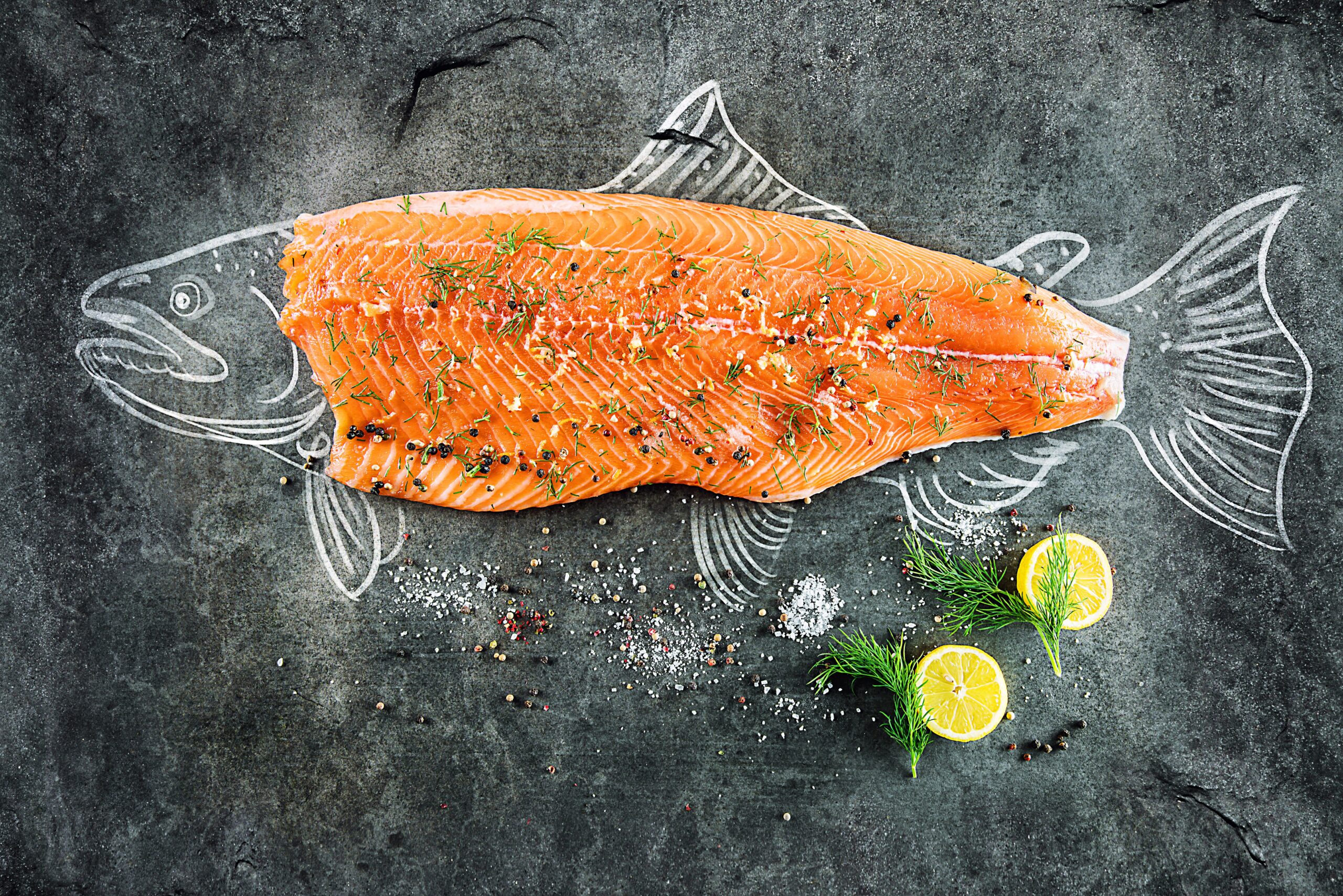
Canadians Are Unknowingly Eating GM Salmon

(Natural Blaze) Ottawa – August 7, 2017 – AquaBounty revealed on August 4, in its quarterly financial results, that it has sold approximately five tonnes of genetically modified (GM or genetically engineered) Atlantic salmon fillets in Canada. (1) This is the world’s first sale of GM fish for human consumption and has occurred without GM product labeling for Canadian consumers.

Related: Genetically Modified Salmon Is On Its Way To Your Store

“No one except AquaBounty knows where the GM salmon are,” said Lucy Sharratt of the Canadian Biotechnology Action Network (CBAN). “The company did not disclose where the GM salmon fillets were sold or for what purpose, and we’re shocked to discover that they’ve entered the market at this time.”

Without mandatory labeling in Canada, CBAN works to track GM foods to keep Canadians informed.

“The immediate remedy is for grocery stores to commit to keeping GM salmon out,” said Sharratt. So far, two grocery companies in Canada have published statements online responding to consumer concerns over GM salmon: IGA Quebec states that it only orders non-GM salmon, and Costco’s website states that it does not intend to sell it.(2)

“We clearly need mandatory labeling of all GM foods,” said Thibault Rehn of the Quebec network Vigilance OGM, a member group of CBAN.

Related: What Do Natural, Organic, and Non-GMO Actually Mean?

There is no federal government tracking of GM products in the market and Members of Parliament voted down a Private Members Bill for mandatory GM food labeling in May. GM salmon is approved for human consumption in the US and Canada, but there is an import ban in the US until labeling guidelines are published.

“When it comes to GM foods, Canadian consumers are shopping blind,” said Sharratt.

NOTES:
(1) AquaBounty Technologies, Inc. Quarterly Filing, 10-Q, 08/04/17  http://phx.corporate-ir.net/phoenix.zhtml?c=197553&p=irol-sec#15145522

(2) IGA Quebec: “Non-GMO salmon: At IGA, we order only non-GMO salmon from our suppliers, even though genetically modified salmon is legal and approved by the Canadian Food Inspection Agency (CFIA).” https://www.iga.net/en/in_the_community/buying/sustainable_fishing
Costco: “Costco does not intend to sell genetically modified salmon.” https://www.costco.com/sustainability-fisheries.html

For the First Time, NFL Acknowledges Benefits of Cannabis, Offers to Study it for Pain

Doping in sports and steroid abuse concept with a american football, a bottle of prescription pills and syringes with green and red liquid on a dark background

(The Free Thought Project) The NFL is finally acknowledging that cannabis has the potential to treat acute and chronic pain. A report out today says that the NFL has sent a letter to the Player’s Association (NFLPA) indicating it is willing to study the use of medical cannabis for pain management.

The NFLPA, apparently quicker to grasp the conclusions of science, is already studying the issue. In Jan. 2017, the National Academies of Science (NAS) released an exhaustive study on the therapeutic benefits of cannabis, with chronic pain treatment being one of the most significant.

Related: Why Chronic Pain is Such a Pain and What You Can Do About It

Players in America’s favorite sport are plagued by pain, often for the rest of their lives, and many have already turned to medical cannabis whether the league allows it or not. Soon after the NAS study, retired football players were telling their stories of lives virtually ruined by pain and the standard drugs given to them such as opioid pills – only to find relief with cannabis.

Now, former NFL players are trying to open medical cannabis dispensaries and extolling the benefits of this medicinal plant. They are on the right side of history, and the NFL may finally be catching up.

Cannabis use remains banned by the league, with players regularly tested and penalized if THC is detected. At the moment, the NFL is still stuck in the Reefer Madness mentality, thinking that because federal government prohibits the plant, then they should as well. But the letter to the NFLPA is an encouraging sign.

We look forward to working with the Players Association on all issues involving the health and safety of our players,” said Joe Lockhart, the NFL’s executive vice president of communications…

The NFL, according to one person with knowledge of the matter, wrote a letter to the union asking if, given the NFLPA’s public comments on the issue this year, it is interested in working together on research. The league’s letter outlined a few areas for potential research that included pain management for both acute and chronic conditions.”
The NFLPA is also seeking to reduce punitive measures for the use of cannabis, which is especially needed now that recreational cannabis is legal in eight states and 26 other states have legalized medical use only.

I do think that issues of addressing it more in a treatment and less punitive measure is appropriate,” said DeMaurice Smith, NFLPA’s executive director. “I think it’s important to look at whether there are addiction issues. And I think it’s important to not simply assume recreation is the reason it’s being used.”

The issue of opioid abuse is another reason why the NFL should adopt a more reasonable approach to medical cannabis. Opiates are routinely handed out to players for acute and chronic pain, making them prone to join the ever-growing ranks of those addicted to these dangerous legal drugs. We know from multiple studies that people are giving up deadly, addictive opioids in favor of cannabis in states where it is legal.

In addition to a safer method of pain management, medical cannabis can help prevent brain damage, which is also pervasive in NFL players. A recent major study found that “a vast majority of the brains of deceased players that were studied showed signs of chronic traumatic encephalopathy, a degenerative condition linked to head trauma.”

Related: The Gut-Brain Connection

In response to this, Doctors for Cannabis Regulation is lobbying the NFL to change its irrational rules on cannabis. It should be noted that medical cannabis can be administered with no psychoactive effects.

There is some early data that cannabis does play a role in neuroprotection. This is the kind of science we’ve put in front of the NFL, hoping they would reconsider their antiquated policies,” Dr. Suzanne Sisley told The Chronicle. “The bottom line is that cannabinoids are clearly neuroprotective. We have preclinical data at the receptor level that cannabinoids and cannabis are not only involved with brain repair but neurogenesis, the development of new neural tissue. It’s one of the most exciting discoveries of modern neuroscience.”

The NFL appears to have taken the first step in embracing factual evidence and science. Hopefully this will continue, as other entities such as Big Pharma and the alcohol industry will surely lobby against relaxing the NFL’s current prohibitionist stance.

Depression Doubles the Risk of Death From Coronary Artery Disease, Finds Research

(Independent) Depression appears to double the chance of dying in any given year for patients with coronary artery disease, according to a new study.

 The researchers said such mental distress was a “stronger risk factor” than age, having had a heart attack, or diabetes.
Related: Lower Cholesterol and prevent Heart Disease Without Drugs
The effect was seen if the person was depressed before or after diagnosis of the disease.

Dr. Heidi May, a cardiovascular epidemiologist at Intermountain Medical Centre Heart Institute in Salt Lake City, said: No matter how long or how short it was, patients were found to have twice the risk of dying compared to those who didn’t have a follow-up diagnosis of depression.

Depression was the strongest risk factor for dying, compared to any other risk factors we evaluated. That included age, heart failure, diabetes, high blood pressure, kidney failure, or having a heart attack or stroke.

We’ve completed several depression-related studies and been looking at this connection for many years.

The data just keeps building on itself, showing that if you have heart disease and depression and it’s not appropriately treated in a timely fashion, it’s not a good thing for your long-term wellbeing.”

Of more than 2,600 patients who became clinically depressed about 27 per cent did so within a year of being diagnosed with the disease. The figure was 37 per cent after five years.

And while depression seems to make the condition worse, being diagnosed is also a reason why some patients become depressed.

The reason why the chance of dying increased was not revealed by the study, but Dr. May said it was possible patients were not following their treatment plans as closely as people in good mental health. She said,

We know people with depression tend to be less compliant with medication on average and probably in general aren’t following healthier diets or exercise regimens.

They tend to do a poorer job of doing things that are prescribed than people without depression. That certainly doesn’t mean you’re depressed so you’re going to be less compliant, but in general, they tend to follow those behaviours.”

 She added that depression can also cause physiological changes to the body, which could also be a factor.
Related: Natural Approaches to Combat Depression

Dr. May urged the medical community to take depression seriously when treating coronary artery disease.

Patients who have depression need to be treated to improve not only their long-term risks but their quality of life.”

The American Council on Science and Health is a Corporate Front Group

(U.S. Right to Know) The American Council on Science and Health is a front group for the tobacco, agrichemical, fossil fuel, pharmaceutical and other industries.

A leaked ACSH financial summary, released in 2013 by Mother Jones, revealed that the American Council on Science and Health receives funding from a large number of corporations and industry groups with a financial stake in the messaging ACSH promotes. The internal document further revealed that ACSH solicits corporate donations for specific product-defense science messaging campaigns. For example, the document outlines:

  • plans to pitch the Vinyl Institute which “previously supported chlorine and health report”;
  • plans to pitch food companies for a messaging campaign to oppose GMO labeling, and cosmetic companies to counter “reformulation pressures”; and
  • efforts to court tobacco and electronic cigarette (e-cig) companies.

Personnel

  • ACSH’s longtime “Medical/Executive Director” was Dr. Gilbert Ross.[2] In 1993, according to United Press International, Dr. Ross was “convicted of racketeering, mail fraud and conspiracy,” and was “sentenced to 47 months in jail, $40,000 in forfeiture and restitution of $612,855” in a scheme to defraud the Medicaid system.[3]
  • ACSH’s Dr. Ross was found to be a “highly untrustworthy individual” by a judge who sustained the exclusion of Dr. Ross from Medicaid for ten years.[4]
  • Hank Campbell took over ACSH leadership from convicted felon Dr. Gil Ross in June 2015. Campbell is a former software developer who started the website Science 2.0 in 2006. In his book, “Science Left Behind: Feel Good Fallacies and the Rise of the Anti Science Left” (2012), Campbell describes his background: “six years ago… I decided I wanted to write science on the Internet” and, “Six years ago, with nothing but enthusiasm and a concept, I approached world famous people about helping me reshape how science could be done, and they did it for free.”

Funding

ACSH has often billed itself as an “independent” group, and has been referred to as “independent” in the press. However, according to the internal ACSH financial documents obtained by Mother Jones:

  • “ACSH planned to receive a total of $338,200 from tobacco companies between July 2012 and June 2013. Reynolds American and Phillip Morris International were each listed as expected to give $100,000 in 2013, which would make them the two largest individual donations listed in the ACSH documents.”[5]
  • “ACSH donors in the second half of 2012 included Chevron ($18,500), Coca-Cola ($50,000), the Bristol Myers Squibb Foundation ($15,000), Dr. Pepper/Snapple ($5,000), Bayer Cropscience ($30,000), Procter and Gamble ($6,000), agribusiness giant Syngenta ($22,500), 3M ($30,000), McDonald’s ($30,000), and tobacco conglomerate Altria ($25,000). Among the corporations and foundations that ACSH has pursued for financial support since July 2012 are Pepsi, Monsanto, British American Tobacco, DowAgro, ExxonMobil Foundation, Philip Morris International, Reynolds American, the Koch family-controlled Claude R. Lambe Foundation, the Dow-linked Gerstacker Foundation, the Bradley Foundation, and the Searle Freedom Trust.”[6]
  • ACSH has received $155,000 in contributions from Koch foundations from 2005-2011, according to Greenpeace.[7]

ACSH features prominently in a July 11, 2017 article in the Progressive by Paul Thacker detailing the chemical industry’s PR campaign to spin journalists on GMOs and discredit environmental health concerns.  Although Monsanto denied funding other groups, Thacker reported, “Monsanto ignored repeated questions about their financial support for the American Council on Science and Health.” ACSH Director Hank Campbell responded with this comment about his corporate funding, “I don’t care. If a large food corporation, like Whole Foods, or a smaller one, like Monsanto, wants to buy an ad here, they can. We will cash that check.”

Ties to Monsanto

A 2017 Le Monde investigation into Monsanto’s “war on science” describes the American Council on Science and Health as a key player in Monsanto’s communication and lobbying network.

Plaintiffs’ attorneys suing Monsanto over glyphosate cancer concerns stated in a May 2017 brief that:

  • “Monsanto quietly funnels money to ‘think tanks’ such as the “Genetic Literacy Project” and the “American Council on Science and Health,” organizations intended to shame scientists and highlight information helpful to Monsanto and other chemical producers.

According to emails obtained by US Right to Know, Monsanto tapped ACSH to publish a series of pro-GMO papers written by professors and assigned by Monsanto.

  • In an August 2013 email, Monsanto executive Eric Sachs wrote to the professors: “To ensure that the papers have the greatest impact, the American Council for Science and Health is partnering with CMA Consulting to drive the project. The completed policy briefs will be offered on the ACSH website … CMA and ACSH also will merchandize the policy briefs, including the development of media specific materials, such as op-eds, blog postings, speaking engagements, events, webinars, etc.” The papers were eventually published and merchandized by Jon Entine’s Genetic Literacy Project.

Ties to Syngenta

In 2011, ACSH published the book “Scared to Death: How Chemophobia Threatens Public Health,” by Jon Entine, a longtime PR messenger for chemical industry interests. Entine’s book defends atrazine, a pesticide manufactured by Syngenta, which was funding ACSH.

A 2012 Mother Jones article about Entine describes the circumstances leading up to the publication of the book. The article, by Tom Philpott, is based in part on internal company documents, obtained by the Center for Media and Democracy, describing Syngenta’s PR efforts to get third-party allies to spin media coverage of atrazine.

In one email from 2009, ACSH staff asked Syngenta for an additional $100,000 – “separate and distinct from general operating support Syngenta has been so generously providing over the years” – to produce an atrazine-friendly paper and “consumer-friendly booklet” to help educate media and scientists.

A year and a half later, ACSH published Entine’s book with this release:

“The American Council on Science and Health is pleased to announce a new book and companion friendly, abbreviated position paper … authored by Jon Entine, a scholar with the American Enterprise Institute and highly regarded science journalist … ACSH compiled this resource book and position to educate legislators, industry, media, consumers and parents on the actual risks of chemical exposure and use in everyday products.”

Entine denied any relationship with Syngenta and told Philpott he had “no idea” Syngenta was funding ACSH.

Indefensible and incorrect statements on science 

ACSH has:

  • Claimed that “There is no evidence that exposure to secondhand smoke involves heart attacks or cardiac arrest.”[8]
  • Argued that “there is no scientific consensus concerning global warming. The climate change predictions are based on computer models that have not been validated and are far from perfect.”[9]
  • Argued that fracking “doesn’t pollute water or air.”[10]
  • Claimed that “The scientific evidence is clear. There has never been a case of ill health linked to the regulated, approved use of pesticides in this country.”[11]
  • Declared that “There is no evidence that BPA [bisphenol A] in consumer products of any type, including cash register receipts, are harmful to health.”[12]
  • Argued that the exposure to mercury, a potent neurotoxin, “in conventional seafood causes no harm in humans.”[13]

ACSH in the Media 

February 2017 letter to USA Today: Thirty health, environmental, labor and public interest groups wrote to the editors of USA Today expressing concerns that the paper is publishing science columns by members of the American Council on Science and Health without identifying  them as a corporate front group. The editors have so far declined to stop publishing the column or provide accurate disclosures about ACSH’s ties to corporations.

Recommended Reading:
Sources:

[2] “Meet the ACSH Team,” American Council on Science and Health website.

[3] “Seven Sentenced for Medicaid Fraud.” United Press International, December 6, 1993. See also correspondence from Tyrone T. Butler, Director, Bureau of Adjudication, State of New York Department of Health to Claudia Morales Bloch, Gilbert Ross and Vivian Shevitz, “RE: In the Matter of Gilbert Ross, M.D.” March 1, 1995. Bill Hogan, “Paging Dr. Ross.” Mother Jones, November 2005. Martin Donohoe MD FACP, “Corporate Front Groups and the Abuse of Science: The American Council on Science and Health (ACSH).” Spinwatch, June 25, 2010.

[4] Department of Health and Human Services, Departmental Appeals Board, Civil Remedies Division, In the Cases of Gilbert Ross, M.D. and Deborah Williams M.D., Petitioners, v. The Inspector General. June 16, 1997. Docket Nos. C-94-368 and C-94-369. Decision No. CR478.

[5] Andy Kroll and Jeremy Schulman, “Leaked Documents Reveal the Secret Finances of a Pro-Industry Science Group.” Mother Jones, October 28, 2013. “American Council on Science and Health Financial Report, FY 2013 Financial Update.” Mother Jones, October 28, 2013.

[6] Andy Kroll and Jeremy Schulman, “Leaked Documents Reveal the Secret Finances of a Pro-Industry Science Group.” Mother Jones, October 28, 2013. “American Council on Science and Health Financial Report, FY 2013 Financial Update.” Mother Jones, October 28, 2013.

[7] “Koch Industries Climate Denial Front Group: American Council on Science and Health (ACSH).” Greenpeace. See also Rebekah Wilce, “Kochs and Corps Have Bankrolled American Council on Science and Health.” PR Watch, July 23, 2014.

[8] Richard Craver, “The Effects of the Smoking Ban.” Winston-Salem Journal, December 12, 2012.

[9] Elizabeth Whelan, “’Global Warming’ Not Health Threat.” PRI (Population Research Institute) Review, January 1, 1998.

[10] Elizabeth Whelan, “Fracking Doesn’t Pose Health Risks.” The Daily Caller, April 29, 2013.

[11] “TASSC: The Advancement of Sound Science Coalition,” p. 9. Legacy Tobacco Documents Library, University of California, San Francisco. November 21, 2001. Bates No. 2048294227-2048294237.

[12] “The Top 10 Unfounded Health Scares of 2012.” American Council on Science and Health, February 22, 2013.

[13] “The Biggest Unfounded Health Scares of 2010.” American Council on Science and Health, December 30, 2010.