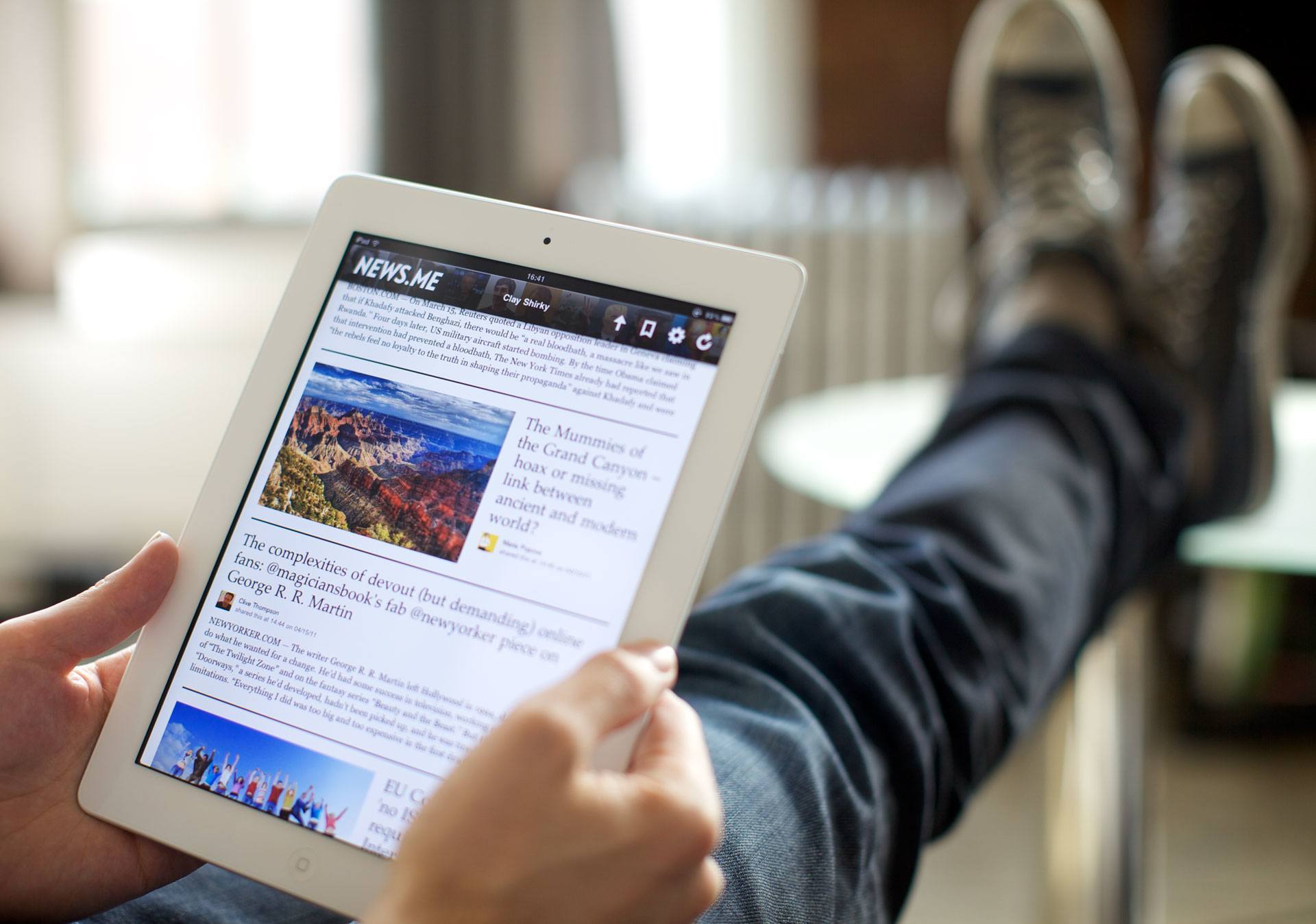
Treat Media Consumption Just Like Binge Eating

(DrFrankLipman – Pilar Gerasimo) A few months ago, as I was wrapping up the next day’s work preparations and shutting down my electronics for the evening, I noticed a new email in my inbox.

It was a New York Times News Alert informing me that Osama bin Laden had been killed. The brief email offered few details but informed me that President Obama would be appearing on TV imminently with an announcement.

Compelled, I clicked the link to the promised live-video stream and waited, looking at a placeholder screen and this message:

The White House has announced that President Barack Obama will address the American people in the next few minutes. When Mr. Obama begins speaking, his remarks will appear in this live video stream from the White House Web site.

Wow, I thought. Historic moment. I should watch this.

A minute ticked by. As I waited, I began reading the headlines of related articles. I perused the page’s unrelated live Twitter feed about Syria. I reread the placeholder message to see if anything had changed. I started thinking about hitting social media or turning on the radio to see what else was being said about the breaking news of bin Laden’s demise.

And then, I thought better of it.

I reminded myself of a commitment that I’d made almost a decade ago in the wake of another major news event — 9/11. My commitment: to become a more discerning and conscious consumer of media.

To me, that means making thoughtful choices about what I watch, read and listen to. It means noticing how I wind up giving my attention to various media streams, and why. It means being aware of the impact my media habits are having on me, and on those around me.

It especially means noticing when I am getting sucked in by something I hadn’t planned to. And it often means turning off or tuning out media — from TV and radio to books, magazines, Web and social-media content — that I find irrelevant, unhelpful, or inconsistent with what I deem to be the best use of my focus and time.

It does not necessarily mean always looking away from things that I find disturbing, surprising or provocative, but it does mean evaluating whether I am being catalyzed to grow and respond constructively, or merely being bombarded in a way that leaves me feeling helpless, hopeless and disempowered.

Over the course of the past decade, I’ve found that this approach to monitoring my media intake has served me well, and it has saved me countless hours of frustration and distraction.

Contrary to some of my early fears, I have not ceased to be a reasonably well-informed individual. Nor have I lost all touch with civilized society. What I’ve done instead is reserve my media time and bandwidth for information that matters to me; experiences that sync with my values and priorities; amusements that entertain, inspire and delight me; inquiries that inform my perspectives; and explorations that empower me to better understand and contribute to my world.

In the scheme of everything else I want to do and experience in my lifetime, I have limited time and focus even for media that meets these high standards. And so it happened that on this particular evening, presented with this particular media option, I considered my commitment and made my decision: I turned off the computer and went to bed.

Here are some of the factors that influenced my choice that night — and that figure into a lot of my media decisions these days:

1. Triggers and appetite: What is enticing or tempting me to tune in to this particular stream of media now, and how do I feel about that?

Although I initially felt that I “should” watch (presumably so that I’d be up to date on a matter of national importance), in truth, I think the offer of the televised announcement mostly appealed to my prurient curiosity and reflexive instincts. It was the media equivalent of an unconscious, impulsive food binge. Did I really want or need to watch this? Would any good likely come of my watching it now? No.

2. Timing and flow: What is going on in my world that makes this an appropriate, potentially rewarding media choice — or conversely, a conflicted and potentially disruptive one? 

I was on my way to bed when I got the News Alert email, and I was glad to have received it. I realized a few moments into my investigation, though, that if I chose to wait up for the president’s live address, I might wind up waiting for quite a while — and that every moment I spent on the edge of my seat would only enhance my sense of keyed-up investment in needing to know as much as possible as quickly as possible. That vibe would likely interfere with my other real-life priorities and intentions — like spending time with my husband and getting some much-needed rest.

3. Consequences/alternatives: What is the likely outcome of my decision to tune in to — or out of — this media option at this time? How is it affecting me?

Although this was certainly a unique, once-in-a-lifetime media event, I surmised that I was unlikely to learn much of great importance from the late-night televised address that I wouldn’t just as quickly learn the next morning (when I’d probably also get more complete, thoughtful reporting, and a more layered sense of background). If I chose to wait and watch, there was also a good chance that I’d be sucked into all kinds of pre- and post-event media chatter that I hadn’t planned on consuming and that really wasn’t terribly relevant to me at this moment. Getting wrapped up in it would not likely provoke me to do anything helpful and would probably leave me feeling overstimulated, distracted and upset.

4. Significance/value: Does this material have real importance, relevance or value to me personally?

Although I certainly considered the information to be significant, I already knew the most essential and relevant piece of it, which was that bin Laden was dead. Part of me was already struggling to digest and make sense of that bit of data. Piling more data on top of it — presumably things like circumstances, nature and timing of the raid — was not likely to help me integrate my thoughts and feelings, only to distract me from them.

Ultimately, based on all these factors and more, I decided that rather than waiting for the streaming video or surfing the Web in search of more info, I was better off observing a moment of silence, taking stock of my own internal reaction to the news I already had, and then getting some sleep so that I could wake up ready to process the next day’s inevitable media onslaught from a more centered place.

If this sounds like an awful lot of thought to put into a single media decision, well, it is. Learning to consume media this way does not necessarily come naturally, particularly in this culture, where media, like food, is everywhere, all the time.

That’s why learning to be conscious of one’s media consumption is a valuable skill, a personal practice that — much like learning how to eat consciously and healthfully — is essential to living well. (It’s also why “Consume Media Wisely” is honored as No. 74 of my 101 Revolutionary Ways to Be Healthy.)

The good news: With time and practice, the process of making conscious decisions about media becomes increasingly quick and instinctive.

Just to clarify, I am not suggesting that the specific reflections and choices I made in this case were the only good or right ones. Nor am I recommending them to everybody in every situation. But I do think we can all benefit from being more discerning about our media intake — particularly if we value our physical, emotional and mental health, to say nothing of our time.

Why? Because as many health-and-happiness experts have pointed out, just like the food we eat, the media we consume have a direct impact on our energy, attitude and well-being. Whether or not we are aware of it, what we watch, read and listen to can profoundly affect the way we think, feel and respond to people and situations in our own lives.

For more on this body of research and the value of rethinking your own media intake, check out the article “Media Diet Makeover“, which originally appeared in Experience Life magazine in 2006.

Meanwhile, if you’ve never embarked on a “media diet” before, it’s the one kind of diet I’d encourage you to think about trying. A period of consciously limiting one’s media intake, or just being especially thoughtful about the TV/video/film, radio/audio, Internet/Web and reading one chooses to partake of can be incredibly insight-provoking.

Be forewarned, though: The choices are not always simple. On the evening in question, there was a part of me that felt disoriented by the news of bin Laden’s death, and I felt what I imagine is a natural urge to re-tether to a common reality by hooking into the mass-media stream.

There was another part of me, though — I think a wiser part — that was urging me to just sit with my own thoughts and feelings and then go to bed as I had planned.

As I noted, I began reconsidering my media habits during the aftermath of 9/11 — a time during which, out of our sense of helplessness, outrage and horror, millions of us were glued continuously to the television for days at a time.

We watched an endless, repeating barrage of appalling images and listening to disjointed, almost content-less reporting — as if somehow, by sheer repetition and our willingness to take it in, we could glean a fuller understanding of what had befallen our country.

We did this, I think, in part out of some sense of civic duty — a well-meaning desire to show solidarity by willingly co-experiencing the disaster and sharing in the collective dismay. But instead, I think a great many of us wound up overwhelmed, freaked out and mired in dramatic details — to the point that we were no good to anyone, including our own families, friends, neighbors and children, much less community causes and charity.

And meanwhile, even as millions of media hours were being compulsively consumed, an alarming percentage of our citizenry somehow missed the news that the 9/11 attacks had nothing at all to do with Iraq or Saddam Hussein. Even a media decade later, a great many of us aren’t much better informed about the political, social and economic issues that gave rise to those tragic events, much less to ongoing wars that have followed.

It’s with all this in mind that, ever since 9/11, I’ve taken the opportunity to put conscious media choices into practice for myself.

I now follow these same general principles not only in times of high-drama news, but whenever I’m presented with media that’s just “there” — streaming from the omnipresent TVs in waiting rooms, diners, bars and airports; flashing across digital billboards; beckoning from magazine racks and newsstands; and blaring from media-equipped fuel pumps, bathroom stalls and taxi cabs.

In all these situations, I make it my goal not to allow random media streams to wash over me, but, rather, to choose — to really decide — what, when and how much I watch, read and listen to, and to remember that my choices have a real influence not just on my knowledge base, but also on my health, happiness and quality of life.

For better or worse, just as the foods we put into our bodies become the raw materials from which our energy is generated and our bodily tissues are repaired, the media we consume become part of the neurological substrate that informs our mindset, moods, belief systems, relationships — our very sense of identity.

A body of emerging neurological, psychological and immunity-focused research suggests that our media intake can powerfully affect both our mental priming (see Barbara L. Fredrickson, Ph.D.’s work on positivity and its response to media intake) and our physical vitality (see David C. McClelland, Ph.D. and Carol Kirshnit, Ph.D.’s work on immune changes in response to watching two different films).

That’s a little scary, because if we gave even a little attention to the quality of television, movies, video, radio, reading, gaming and Internet fodder that we take in on any given day, I suspect a lot of us would find that we are mindlessly munching on the equivalent of junk food, or worse.

So if you haven’t reflected on your media choices lately, I hope you will. And if you’ve already decided to upgrade your media diet, I congratulate you. You’ll be getting a whole body-mind-life upgrade in the bargain.


The Healing Gifts of Sound

(DrFrankLipman – Frank Lipman) Whether we are conscious of it or not, sound surrounds us virtually every moment of the day. There are good sounds – ones that soothe, calm, heal, energize or simply make us smile – and those which have the opposite effect, stressing both body and mind – think sirens, jackhammers, lawnmowers and so on. With its power to create both positive and negative responses throughout the body, it’s important to be conscious of the types of sound we’re exposing ourselves to every day.

As a sustainable wellness practitioner and life-long world music fan, I believe one of the simplest, most important gifts you can give yourself is the gift of music. Why? Because listening to all those “good” sounds enhance and support health. It’s also one of the easiest ways out there to help yourself feel great, which is why I encourage everyone to enjoy multiple doses of musical medicine. Here are a few thoughts on the power of sound to keep in mind as you move – and groove – through your day:

It’s Only Natural – You’ve Been Rocking the Beat Since Before You Were Born

The first sensory organ to develop in the womb is the ear. The first sense to become functional is hearing, beginning at about four and a half months before birth. From that primordial point onward, the inner ear spends its time transforming soundwaves into electrical impulses which go to the brain and stimulate emotional responses. From sounds that soothe and calm to those that agitate and excite, sound, and more specifically music, connects us to our most primal, emotional aspects of ourselves, no language skills required.

Sounds Good to Me, But Hold Off on the Heavy Metal

Carefully selected music and sounds can have powerful therapeutic benefits, lowering heart rate, slowing respiration, decreasing blood pressure, reducing muscle tension and increasing feelings of well-being. In general, classical, new age, instrumentals, nature sounds and music with binaural beats (those frequencies which help calm and balance brain wave activity) tend to deliver the most soothing effects. However, music taste is personal so feel free to develop your own playlist as studies indicate that just about any music that you love will offer benefits. I would however suggest limiting heavy metal or aggressive music to the treadmill, particularly if your larger mission is to heal and calm the body in your off-hours.

Music Moves You From the Inside

In addition to making you want to sway, dance or just tap your feet, there are numerous other ways the body responds to sound – and they’re all good. According to noted musicologist and author Don Campbell, physiological and psychological reactions include: slowed down brain wave activity; increased endorphin levels; better regulation of stress-related hormones; pain control; boosted immunity; improved digestion; altered perception of time and space – and enhanced romance and sexual feelings. Understood in this way, we start to realize the amazing power of sound and music and how easily we can harness it to enhance our health.

Can You Help Me, Dr. Beat?

Certain sounds can help speed entry into different states of consciousness, in part by slowing down brainwave activity, music is a wonderful tool to help make you feel more peaceful, which sets the stage for better and faster healing. In fact, I use music every day to help amplify acupuncture’s effects. After placing the needles, I’ll have patients listen to music in the 60-beats-per-minute range, which is ideal for helping to induce alpha states – the same relaxed state that’s induced by meditation. Among my favorite alpha-inducers, with or without acupuncture treatment, are the albums Reiki ChantsChakra Chants, The Lost Chord, and De-Stress by musician Jonathan Goldman, who has spent much of his career studying and working with sound as a healing force.

Ears are Great, But Learn to Listen with Your Body

While I am all for listening to your body, I also believe it’s important to listen with your body, with eyes closed, in order to truly tune in to the sounds that help us relax and heal. Without visual stimuli, hearing music becomes more acute, enabling you to take in the full spectrum of sounds and feel the vibrations of the sounds in your body. Listening this way also helps you to be in the moment, to be mindful, to access deeper states of consciousness and expand awareness. Chanting, toning, drumming, Tibetan singing bowls, Chinese meditation gongs and mantras are also equally powerful sound alternatives which anyone can use to calm, soothe and stimulate healing in the body while simultaneously refreshing the mind.

Go With the Flow and Be Here Now

Music is so much more than just entertainment – it is an ancient and sacred form of medicine with wonderful side-effects, head-to-toe, body and soul. With its power to uplift, inspire, energize and heal, music and sound enables us to reconnect with and release our most primal emotions, enabling us to feel what at times can be difficult to express. I have found it helps to release, let go and reconnect to deeper levels of our being, our deepest feelings and even our “souls.” Sound bypasses the thinking mind, the rational mind, and is able to touch us at a core level. Music is a universal language, and that’s probably why I love world music so much. It’s not necessary to understand the words, only to feel the rhythm. As Bob Marley said, “the thing about music is that when it hits, you feel no pain.”

8 Ways to Disconnect from Technology and Get More Done!

(DrFrankLipman – Frank Lipman) I believe multi-tasking is over-rated! Recently, I saw a study that said the average smartphone user checks their device about six times an hour. Small wonder so many people these days are feeling distracted and overwhelmed! Making matters worse is that we are the ones constantly interrupting ourselves, tapping that Pavlovian bell we call the smartphone, checking it when it’s buzzing and when it’s not. And what’s all that incoming information doing to us? It’s creating world of people who are stressed out, exhausted and perpetually teetering on the brink of a cold or worse, because their immune systems are similarly fried.

In short, our tech-tethered lives are making millions unwell. While that may be good news for Big Pharma, we in the sustainable wellness community have a better idea: try a digital detox — learn to cut the cord and take your life back from tech. In other words, give your overloaded, “always-on” brain a break. By doing so, you’ll be able to recharge your body and mind, re-connect with your creative side, improve your mood, boost concentration and make room for new intellectual connections you’d probably not have made had you been glued to a screen.  Not convinced you may be a bit addicted? Put it this way: if you start your day by checking your email before you’ve even gotten out of bed, or worse, while you’re on the toilet, it’s time for a digital detox. Here’s how to start your dial-down:

1. Do Less Every Morning

Wake, meditate, shower, dress, have breakfast with the family, go through your morning routine – all without blaring TVs, radios, or flickering phones and computers competing for attention. Sure, the kids will probably hate it at first (you might also), but by lowering the decibel and distraction levels, you’ll help tame the early morning chaos, enabling all to focus on getting out of the house on time. To start, try doing this one day a week – call it Mellow Mondays – and add more days incrementally as the family gets used to the new routine. Another tip: If you’re the one holding everyone up in the morning, save precious minutes by not checking email until you’re belted into the passenger seat in the car-pool, then you can officially start your workday.

2. Send Your Brain on an All-expense Paid Vacation

There are numerous ways to disconnect from technology, some short-form and others, a bit more hard-core, but all have one thing in common: silence. Commit to a daily meditation practice even if it’s just for 10 minutes, as soon as you get up. If you can take another mediation break in the middle of the day, even better. The more opportunity you give your brain to calm down and refresh itself, the more productive and creative it will be – you just need to give it a little free time! If you’re ready to make a longer commitment, consider trying a silent retreat, one where meditation and quiet contemplation are the main events. Among the more popular retreat weekend programs are those offered by IMS/Insight Meditation Society in Barre, MA.

3. You are the Boss of Your Weekend

Sure, your boss-from-hell delights in spending his entire Sunday firing off non-stop emails, but unless you’re in charge of national security or make your living as a fire-fighter, chances are you don’t actually need to respond until “normal” business hours on Monday morning. Don’t respond Sunday night unless you want the boss to think you’re always on call. It’s about boundaries, people, and in the digital age, we all need to set them.

4. When You’re Off Duty, Mean It!

Make weekends and vacations true relaxation times, not just lighter versions of your weekday workdays. Use the-out-of-office notification setting on your office email and resist the urge to respond to emails until just a few hours before your scheduled return. If not checking your email makes you nervous or puts your livelihood at risk, politely inform colleagues that you’ll be checking emails at specific times, for example 10 am, 3 pm and 7 pm, and will be able to respond only to the most truly time sensitive ones. If you value your off-hours, so will they.

5. Go a Bit Off the Grid

While not always feasible for everyone, I like the idea of occasionally going “off the grid,” and leaving technology behind. For example, when I travel, I lighten my digital and mental load by traveling with just my phone and leaving my laptop in the States. I have several patients who dial-down their digital dependence by spending time in places or situations where Internet service isn’t necessarily guaranteed – and they love the retro feeling they get from being able to step back in time, if only for a few days. One exec has a remote cabin in Quebec where the wifi is subject to the amount of cloud cover on a given day, thus limiting his access. Another simply refuses to connect to wifi on long-haul flights so she arrives mentally and physically rested – and ready to hit the ground running.

6. Make Yourself Digitally Incompatible

The simplest way to disconnect? Add activities to your life that are all but impossible to do with a digital device in hand. Three of my all-time favorites are meditation, yoga and hiking. The beauty of all of these three calming activities is that they are wonderfully head-clearing, fantastic for your body and utterly incompatible with electronic devices.

7. Be Where You Are

When you are texting, emailing, Facebooking etc., in the presence of others, you are not being where you are; you’re only partially engaged with the real world. Your tapping away in the presence of others announces that your mind is elsewhere, and suggests that they’re not as interesting as whatever is happening in your virtual world. If it seems family and friends seem annoyed with your lack of attention, the screen between you and them might be contributing to the problem. Learn to put the smartphone down and start giving people your full attention, you know, just like we used to do in the old days.

8. Go On a Digital Diet

Control some of the mayhem by curbing your enthusiasm for social media. Go on a Facebook/Twitter/Instagram/Snapchat diet. Cut down on the number of times a day you check in or are alerted to your friend’s status updates. Update your page every other day or so, instead of multiple times in a day. Are you brave enough to take it a few steps further? Then go rogue and shut down your Facebook account. You might be surprised by how much more time you’ll have to do the stuff you never used to have time for!

For more ideas on how to live better, sleep better and feel better with less technological interference, check out Terri Cole’s recent post on great reasons to unplug  “Step Away From the Electronic Device”.

Exercising Outdoors May Help Boost its Positive Health Effects in Children

(NaturalNews – J. Anderson) Mother Nature may have even more positive health powers than we thought! According to Coventry University research published in the International Journal of Environmental Research and Public Health, children who exercise outside are significantly more likely to experience positive health effects post-exercise than if the exercise was inside.

The Study

The research was conducted on a group of 9- to 10-year-olds who had to complete multiple 15-minute cycling sessions. During one session, the children were shown pictures of a forest path which was synced to their bike; in another session, they were given no visual enhancement at all. After the session in which they were given “green stimulus,” the children experienced significantly lower blood pressure than when given no stimulus. The authors of the study noted that lower blood pressure can be attributed to a lower risk of healthy problems such as cardiovascular disease.

The lead researcher of the study, Dr. Michael Duncan of Coventry University had this to say regarding the results: “If there is indeed a correlation between viewing scenes of nature and a lower blood pressure post exercise, as indicated by our data, it could have very positive implications in encouraging public health practitioners to prescribe outdoor exercise to reduce health risk.”

Exercise in Children

Exercise in general is great for children, because it sets them up for a healthier adulthood by instilling a sense of a healthy lifestyle! In fact, research has gone so far as to hypothesize that a child’s “weight fate” is determined by age five! This means that children who are obese by this early age are more than likely to remain this weight for a large portion of their adult lives (this of course is not always true; with exercise and the proper diet, anyone can control their weight). Not only does exercise keep us physically fit, but research has shown that exercise in children (as well as adults) is vital in helping memory function too!

Although the study was done with visual stimuli and not an actual outdoor exercise experience, it does raise questions for future research on the subject. We know that exercise in general is amazingly healthy for all of us, but exercising outside could help boost those health benefits even more! From the data in the study provided, it does seem that children and adults alike could benefit from exercising more outdoors.

Sources for this article include:
http://www.coventry.ac.uk
http://www.naturalnews.com
http://science.naturalnews.com

Vitamin D Hailed in the Fight Against Heart Disease, Alzheimer’s Disease and Diabetes

(NaturalNews – John Phillip) Scientific research bodies extolling the amazing virtues of the prohormone vitamin D have been published in rapid succession to explain the preventive mechanism shown to prevent cardiovascular disease, diabetes and Alzheimer’s disease. Three independent reviews demonstrate that maintaining a vitamin D blood level between 50 and 70 ng/mL can provide optimal protection against many chronic diseases.

Researchers’ publishing in the journal Nutrition, Metabolism & Cardiovascular Diseases provide evidence that vitamin D is intrinsically involved in the homeostasis of the cardiovascular system. Disruption of the body’s natural stasis system contributes to diabetes, obesity, elevated blood lipids, high blood pressure, endothelial dysfunction, stroke and risk of coronary artery disease. Scientists advise supplementation of 4,000 to 8,000 IU of vitamin D per day to achieve optimal levels, far above the anemic 400 IU currently recommended.

Scientists at the University of Miami’s School of Medicine demonstrate a direct genetic link between low vitamin D levels and the development of amyloid proteins in the brain, commonly associated with Alzheimer’s disease. Reporting in the journal Neurobiology of Aging, researchers looked at gene signaling in relation to the vitamin D receptor in 492 late onset Alzheimer’s patients and 496 control subjects.

Vitamin D controls genetic receptors to guard against chronic disease

When vitamin D receptors were not activated on the surface of individual cells due to poor vitamin D saturation in the blood, precise gene signaling went awry that halted normal clearance of the dementia-related protein clumps. The team conducting the study concluded “Our findings are consistent with epidemiology studies suggesting that vitamin D insufficiency increases the risk of developing Alzheimer’s disease.”

Researchers in Spain evaluated the vitamin D status of 1,226 individuals in 1996. The participants were again tested eight years later, and vitamin D levels were contrasted with development of diabetes over the course of the study. The results, published in the journal Clinical Nutrition, found that those with vitamin D blood levels above 18.5 ng/mL had an 83 percent lower risk of developing type 2 diabetes during the eight-year period. No one in the study with a vitamin D score over 30 ng/mL developed type 2 diabetes.

It has become very clear from countless research studies published over the past decade that vitamin D qualifies among the most crucial and essential hormone-based nutrients. And still millions of people continue to place themselves at unnecessary risk by ignoring this information.

Most people above the age of twenty-one should supplement with a minimum of 2,000 IU of vitamin D every day and have their blood tested to ensure they reach the optimal range of 50 to 70 ng/mL. Extensive research provides more than sufficient evidence that maintaining a proper vitamin D level can dramatically lower the risk of heart disease, Alzheimer’s disease diabetes and many other chronic illnesses.

Sources for this article include:
http://www.nmcd-journal.com
http://www.wellnessresources.com
http://www.ncbi.nlm.nih.gov
http://www.wellnessresources.com
http://www.sciencedirect.com