(Dr. Mercola) In the health paradox of the year, 52-year-old cardiologist John Warner, president of the American Heart Association (AHA), recently suffered a heart attack in the middle of a health conference.1,2 In a statement, the association reported Warner was in stable condition after having a stent placed to open a blocked artery. Part of Warner’s speech at the Scientific Sessions conference in Anaheim, California, centered around his own family’s struggle with heart disease.
“After my son was born and we were introducing him to his extended family, I realized something very disturbing: There were no old men on either side of my family. None. All the branches of our family tree cut short by cardiovascular disease,” Warner said in his speech.3
“Together we can make sure old men and old women are regulars at family reunions, that people live long enough and healthy enough to enjoy walks and fishing trips with their grandchildren and maybe even their great-grandchildren. In other words, I look forward to a future where … children grow up surrounded by so many healthy, beloved, elderly relatives that they couldn’t imagine life any other way.”
The AHA’s CEO, Nancy Brown, said in a statement:4 “John wanted to reinforce that this incident underscores the important message that he left us with in his presidential address … that much progress has been made, but much remains to be done.”
Many AHA Recommendations Worsen Heart Health
In all likelihood, Warner followed AHA recommendations, many of which are actually recipes for heart disease disaster. Of the foods scientifically proven to cause heart disease and clogged arteries, excess sugar and industrially processed omega-6 vegetable oils, found in nearly all processed foods, compete for space at the top the list. And what kinds of foods does the AHA recommend to protect your heart?
Not only does it support ample grain consumption, it also recommends eating harmful fats such as canola, corn, soybean and sunflower oil.5 “Blends or combinations of these oils, often sold under the name ‘vegetable oil,’ and cooking sprays made from these oils are also good choices,” the AHA says. Meanwhile, the association still insists saturated fats are to be avoided.
Just this past summer the AHA shocked health experts around the world by sending out a worldwide advisory6 saying saturated fats such as butter and coconut oil should be avoided to cut your risk of heart disease, and that replacing these fats with margarine and vegetable oil might cut your heart disease risk by as much as 30 percent. Overall, the AHA recommends limiting your daily saturated fat intake to 6 percent of daily calories or less.7
This is as backward as it gets, and if Warner was following this long-outdated advice, it’s no wonder he suffered a heart attack. In fact, it is to be expected. As noted by American science writer Gary Taubes in his extensive rebuttal to the AHA’s advisory,8 with this document, the AHA reveals its longstanding prejudice — and the method by which it reaches its flawed conclusions.
In short, the AHA simply excluded any and all contrary evidence. After this methodical cherry-picking, they were left with just four clinical trials published in the 1960s and early ‘70s — the eras when the low-fat myth was born and grew to take hold. The problem is nutritional science has made significant strides since then, and a number of significant studies have firmly disproven the hypothesis that saturated fat causes heart disease, finding no association whatsoever.
In related news, the AHA recently issued new guidelines on blood pressure,9 moving the goal post for heart health yet again. Now you’re considered hypertensive if your blood pressure is above 130 over 80. Previous guidelines started hypertension at 140 over 90. This means an estimated 30 million Americans will qualify for the designation of having high blood pressure, and of those, an estimated 1 in 5 are likely to receive the recommendation to take blood pressure medication.
Flawed Fat Recommendations Have Been Followed With Disastrous Consequences
Since the 1950s, when vegetable oils began being promoted over saturated fats like butter, Americans have dutifully followed this advice, dramatically increasing consumption of vegetable oil. Soybean oil, for example, has risen by 600 percent while butter, tallow and lard consumption has been halved. We’ve also dramatically increased sugar consumption, which has also been implicated as a primary contributor to heart disease and other chronic health problems.10
While following this advice, Americans have gotten fatter and sicker. Heart disease rates have not improved even though people have been following the AHA’s “heart healthy diet.” Common sense tells us if the AHA’s advice hasn’t worked in the last 65 years, it’s not likely to start working now. Modern research is just now starting to reveal what actually happens at the molecular level when you consume vegetable oil and margarine, and it’s not good.
For example, Dr. Sanjoy Ghosh,11 a biologist at the University of British Columbia, has shown your mitochondria cannot easily use polyunsaturated fatty acids (PUFAs) for fuel due to the fats’ unique molecular structure. Other researchers have shown the PUFA linoleic acid hinders mitochondrial function and can even cause cell death.12
PUFAs are also not readily stored in subcutaneous fat. Instead, PUFAs tend to get deposited in your liver, where they contribute to fatty liver disease, and in your arteries, where they contribute to atherosclerosis.
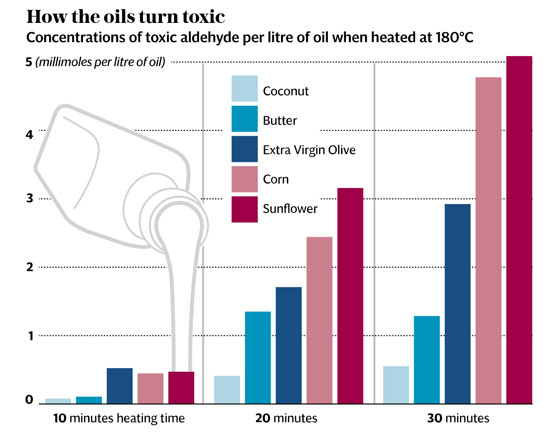
According to Frances Sladek,13 Ph.D., a toxicologist and professor of cell biology at UC Riverside, PUFAs behave like a toxin that builds up in tissues because your body cannot easily rid itself of it. Making matters worse, when vegetable oils like sunflower oil and corn oil are heated, cancer-causing chemicals like cyclic aldehydes are also produced.14
Other research confirms such findings by linking fried foods to an increased risk of death. For example, eating fried potatoes more than twice a week has been shown to double a person’s risk of death compared to never eating fried potatoes.15 Animal and human research has also found vegetable oils promote:
According to Dr. Cate Shanahan,21 a family physician and author of “Deep Nutrition: Why Your Genes Need Traditional Food,” the idea that PUFAs are healthier than saturated fats falls flat when you enter the field of biochemistry, because it’s “biochemically implausible.” In other words, the molecular structure of PUFA is such that it’s far more prone to react with oxygen, and these reactions disrupt cellular activity and cause inflammation.22 Oxidative stress and inflammation, in turn, are hallmarks not only of heart disease and heart attacks but of most chronic diseases.23,24
“[T]he folks at the AHA claim saturated fat is pro-inflammatory and causes arterial plaque and heart attacks — but there is no biochemically plausible explanation for their argument,” she told me in an emailed rebuttal to the AHA advisory.“Saturated fat is very stable, and will not react with oxygen the way PUFA fat does, not until the fundamental laws of the universe are altered.
Our bodies do need some PUFA fat, but we need it to come from food like walnuts and salmon or gently processed (as in cold pressed, unrefined) oils like flax and artisanal grapeseed, not from vegetable oils because these are refined, bleached and deodorized, and the PUFA fats are molecularly mangled into toxins our body cannot use.”
Open Letter to AHA President
In an open letter to AHA president Warner, Dr. William Davis, a New York cardiologist and author of The New York Times best seller “Wheat Belly, Lose the Wheat, Lose the Weight, and Find Your Path Back to Health,” writes, in part:
“If you ignore the nonsense that AHA policy dictates, you can absolutely gain control over cardiovascular risk. But you will NOT find the answers in any AHA policy. I learned these lessons practicing as an interventional cardiologist, then abandoning this ridiculous way of managing coronary disease to devote my efforts to early detection and prevention.
So, I thought I would articulate some of these thoughts in an open letter to Dr. Warner as he recovers from his procedure … Dr. Warner — … There are a number of reasons why someone like you — deeply-entrenched in the conventional world of heart disease management and what passes for prevention — highlights the miserable failure that the modern coronary care paradigm represents:
1) We are trapped by the outdated but profitable lipid hypothesis … 2) We know from abundant data that small oxidation- and glycation-prone LDL particles are highly atherogenic … are potent triggers of the inflammation cascade … and are triggered to abundant degrees in some genotypes upon consumption of the amylopectin A of grains …
[Y]es, the food that the American Heart Association advises to fill the diet with — and sugars … I am hoping that, now that this disease has touched you personally, your eyes will be opened to the corrupt and absurd policies of conventional coronary care and the American Heart Association.”
The Magic Pill Myth Needs to End
Davis goes on to note that heart disease is a multifactorial problem that cannot be solved with a pill.
“Thinking that a statin drug … [is] sufficient to prevent coronary events is absurd and overly-simplistic, like thinking that taking Aricept for dementia will stop the disease — of course, it does no such thing,” he writes, adding, “There are no drugs to ‘treat’ many of the contributors to coronary atherogenesis.But there are many non-drug strategies to identify, then correct, such causes.”
Nondrug prevention strategies suggested by Davis include:
•Avoiding any and all dietary factors that provoke insulin resistance, glycation and formation of small, dense LDL particles. Importantly, this would include avoiding the harmful fats recommended by the AHA such as margarine and processed vegetable oils, and keeping your total daily fructose consumption below 25 grams per day.
•Optimizing your vitamin D level.
•Optimizing your omega-3 fat intake: An omega-3 index of 10 percent or greater is associated with “dramatic reduction in cardiovascular events,” Davis notes. Indeed, a 2010 analysis25 found that while diets higher in omega-6 fats (found in ample amounts in vegetable oils) and lower in omega-3s increased the risk of nonfatal myocardial infarction and death from heart disease by 13 percent; a mixed diet of both omega-3 and omega-6 fats reduced these risks by 22 percent.
Meanwhile, the AHA recommends higher intakes of omega-6, saying26 “Aggregate data from randomized trials, case-control and cohort studies, and long-term animal feeding experiments indicate that the consumption of at least 5 percent to 10 percent of energy from omega-6 PUFAs reduces the risk of coronary heart disease relative to lower intakes.
The data also suggest that higher intakes appear to be safe and may be even more beneficial.”This statement runs counter to a large body of research suggesting the converse — specifically, that reducing omega-6 fats and increasing omega-3 is better for your heart.
•Addressing your thyroid function.
•Optimizing your gut microbiome to address dysbiosis caused by excess sugar, chlorinated and fluoridated water, and exposure to antibiotics, pesticides and common heartburn drugs.
Stent Placement No Better Than Placebo
Research also does not support the routine procedure of coronary artery angioplasty and stent placement. In fact, recent research suggests up to 50 percent of all stent placements may be unnecessary.27 Moreover, the effectiveness of this procedure is right on par with placebo. In a recent study published in The Lancet, researchers from Imperial College London investigated the difference between patients who had received a stent for stable angina and those who underwent a placebo intervention.28
In the short video above, lead author and interventional cardiologist Dr. Rasha Al-Lamee, describes the study and its results. Two hundred participants with severe single vessel blockage were recruited from five sites across the U.K.29 During the initial six weeks, all patients underwent an exercise test followed by intensive medical treatment.
At that point, they were randomly assigned to two groups. The first underwent a percutaneous intervention (PCI) during which coronary angioplasty was performed and a stent was placed. The second group also underwent a PCI procedure with an angiogram but without a balloon angioplasty or stent placement.30
For the following six weeks, neither the patient nor the physician knew if the patient received the stent. At the conclusion of the six weeks, patients again underwent an exercise test and were questioned about their symptoms. The researchers found both groups experienced nearly identical improvements in exercise tolerance and no difference in reported improvements of their symptoms.31 From the data, Al-Lamee commented:32
“Surprisingly, even though the stents improved blood supply, they didn’t provide more relief of symptoms compared to drug treatments, at least in this patient group. It seems that the link between opening a narrowing coronary artery and improving symptoms is not as simple as everyone had hoped.”
In this interview, Dr. Thomas Cowan, family physician, founding member of the Weston A. Price Foundation and author of “Human Heart, Cosmic Heart: A Doctor’s Quest to Understand, Treat and Prevent Cardiovascular Disease,” reveals how your heart and circulatory system works. This understanding may go a long way toward changing the way you understand heart disease.
He makes a strong case for heart disease being rooted in mitochondrial dysfunction and believes plaque formation alone cannot explain a heart attack.”[Conventionally], it’s all about the plaque,” Cowan says. “My point in the book is that it’s NOT about the plaque.” The conventional view is that your heart functions like a pump — a pressure propulsion system caused by the muscular contraction of the ventricles.
Cowan explains that your heart is actually better described as a hydraulic ram — a vortex-creating machine — where the primary mover of blood is the interaction occurring between the negatively charged vessel walls and the positively charged water in your blood. Importantly, the following three natural energies result in a separation of charges that improve blood flow:
1. Sunlight charges up your blood vessels, which increases the flow of blood. When the sun’s rays penetrate your skin, it causes a massive increase of nitric oxide that acts as a vasodilator. As much as 60 percent of your blood can be shunted to the surface of your skin through the action of nitric oxide.
This helps absorb solar radiation, which then causes the water in your blood to capture the energy and become structured. This is a key component for a healthy heart. The ideal is to be exposed to the sun while grounding, meaning walking barefoot. This forms a biological circuit that makes it work even better.
2.Negative ions from the Earth, also known as earthing or grounding. This also charges up your blood vessels, creates a separation of charges, creates more positive ions and allows the blood to flow upward, against gravity.
3.The field effect or touch from another living being, such as laying on of hands.
A Healthy Heart Is the Result of a Healthy Lifestyle
As noted by Cowan, “The best thing is to be, more or less, with shorts or naked on the beach, with the saltwater, which acts as an electrical conductor, holding hands with somebody you love. That’s how you structure the water [in your blood vessels].” Sun exposure, grounding and skin-to-skin contact are three heart disease prevention strategies that, ideally, everyone should be doing, and it doesn’t get a whole lot easier or less expensive than this.
That said, your heart health is really dependent on your diet — what you eat and when you eat. In my view, the best treatment for heart disease is to work your way up to an intermittent fasting schedule where you’re fasting for 20 hours a day. When you do eat, make sure you eat real food, and consider a cyclical ketogenic diet, high in healthy fats, low in net carbs with moderate protein.
Once you’re comfortable with this intermittent fasting schedule, start doing a monthly five-day water fast. This really is the most powerful metabolic intervention I know of, and I feel it’s one of the healthiest things I now do for my own health. Senescent cells, which have stopped replicating, play a distinct role in aging and disease. Once replication stops, these cells need to be removed from your body, or else they start clogging it up, causing severe inflammation and immune dysfunction.
Fasting very effectively gets rid of senescent cells — a process known as autophagy. Fasting also stimulates the production of stem cells, which help with regeneration and healing.
While a five-day fast may sound intimidating, if you’re used to 20-hour daily intermittent fasting for a month before starting your five-day fast, then the hunger that typically strikes on the second day of fasting is dramatically reduced and will typically not be at all bothersome. Fasting is also a powerful remedy for insulin resistance, which is a major underlying factor of heart disease.
Last but not least, the following exercise, which requires only two to three minutes, three times a day, is a super-simple way to boost your heart health. It prompts your body to release nitric oxide, which will help relax your blood vessels and improve your blood pressure.
(Mercola) Exposure to pesticides, herbicides and insecticides has dramatically increased since the introduction of genetically engineered (GE) crops. Urine output of glyphosate, the active ingredient in the herbicide Roundup, shot up by more than 1,200 percent between 1993 and 2016.1 Unfortunately, glyphosate is not the only chemical of concern.
Chlorpyrifos (sold under the trade name Lorsban) — an organophosphate insecticide known to disrupt brain development and cause brain damage, neurological abnormalities, reduced IQ and aggressiveness in children — is another.2 ,3 In adults, the chemical has been linked to Parkinson’s disease4,5 and lung cancer.6
Chlorpyrifos has been in use since 1965, and is commonly used on staple crops such as wheat and corn, as well as fruits and vegetables, including nonorganic citrus, apples, cherries, strawberries, broccoli, cauliflower and dozens of others. Since the chemical has a half-life of several months and can remain on sprayed foods for up to several weeks,7 nonorganic foods are a major source of exposure.
Importantly, nonorganic, non-grass fed meats are likely to be loaded with this chemical, since conventional feed consists primarily of genetically and/or conventionally-raised grains such as corn. This is yet another reason to make sure you feed your family grass fed meats and animal products, especially your young children. Chlorpyrifos is also a commonly found water contaminant, and has even been found in indoor air.8
Children experience greater exposure to chemicals pound-for-pound than adults, and have an immature and porous blood-brain barrier that allows greater chemical exposures to reach their developing brain. Needless to say, the results can be devastating and, indeed, many agricultural and industrial chemicals have been found to affect children’s brain function and development specifically.
Decadelong Effort to Ban Chlorpyrifos Fall Through
Permissible uses of chlorpyrifos was limited in the year 2000, at which time the chemical was banned for use in homes, schools, day care facilities, parks, hospitals, nursing homes and malls. However, agricultural use remained, and it can still be used on golf courses and road medians.
Scientists at the U.S. Environmental Protection Agency (EPA) actually pushed for a complete ban on chlorpyrifos, as its dangers are well-documented, and the chemical is in fact classified as a neurotoxin, as it disrupts communication between brain cells. Research shows that living within 1 mile of chlorpyrifos-treated fields increases a woman’s risk of having an autistic child by 300 percent.9,10
A petition to ban chlorpyrifos on food was filed over a decade ago, and the lack of response from the EPA finally led to a federal court ordering the EPA to issue a decision.11 Forced to act, Scott Pruitt, President Trump-appointed head of the EPA,12 issued an order denying the petition to revoke all tolerances for chlorpyrifos on food in March 2017.13,14 As noted by NPR:15
“That’s despite the agency’s earlier conclusion, reached during the Obama administration, that this pesticide could pose risks to consumers. It’s a signal that toxic chemicals will face less restrictive regulation by the Trump administration. In its decision, the EPA didn’t exactly repudiate its earlier scientific findings. But the agency did say that there’s still a lot of scientific uncertainty about the risks of chlorpyrifos …
Patti Goldman, from the environmental group Earth Justice, calls the decision “unconscionable,” and says that her group will fight it in court … ‘Based on the harm that this pesticide causes, the EPA cannot, consistent with the law, allow it in our food.'”
87 Percent of Newborns Have Chlorpyrifos in Their Cord Blood
Considering Pruitt’s history of championing industry interests and the evidence showing other EPA officials have has taken an active role in protecting chemical giants against rulings that would impact their bottom line, his decision to keep chlorpyrifos on the market does raise suspicions. As noted by USA Today,16 Pruitt “filed more than a dozen lawsuits seeking to overturn some of the same regulations he is now charged with enforcing.”
Evidence also suggests Dow Chemical, the maker of chlorpyrifos, pressured government agencies to ignore incriminating studies (see next section). The EPA’s earlier conclusion that chlorpyrifos posed a risk to consumers was largely based on research17 showing that exposure to the chemical caused measurable differences in brain function. In one study, compared to children whose exposure to the chemical was negligible, children with high levels of exposure had lower IQ at age 7.18
Research19 published in 2014 showed that pregnant women exposed to chlorpyrifos during their second trimester had a 60 percent higher risk of giving birth to an autistic child. Studies have also shown that genetic differences can make some people far more vulnerable to chlorpyrifos than others.
Moreover, according to the U.S. Centers for Disease Control and Prevention, chlorpyrifos is metabolized in the human body into 3,5,6-trichloro-2-pyridinol (TCPy),20 which is even more toxic than the original insecticide. Disturbingly, California’s biomonitoring program found TCPy in 82 percent of Californians sampled in 2012, including pregnant women.21
Another 2012 study,22 which measured chlorpyrifos levels in maternal and cord plasma of women and children living in an agricultural community, found measurable levels in 70.5 percent of maternal blood samples and 87.5 percent of cord blood samples. According to the authors:
“Blood organophosphate pesticide levels of study participants were similar in mothers and newborns and slightly higher than those reported in other populations. However, compared to their mothers, newborns have much lower quantities of the detoxifying PON1 enzyme suggesting that infants may be especially vulnerable to organophosphate pesticide exposures.”
Dow Chemical Requested Evidence to Be ‘Set Aside’
Government-funded studies also reveal that chlorpyrifos poses serious risks to 97 percent of endangered animals in the U.S.23,24 This alone ought to be cause enough to ban this chemical, but it appears industry pressure worked its usual magic.
On April 13, 2017, a legal team representing Dow Chemical and two other organophosphate manufacturers sent letters to the three agencies responsible for joint enforcement of the Endangered Species Act25,26 — the U.S. Fish and Wildlife Service, the National Marine Fisheries Service and the Department of Commerce — asking them to “set aside” these incriminating findings, as the companies believe they are flawed. As reported by USA Today:
“Over the past four years, federal scientists have compiled … more than 10,000 pages indicating the three pesticides under review — chlorpyrifos, diazinon and malathion — pose a risk to nearly every endangered species they studied. Regulators at the three federal agencies … are close to issuing findings expected to result in new limits on how and where the highly toxic pesticides can be used …
The EPA’s recent biological evaluation of chlorpyrifos found the pesticide is ‘likely to adversely affect’ 1,778 of the 1,835 animals and plants accessed as part of its study, including critically endangered or threatened species of frogs, fish, birds and mammals … In a statement, the Dow subsidiary that sells chlorpyrifos said its lawyers asked for the EPA’s biological assessment to be withdrawn because its ‘scientific basis was not reliable.'”
Pruitt claims he’s “trying to restore regulatory sanity to EPA’s work.” I would argue the definition of sanity is first not to abandon the EPA’s mandate to protect the public health and, further, not to give developmentally crippling toxins a free pass and ignoring loads of unbiased research documenting its toxicity.
At present, the EPA is also in the process of reassessing atrazine, another pernicious and exceptionally toxic agricultural chemical. It remains to be seen whether the agency will finally take a firm stand against this pernicious toxin, or let it slide like chlorpyrifos and glyphosate.
Toxic Exposures Have Robbed Americans of 41 Million IQ Points
Problems with cognitive function that are not severe enough for diagnosis are becoming even more common than neurobehavioral development disorders. In 2012, David Bellinger, Ph.D., professor of neurology at Harvard Medical School, published a study funded by the National Institutes of Health where he calculated the impact of toxic exposures on children’s IQ.27
He determined that based on a population of 25.5 million children, aged birth to 5, those born to mothers exposed to organophosphates, mercury or lead during pregnancy suffered a combined loss of 16.9 million IQ points. Researchers calculated a collective loss of 41 million IQ points in the U.S. from the same exposures.28 Conventional farmers are reluctant to stop using pesticides as this will put their crops at risk, and pesticide makers will not support a ban for obvious reasons.
But at what point do we say enough is enough? How many children have to be sacrificed for financial profits? Considering the lack of proactive measures from government and industry, it’s up to each and every one of us to be proactive in our own lives. One of the most effective ways to reduce your exposure to toxic pesticides, herbicides and insecticides is to buy certified organic foods, or better yet, foods certified biodynamic.
Environmental Toxins Kill 1.7 Million Children Annually, Worldwide
Untested chemicals should not be presumed safe.29 The World Health Organization (WHO) has stated that environmental pollution, including but not limited to toxic exposures, kills 1.7 million children every year.30 The top five causes of death for children under 5 are related to their environment.
A recent report from CHEMTrust, a British charity working internationally to prevent man-made chemicals from triggering damage to wildlife or humans, found current chemical testing is not adequately picking up chemicals that cause developmental neurotoxicity.31Their “No Brainer” report32 evaluated the impact of chemicals on the development of a child’s brain.
The report praised the European Food Safety Authority for work on risk assessment of pesticides and recommended their approach be expanded to include chemicals from other sources.33
They also recommended chemicals used for food contact material be routinely tested and screened for developmental neurotoxicity. The report also called for a taskforce to identify and develop better ways to screen chemicals before use. Without a doubt, the U.S. needs to follow suit and take a stronger stance against chemicals suspected of neurotoxicity.
How to Protect Your Family From Toxic Pesticides
According to a U.S. Department of Agriculture report on pesticide residues in food,34 in 2014, 41 percent of samples had no detectable pesticide residues. The following year, a mere 15 percent of all the food samples tested were free from pesticide residues. That just goes to show how rapidly and dramatically our pesticide exposure has increased.
Here’s a summary of commonsense recommendations that will help reduce your exposure to pesticides, and help you eliminate toxins you may already have been exposed to:
•As a general rule, your safest bet is to grow your own food, followed by buying certified organic or, better yet, biodynamic produce, and grass fed or pastured meats and animal products. See the listing below for sources where you can locate farm-fresh foods locally. If you cannot afford an all-organic/biodynamic diet, focus on buying grass fed and organic pastured meats first.
Next, familiarize yourself with average pesticide loads and buy (or grow) organic varieties of produce known to carry the highest amounts of pesticides. You can find a quick rundown in the Consumer Reports video above.35 Another excellent source, which is updated annually, is the Environmental Working Group’s (EWG) shopper’s guide36 to pesticides in produce.
•Filtering your drinking water is also important. To remove pesticides, look for a filter certified by the NSF International to meet American National Standards Institute Standard 53 for volatile organic compounds reduction. This will ensure the filter is capable of significantly reducing pesticides.37 Most activated carbon filters will meet this requirement and get the job done.
•Carefully wash all nonorganic produce to remove surface pesticides. According to a recent study,38 the most effective cleaning method, by far, is to wash your produce using a mixture of tap water and baking soda. Soaking apples in a 1 percent baking soda solution for 12 to 15 minutes was found to remove 80 percent of the fungicide thiabendazole and 96 percent of the insecticide phosmet.
•Lastly, if you know you have been exposed to pesticides, eating fermented foods and/or using a low-EMF far infrared sauna can be helpful, especially if combined with an optimal supplemental detox regimen including binders to catch the toxins that are mobilized from the fats. The lactic acid bacteria formed during the fermentation of kimchi has been shown to help your body break down pesticides.
The goal of the American Grassfed Association is to promote the grass fed industry through government relations, research, concept marketing and public education.
Their website also allows you to search for AGA approved producers certified according to strict standards that include being raised on a diet of 100 percent forage; raised on pasture and never confined to a feedlot; never treated with antibiotics or hormones; born and raised on American family farms.
EatWild.com provides lists of farmers known to produce raw dairy products as well as grass fed beef and other farm-fresh produce (although not all are certified organic). Here you can also find information about local farmers markets, as well as local stores and restaurants that sell grass fed products.
Weston A. Price has local chapters in most states, and many of them are connected with buying clubs in which you can easily purchase organic foods, including grass fed raw dairy products like milk and butter.
This website will help you find farmers markets, family farms and other sources of sustainably grown food in your area where you can buy produce, grass fed meats and many other goodies.
The Eat Well Guide is a free online directory of sustainably raised meat, poultry, dairy and eggs from farms, stores, restaurants, inns, hotels and online outlets in the United States and Canada.
The FoodRoutes “Find Good Food” map can help you connect with local farmers to find the freshest, tastiest food possible. On their interactive map, you can find a listing for local farmers, CSAs and markets near you.
The Cornucopia Institute maintains web-based tools rating all certified organic brands of eggs, dairy products and other commodities, based on their ethical sourcing and authentic farming practices separating CAFO “organic” production from authentic organic practices.
If you’re still unsure of where to find raw milk, check out Raw-Milk-Facts.com and RealMilk.com. They can tell you what the status is for legality in your state, and provide a listing of raw dairy farms in your area. The Farm to Consumer Legal Defense Fund39 also provides a state-by-state review of raw milk laws.40 California residents can also find raw milk retailers using the store locator available at www.OrganicPastures.com.
(Dr. Mercola) Human fertility is declining, and recent studies suggest conventional food may be a significant contributor to this disturbing trend, seen in both men and women. Pesticides have repeatedly been implicated in worsening fertility, and one of the most recent studies adds further support to this hypothesis.
The study,1,2 published in JAMA Internal Medicine, evaluated the influence of factors known to affect reproduction on the reproductive success of 325 women between the ages of 18 and 45 (mean age 35), who underwent in vitro fertilization (IVF). As reported by Time,3“The women in the study filled out detailed questionnaires about their diet, along with other factors that can affect IVF outcomes, like their age, weight and history of pregnancy and live births.”
High Pesticide Exposure Associated With Reduced IVF Success
Using a U.S. government database listing average pesticide residues on food, the researchers estimated each participant’s pesticide exposure based on their food questionnaires. On average, women with high pesticide exposure ate 2.3 servings per day of fruits, berries or vegetables known to have high amounts of pesticide residue. Those in the lowest quartile ate less than 1 serving of high-pesticide produce per day.
Compared to women with the lowest pesticide exposure, women with the highest amounts of pesticide exposure had an 18 percent lower IVF success rate. They were also 26 percent less likely to have a live birth if they did become pregnant. Using modeling, the researchers estimate that exchanging a single serving of high-pesticide produce per day for one with low pesticide load may increase the odds of pregnancy by 79 percent, and the odds of having a live birth by 88 percent.
Pesticide Regulations Fail to Protect Human Health
Senior investigator Dr. Jorge Chavarro, associate professor of nutrition and epidemiology at Harvard T. H. Chan School of Public Health told Time:4
“I was always skeptical that pesticide residues in foods would have any impact on health whatsoever. So, when we started doing this work a couple of years ago, I thought we were not going to find anything. I was surprised to see anything as far as health outcomes are concerned.I am now more willing to buy organic apples than I was a few months ago.”
Coauthor Dr. Yu-Han Chiu, research fellow in the department of nutrition at the Harvard T.H. Chan School of Public Health, added:5
“There have been concerns for some time that exposure to low doses of pesticides through diet, such as those that we observed in this study, may have adverse health effects, especially in susceptible populations such as pregnant women and their fetus, and on children. Our study provides evidence that this concern is not unwarranted.”
As noted by Dr. Philip Landrigan, dean for global health and professor at the Icahn School of Medicine at Mount Sinai, in an accompanying commentary,6 “The observations made in this study send a warning that our current laissez-faire attitude toward the regulation of pesticides is failing us,” adding:
“We can no longer afford to assume that new pesticides are harmless until they are definitively proven to cause injury to human health. We need to overcome the strident objections of the pesticide manufacturing industry, recognize the hidden costs of deregulation, and strengthen requirements for both premarket testing of new pesticides, as well as postmarketing surveillance of exposed populations — exactly as we do for another class of potent, biologically active molecules — drugs.”
Male Fertility Rates Have Also Plunged
Research also shows sperm concentration and quality has dramatically declined in recent decades, and the evidence suggests endocrine disrupting chemicals are largely to blame. While there are many sources, pesticides, including glyphosate,7 are known endocrine disruptors as well. According to the first of two recently published papers,8 a meta-analysis of 185 studies and the largest of its kind, sperm counts around the world declined by more than 50 percent between 1973 and 2013, and continue to dwindle.
The most significant declines were found in samples from men in North America, Europe, Australia and New Zealand. (Men suspected of infertility, such as those attending IVF clinics, were excluded from the study.) Overall, men in these countries had a 52.4 percent decline in sperm concentration and a 59.3 percent decline in total sperm count (sperm concentration multiplied by the total volume of an ejaculate).
As it stands, half of the men in most developed nations are now near or at the point of being infertile. Lead author Dr. Hagai Levine, who called the results “profound” and “shocking,”9 worries that human extinction is a very real possibility, should the trend continue unabated.10
Microwave Exposure — Another Invisible Contributor to Infertility
Exposure to electromagnetic fields (EMFs) is another major contributor to infertility. In fact, I believe this may be the most significant factor for the observed decrease in male sperm count. Women’s reproductive organs are a bit more shielded, but can still be affected, just not as easily as men’s testicles.11 During World War II, it was well-known that radar operators could easily create sterility by exposing the groin to radar waves. Radar is microwave radiation and was the precursor to cellphones that use similar frequencies.
More modern research also suggests microwave radiation may play a significant role in male reproductive health. While evaluating studies showing you can radically reduce biological microwave damage using calcium channel blockers, Martin Pall, Ph.D., discovered a previously unknown mechanism of biological harm from microwaves emitted by cellphones and other wireless technologies.12
Embedded in your cell membranes are voltage gated calcium channels (VGCCs). It turns out these VGCCs are activated by microwaves, and when that happens, about 1 million calcium ions per second are released.
This massive excess of intracellular calcium then stimulates the release of nitric oxide (NO) inside your cell and mitochondria, which combines with superoxide to form peroxynitrite. Not only does peroxynitrites cause oxidative damage, they also create hydroxyl free radicals — the most destructive free radicals known to man.
Hydroxyl free radicals decimate mitochondrial and nuclear DNA, their membranes and proteins, resulting in mitochondrial dysfunction. During a 2013 children’s health expert panel on cellphone and Wi-Fi exposures,13 it was noted, “The testicular barrier, that protects sperm, is the most sensitive of tissues in the body … Besides sperm count and function, the mitochondrial DNA of sperm are damaged three times more if exposed to cellphone radiation.”
In addition to male testes, the tissues with the highest density of VGCCs are your brain and the pacemaker in your heart. What the research tells us is that excessive microwave exposure can be a direct contributor to conditions such as infertility, Alzheimer’s, anxiety, depression, autism and cardiac arrhythmias.14
Indeed, other studies have linked low-level electromagnetic radiation exposure from cellphones to an 8 percent reduction in sperm motility and a 9 percent reduction in sperm viability.15,16 Wi-Fi equipped laptop computers have also been linked to decreased sperm motility and an increase in sperm DNA fragmentation after just four hours of use.17 So, if you care about your reproductive health, the most important strategies to implement are to:
Avoid carrying your cellphone in your pockets or on your hip
Avoid using portable computers and tablets on your lap
Turn off your cellphones at night, as even if you are not talking they can damage you up to 30 feet away
Turn off your Wi-Fi at night (ideally in the day also)
Most importantly, turn off the electricity to your bedroom at the circuit breaker. This typically works for most bedrooms unless you have a room or rooms adjacent to your bedroom, in which case you might need to shut that off too. This will radically lower electric and magnetic fields while you sleep. If you need a clock you can you a battery operated one and even better a talking clock with no light that can be picked up on Amazon
Study Reveals Shocking Increase in Glyphosate Levels
In related news, researchers from University of California San Diego School of Medicine recently reported there’s been a shocking increase in glyphosate exposure in recent decades and, subsequently, the level found in people’s urine.
For this study,18 the researchers measured excretion levels of glyphosate and its metabolite aminomethylphosphonic acid in 100 participants from the Rancho Bernardo Study of Healthy Aging, which ran for 23 years, starting in 1993, the year before genetically engineered (GE) crops were introduced in the U.S.
As one would expect, the introduction of Roundup Ready GE crops led to a massive increase in the use of Roundup, the active ingredient of which is glyphosate. Glyphosate has also become a popular tool for desiccating non-GE grains, legumes and beans.
Data19,20 reveals that between 1974 (the year glyphosate entered the U.S. market and just over two decades before GE crops were introduced) and 2014, glyphosate use in the U.S. increased more than 250-fold. Globally, glyphosate use rose nearly fifteenfold since 1996, two years after the first GE crops hit the market.
At the start of the study, very few of the participants had detectable levels of glyphosate in their urine, but by 2016, 70 percent of them did.21 Overall, the prevalence of human exposure to glyphosate increased by 500 percent during the study period (1993 to 2016), while actual levels of the chemical in people’s bodies increased by an astounding 1,208 percent.
Rising Glyphosate Levels in Urine Is Cause for Concern
The exact implications of glyphosate exposure to human health is still unclear, but other recent research22 found that daily exposure to ultra-low levels of glyphosate for two years led to nonalcoholic fatty liver disease in rats, and the levels found in people’s urine were a hundredfold greater than those in this rat study.
In response to the findings of rising glyphosate levels in people’s urine, Monsanto was quick to say that the amounts reported “do not raise health concerns,” and that the fact that the chemical is detected in urine is just “one way our bodies get rid of nonessential substances.”23 Speaking to GM Watch, Michael Antoniou of King’s College London had another take on the matter:24
“This is the first study to longitudinally track urine levels of glyphosate over a period before and after the introduction of GM glyphosate-tolerant crops. It is yet another example illustrating that the vast majority of present-day Americans have readily detectable levels of glyphosate in their urine, ranging from 0.3 parts per billion, as in this study, to 10 times higher — 3 or more parts per billion — detected by others.
These results are worrying because there is increasing evidence to show that exposure to glyphosate-based herbicides below regulatory safety limits can be harmful.”
Glyphosate Found in Breast Milk
Three years ago, the first-ever independent testing for glyphosate in the breast milk of American women found high levels in 30 percent of the samples.25 The testing, which was not a formal scientific study, was carried out by Moms Across America and Sustainable Pulse. Still, the findings strongly suggest glyphosate bioaccumulates and builds up in your body over time, despite claims to the contrary.
Breast milk levels were found to be 76 to 166 micrograms per liter (ug/l), which is up to 1,600 times higher than the European Drinking Water Directive allows for individual pesticides, but still well below the 700 ug/l maximum contaminant level (MCL) for glyphosate allowed in the U.S. However, the U.S. level was set by the U.S. Environmental Protection Agency (EPA) based on the now-ridiculous premise that glyphosate will not bioaccumulate.
Importantly, many of the participants in this study were familiar with genetically modified organisms (GMOs) and had been actively trying to avoid them for several months to two years. This makes the findings all the more disheartening, and shows just how difficult it is to avoid this chemical unless you’re consistently eating an organic diet.
Corporate Machinations Kept Glyphosate on the Market
As noted in a recent investigation by In These Times,26 in the wake of Moms Across America’s findings, Monsanto defended its flagship pesticide with a study that found no glyphosate in breast milk. However, this study, which was purported to be “independent,” was actually backed by Monsanto. According to In These Times:
“More and more research suggests that glyphosate exposure can lead to numerous health issues, ranging from non-Hodgkin lymphoma and kidney damage to disruption of gut bacteria and improper hormone functioning. The Moms Across America episode fits a pattern that has emerged since 1974, when the EPA first registered glyphosate for use:
When questions have been raised about the chemical’s safety, Monsanto has ensured that the answers serve its financial interests, rather than scientific accuracy and transparency. Our two-year investigation found incontrovertible evidence that Monsanto has exerted deep influence over EPA decisions since glyphosate first came on the market — via Roundup — more than 40 years ago.”
Manipulation of Science Led to Underestimation of Glyphosate’s Risks
Suspiciously, archived EPA documents from decades ago, when the agency was initially considering glyphosate for approval, have been heavily redacted. Despite much of it being illegible, the documents reveal that EPA scientists were greatly concerned about a 1983 mouse study showing that glyphosate caused cancer. The documentation also shows that their interpretation of the data was “subsequently reversed by EPA upper management and advisory boards, apparently under pressure from Monsanto.”
“In years to come, that pivotal 1983 mouse study would be buried under layers of misleading analysis to obscure its meaning. Today, the EPA and Monsanto continue to cite that study as evidence that glyphosate poses no public health risk, even though the study’s actual evidence indicates otherwise,” In These Times reports.
The EPA has also been accused of overlooking other evidence of harm. I wrote about this in “Unveiling the Glyphosate Conspiracy.” As mentioned earlier, glyphosate was introduced in 1974, and the earliest example of Monsanto’s attempts to downplay evidence of harm dates back to May 1973, the year before its ultimate approval.
At the time, a biologist at the EPA’s Toxicology Branch Registration Division recommended including the word “Danger” on the label, due to the chemical’s ability to cause eye irritation. Monsanto strongly objected, saying the eye irritation observed was merely the result of “a secondary infection in previously irritated eyes.” After three years of deliberations back and forth, the EPA finally agreed to Monsanto’s request to replace the word “Danger” with the less attention-grabbing “Caution.”
As food has become increasingly adulterated, contaminated and genetically engineered, the need for laboratory testing has exponentially grown. In response to this need, the Health Research Institute (HRI Labs) has created two glyphosate tests for the public — a water testing kit, and an environmental exposure test kit.
The latter is a urine test that will tell you how much glyphosate you have in your system, which can give you a good idea of the purity of your diet. If your glyphosate level is high, chances are you’ve been exposed to many other agrochemicals as well.
I had the environmental exposure test done a while back, and had a glyphosate level below the threshold of detection, which is 40 parts per trillion, likely because I eat primarily organic and homegrown foods, and expel toxins I might come in contact with through exercise and regular sauna use.
So far, HRI Labs has analyzed more than 1,200 urine samples. The testing is being done as part of a research project, which will provide valuable information about the presence of glyphosate in the diet. It will also help answer questions about how lifestyle and location affects people’s exposure to agrochemicals. Here are some of their findings to date:
76 percent of people tested have some level of glyphosate in their system
Men typically have higher levels than women
People who eat oats on a regular basis have twice as much glyphosate in their system as people who don’t (likely because oats are desiccated with glyphosate before harvest)
People who eat organic food on a regular basis have an 80 percent lower level of glyphosate than those who rarely eat organic. This indicates organic products are a safer choice
People who eat five or more servings of vegetables per day have glyphosate levels that are 50 percent lower than those who don’t eat fewer vegetables
Which Foods Are the Most Important to Buy Organic?
Everyone can be harmed by pesticides, but if you’re a man or woman of childbearing age or have young children, taking steps to reduce your exposure is especially important. Ideally, all of the food you and your family eat would be organic. That said, not everyone has access to a wide variety of organic produce, and it can sometimes be costlier than buying conventional.
One way to save some money while still lowering your pesticide exposure is to purchase certain organic items, and “settling” for others that are conventionally grown, based on how heavily each given crop is typically treated with pesticides.
Animal products, like meat, butter, milk and eggs are the most important to buy organic, since animal products tend to bioaccumulate toxins from their pesticide-laced feed, concentrating them to far higher concentrations than are typically present in vegetables. Beyond animal foods, the pesticide load of different fruits and vegetables can vary greatly.
In 2015, Consumer Reports analyzed 12 years’ worth of data from the USDA’s Pesticide Data Program to determine the risk categories (from very low to very high) for different types of produce.27 Their results are featured in the video above. Because children are especially vulnerable to the effects of environmental chemicals, including pesticides, they based the risk assessment on a 3.5-year-old child.
They recommend buying organic for any produce that came back in the medium or higher risk categories, which left the following foods as examples of those you should always try to buy organic, due to their elevated pesticide load. Another excellent source, which is updated annually, is the Environmental Working Group’s (EWG) “Dirty Dozen” and “Clean 15” lists of produce with the greatest and least amounts of pesticide contamination. The EWG’s 2017 shopper’s guide28 to pesticides in produce can be downloaded here.
Washing your produce will help remove surface pesticide residues. According to recent research,29 the most effective cleaning method, by far, is to wash your produce using a mixture of tap water and baking soda. Soaking apples in a 1 percent baking soda solution for 12 to 15 minutes was found to remove 80 percent of the fungicide thiabendazole and 96 percent of the insecticide phosmet.
The reason thiabendazole was not as effectively removed is because it penetrated the apple to a depth of 80 micrometers. Importantly, the industry standard for cleaning apples — running under tap water or treating with the bleach solution for two minutes — was ineffective in comparison.
The NVICAP is a free online vaccine choice advocacy network launched by NVIC in 2010 to protect and expand the legal right to exercise informed consent to vaccination in the U.S. NVIC’s mission since 1982 has been to prevent vaccine injuries and deaths through public education and to secure and defend informed consent protections in vaccine policies and laws, including protecting flexible medical, religious and conscientious belief vaccine exemptions.
In 2015, the NVICAP team responded to more vaccine-related bills than were filed in any previous year: 160 bills across 41 states. This record was shattered two years later in 2017 when NVIC tracked and published information on an all-time record of 184 proposed vaccine bills filed in 42 state legislatures.
Mainstream media continues to cite the passage of two 2015 bills, California SB277, which eliminated the personal belief and religious vaccine exemption, and Vermont H98, which removed only the philosophical exemption, as evidence that public support for vaccine exemptions is waning.1 This is a myth easily refuted by looking at the real evidence.
Over the last three years it has been easy to find biased articles and newspaper OpEds in favor of “no exceptions” forced vaccination laws. Articles featuring individuals advocating for the removal of vaccine exemptions and opposing the expansion of exemptions are portrayed in a positive light.2,3 There is also a distinct trend to portray individuals who oppose bills that eliminate vaccine exemptions and support bills expanding exemptions in a negative light.4,5
However, this clear media bias fails to tell the truth about what really occurred in state legislatures around the country since 2015, when only two states removed personal belief vaccine exemptions. The American Academy of Pediatrics (AAP), which has adopted and actively promoted through their state chapters the extreme position to “eliminate nonmedical exemptions for school entry,” acknowledges the backlash caused by pushing bills that propose to strip public health laws of vaccine exemptions.6
At a debate held at the AAP’s annual conference in September 2017, there was discussion about the fact that the position of outright elimination of personal belief exemptions may “embolden” parents.7 A recent article in the Journal of the American Medical Association admits there is uncertainty about the effectiveness of policies to remove a parent’s ability to obtain a religious or conscientious belief exemption so a child can attend day care or be educated in a public or private school.8
Neither of these medical trade associations accurately depicts the extent to which passage of the two bills eliminating exemptions in California and Vermont have inspired grassroots vaccine informed consent advocates in every state to become even more active and effective.
The medical trade and Pharma lobby, as well as public health officials promoting heavy-handed implementation of the federally recommended childhood vaccine schedule, do not want to acknowledge there is a strong growing backlash against inflexible implementation of vaccine laws.
While it is rare to find registered lobbyists for vaccine manufacturers directly testifying in favor of a bill eliminating vaccine exemptions, Pharma’s fingerprints are all over lobbying efforts to influence the outcome of proposed vaccine bills severely restricting or removing vaccine choices.
There are a number of vocal advocacy organizations promoting forced vaccination which receive financial contributions and support from pharmaceutical corporations that make big profits from mandatory vaccination laws requiring all children to get federally recommended vaccines.
The Centers for Disease Control’s (CDC) childhood vaccine schedule of 69 doses of 16 vaccines alone is worth billions of dollars to drug companies marketing vaccines. Every vaccine that a state mandates guarantees vaccine manufacturers liability-free profits under the 1986 National Childhood Vaccine Injury Act and a U.S. Supreme Court ruling in 2011 that effectively eliminated all product liability for vaccine injuries and deaths caused by government licensed vaccines recommended for children.9,10,11
Every Child By Two (ECBT) identifies multiple vaccine manufacturers among sources of funding, including GlaxoSmithKline, Merck, Pfizer and Sanofi Pasteur.12 A nonprofit organization, ECBT actively lobbies in state legislatures and in Congress to promote mandatory vaccination and the elimination of vaccine exemptions, as well to secure increased funding for the CDC and other government agencies developing, licensing, making policy for and promoting universal use of federally recommended vaccines.13
Who Are Behind the Removal of Personal Belief Exemptions?
An ECBT board member, who is executive director of the California Immunization Action Coalition, was instrumental in lobbying efforts in the California legislature to pass the bill (SB277) that removed California’s personal belief vaccine exemption in 2015.14,15
The California Immunization Coalition is a network member of the nonprofit Immunization Action Coalition (IAC), which is funded by Astra Zeneca, GlaxoSmithKline, Merck, Pfizer, Sanofi Pasteur and the CDC.16,17 Among members of IAC’s Advisory Board are vaccine developers and current or former CDC officials and mandatory vaccination proponents, including developers of Merck’s rubella and rotavirus vaccines, Dr. Stanley Plotkin and Dr. Paul Offit.18,19,20,21
Voices for Vaccines, which has lobbied in Colorado, Virginia and other state legislatures for the removal of vaccine exemptions, is an administrative program of the Atlanta-based nonprofit Task Force for Global Health (TFGH), which was founded in 1984 by a former director of the CDC to raise childhood vaccination rates globally.22
Among TFGH funders are Merck, GlaxoSmithKline, Pfizer and the CDC, the World Health Organization and the Bill and Melinda Gates Foundation.23 Scientific Advisory Board members of Voices for Vaccines include the founder and director of the Immunization Action Coalition (IAC), Plotkin, Offit and a former CDC director of immunization. 24
The Immunization Partnership (TIP) is a Texas-based coalition dedicated to eradicating diseases through the universal use of vaccines facilitated by electronic vaccine tracking registries and implementation of mandatory vaccination laws.
TIP is funded in part by Merck, GlaxoSmithKline and Pfizer and counts as one of its biggest accomplishments that it “screened more than 50,000 immunization records and recalled more than 14,000 patients back into clinics to get up-to-date on their vaccines through the Immunization Champions project.”25
Dr. Peter Hotez, a vaccine developer and well-known forced vaccination proponent, serves as a director for TIP.26,27,28 During the 2017 legislative session in Texas, TIP representatives directly gave testimony and lobbied for bills that would make it harder for families to decline vaccines or choose to vaccinate their children using a schedule that differs from the CDC’s recommended schedule.29,30
Contrary to what the corporate and government dominated media are reporting and would like the public to believe, many enlightened state legislators are listening to concerned constituents. They are supporting parental rights and the ethical principle of informed consent, which are protected in vaccine laws that contain flexible medical and personal belief exemptions.
What has largely been ignored or misrepresented by the media, medical trade and Pharma during the 2015 to 2017 timeframe is a growing public awareness about vaccine risks and failures and the increasing number of well-informed Americans who are advocating for vaccine freedom of choice because they understand the need to protect informed consent rights by securing and protecting vaccine exemptions in public health laws.
The Truth by Numbers
NVICAP TRACKED
2015
2016
2017
TREND
NVICAP OPPOSE
117 (73.0 percent)
71 (67.0 percent)
116 (63.0 percent)
Decreasing
BAD BILLS PASSED
22/117 (18.8 percent)
8/71 (11.2 percent)
7/116 (6.0 percent)
Decreasing
NVICAP SUPPORT
19 (11.8 percent)
18 (17.0 percent)
45 (24.0 percent)
Increasing
NVICAP WATCH
24 (15.0 percent)
17 (16.0 percent)
23 (12.5 percent)
Neutral
TOTAL BILLS
160
106
184
Increasing
STATES AFFECTED
41
33
42
Increasing
In 2014, the NVIC Advocacy Portal tracked 91 bills across 28 states. Over the course of the 2015 to 2017 legislative sessions, the number of vaccine-related bills for which NVIC issued position statements and the number of states affected by bills proposing to restrict or eliminate vaccine freedom of choice dramatically increased.
However, the numbers also clearly show that as the grassroots vaccine safety and informed consent movement grows, a lower percentage of bad bills require opposition because a higher percentage of good bills are being filed by legislators that deserve support.
Most importantly, the numbers and percentages of bills passing that negatively affect vaccine exemptions and threaten informed consent rights are significantly decreasing because more legislators are resisting aggressive lobbying efforts by medical trade and Pharma to make the vaccination system more oppressive than it already is in the U.S.
In a nutshell, slowly but surely as a result of years of hard work, grassroots vaccine education and informed consent advocacy in the U.S. are achieving tangible results.
To keep this trend moving in the right direction, everyone needs to get involved and continue to educate and personally communicate with his or her own legislators. The best way to get real time accurate information about what actions you can take to help protect vaccine informed consent rights in your state is to register as a user of the free online NVIC Advocacy Portal.
The Real Story: Few Bad Vaccine Bills Passed
What happened in 2015:
In 2015, there was a significant increase in state legislative action to add more vaccine mandates and attack the legal right to make voluntary vaccine decisions. Bills were introduced to:
Eliminate or severely restrict vaccine exemptions
Add and expand vaccine mandates for both children and adults in the school or workplace settings
Expand police powers related to vaccination during government-declared public health emergencies
Expand intrusive electronic vaccine tracking and medical records data sharing without consent to more easily enforce use of government recommended vaccines
Publish and publicly post detailed information about vaccine exemptions and vaccination rates in much smaller geographical boundaries like individual schools
In some states, legislation was passed allowing pharmacists to administer more vaccines. Spurred on by reports of a measles outbreak in Disneyland, much of the media attention focused the loss of the personal belief and religious exemptions in California and the loss of the philosophical exemption in Vermont, and there was no acknowledgement of the strong pushback by citizens that thwarted multiple attacks on vaccine exemptions and informed consent rights in many other states.
During the 2015 legislative cycle, the following states derailed legislative attempts to outright eliminate the conscientious/philosophical vaccine exemptions: Maine, Minnesota, Oklahoma, Oregon, Pennsylvania, Texas and Washington.
Additionally, the following states came out on top of attacks on freedom of conscience and religion that would have eliminated or severely restricted the religious exemption: Connecticut, Maryland, New Jersey, New Mexico, North Carolina, Oklahoma, Pennsylvania, Rhode Island, Texas and Vermont.
Bills to mandate vaccines for child care employees passed in California in 2015. However, bills to require vaccination of health care workers in Connecticut, Missouri and New Jersey and to require vaccination of school employees in Texas all failed.
Taking a closer look at the bills NVIC opposed that did pass, there was one Illinois bill in 2015 that weakened vaccine freedom of choice. Illinois SB 1410 added the requirement for parents to complete state approved vaccine education and secure a physician’s signature prior to filing a religious exemption for children to attend school.
Oregon passed SB 895A, which required schools to publicly post vaccine exemption rates. New vaccine mandates became law in Illinois for children attending day care, as did new vaccine mandates for school children in Indiana, Louisiana and Montana.
It was clear that 2015 marked a turning point, both for pharmaceutical and medical trade lobbyists pushing for more oppressive vaccine laws and for citizens who support informed consent and the legal right to flexible medical, religious and conscientious belief vaccine exemptions.
What happened in 2016:
There was a sharp decline in 2016 in the total number of vaccine-related bills filed in state legislatures compared to the previous year: from 160 bills filed in 2015 down to 106 bills filed in 2016, but, again, this was still more bills than were filed in 2014. It is very significant that in 2016, NO bills were passed by state legislatures that restricted or eliminated vaccine exemptions.
The NVIC Advocacy team helped families and enlightened health care professionals defeat bills proposing to restrict or eliminate vaccine exemptions that were filed in Colorado, Connecticut, Hawaii, Illinois, New York, Ohio, Rhode Island, South Dakota and Virginia. Bills in three states tried to completely remove the religious exemption, and bills in four states tried to eliminate the personal, philosophical or conscientious belief exemption.
In Virginia, where NVIC has been headquartered since 1982, a bill was proposed to gut the medical exemption by confining it to CDC vaccine contraindications only and to eliminate the religious vaccine exemption for all school aged children, including home schooled children.
This assault on freedom of conscience and religion was met with strong opposition from hundreds of parents, grandparents, health care professionals and allied health freedom groups, who responded to NVIC’s call to action and attended Joint Commission on Health Care public hearings with their children and flooded the legislature with emails, phone calls and personal visits to legislators’ offices.
NVIC prepared a 90-page referenced report defending the religious and medical vaccine exemptions and NVIC’s co-founder and president gave an oral presentation in the legislature defending freedom of religion and conscience, which was defined in the Virginia Constitution and Bill of Rights by authors of the U.S. Constitution and Bill of Rights.31,32 The bill did not pass out of committee.
This nationwide rejection by state legislatures of lobbying attempts to take away more vaccine exemptions was a strong and definitive response by citizens and legislators to the attack on and loss of personal belief vaccine exemptions in two states in the 2015 legislative session.
In 2016, only eight vaccine bills passed out of the 71 bills that NVIC actively opposed on the NVIC Advocacy Portal. Colorado SB 146 proposed to allow minor children to receive vaccines for sexually transmitted diseases, such as hepatitis B and HPV vaccines, without their parents’ knowledge or consent.
Through well-organized grassroots action using the Advocacy Portal network and NVIC talking points, this offensive provision was stripped from the bill before final passage, pushing it into a “win” category for supporters of parental rights and informed consent. Of the seven remaining bills that NVIC opposed but went on to pass in 2016, three added meningococcal vaccine requirements in Delaware, Iowa and South Dakota.
The remaining four bills were not as threatening: HB 313 in Virginia expanded categories of medical workers who could give vaccines; S 1294 in Idaho lowered the age of children who can be vaccinated by pharmacists; SB 512 in New Hampshire expanded vaccine tracking of flu shots for health care workers, and SB 5143 in Washington state added mandated vaccine education for expectant parents before birth of a child.
In 2016, people around the country contacted NVIC and expressed concern that they did not want to see what happened in California happen in their state too, and committed to actively educating their legislators.
Many became users of the NVIC Advocacy Portal to learn more about becoming an effective vaccine choice advocate and how to network with legislators and community leaders. The excellent numbers coming out of the 2016 legislative session show just how committed and effective they were. NVIC supported 18 bills in 2016 including:
Massachusetts S 317 to add a personal belief vaccine exemption
Michigan HB 5126 to remove restrictions placed on vaccine exemptions by the Department of Health through rule making authority
New Hampshire HB 1463 to offer protection for employees against being forced to get an annual flu shot as a condition of employment
Ohio HB 170 to prohibit an employer from taking punitive action against an employee who chooses not to get an annual flu shot
While these positive bills did not pass, opportunities to educate legislators about vaccines and informed consent rights gained momentum, with some of these bills being carried through to 2017.
What happened in 2017:
2017 was a record-breaking year on many fronts starting with NVIC’s Advocacy Portal team tracking an unprecedented 184 vaccine-related bills across 42 states. The great news coming out of 2017 was that there was very little progress made by forced vaccination lobbyists during this year’s legislative session. Of the 116 bills that NVIC opposed, only 16 bills passed and, out of those 16, only seven had elements that were targeted for strong opposition.
Indiana took the hardest hit with a total of three unwanted vaccine bills passing: HB 1069 mandated meningococcal vaccinations for college students; HB 1540 allowed for quarantine and isolation of children with personal belief vaccine exemptions during a declared public health emergency involving disease outbreaks, and SB 51 added new vaccines that pharmacists can administer under standing orders and expanded medical records data sharing with the state’s electronic vaccine tracking registry.
Arkansas also passed a bill (SB 301) to expand medical records data sharing with the state’s electronic vaccine tracking registry. Tennessee passed the only other bill (SB 393) affecting vaccine mandates, which required college boards and the state Department of Health to adopt rules concerning vaccine requirements that effectively delegated the authority to add new vaccine mandates for college students to the health department.
The only state to pass a bill (HB 308) restricting existing vaccine exemption rights was Utah, which added the requirement that parents either complete a vaccine education module to obtain a vaccine exemption form online or attend an in-office consultation at the local health department if an exemption form for a child to attend school is picked up at a health department office.
The original statute only required the local health department to make the exemption form available to parents on request, but some parents reported that there were local health departments making that process too difficult for parents. Adding any additional codified restrictions to obtaining a vaccine exemption is a position that NVIC has consistently opposed.
In Washington State, a bill (HB 1641) was passed that significantly undermined parental informed consent rights by authorizing school nurses to give consent for vaccines to be administered to children whose families were homeless.
Of the remaining nine bills that NVIC opposed but were passed in 2017, none of them affected vaccine exemptions. In Alabama (HB 381), Georgia (HB 198), Nebraska (HB 1481) and Tennessee (HB 388 and SB 598), laws were passed to require vaccine promotion and marketing by schools or health care providers.
Hawaii (SB 514), Kansas (HB 2030) and Montana (HB 177) authorized pharmacists to give vaccines or expand the types of vaccines and ages of children pharmacists could vaccinate.
On the positive side, New Hampshire scored a huge win with the passage of a bill (HB 362) that prohibits school vaccine requirements for diseases that are not transmitted from person to person in a public setting, basically gutting hepatitis B vaccine requirements and putting a road block in the way of any future rule to mandate HPV vaccine or other vaccines for sexually transmitted diseases.
Parental rights in Texas were affirmed when a bill (HB 7) was passed protecting families from having their children vaccinated by Child Protective Services (CPS) without parents’ informed consent. Of the 184 bills that the NVIC Advocacy Portal team tracked in 2017, 23 were in Texas.
Among the Texas bills NVIC opposed, there were three bills proposing to use tax dollars to promote vaccination; one bill removing parental consent by allowing minor children to consent to HPV vaccination; four bills mandating public vaccine exemption disclosure resulting in shaming of schools with high vaccine exemption rates; two bills removing the right to opt-in informed consent for personal medical information to be entered into the vaccine tracking system; two bills to restrict vaccine exemptions; and one bill to eliminate conscientious and religious exemptions.
All of these bills trampling on parental and informed consent rights FAILED, thanks to the work of NVIC’s volunteer state directors, supporters and allied groups in Texas.
2017 Bill Analysis by Category
Because of the record number of vaccine bills filed in 2017, it is useful to look at trends across the states. The four main areas that NVIC focuses on when tracking proposed bills are: (1) vaccine exemptions and informed consent rights; (2) new vaccine mandates; (3) electronic vaccine tracking and reporting registries and (4) vaccines in general.
The breakout and analysis of bills in these different categories is interesting and can serve as a guide to those who want to become active in educating their legislators and community about protecting vaccine informed consent rights in 2018.
Exemptions and Informed Consent (81 related bills)
The majority of vaccine bills filed in state legislatures in 2017 affected vaccine exemptions and informed consent rights: 81 related bills. NVIC opposed 42 of these bills and supported 39 bills. Some of the position statements NVIC posted on the Advocacy Portal were listed as bills to “WATCH” because our analysis indicated they were unlikely to move forward; however, NVIC stated opposition to all of the bills in the “watch” category that negatively affected vaccine exemptions and informed consent rights.
This year, 2017, was a big year for vaccine choice advocates: ALL lobbying attempts to eliminate vaccine exemptions failed in every state where bills were proposed to do that. Bills were filed in Arkansas (HB 1043), Iowa (H 261), New York (A 1810), Pennsylvania (SB 217) and Rhode Island (H 5681) to eliminate vaccine exemptions.
Texas (HB120) attempted to remove the words “conscientious” and “religious” from vaccine exemption language in state law and refer to exemptions only in medical terms (i.e., “nonmedical”). The Arkansas bill was withdrawn by the sponsor and the rest of the bills failed to move forward. This is very good news.
On the other side, there were 17 bills filed in Hawaii, Iowa, Mississippi (4), New Jersey, New York (3), Rhode Island (3), Tennessee and West Virginia (3) that NVIC supported because they proposed to expand vaccine exemptions. Unfortunately, none of those bills passed but their introduction provided an excellent opportunity for citizens to educate legislators about vaccine science, policy and law and informed consent rights.
Of the 15 bills filed in Connecticut (2), Iowa, Minnesota (2), New Jersey, New York, Ohio (3), Oklahoma, Texas (2) and Utah (2) that attempted to restrict vaccine exemptions, only one bill in Utah passed (HB 308). Utah parents now must obtain a vaccine exemption form after completing an online educational module or having in an “inperson consultation” with a health official or other designated person at a local health department office, where parents can be charged up to $25 to do that.
In Mississippi and Texas, there were proposed bills to expand the types of medical workers who could sign a medical vaccine exemption, but they did not pass.
Many more bills in 2017 were filed that tried to mandate the public disclosure of vaccine exemption rates for individual schools. This type of law serves to publicly shame schools with higher student vaccine exemption rates and creates a climate of fear and stigmatization of children attending school with vaccine exemptions.
There were bills attempting to do this filed in Arizona, Connecticut, Nevada, New York, Oklahoma, Texas (4) and Virginia. NVIC opposed every one of these bills and we are happy to say NONE of them passed.
This was the second session in a row that a legislator in Texas was unsuccessful in passing this type of legislation and users of the NVIC Advocacy Portal fought hard to stop it from passing. There was a lot of media attention generated by pro-forced vaccination groups in advance of the 2017 legislative session in Texas to try to sway public opinion and persuade the legislature to pass coercive vaccine bills, but those efforts failed.
There were six bills filed in the states of Minnesota (4), New York and Texas that attempted to remove vaccine informed consent rights from parents and delegate them to the minor children themselves. Fortunately, NONE of these bills passed. However, Washington State did pass a bill (HB 1641) that allows school nurses to give consent to vaccinating children whose families are homeless.
Being “homeless” does not mean children don’t have parents who care for them and are legally responsible for their welfare. School nurses should not be given the power to vaccinate children for whom they are not legal guardians. NVIC is urging families in Washington State to contact legislators to repeal this law, which sets a bad precedent and threatens parental informed consent rights.
A new category of legislation that emerged in 2017: Six bills were filed in Colorado, Idaho, Michigan, Oregon and Washington that highlighted the urgent need to rein in overzealous government agencies where officials are appropriating authority they do not have by ignoring current statutes and adding erroneous restrictions and forms to vaccine exemptions.
Although none of the six bills passed that would have expressly limited state agency actions where government officials are overstepping their authority, the efforts still yielded wins in two states: Colorado and Oregon. In Colorado, a bill (SB 250) proposed to clarify that parents can submit a signed letter requesting a religious or philosophical exemption to vaccination for children to attend school and parents are not required to fill out a state health department form.
This bill was filed because the Colorado Department of Public Health and Environment (CDPHE), the Colorado Department of Education (CDE) and schools were telling parents they must use the CDPHE forms, even though Colorado State Law 25-4-903(2)(b) has been in force since 1978 allowing parents or legal guardians to submit to schools a signed statement requesting a vaccine exemption on behalf of a minor child.
While the bill did not pass, the parents’ right to submit a vaccine exemption statement to the school was publicly affirmed in a joint letter signed by the departments of health and education.33
Oregon SB 687 proposed to clarify that the definition of parental child abuse does not include delaying or declining vaccination for a child. While the bill did not pass, the Oregon Department of Human Services issued a memo, which states that not vaccinating a child by itself does not constitute medical neglect. It is likely there will be more clarification bills filed in the future as more families and legislators grow frustrated with state agencies that don’t follow the law.34
Texas made strides in 2017 in creating legislation to protect parents, whose children have not received all federally recommended and state mandated vaccines, from overreach by Child Protective Services (CPS) and the courts. Already armed with protective language passed in a 2003 bill, which amended the government code with “Prohibition on Punitive Action for Failure to Immunize,” the passage of Texas HB 7 in 2017 took this protection to an even higher level.
HB 7 provided for a sweeping revamping of the CPS system and was amended to include protective language for parents filing a conscientious/religious vaccine exemption for their children. Sections 10 and 11 of the bill prohibit a court from ordering the termination of parental rights, and sections 17 and 18 prohibit the Department of Family and Protective Services (DFPS) from taking possession of a child based on a parent “declining immunization for a child for reasons of conscience including a religious belief.”
Threatening language also was removed from Texas HB 1549 that targeted innocent parents, who CPS officials believe are “at risk” of committing child abuse or neglect at some point in the future.
The original bill contained no qualification that families would have to already be under investigation for child abuse or neglect to be labeled “at risk” of becoming child abusers. Rather, the bill would have allowed CPS officials to visit the home of any family they believed displayed “risk factors” and CPS could schedule monthly visits to that family’s home.
Under the bill’s original language, a “risk factor” could be anything that CPS believed would make a child susceptible to abuse or neglect. NVIC sent an action alert to oppose the bill. We are grateful to all the organizations that worked together in Texas to remove offensive language from the bill that could have led to labeling parents who do not vaccinate their children as potential child abusers.
Seventeen bills in Hawaii, Iowa, Mississippi (4), New Jersey, New York (3), Rhode Island (3), Tennessee, and West Virginia (3) were filed to expand vaccine exemptions and bills filed in Minnesota, Oklahoma (4), Oregon (3), Texas (2) and Washington State proposed to expand vaccine informed consent rights. Two bills in Mississippi and Texas were filed to expand which type of medical workers can sign medical exemptions, plus Texas had a bill to prohibit doctors from refusing to provide medical care to patients for declining vaccinations.
While none of these proactive bills passed, they advanced education efforts in the legislature about vaccine exemption and informed consent issues affecting families, which ultimately helped stop some of the bad vaccine-related bills from passing.
Vaccine Mandates (35 bills)
Twenty-five bills were filed across 11 states to add new vaccine mandates, including in Connecticut (2), Illinois, Indiana (3), Kansas, Kentucky, Maine (2), Missouri, New Jersey (5), New York (5), Tennessee (2) and Virginia (2). The majority of these bills attempted to require influenza, meningococcal or HPV vaccines for either health care workers or children attending school.
NVIC opposed all of these bills and the only two that passed were Indiana HB 1069, which mandated meningococcal vaccinations for college students, and Tennessee SB 393, which required college boards and the Department of Health to adopt vaccine requirement rules.
No elementary or secondary school mandates were passed by any state legislature. However, there has been an increasing trend for legislatures to allow public health officials in state health departments to add school vaccine mandates by using the administrative rule making process that bypasses the legislative process, which effectively reduces active public participation and scrutiny of these policies.
NVIC tracked four bills that proposed to protect employees from vaccine mandates as a condition of employment: one in Mississippi, one in Ohio and two in Oregon. While the bills in Mississippi and Oregon died, in Ohio a bill (HB 193), which provides protections for employees who refuse an annual flu shot, is still moving. The bill passed out of the Economic Development, Commerce and Labor Committee and, as long as it is alive, Ohio residents should continue to monitor and urge legislators to support this bill.
There were five proactive bills filed in Mississippi, New Hampshire (2), New Jersey and Rhode Island to restrict vaccine mandates. Four of the five bills restricted hepatitis B vaccine mandates. The only one of these bills to pass was in New Hampshire (HB 362), where there is now a prohibition on school vaccine mandates for diseases that are not transferred from person to person in a public setting.
This bill went into effect on August 15, 2017. That victory came after dedicated education efforts in the legislature by NVIC’s volunteer New Hampshire state advocacy director and Advocacy Portal users in the state.
Vaccine Tracking and Reporting (28 bills)
The largest group of bills under the category of vaccine tracking and reporting were 17 bills in 12 states that proposed to expand electronic vaccine tracking systems: Arkansas, California, Connecticut (3), Idaho, Indiana, Kansas, Louisiana, Massachusetts, Nebraska, New York (2), Ohio and Utah. The only two bills that passed were Arkansas SB 301 and Indiana SB 51.
The next largest category was vaccine tracking bills that were filed in Montana, Oregon, Texas (2) and Utah to remove opt-in informed consent to vaccine records tracking so the vaccination status of individuals can be tracked without their knowledge or consent by state health officials. Fortunately, none of these bills passed.
Maryland HB 1481 proposed to not only require all primary health care providers to push federally recommended vaccines for adolescents, such as hepatitis B and HPV vaccines, it would have required the documentation of parental refusal of vaccinations in the child’s permanent medical record. Fortunately, this bill stalled and failed to move out of committee.
A good bill in Massachusetts (H 1179) proposed to give individuals a way to avoid automatic inclusion in the state’s electronic vaccine tracking system without consent, but the bill did not pass. A bill in Vermont (H 247), which requires the state health department file vaccine adverse reaction reports to the General Assembly, is still active for the upcoming 2018 session. If you live in Vermont, you can encourage your legislators to support H 247.
Vaccine Promotion (47 bills)
Vaccine advertising, promotion and marketing should not be funded by taxpayers and, yet, there were bills filed in 10 states, including Alabama, Florida (3), Georgia, Illinois (2), Louisiana (2), Maryland, Nebraska, Oregon, Tennessee (2) and Texas (3) to require the promotion of vaccine use by schools, medical facilities and places of employment.
Schools should not be legally compelled to promote vaccinations. Yet, bills in Alabama (HB 381), Georgia (HB 198) and Tennessee (HB 388 and SB 598) all passed and require schools to provide information on influenza and flu shots to children and their parents. A bill in Nebraska (LB 267), which also passed, requires nursing facilities to offer employees and residents influenza vaccines.
There were bills filed in 11 states proposing to authorize pharmacists to administer more vaccines, including in California, Hawaii, Indiana, Kansas, Kentucky, Maryland (2), Maine (2), Montana, New York (3) South Dakota and Texas. Four of these bills passed and some of the bills broaden the ages of individuals who can be given vaccines, while others broaden the types of vaccines that can be given.
Hawaii (SB 514) passed a bill allowing pharmacists to administer HPV and other vaccines to children that became effective July 3, 2017. Indiana (SB 51) added new vaccines that pharmacists can administer under standing orders, effective July 1, 2017. Kansas (HB 2030) now allows pharmacists to administer a vaccine to children as young as 12 years old and this went into effect on July 1, 2017.
Finally, Montana passed HB 177, which allows pharmacists to give pneumococcal vaccines to everyone and this law went into effect March 1, 2017. California passed a bill (AB 443) that allows optometrists to give vaccines, effective Oct. 7, 2017.
There were nine bills in six states proposing to expand vaccine and public health programs, including in Florida (3), Georgia, Oklahoma, Oregon, Texas and Washington (2), and two of these bills passed. While two bills in Florida to promote vaccination of pregnant women died, there is a new bill (HB 41) that has already been pre-filed for the 2018 legislative session. This bill makes influenza and tetanus vaccines (most tetanus containing shots also contain diphtheria and pertussis vaccines) part of pregnancy wellness programs.
NVIC will continue to oppose this bill and encourage Florida residents to contact their legislators and share with them the results of a new study signaling an association between influenza vaccine and miscarriage.35 There were also three bills, all filed in Missouri, which proposed to limit certain ingredients in vaccines, but none of them passed.
Government Agencies Abusing the Rule Making Process to Circumvent Legislators
As citizens in many states have become more effective informed consent advocates and are successfully blocking coercive vaccine legislation, officials in government agencies are increasingly attempting to use and stretch the administrative rule making process, which avoids legislation, to try to get away with putting restrictions on or adding more requirements to the vaccine exemption process.
Citizens have little recourse when administrative rules are adopted by government agencies that increase restrictions or add extra requirements not set forth in law because, unlike elected legislators, voters cannot hold unelected government employees accountable at the polls. In the 2015 to 2017 time frame, NVIC issued action alerts to oppose proposed administrative rules in Illinois, Pennsylvania and Vermont that affect vaccine exemptions and, in New Hampshire, we urged opposition to a vaccine tracking system proposed rule.
A local health department in Allegheny County, Pennsylvania, tried to mandate HPV vaccines for school children, which is yet another example of government overreach that was fortunately stopped. These administrative rules issued by government officials all had one thing in common: They went beyond the authority given to government employees in the state laws they were supposed to responsibly implement.
For example, the Illinois Department of Public Health adopted administrative rules that went into effect on February 27, 2017 related to the passage of SB 1410 by the legislature in 2015. SB 1410 required the signature of a medical professional that verified the parent was given vaccine education, as well as required new religious vaccine exemption forms to be filled out by parents of children entering kindergarten, sixth and ninth grades.
The final rule that was adopted by the health department went beyond the scope of what was authorized in the bill, requiring ALL children in day care, nursery schools, pre-K, special education and entering other grades to file new religious exemption forms. The health department rule also failed to implement a section of the bill clarifying that state designated medical workers giving vaccines may write a medical exemption for a child without restrictions.
In 2017, NVIC issued an alert in Kentucky opposing a proposed rule by the Cabinet for Health and Family Services to restrict vaccine exemptions by requiring the use of a state issued form that would require additional parent education and a notary signature.
An increasing number of public health officials working in state health departments are growing bolder by taking action outside the scope of the laws for which they write rules. It is very important to hold public health officials accountable with legislators who control their funding, and call them out for going beyond their authority when it comes to promoting and enforcing vaccination.
Parents should be very cautious about signing government forms that contain statements about diseases and vaccines that they do not agree with, especially if coercion is involved, which is called “compelled speech” and is unconstitutional. Make sure that the forms you sign are legally required and do not include additional information requests or attestations that are not required in state or federal law.
Informed consent advocates in every state, who want to expand or protect vaccine exemptions, should actively monitor proposed rulemaking notices published in their state by health agencies and respond with written or oral public comment, as allowed, as well as contact legislators and express concerns.
Taking action will help stop government officials from abusing rule making authority for the purpose of coercing individuals into using all federally recommended and state-mandated vaccines rather than respecting informed consent rights. Links are posted to state proposed rulemaking on each state vaccine law page at NVIC.org to assist the public in providing oversight on and holding government agencies accountable for legally administrating the rule making process.
What Can You Do?
NVIC expects many more vaccine-related bills to be filed in the states in 2018, so please become a registered user of the NVIC Advocacy Portal and check in often to learn about ways to educate legislators when vaccine bills moving in your state, and encourage all of your friends and family to do the same.
Clearly your efforts are making a much more significant difference than the media and those pushing “no exceptions” forced vaccination policies and laws are willing to admit, and your participation is vital to protecting informed consent and vaccine choices in America.
Also, if you see inaccurate information in the media, take the time to respond by a making a comment online. You can also email the journalist or media outlet and provide accurate, well referenced vaccine information, which you can find on the “Ask 8 Vaccine Information Kiosk” on NVIC.org.
NVIC’s updated 2017 illustrated and fully referenced Guide to Reforming Vaccine Policy and Law is a good vaccine education tool for legislators and friends and family, too. NOTE: Every bill discussed in this report is linked on the NVIC Advocacy Portal.
Protect Your Right to Informed Consent and Defend Vaccine Exemptions
With all the uncertainty surrounding the safety and efficacy of vaccines, it’s critical to protect your right to make independent health choices and exercise voluntary informed consent to vaccination. It is urgent that everyone in America stand up and fight to protect and expand vaccine informed consent protections in state public health and employment laws. The best way to do this is to get personally involved with your state legislators and educating the leaders in your community.
THINK GLOBALLY, ACT LOCALLY.
National vaccine policy recommendations are made at the federal level but vaccine laws are made at the state level. It is at the state level where your action to protect your vaccine choice rights can have the greatest impact.
It is critical for EVERYONE to get involved now in standing up for the legal right to make voluntary vaccine choices in America because those choices are being threatened by lobbyists representing drug companies, medical trade associations, and public health officials, who are trying to persuade legislators to strip all vaccine exemptions from public health laws.
Signing up for NVIC’s free Advocacy Portal at www.NVICAdvocacy.org gives you immediate, easy access to your own state legislators on your smart phone or computer so you can make your voice heard. You will be kept up-to-date on the latest state bills threatening your vaccine choice rights and get practical, useful information to help you become an effective vaccine choice advocate in your own community.
Also, when national vaccine issues come up, you will have the up-to-date information and call to action items you need at your fingertips. So please, as your first step, sign up for the NVIC Advocacy Portal.
Share Your Story With the Media and People You Know
If you or a family member has suffered a serious vaccine reaction, injury, or death, please talk about it. If we don’t share information and experiences with one another, everybody feels alone and afraid to speak up. Write a letter to the editor if you have a different perspective on a vaccine story that appears in your local newspaper. Make a call in to a radio talk show that is only presenting one side of the vaccine story.
I must be frank with you; you have to be brave because you might be strongly criticized for daring to talk about the “other side” of the vaccine story. Be prepared for it and have the courage to not back down. Only by sharing our perspective and what we know to be true about vaccination, will the public conversation about vaccination open up so people are not afraid to talk about it.
We cannot allow the drug companies and medical trade associations funded by drug companies or public health officials promoting forced use of a growing list of vaccines to dominate the conversation about vaccination.
The vaccine injured cannot be swept under the carpet and treated like nothing more than “statistically acceptable collateral damage” of national one-size-fits-all mandatory vaccination policies that put way too many people at risk for injury and death. We shouldn’t be treating people like guinea pigs instead of human beings.
Internet Resources Where You Can Learn More
I encourage you to visit the website of the non-profit charity, the National Vaccine Information Center (NVIC), at www.NVIC.org:
NVIC Memorial for Vaccine Victims: View descriptions and photos of children and adults, who have suffered vaccine reactions, injuries, and deaths. If you or your child experiences an adverse vaccine event, please consider posting and sharing your story here.
Vaccine Freedom Wall: View or post descriptions of harassment and sanctions by doctors, employers, and school and health officials for making independent vaccine choices.
Vaccine Failure Wall: View or post descriptions about vaccines that have failed to work and protect the vaccinated from disease.
Connect With Your Doctor or Find a New One That Will Listen and Care
If your pediatrician or doctor refuses to provide medical care to you or your child unless you agree to get vaccines you don’t want, I strongly encourage you to have the courage to find another doctor. Harassment, intimidation, and refusal of medical care is becoming the modus operandi of the medical establishment in an effort to stop the change in attitude of many parents about vaccinations after they become truly educated about health and vaccination. However, there is hope.
At least 15 percent of young doctors recently polled admit that they’re starting to adopt a more individualized approach to vaccinations in direct response to the vaccine safety concerns of parents.
It is good news that there is a growing number of smart young doctors, who prefer to work as partners with parents in making personalized vaccine decisions for children, including delaying vaccinations or giving children fewer vaccines on the same day or continuing to provide medical care for those families, who decline use of one or more vaccines.
So take the time to locate a doctor, who treats you with compassion and respect, and is willing to work with you to do what is right for your child.
(Dr. Mercola) It’s that time again. Flu season. And with it, a constant barrage of reminders to get your annual flu shot. Interestingly enough, what you’re being told about the influenza vaccine’s effectiveness and the reality are two very different stories. In January 2015, U.S. government officials admitted that, in most years, flu shots are — at best — 50 to 60 percent effective at preventing lab confirmed type A or B influenza requiring medical care.1
At the end of that same year, a Centers for Disease Control and Prevention (CDC) analysis2 of flu vaccine effectiveness revealed that, between 2005 and 2015, the influenza vaccine was actually less than 50 percent effective more than half of the time. I wonder if the reality might be even worse than that.
Research from 2011 shows just how easy it is to inflate efficacy rates simply by using different end points.3 At that time, they found that by using serologic measures, i.e., the increase in influenza antibodies identified in the blood, results in an overestimation of vaccine efficacy.
During the 2015/2016 flu season, FluMist, the live virus nasal spray that typically has been recommended for children in recent years, had a failure rate of 97 percent.4 Its failure was so epic, the Advisory Committee on Immunization Practices recommended FluMist be taken off the list of recommended flu vaccines for the 2016 to 2017 season, a recommendation CDC officials ended up heeding. There are many other examples of the influenza vaccine not protecting people as promised. So, what might we expect from the vaccine this year?
Flu vaccines are by their nature a tricky business because influenza viruses are constantly evolving and public health officials have to guess at least six months before the flu season starts which type A and B influenza virus strains will be predominantly in circulation so drug companies can manufacture the vaccines. When the strains chosen do not match the strains actually causing most of the disease in any given flu season, the vaccine’s failure rate significantly increases.
Even when there’s a good match, the flu vaccine’s effectiveness is estimated to be between 40 and 60 percent,5 meaning that, at best, public health officials believe you have a 60 percent lower chance of not getting sick with influenza if you get a flu shot. But it could be as low as 40 percent. Put another way, it is still a coin toss no matter which way you look at it.
Before reviewing influenza vaccines, It is important to remember that the majority of respiratory influenza-like illness that people experience during any given flu season is NOT type A or B influenza.6 When you get a sore throat, runny nose, headache, fatigue, low-grade fever, body aches and cough, most of the time it is another type of viral or bacterial respiratory infection unrelated to influenza viruses.7 There are several different types of influenza vaccines. This year, the available vaccine lineup includes:8,9
•Trivalent flu vaccines, which target two influenza A strains and one influenza B strain:
•Quadrivalent flu vaccines, which contain the same three strains as the trivalent, plus a second influenza B strain: B/Phuket/3073/2013-like (B/Yamagata lineage) virus. Two different types of quadrivalent vaccines are licensed:
◦An inactivated version (Afluria quadrivalent)
◦A recombinant version (Flublok quadrivalent)
There are also a range of delivery methods and formulations:
A high-dose version for seniors over the age of 65, containing four times the amount of antigen as the regular dose of the standard vaccine
An adjuvanted vaccine (Fluad) for seniors over 65, first available during the 2016 to 2017 season. It contains an adjuvant called MF59, described as an oil-in-water emulsion of squalene oil, added to hyper-stimulate a strong inflammatory response to try to strengthen artificial vaccine acquired immunity
An intradermal flu vaccine for adults between 18 and 64
An egg-free recombinant version approved for people over the age of 4 with an egg allergy
A jet injector (needle-free) vaccine approved for adults between 18 and 64
Since it was licensed in 2003, a live attenuated flu vaccine in the form of a nasal spray has been available but, for the second year in a row, the CDC is recommending the nasal spray version not be used by anyone because of its history of ineffectiveness.
New for the 2017 to 2018 season is a quadrivalent influenza vaccine (Flucelvax) for individuals over 4 years old that uses dog kidney cells (MDCK) for production.10 Traditionally, candidate vaccine strain influenza viruses, i.e., the viruses selected for inclusion in the vaccine, have been produced using fertilized chicken eggs.
The cell-based influenza vaccine viruses are grown in cultured animal cells instead of chicken eggs.11 Another relatively new technology uses insect cells to produce a recombinant quadrivalent influenza vaccine, Flublok, for individuals over 18 years old.12,13
Shoulder Damage Following Flu Vaccination
In October 2015, journalist Marlene Cimons wrote about her experience following a routine pneumonia vaccination.14 While she said the injection itself hurt more than most other vaccinations, that was nothing compared to the pain she developed in the days and months following. “Initially, I dismissed it as typical post-shot soreness,” she writes. “But it didn’t go away.” Months later, her left shoulder was still in pain. Her orthopedist diagnosed her with subacromial bursitis — chronic inflammation and fluid buildup in the bursa sac.
“I’m convinced this occurred because the nurse injected the vaccine too high on my arm. I had no symptoms before the shot, and pain has persisted since. The needle probably entered the top third of the deltoid muscle — which forms the rounded contours of the shoulder — and probably went into the bursa or the rotator cuff, instead of lower down, into the middle part of the muscle, missing the bursa and rotator cuff entirely,” Cimons writes.
In a recent Facebook post, ABC Action News journalist Ashley Glass also complained of shoulder pain, saying she could “barely move my arm now,” following her flu shot.15 As it turns out, shoulder damage following vaccination16 is a known side effect of improper injection.
In a 2011 report, “Adverse Effects of Vaccines: Evidence and Causality,”17 the Institute of Medicine acknowledged that shoulder injuries are one of the possible adverse effects of vaccine injections, stating it found “convincing evidence of a causal relationship between injection of vaccine … and deltoid bursitis, or frozen shoulder, characterized by shoulder pain and loss of motion.”
According to Dr. G. Russell Huffman, associate professor of orthopedic surgery at the Hospital of the University of Pennsylvania (cited by Cimons), shoulder injury related to vaccine administration, also known as SIRVA, includes chronic pain, limited range of motion, nerve damage, frozen shoulder and rotator cuff tears, and are typically the result of the injection being administered too high on the arm.
Rather than being injected into the muscle, the vaccine is injected into the bursa or joint space and, since vaccines are designed to provoke an immune response, the immune system ends up attacking the bursa sac, leading to the effects just mentioned.
Part of the problem appears to be related to more people receiving their vaccinations outside of a clinical setting, such as in pharmacies and grocery stores. Many will simply pull down the top of their shirt, exposing only the upper part of their deltoid, thereby increasing their risk of getting the injection in the wrong area.
Whatever the cause, reports of SIRVA have definitely increased in recent years,18 as has SIRVA cases settled in the federal vaccine injury court. Between 2011 and 2015, 112 patients were compensated for SIRVA and over 50 percent of those cases were brought in 2015.19,20 In 2016, 202 SIRVA cases were awarded damages by the national Vaccine Injury Compensation Program (NVICP) created by Congress under the National Childhood Vaccine Injury Act of 1986.21
In July 2015, the Department of Health and Human Services proposed adding SIRVA to the NVICP Vaccine Injury Table (VIT), noting that, “The scientific evidence convincingly supports a causal relationship between an injection-related event and deltoid bursitis.” By adding it to the table, SIRVA cases brought before the government’s vaccine court will be easier and faster, allowing injured patients to receive compensation quicker.
SIRVA, as well as Guillain-Barre Syndrome (GBS), were two vaccine reactions officially added to the VIT earlier this year, and applies to petitions for compensation filed under NVICP on or after March 21, 2017.22,23 One of the first case studies24 to recognize SIRVA was published in 2006. Clusters of GBS cases were noted among U.S. military personnel receiving the H1N1 influenza vaccine as early as 1976.25
It took a decade to get SIRVA added to the NVICP’s injury table. If it takes that long for the government to acknowledge that vaccine injection site injuries are real, imagine what it takes to prove other vaccine injuries.
For GBS, it took more than four decades. Is it any wonder then that many very serious vaccine-related neurological problems still have not made it onto that list — and some have even been taken OFF the list by government officials reluctant to award compensation — considering the far-ranging ramifications it might have for the childhood vaccination program? 26
The More Flu Vaccines You Get, the More Likely You’ll Get Sick
It seems no matter how poor influenza vaccine effectiveness is, the national call for everyone to get a flu shot every single year remains. But is getting an annual flu shot really “the best way” to protect yourself against influenza? Research frequently suggests otherwise. A recent article in Science Magazine27 delves into some of the finer points about individuality and how people’s immune responses vary depending on a number of different factors, including the age at which you’re exposed to the flu for the very first time.
That exposure will actually influence how your immune system responds for the rest of your life. Knowing this, what kind of effects might one expect when the first exposure to influenza viruses are vaccine viruses? It’s a gamble that no one has the answer to as of yet. Other studies have shown that:
With each successive annual flu vaccination, the theoretical protection from the vaccine appears to diminish.28,29Research published in 2014 concluded that resistance to influenza-related illness in persons over 9 years old in the U.S. was greatest among those who had NOT received a flu shot in the previous five years.30
The flu vaccine may also increase your risk of contracting other, more serious influenza infections.
A 2009 U.S. study compared health outcomes for children between 6 months and age 18 who do and do not get annual flu shots and found that children who receive influenza vaccinations have a three times higher risk of influenza-related hospitalization, with asthmatic children at greatest risk.32
Statin drugs — taken by 1 in 4 Americans over the age of 45 — may undermine your immune system’s ability to respond to the influenza vaccine.33,34 After vaccination, antibody concentrations were 38 percent to 67 percent lower in statin users over the age of 65, compared to non-statin users of the same age.35 Antibody concentrations were also reduced in younger people who took statins.
Independent science reviews have also concluded that flu shots do not appear to prevent influenza or complications of influenza.36,37 Influenza vaccine does not appear to prevent influenza-like illness associated with other types of viruses responsible for about 80 percent of all respiratory or gastrointestinal infections during any given flu season.38,39,40,41
Research42 published in 2006, which analyzed influenza-related mortality among the elderly population in Italy associated with increased vaccination coverage between 1970 and 2001, found that after the 1980s, there was no corresponding decline in excess deaths, despite rising vaccine uptake.
According to the authors, “These findings suggest that either the vaccine failed to protect the elderly against mortality (possibly due to immune senescence), and/or the vaccination efforts did not adequately target the frailest elderly. As in the U.S., our study challenges current strategies to best protect the elderly against mortality, warranting the need for better controlled trials with alternative vaccination strategies.”
Another 2006 study43 showed that, even though seniors vaccinated against influenza had a 44 percent reduced risk of dying during flu season than unvaccinated seniors, those who were vaccinated were also 61 percent less like to die BEFORE the flu season ever started.
This finding has since been attributed to a “healthy user effect,” the idea of which is that older people who get vaccinated against influenza are already healthier and therefore less likely to die anyway, whereas those who do not get the shot have suffered a decline in health in recent months.
Study Suggests Flu Vaccination During Pregnancy Can Cause Miscarriage
In 2009, reports of miscarriage following administration of the pandemic H1N1 (pH1N1) swine flu vaccine started emerging.44 Dozens of women claimed they lost their babies hours or days after getting the pH1N1 vaccine, which had not been tested on pregnant women (if it was, the evidence was never published). Not surprisingly, these instances were passed off by health officials as coincidental. After all, miscarriages do happen, and for any number of different reasons.
Alas, scientific findings published September 25, 2017, in the medical journal Vaccine45,46,47 suggest this spike in miscarriage reports may not have been a fluke after all. Researchers found that women who had received a pH1N1-containing flu shot two years in a row were, in fact, more likely to suffer miscarriage within the following 28 days. While most of the miscarriages occurred during the first trimester, several also took place in the second trimester.
The median fetal term at the time of miscarriage was seven weeks. In all, 485 pregnant women aged 18 to 44 who had a miscarriage during the flu seasons of 2010/2011 and 2011/2012 were compared to 485 pregnant women who carried their babies to term. Of the 485 women who miscarried, 17 had been vaccinated twice in a row — once in the 28 days prior to vaccination and once in the previous year. For comparison, of the 485 women who had normal pregnancies, only four had been vaccinated two years in a row.
While study authors stated that direct causation could not be established, they called for more research to assess the link. Commenting on the study, which was funded by the CDC, Amanda Cohn, CDC adviser for vaccines stated:
“I think it’s really important for women to understand that this is a possible link, and it is a possible link that needs to be studied and needs to be looked at over more [flu] seasons. We need to understand if it’s the flu vaccine, or is this a group of women [who received flu vaccines] who were also more likely to have miscarriages.”
At present, the CDC is not making any changes to its recommendation for pregnant women, which states they can and should get a flu shot at any point during their pregnancy, no matter which trimester they’re in.48 This is irresponsible public health policy at its worst, placing the health of women and their unborn children in danger so corporations can profit.
Remember, the former head of the CDC, Julie Gerberding, left the CDC in 2009 to later become president of Merck Vaccines, a position she held until December 2014, when she became Merck’s executive vice president of strategic communications, global public policy and population health.49 She’s a poster child for the revolving door between government and industry, and a clear example of how that door is working against protecting the public health and safety.
Fraudulent Advertising Is the Norm for Flu Vaccines
Now we find out that the 2016 to 2017 influenza vaccine, which public health officials acknowledged was very well-matched to circulating viral strains and was hailed in February 2017 as “one of the most effective in years,”50 actually turned out to be another rather useless dud.
According to the CDC, 100 percent of circulating H1N1, 95 percent of the H3N2, 90.6 percent of the Victoria B lineage viruses and 100 percent of the Yamagata B lineage viruses were similar to the vaccine virus components for the 2016 to 2017 season.51
In other words, the match-up between the vaccine strains and the circulating strains causing type A or B influenza illness was about as good as you could ever hope for and, based on interim estimates in February, the CDC reported vaccinated individuals were 59 percent less likely to get sick than unvaccinated individuals.52
Dr. Joseph Bresee, CDC’s influenza division’s associate director of global health affairs, told NBC News this was “good news and underscores the importance and the benefit of both annual and ongoing vaccination efforts this season.”53 Fast-forward four months, and the good news turned into a report of last year’s seasonal flu shot being yet another dismal failure.
It turns out the 2016 to 2017 influenza vaccine had “no clear effect” in those between the ages of 18 and 49. Ditto for the elderly. In fact, influenza-related hospitalizations among seniors were the highest they’ve been since the 2014 to 2015 season, which was rated as “severe.”
Among young children, the effectiveness was about 60 percent.54 In older children and adults between the ages of 50 and 64, the overall effectiveness topped out at about 42 percent, in terms of preventing illness severe enough to send you to the hospital or doctor’s office.
As reported by U.S. News & World Report,55 “In four of the last seven flu seasons, influenza vaccine was essentially ineffective in seniors, past studies suggest. The worst performances tend to be in H3N2-dominant seasons.”
Last year, H3N2 type A influenza, which is associated with more severe illness and increased mortality among seniors and very young children, was the most prevalent influenza strain circulating in the U.S.56 So far, CDC influenza surveillance data indicates that H3N2 is the most prevalent strain circulating in the U.S. this year, as well.57
You can find a listing of adjusted vaccine effectiveness estimates for each influenza season going back to 2005 until 2016 on the CDC’s Seasonal Influenza Vaccine Effectiveness, 2005 to 2017 webpage.58 told U.S. News & World Report, “While it is clear we need better flu vaccines, it’s important that we not lose sight of the important benefits of vaccination with currently available vaccines.”
What exactly those “important benefits” are was left unsaid. Personally, I cannot think of a single one. I can, however, point to a number of well-documented risks of harm and failure associated with influenza vaccine, which people take year after year, while apparently getting virtually no benefit at all.