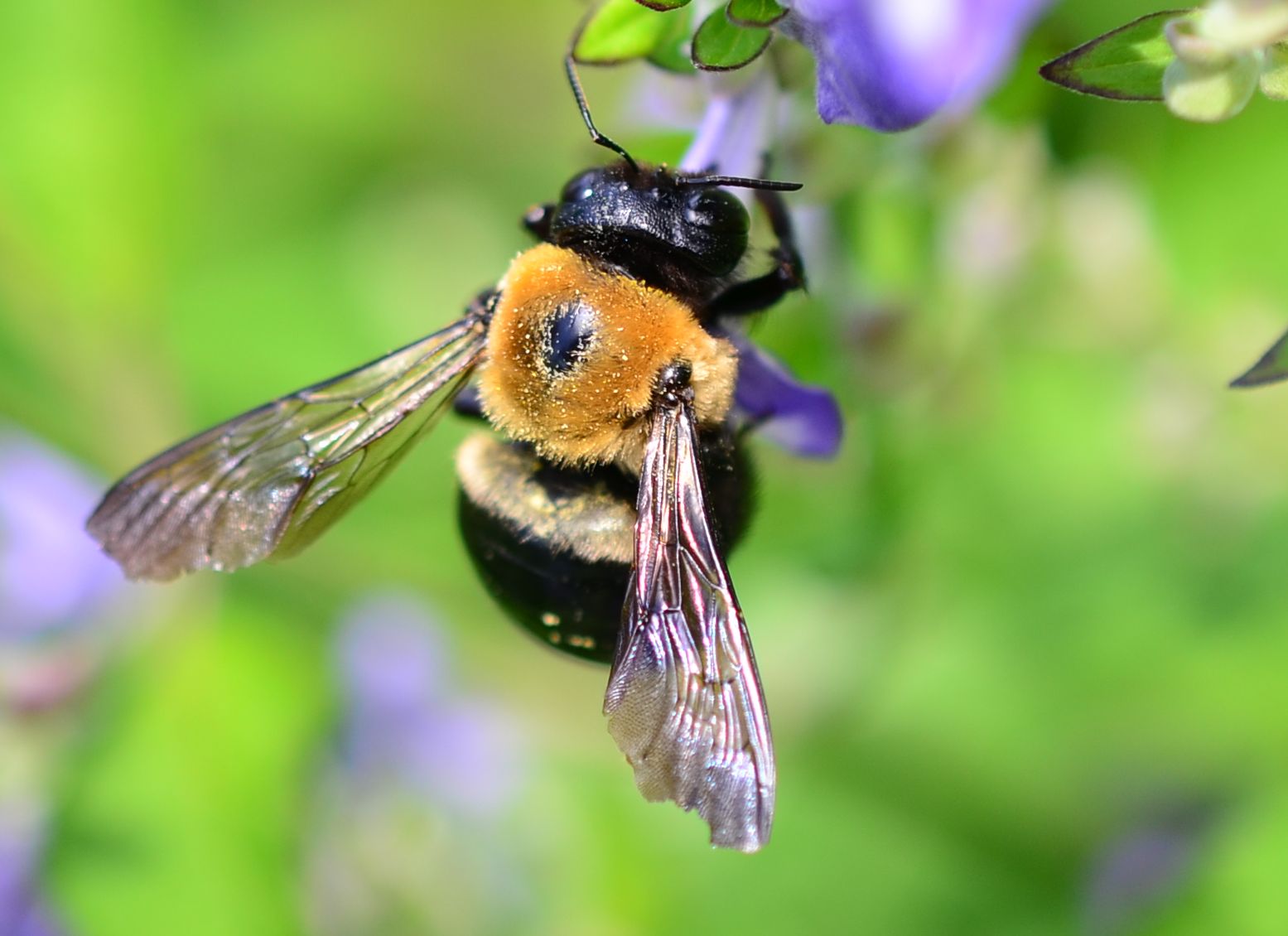
Pesticides Can Block Colony Formation In Bumblebees, Could Lead To Extinction: Study

(Natural Blaze By Jason Erickson) Regular readers of Natural Blaze are probably well aware of the threat that neonics present to the ecosystem. For this reason, it is essential that we continue to focus on each new study that reinforces what the alternative media seems willing to cover, but the mainstream not so much.

The plight of the pollinator continues to be documented by studies linking neonicotinoid pesticides to a range of negative effects upon bees and their colonies. Neonics have been implicated in tens of millions of bees instantly dropping dead at a single honey farm after nearby spraying of GMO crops. One type of neonic has even been shown to negatively affect social behavior within the hive itself, causing bees to abandon their responsibilities with protective care and foraging.

The issue is exacerbated by major producers of these pesticides who have been implicated in false advertisingself-funded studies, and covering up their own negative test results, thus making it difficult for the public at large to become fully informed about the severity of what is taking place.

Related: The Difference Between Heirlooms, Hybrids, and GMOs

While an increasing number of countries, particularly in Europe, have become properly aware and have taken action against neonicotinoids, the U.S. stubbornly clings to their widespread use. This is happening even as the bumblebee has been put on the endangered species list in the U.S. for the first time.

A new study adds to a developing concern that aside from the aftereffects of neonics upon living bees, they are also fundamentally restricting breeding patterns and colony formation. Researchers are sounding the alarm that if protective measures are not taken, this logically could lead to a full extinction of the bumblebee.

Related: Understanding and Detoxifying Genetically Modified Foods

Many people remain unaware that neonicotinoids are a family of pesticides, each of which carries its own negative consequences. Thiamethoxam is one of them that is being scrutinized. Professor Nigel Raine from the University of Guelph has been instrumental in establishing that this particular neonic threatens breeding patterns. The first study, which we covered back in May, concluded that:

…neonicotinoid pesticides hinder wild queen bumblebee’s reproductive success.

Raine says if queens need to use energy to clear pesticides from their system instead of investing in eggs, there will be fewer fully developed eggs. “This will likely translate into slower egg-laying rates, which will then impede colony development and growth.”

In the newest study from Raine, et al., which appeared in Nature Ecology and Evolution, what was previously suspected is sadly being confirmed and fully quantified, with a minimum of 25% reduction of colony formation.

Bumblebees are less able to start colonies when exposed to a common neonicotinoid pesticide, according to a new University of Guelph study.

Prof. Nigel Raine has discovered that exposure to thiamethoxam reduces the chances of a bumblebee queen starting a new colony by more than a quarter.

“Bumblebee queens that were exposed to the neonicotinoid were 26 per cent less likely to lay eggs to start a colony,” said Raine, holder of the Rebanks Family Chair in Pollinator Conservation. “A reduction this big in the ability of queens to start new colonies significantly increases the chances that wild populations could go extinct.”

Source

Related: Permaculture Agriculture – The Transition to a Sustainable Future

One has to wonder how much more evidence needs to be acquired for regulatory agencies across the world to speed up efforts to eradicate these toxins from the ecosystem. We certainly look forward to the day when this becomes a topic that we no longer need to cover.

Jason Erickson writes for NaturalBlaze.com. This article (Pesticides Can Block Colony Formation in Bumblebees, Could Lead to Extinction: Study) may be republished in part or in full with author attribution and source link.

New ‘Monsanto Papers’ Add To Questions Of Regulatory Collusion, Scientific Mischief

(U.S. Right to Knowby Carey Gillam) Four months after the publication of a batch of internal Monsanto Co. documents stirred international controversy, a new trove of company records was released early Tuesday, providing fresh fuel for a heated global debate over whether or not the agricultural chemical giant suppressed information about the potential dangers of its Roundup herbicide and relied on U.S. regulators for help.

More than 75 documents, including intriguing text messages and discussions about payments to scientists, were posted for public viewing early Tuesday morning by attorneys who are suing Monsanto on behalf of people alleging Roundup caused them or their family members to become ill with non-Hodgkin lymphoma, a type of blood cancer. The attorneys posted the documents, which total more than 700 pages, on the websitefor the law firm Baum Hedlund Aristei Goldman, one of many firms representing thousands of plaintiffs who are pursuing claims against Monsanto. More than 100 of those lawsuits have been consolidated in multidistrict litigation in federal court in San Francisco, while other similar lawsuits are pending in state courts in Missouri, Delaware, Arizona and elsewhere. The documents, which were obtained through court-ordered discovery in the litigation, are also available as part of a long list of Roundup court case documents compiled by the consumer group I work for, U.S. Right to Know.

It was important to release the documents now because they not only pertain to the ongoing litigation, but also to larger issues of public health and safety, while shedding light on corporate influence over regulatory bodies, according to Baum Hedlund attorneys Brent Wisner and Pedram Esfandiary.

“This is a look behind the curtain,” said Wisner. “These show that Monsanto has deliberately been stopping studies that look bad for them, ghostwriting literature and engaging in a whole host of corporate malfeasance. They (Monsanto) have been telling everybody that these products are safe because regulators have said they are safe, but it turns out that Monsanto has been in bed with U.S. regulators while misleading European regulators.”

Esfandiary said public dissemination of the documents is important because regulatory agencies cannot properly protect public and environmental health without having accurate, comprehensive, and impartial scientific data, and the documents show that has not been the case with Monsanto’s Roundup herbicide and the active ingredient glyphosate.

Monsanto did not respond to a request for comment.

Several of the documents discuss a lack of robust testing of formulated Roundup products. In one email, Monsanto scientist Donna Farmer writes “you cannot say that Roundup is not a carcinogen … we have not done the necessary testing on the formulation to make that statement. The testing on the formulations are not anywhere near the level of the active ingredient.”

The release of the documents Tuesday came without the blessing of Judge Vince Chhabria, who is overseeing the multidistrict litigation moving its way through the U.S. District Court for the Northern District of California. In March, Chhabria did agree to unseal several other discovery documents – over Monsanto’s objections – and those documents prompted a wave of outrage for what they revealed: questionable research practices by Monsanto, cozy ties to a top official within the U.S. Environmental Protection Agency, and indications that Monsanto may have engaged in “ghostwriting,” of research studies that appeared to be independent of the company.

The revelations within those documents prompted an investigation by the EPA’s Office of Inspector General into possible Monsanto-EPA collusion, and roiled Europe where regulators now are trying to decide whether or not to reauthorize glyphosate, which is the most widely used herbicide in the world and is found in numerous products in addition to Roundup.

The lawyers said they are sending copies of the documents to European authorities, to the EPA’s OIG and to the California Office of Environmental Health Hazard Assessment (OEHHA), which has been sued by Monsanto for moving to list glyphosate as a known carcinogen

Monsanto has fought to keep most of the documents it turned over in discovery sealed, complaining to Judge Chhabria that in several court filings plaintiffs’ attorneys presented discovery materials out of context and tried to exploit the information to influence public opinion. Chhabria has both chided Monsanto for trying to improperly seal certain documents and warned plaintiffs’ attorneys against unfairly publicizing certain documents. It is unclear how Judge Chhabria will react, if at all, to the law firm’s release of these documents.

Baum Hedlund attorneys said they notified Monsanto on June 30 of their intent to unveil the 86 documents and gave Monsanto the legally required 30-day window to formally object. That period expired Monday, clearing the way for them to make the release early Tuesday, said Wisner.

Concerns about the safety of glyphosate and Roundup have been growing for years amid mounting research showing links to cancer or other diseases. But the lawsuits only began to accumulate after the International Agency for Research on Cancer (IARC) in 2015 classified glyphosate as a probable human carcinogen. The plaintiffs in the lawsuits allege that the combination of glyphosate with certain surfactants used in Monsanto-branded Roundup products is even more toxic than glyphosate alone, and Monsanto has sought to cover up that information.

Monsanto has publicly denied that there are cancer connections to glyphosate or Roundup and says 40 years of research and scrutiny by regulatory agencies around the world confirm its safety.

Monsanto has made billions of dollars a year for decades from its glyphosate-based herbicides, and they are the linchpin to billions of dollars more it makes each year from the genetically engineered glyphosate-tolerant crops it markets. The company is currently moving toward a planned merger with Bayer AG.

Recommended Reading:

Ben & Jerry’s Ice Cream Found With Active Ingredient From Roundup Weedkiller

(Natural Blaze) Not even Ben & Jerry’s ice cream is safe from Monsanto’s herbicide Roundup. Glyphosate, the main ingredient in Roundup, has been discovered in small amounts to be tainting Ben & Jerry’s ice cream.

The Organic Consumers Association announced Tuesday that it had found traces of glyphosate in 10 of 11 samples of Ben & Jerry’s ice cream, despite the company’s previous pledge in 2014 to not use GMO products for its ice cream.

The results originated from independent lab testing by Health Research Institute Laboratories of these flavors — Peanut Butter Cup, Peanut Butter Cookie, Vanilla (2 samples), Cherry Garcia, Phish Food, The Tonight Dough, Half Baked, Chocolate Fudge Brownie, Americone Dream and Chocolate Chip Cookie Dough. Cherry Garcia was the only flavor that tested negative for glyphosate out of the 11 samples.

The group also calls on natural and organic food stores to drop the Ben & Jerry’s brand unless the company commits to transitioning to organic.

OCA International Director Ronnie Cummins said:

Ben & Jerry’s falsely advertises its products as ‘natural’ and its brand as ‘sustainable’ and ‘socially responsible.’ Nothing could be further from the truth.

Ben & Jerry’s profits are built on the back of an industrial dairy system that poisons the environment and produces pesticide-contaminated food products. Ben & Jerry’s sales, driven in large part by its deceitful claims, damage the organic industry by cutting into the sales of authentic natural, grass-fed and organic producers.

Ben and Jerry’s global director of social mission responded Rob Michalak stating they were working to transition away from GMOs,” The New York Times reported.

“We’re working to transition away from G.M.O., as far away as we can get,” Rob Michalak, said. “But then these tests come along, and we need to better understand where the glyphosate they’re finding is coming from. Maybe it’s from something that’s not even in our supply chain, and so we’re missing it.”

In March of 2015 the International Agency for Research on Cancer, which is apart of the World Health Organization, classified glyphosate as a ‘Group 2A’ carcinogen stating it’s “probably carcinogenic to humans.” On July 7 of this year California’s Office of Environmental Health Hazard Assessment (OEHHA) added glyphosate to its Prop 65 list of chemicals known to cause cancer.

Related: Cure Cancer Naturally

Another organization, PAN, the Pesticide Action Network International, issued a 96-page report stating that glyphosate contaminates the Global Ecosystem. That same year the FDA suspended testing for glyphosate residues in food. Those foods, according to a subsequent report by Food Democracy Now! and the Detox Project, included many of America’s most popular foods including — cookies, crackers, popular cold cereals, and chips. The chemical was also found in several wines including organic wines, baby food and formulabreast milk and even tampons.

Related: Understanding and Detoxifying Genetically Modified Foods

In research published earlier this year in Scientific Reports, a journal from the publishers of Nature, scientist found that rats that consumed very low doses of glyphosate each day showed early signs of fatty liver disease within three months. This corroborates a previous study of rats fed glyphosate done in France in 2012 that was later retracted then republished.

The French scientists found that the rats fed on a diet containing the herbicide-tolerant GM maize, or given water containing a “safe level” of Roundup in drinking water and GM crops in the U.S., died sooner than rats fed just a standard diet.

In 2015, a French court found Monsanto responsible for poisoning a French farmer Paul François. Earlier this year, France completely banned the public use of pesticides.

It seems like Monsanto is finally being held responsible for its dangerous poison.

Read more from Aaron

This article (Ben & Jerry’s Ice Cream Found With Active Ingredient from Roundup Weedkiller) appeared first on Natural Blaze and can be shared with this message, bio and links intact. Image source

Aaron Kesel writes for Natural Blaze and Activist Post. He is an independent journalist and researcher you can also check out more of his work on Steemit.

5 Reasons You Should Never Eat Tilapia Again

Fish Feeding at the temple Thailand

(Natural Blaze) Eating tilapia can be toxic to your health and can cause all sorts of health problems.

Here are at least 5 reasons why you should probably avoid consuming the 4th most consumed fish in America according to the National Institute of Fisheries.

1.) Eating tilapia is worse than eating bacon (HIGH INFLAMMATORY LEVELS) according to nutritionists
You may be surprised, but some nutritionists believe that an average serving of tilapia has more fatty acid than bacon

The quantity of omega-6s in tilapia is higher than in a hamburger or bacon.

In 2008, researchers at the Wake Forest University School of Medicine released a study comparing fatty acid levels among popular farm fish. The researchers found that tilapia contained far less omega-3 fatty acid than other fish, such as salmon and mackerel.

The report stated that the “inflammatory potential of hamburger (80 percent lean) and pork bacon is lower than the average serving of farmed tilapia (100 g).” In theory, scientists believe this may contribute to heart disease, cancer, and other chronic health problems.

Related: What Causes Chronic Inflammation, and How To Stop It For Good

2.) Tilapia are fed a diet of feces

A 2009 study conducted by the Economic Research Service of the U.S. Department of Agriculture stated Chinese farm-raised fish are fed poultry and livestock feces.

“It is common practice to let livestock and poultry roam freely in fields and to spread livestock and poultry waste on fields or use it as fish feed,” the report said.

Researchers noted that “many of China’s farms and food processors are situated in heavily industrialized regions where water, air, and soil are contaminated by industrial effluents and vehicle exhaust.”

So how much tilapia in the U.S. actually comes from China?

You would be shocked to know the answer. According to Monterey Bay Aquarium Seafood Watch, over 95 percent of tilapia consumed in the U.S. came from overseas with a whopping 70% from China.

3) Tilapia Could Cause Alzheimer’s and Cancer

Tilapia can carry up to 10 times the amount of carcinogens as other farm raised fish. This is because of the “food” the farmers typically feed the fish is — feces, pesticides, and industrial-grade chemicals.

Additionally, the fish may contain high levels of arachidonic acid, which, in excess, has been linked to conditions like Alzheimer’s.

Related: How to Improve Brain Health and Reduce the Risk of Alzheimer’s

4) Antibiotics are used to modify the fish to grow faster

Tilapia are fed antibiotics, malachite green and methyl testosterone hormones to keep the population safe and to grow them faster. The chemical dye malachite green is banned for food use since 1983 because it is a suspected carcinogen.

In 2007, the FDA halted imports of farmed fish from China after finding antimicrobials — nitrofuran, malachite green, gentian violet, and fluoroquinolone.

Nitrofuran, malachite green and gentian violet are chemicals that are known to treat fungal infection and have been shown to be carcinogenic with long-term exposure, while fluoroquinolones are used to increase antibiotic resistance.

Related: How to Detoxify From Antibiotics and Other Chemical Antimicrobials

5) Tilapia contains the harmful chemical dioxin

Researchers have found that dioxin, which is linked to the development and progression of cancer is found within Tilapia due to the food farmers feed it. However, that doesn’t mean that Tilapia as a whole all contains contaminants it all depends on where it was raised and harvested over all.

So what are your alternatives to tilapia?

It is always best to eat wild-caught fish. If you choose to buy farmed fish, then you should look for fish that are free of hormones, antibiotics, pesticides, and are certified by the Marine Stewardship Council.

Even so, the best solution is to avoid tilapia altogether. I wouldn’t want to eat feces or antibiotics, would you?

First Urban ‘Agrihood’ In America Feeds 2,000 Households For Free

(True Activist) The agrihood is located in Detroit, Michigan, and feeds thousands of families in the area. Children and adults can learn about sustainable agriculture when they take part in the food forest’s development.

Have you ever contemplated the fact that humans are the only species on Earth that pays to live on the planet? This continues, despite the fact that there is presently more than enough resources to care for every citizen.

As a matter of fact, enough food is produced around the world to feed 10 billion people. However, because 70% of the mono crops which are grown are  feed livestock intended for slaughter, a distribution problem exists. In effect, 795 million people go to bed hungry each evening.

Solving the conundrum of world hunger has been many peoples’ dream. Hopefully, it will be remedied within the next century or two. Perhaps one of the ways inspired activists will make this ambition a reality is to install more community gardens which can offer nutrient-dense food to local civilians for free!

If it sounds too good to be true, look no further than what has developed in Michigan. Inhabitat reports that in the city of Detroit – which is recognized as a location where many families are affected by economic imbalance, America’s first urban ‘Agrihood’ exists and it feeds approximately 2,000 households.

The Michigan Urban Farming Initiative (MUFI) is responsible for implementing the three-acre project. Two acres of the land is devoted to growing crops, such as fruits and vegetables, and the remaining one acre allows for a fruit orchard with 200 trees. Additionally, a sensory garden has been constructed for kids to experience and learn more about sustainable agriculture.

MUFI explains its project as an alternative neighborhood growth model which centers around urban agriculture. Co-founder and president of the non-profit, Tyson Gersh, explained in a statement:

“Over the last four years, we’ve grown from an urban garden that provides fresh produce for our residents to a diverse, agricultural campus that has helped sustain the neighborhood, attracted new residents and area investment.”

Volunteers are essential for MUFI to flourish. Reportedly, plans are in the works to construct a 3,200 square-foot Community Resource Center at the agrihood. The building will serve as a colorful headquarters and education center. Nearby, a health food cafe will also be built, and it will likely utilize crops grown in the urban food forest.

Every individual and family deserve to have abundant access to nutrient-dense, life-saving foods. Please like, comment on, and share this article if you think more cities need similar initiatives.