Diatomaceous Earth – Mother Nature’s Secret Weapon: What Is It, How to Use It, Where to Find It

Diatomaceous earth (DE) is a powerful, inexpensive solution to most of your health issues. It’s probably the simplest and most straightforward health product out there on the market. It can be used as a beauty product, an internal cleanser, or a deep revitalizer for the whole human body.

(Organic Lifestyle Magazine by Claude Borel) There it is—a bit of diatomaceous earth resting at the bottom of my water glass. It might not taste delicious, but its ability to cleanse my body and fill it with sought-after nutrients more than makes up for it.

Where Does DE Come From?

Diatomaceous earth is the waste product of unicellular algae. Over a 30 million year period, it has taken the form of white sedimentary rock that is typically harvested from the bottom of oceans, lakes, and rivers around the globe. After it is harvested and dried, DE is a fine, white dust.

In 1836-1837, Peter Kasten was the first to discover DE while drilling a well in Hausselberg Hill, which is located in Luneburg Heath, Germany. Until the first world war, most of the worldwide production of diatomaceous earth was from this region.

de-diatomaceous-earth-food-gradeThere are a few deposits here in the United-States. In Colorado and in Clark County, Nevada, there are deposits that are up to several hundred meters thick in places.

  • Marine deposits have been worked in the Sisquoc Formation in Santa Barbara County, California near Lompoc and along the Southern California coast.
  • Additional marine deposits have been worked in Maryland,Virginia, Algeria and the MoClay of Denmark.
  • Freshwater lake deposits occur in Nevada,Oregon, Washington, and California.
  • Lake deposits also occur in interglacial lakes in the eastern United States

arranged-polished-diatoms

What Has Diatomaceous Earth Historically Been Used For?

Throughout its history, DE has been used in chemistry labs for various experiments and procedures when filtering very fine particles. Diatomaceous earth is also used in the filtering processes for drinking water. Fish tanks, swimming pools, beer, wine, sugar, syrups, and honey are all filtered in a medium containing DE.

diatomaceous-earth-diatoms-under-a-microscopeThe agriculture field has greatly benefited  from this product, as it has been used as an insecticide and pesticide, and it has been used as a soil additive for growing potted plants. It serves as an anti-caking agent in grain storage and livestock feeds and has been used for its mild abrasive qualities in products like toothpaste, metal polishes, and facial scrubs.

What Is Diatomaceous Earth Predominantly Used for and Known for at the Present Time?

The usefulness of diatomaceous earth ranges from an internal one (as a natural medicine or supplement), to a solution you can apply in-and-around the house in order to protect yourself from unwanted vermin. DE, amazingly, can also be made into a beauty product with its special and unique properties highly effective against “aesthetic defects” which tend to appear as Father Time catches up with all of us. Here’s a quick list to showcase its numerous benefits:

  • Help the body function and regenerate itself properly
  • Detox the body and kill parasites
  • Have an attractive and improved physical appearance
  • Kill bugs, ants, fleas, and the like
Related: How to Kill Fungal Infections

#1: To Help the Body Function and Regenerate Itself Properly

DE is very rich in silica (85% of it), a trace mineral vital for bone health, artery health, and almost all vital organs like the liver. We used to be able to get our silica from nutrient-rich foods. Unfortunately, traditional farming methods have depleted the soil and the possibility of filling our needs through traditional I-eat-and-my-body’s-needs-will-be-met has become a somewhat utopian thing of the past. That’s why this white rock has become so fascinating to so many people. Silicon, calcium, sodium, magnesium, and iron are only a few of the trace-minerals that you’ll find in the white powder, all of which promote bone and muscle growth. People fighting high cholesterol will be satisfied, too, as it’s known to have a regulating effect on cholesterol levels.

#2: To Detox the Body and Kill Parasites

Within a few months of taking diatomaceous earth most will rid the body of  all parasites and most toxic metals as well.

#3: To Have an Attractive and Improved Physical Appearance

Another interesting facet of diatomaceous earth is that it can be used as a fascial mask and exfoliant.

As a matter of fact, when it comes to the skin, it can be used anywhere, and your skin will thank you for it. But it’s not just the skin that can benefit from diatomaceous earth. It’s also your teeth, your hair, your fingernails: all of which will become stronger and healthier over time.

Related: Heal Gum Disease and Cavities Naturally – Step by Step

#4: To Kill Bugs

The benefits of DE truly seem endless at times, and then again there’s still much more to cover. DE is useful against any type of insect infestation you might have in your house. Bugs adapt to conventional pesticides and become immune to their killing agents.  DE works by mechanical action, disrupting their waxy shell, making them more prone to eventual death by dehydration.

DE will also purify any room it has been applied in by detoxifying the ambient air.

Diatomaceous Earth Is Not Profitable to Pharmaceutical Companies

If this product is so great, why haven’t you heard about it before?

The reason most people remain unaware of this earth’s blessing is because of money. It’s as simple as that. Big business and influential pharmaceutical companies, can only profit from a product if they possess the exclusive rights to its merchandising. That certainly won’t happen with diatomaceous earth since the product comes directly from the earth’s soil.

As a result, DE is one of the hundreds of natural alternatives that get overlooked by doctors and pharmaceutical enterprises. People know about it because their friend, their relative, or someone they trust recommended it to them. If something is genuinely helpful to people, it will eventually make itself  known.

Filter grade DE is great for filtering, but should under no circumstances be ingested or inhaled as it’s very dangerous for your health.
Related: Herbs and a Protocol that Eliminates Parasites from the Body

The Difference between Diatomaceous Earth and Any Other Alternative

What makes DE truly stand out though for its aficionados, and therefore makes it an essential addition to any person’s health cabinet, is its “silica-argument.”

Silica is the most important trace-element in human health.” – Dr. Barbara Hendel.

Life cannot exist without silica. Food grade DE is approximately 80-85% silica. When you take into account that most people are silica-deficient, although still holding over 7 grams of the mineral in their bodies (more than any other trace-element, even iron), you begin to understand its importance a bit better.

Issues/Illnesses Where Diatomaceous Earth Has Been Shown to Be Helpful

  • Osteoporosis: As silica helps with the absorption of calcium, taking a silica supplement along with a calcium supplement can effectively offset chronic illnesses like osteoporosis, which are due to chronically depleted calcium stores.
  • Detoxifying the body
  • Losing weight
  • Revitalizing the skin
  • Promoting hair growth
  • As a cough decreasing agent
  • Fighting kidney stones and healing infections of the urinary tract
  • Reducing inflammation in the intestines and stomach
  • Protecting vital lung tissue from pollution and restoring its elasticity
  • Normalizing hemorrhoidal tissue
  • Preventing side-effects of menopause like stress
  • Killing bacteria and parasites

Such a powerful force of action begs the question: how can a product do so much without it hurting the organism?

Related: Holistic Guide to Healing the Endocrine System and Balancing Our Hormones

Diatomaceous Earth Is Completely Safe

For example, DE makes your body bug-free, not with a chemical but by physical action. The hundreds of particles that attack the insect are so small, so microscopic, they cause no harm whatsoever to people or pets. So it’s completely safe to ingest orally, as long as it’s food grade!

Calcined vs. Non-Calcined/Amorphous vs. Crystalline/Food Grade vs. Non-food Grade

Filter grade DE is great for (like the name says it) filtering, but should under no circumstances be ingested or inhaled as it’s very dangerous for your health. This version of the white powder starts by being food grade DE with at about 85% amorphous silica, but then it’s heated to about 1000 degrees. The purpose of this is to make the exoskeletons of the diatoms much harder, which makes for improved filtering properties. The process causes the amorphous silica in DE to turn in to crystalline silica. It’s now called “calcined” diatomaceous earth and is 60% crystalline. The world health organization says DE needs to be less than 2% crystalline silica in order for it to be safe. You don’t want to ingest or inhale this form of DE (though it’s not good to inhale any DE). Also, in order to be considered food grade, the diatomaceous earth (food grade) has to have arsenic levels below 10mg/kg and lead levels below 10mg/kg.

What If I’m Taking Medication?

Reports have been extremely positive with or without medication. DE doesn’t seem to interact at all with pharmaceutical drugs, maybe in part because DE essentially operates through mechanical action only (by tabbing and mangling the little buggers).

Apparently, though, some people experience a rise in energy after taking the powder, a side-effect which has no major consequence, but it might interfere with a goodnight’s sleep. It is advised not to consume any diatomite before going to bed precisely for this reason.

Related: How to Detoxify From Chemotherapy and Repair the Body

So How to Use Diatomaceous Earth (Food Grade)

#1: Internal Use

  1. First week: 1 teaspoon of DE in a glass of water or favorite juice, first thing in the morning (the body needs time to get used to it).
  2. Week 2, 3, and 4: 1 tablespoon of DE in a glass of water, again, first thing in the morning.

The following is only if you wish to do a full detox or have a parasitic infection 

  1. For the next 3 months, take 2-3 tablespoons of DE every single day.
  2. Stop taking it for one whole month. In other words, you don’t take anything on the fourth month.
  3. Start again with 2-3 tablespoons per day for the next 3 months.

Note: drink a lot of water to help flush out toxic metals and dead parasites out of your system.

#2: External Use

Step 1: Mix diatomaceous earth and some water in a bowl (roughly 1 part DE to 3 parts water).

Step 2: Choose whether you prefer a mask or a facial scrub. If you want a mask, just add more of DE to the mixture. If you want a scrub, just add more water to dilute the solution even more.

Step 3: Whatever you have decided, spread the mixture across your forehead, your nose, your chin, and your cheeks.

Step 4: Leave it on your face for 2-5 minutes, allowing it to dry.

Step 5: Finally, thoroughly wash your face with some water and a wash cloth. And that’s it, my friend. You should be good to go now—your skin, delicately exfoliated by the sweet action of diatomaceous earth.

How to Use Crawling Insect Control Diatomaceous Earth

Crawling Insect Control is a good way to control ants, bedbugs, box elder bugs, carpet beetles, centipedes, crickets, cockroaches, earwigs, fleas, grasshoppers, millipedes, slugs, and silverfish (Never ingest it orally).

You’ll need a hand-duster, power-duster, or other similar means for application.

  • Indoor use: Lightly coat a thin layer of Crawling Insect Control in cracks and crevices; behind and beneath refrigerators, cabinets, stoves, garbage cans; in and around sewer pipes and drains, and window frames; and in attics and basements.
  • Outdoor use: Place in areas around patios, outdoor sills, window and door frames.

https://www.youtube.com/watch?v=7EESQG9b-yc&list=PLWRMcGAPG97SRpvHA33BSRB0GHk6YuYsn

Products:
Related Reading:
Sources:

Microplastics On Beaches Now Recorded At Insane Levels

(Natural Blaze By Jason Erickson) More attention is finally being given to determining the ill effects that microplastics (microbeads) are having on human health and the environment. Previous concerns have been raised in everything from toothpaste to beer to the wider ecosystem where it was found to threaten juvenile fish that were becoming addicted to them.

Perhaps even worse is that “an investigation by Orb Media revealed that microplastics were present in 83 percent of drinking water samples. The study encompassed more than a dozen countries, including the U.S., the U.K., France, Germany, Lebanon, Indonesia, Equator, and India.” (Source)

Related: How to Detoxify and Heal the Lymphatic System

Recommended: Start Eating Like That and Start Eating Like This – Your Guide to Homeostasis Through Diet

In a startling case of “the more you seek, the more you find,” a new study orchestrated by a bachelor student and her supervisor from the Leiden University, the Netherlands, along with help from citizen investigators, began collecting samples of European beach sand. It turns out that plastic particles abound in outlandish concentrations right under our feet as we walk among apparently clean and beautiful sand:

They found that every kilogram of sand on European beaches contained on average 250 fragments of microplastic. In some locations the number can be even higher, a spot in Iceland had 700 microplastics per kilogram, in Italy it was as high as 1,500 per kilogram. Bosker has already found relatively high levels in the Netherlands, with 500 fragments per kilo on the beach near to The Hague.

While their findings varied, they found microplastics in every sample taken from 23 locations in 13 European countries.

‘If you fill an espresso cup with sand, it will contain easily twentyfive pieces of plastic, with the number of fragments changing according to the location.’

The researchers have taken steps to standardize their collection process so that even more help can be solicited from the public. In subsequent studies they will be looking at other regions of the world, as well as determining the true nature of the impact that living among pervasive plastic might have on human health and the environment.

Related: Microplastics in Sea Salt – A Growing Concern

You can visit the University website and contact Professor Thijs Bosker if you’d like to inquire about how you can help contribute to this important scientific investigation.

Source: “Plastic Between Your Toes”

Jason Erickson writes for NaturalBlaze.com. This article (Microplastics on European Beaches Recorded at Insane Levels) may be republished in part or in full with author attribution and source link.

Wildfire Smoke and Health: 5 Questions Answered

(The Conversation) Editor’s note: The federal government has declared a public health emergency in Northern California due to wildfires burning across 10 counties. One major threat is smoke, which is causing unhealthy air levels across a wide area, including San Francisco. Atmospheric chemist Richard Peltier explains why smoke from wildfires is hazardous and what kinds of protection are effective.

What substances in wildfire smoke are most dangerous to human health? What kinds of impacts can they have?

Wood smoke contains a mixture of microscopic droplets and particles and invisible gases that spread downwind from the fire source. Surprisingly, relatively few studies have investigated the types of exposures we are now seeing in California. Most studies focus on very controlled laboratory experiments, or forest firefighters who are working on controlled burning, or exposures people in developing nations experience when they use primitive cookstoves. None of these accurately reflects conditions that Californians are experiencing now.

Wood smoke is a very complicated mixture of material in the air, and much of it is known to affect human health. It comes from lots of different fuel sources, including mature trees, dried leaves, forest litter and, unfortunately, local homes. The emissions vary depending on what material is burning and whether it is smoldering or in flames.

For the most part, wildfire smoke is a mixture of carbon monoxide, volatile organic carbon and particles that include alkaline ash, black carbon and organic carbon, which usually contains polyaromatic hydrocarbon, a known cancer-causing agent.

Recommended Reading: Cure Cancer Naturally

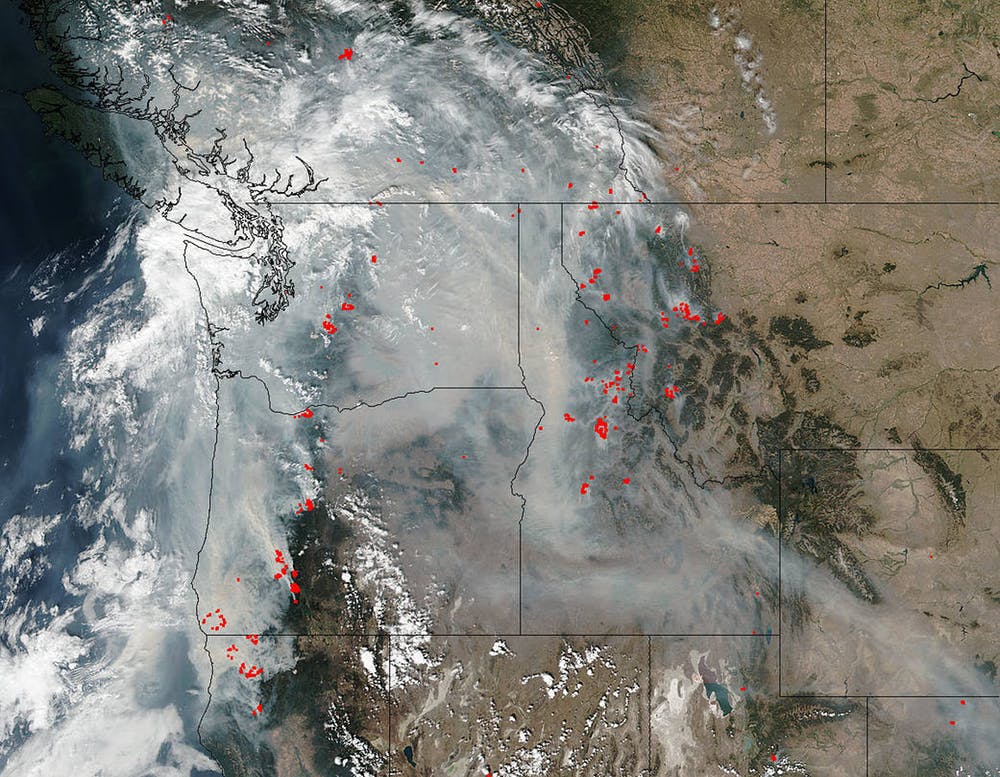
Smoke from wildfires in Northern California, Oregon, Washington, Idaho and Montana blankets much of the Pacific Northwest on Sept. 5, 2017. NASA

Is a brief exposure, say for a few hours, dangerous, or is smoke mainly a concern if it lingers for days? How does distance from the fire affect risk?

We don’t fully know how the size and length of the dose affect risks, but the longer you are exposed to pollutants from wood smoke, the higher the risk of developing smoke-related illnesses. Short-term exposures to intense smoke can lead to lung and cardiovascular problems in some people, especially if they are already susceptible to these diseases. Longer-term exposure over a few days or weeks increases the risk and the chance of health impacts as your cumulative dose increases.

Smoke tends to become more diluted with distance from the source, but there really isn’t any way to estimate a safe distance where the pollutants are so diluted that they pose no risk. Eventually rainfall will clean all of this pollution from the atmosphere, but that can take days or even weeks. In the meantime, these pollutants can travel thousands of miles. That means air pollution from wildfires may threaten people who are far downwind.

Image of a plume of high-altitude smoke from a forest fire near Alaska, observed in northern Quebec, Canada, more than 2,000 miles away. Richard PeltierCC BY-ND

How do the worst pollution levels from the wildfires in California compare to bad air days in a megacity like Beijing or Mumbai?

The concentrations of pollution in communities downwind of these fires are on par with what we see in rapidly growing cities such as Mumbai and Beijing. But there is an important difference. In California these pollutants affect a relatively small geographic area, and the affected areas can rapidly shift with changing weather patterns. In locations like Mumbai and Beijing, high concentrations are sustained across the entire region for days or even weeks. Everyone in the community has to endure them, and there is no practical escape. For now, though, Californians are experiencing what it’s like to live in a developing country without strong air pollution controls.

How should people in smoky areas protect themselves? Are there remedies they should avoid?

The most effective way to protect yourself is by staying with friends or family who live far away from the smoke. People who can’t leave the area should close windows and doors, and apply weather sealing if they detect smoke leaking in. Even masking tape can be reasonably effective. But most houses leak outside air indoors, so this strategy isn’t foolproof.

Recommended Reading: How Himalayan Salt Lamps Work

Portable high-efficiency filter devices – often marketed as HEPA – can remove indoor air pollution, but often are too small to be effective for an entire house. They are best used in individual rooms where people spend a great deal of time, such as a bedroom. And they can be very expensive.

N95 mask. Max-Leonhard von SchaperCC BY

Products marketed as air fresheners that use odorants, such as scented candles or oil vaporizers that plug into an outlet, do nothing to improve air quality. They can actually make it worse. Similarly, products that “clean” the air using ozone can release ozone into your home, which is very hazardous.

Personal face mask respirators can also be effective, but not the cheap paper or cloth masks that many people in developing countries commonly use. The best choice is an N95-certified respirator, which is designed to protect workers from hazardous exposures on the job.

These masks are made of special fabric that is designed to catch particles before they can be inhaled. Paper masks are meant to protect you from contact with large droplets from someone who might be ill. N95 respirators block particles from entering your mouth and nose. They can be a little uncomfortable to wear, especially for long periods, but are pretty effective, and many retailers sell them.

What else do scientists want to know about wildfire smoke?

We have a pretty good understanding of the pollutants that wildfires emit and how they change over time, but we don’t have a firm grasp of how different health effects arise, who is most susceptible or what the long-term effects may be. It is not easy to predict where and when wildfires will occur, which makes it hard for scientists to evaluate individuals who have been exposed to smoke. Controlled laboratory studies give us some clues about what happens in the human body, but these exposures often are quite different from what happens in the real world.

The California fires are affecting thousands of people, and it is good to see that firefighters are starting to contain them. But there will be more wildfires, so we need to learn more about how smoke exposure affects people long after the fires end.

Federal Officials Alerting Consumers About Dangerous Mattress Chemicals

OLYMPUS DIGITAL CAMERA

(Dr. Mercola) In 2015, Earthjustice and Consumer Federation of America, on behalf of a group of more than 20 firefighter, health, science and consumer groups, including the American Academy of Pediatrics, the National Hispanic Medical Association and the International Association of Fire Fighters, asked the U.S. Consumer Product Safety Commission (CPSC) to ban organohalogen flame retardants (OFRs), which have been linked to reduced IQ, cancer, hormone disruption and reproductive system damage.1

The petition called for sales of four categories of consumer products — children’s products, furniture, mattresses and electronic casings — to be prohibited if they contain the chemicals, and in a major victory for environmental and public health, in September 2017 CPSC voted to grant the petition to remove the toxic chemicals from the product categories mentioned.

Organohalogen Flame Retardants May Leave a Toxic Legacy Similar to PCBs

At a public hearing held prior to the vote, Genna Reed, science and policy analyst at the Center for Science and Democracy at the Union of Concerned Scientists, testified that OFRs should be urgently banned, comparing their use to the “earliest form of flame retardants, polychlorinated biphenyls (PCBs),” which are also organohalogens, along with DDT.

PCBs, which have been linked to cancer, reproductive problems and impaired fetal brain development, accumulate in the environment, leaving a lasting toxic legacy that, unfortunately, may be very similar to that left by flame retardants, even after they’re banned. Reed testified:2

“Despite being banned in 1977, these chemicals [PCBs] are still found in dangerously high amounts all over industrial hotspots of the country, and continue to bioaccumulate in a range of species. The ban of PCBs happened decades ago and we are still managing the damaging impacts of the chemical’s prevalence across the country.

The next generation of these chemicals, organohalogen flame retardants, are inside of our own homes in a range of products, thanks largely in part to the disinformation campaign sowed by special interests. The fact remains that the science does not support their continued use.”

Related: What’s Ailing You? Could it be Your Mattress?

The U.S. Environmental Protection Agency (EPA) is also evaluating OFRs, but it could be 10 years or more before they make a decision to ban or restrict their use.3 Part of what makes OFRs so toxic is their semivolatile nature, which allows them to migrate from consumer products into household dust, where every household member, from children to pets, is easily exposed.

In a U.S. study conducted by the Environmental Working Group (EWG), flame retardants were detected in every sample of household dust they tested, at concerning levels.

“The average level of brominated fire retardants measured in dust from nine homes was more than 4,600 parts per billion (ppb) … [while] a tenth sample contained more than 41,000 ppb of the chemicals — twice as high as the maximum level previously reported by any dust study worldwide,” EWG reported.4 As Reed noted, OFRs easily meet the definition of “toxic” under the Federal Hazardous Substances Act (FHSA) because ample evidence shows they have the “capacity to cause personal illness.”

“[E]xposure has been associated with a range of health impacts including reproductive impairment, neurological impacts, endocrine disruption, genotoxicity, cancer and immune disorders,” she said at the public hearing, adding that, “perhaps most egregiously, biomonitoring data have revealed that communities of color and low-income communities are disproportionately exposed to and bear high levels of flame retardant chemicals, adding to the cumulative chemical burden that these communities are already experiencing.”5

American Chemistry Council Deceived the Public About Flame Retardants’ Toxicity, Effectiveness

In 2012, the Chicago Tribune published a revealing investigation, “Playing With Fire,” showing how the chemical industry used tobacco-industry tactics to deceive Americans into accepting flame-retardant chemicals into their homes. In fact, Big Tobacco was involved in their pervasive spread because when the chemicals were developed in the 1970s, nearly half of Americans smoked and cigarettes were a common cause of fires.

Related: Charges Brought upon Doctor and Advocate for Toxic Flame Retardant Chemicals

As revealed in Toxic Hot Seat, a documentary based on the Tribune’s investigation, rather than create self-extinguishing cigarettes to cut down on fire hazards, the tobacco industry created a front group called the National Association of State Fire Marshals, which pushed for federal standards for fire-retardant furniture.

It worked, and in 1975 California Technical Bulletin 117 (TB117) was passed, which required furniture sold in California to withstand a 12-second exposure to a small flame without igniting — and it basically became a national standard.

The chemical industry then engaged in a deceitful battle to ensure the chemicals stayed front-and-center in Americans’ homes, from establishing phony front groups to funding biased research to meet their agenda, despite evidence showing the chemicals limited effectiveness and health risks. Reed testified in September 2017:6

“The companies that manufacture OFRs have put significant time and money into distorting the scientific truth about these chemicals. As a 2012 Chicago Tribune investigative series noted, the chemical industry ‘has twisted research results, ignored findings that run counter to its aims and passed off biased, industry-funded reports as rigorous science.’

In one case, manufacturers of flame retardants repeatedly pointed to a decades-old government study, arguing the results showed a 15-fold increase in time to escape fires when flame retardants were present.

The lead author of the study, however, said industry officials ‘grossly distorted’ the results and that ‘industry has used this study in ways that are improper and untruthful,’ as the amount of flame retardant used in the tests was much greater than would be found in most consumer items.

The American Chemistry Council has further misrepresented the science behind flame retardants by creating an entire website to spread misleading ideas about flame retardants as safe and effective, even though research has consistently shown their limited effectiveness. In doing so, the American Chemistry Council and its member companies have promoted the prevalent use of OFRs at the expense of public health.”

Related: Naturally Relieve a Dust Mite Allergy Without Medication

The chemical industry also engaged in a tactic known as “regrettable substitution,” in which they removed certain flame retardants from products only to replace them with similar, less regulated chemicals that pose many of the same health risks.7

On a positive note, California revised TB117 so that an open flame test is no longer required. As of January 1, 2015, compliance with the updated TB117-2013 became mandatory, which requires upholstered furniture sold in the state to no longer smolder 45 minutes after a lit cigarette is placed on it. This requirement can be met without the use of flame-retardant chemicals (although the law does not ban their use).

Maine Passes Law to Phase Out Flame Retardants in Furniture

It seems the die may have been cast when it comes to the future of flame retardants in the U.S., with both the CPSC’s recent stance against them as well as an August 2017 vote in Maine, in which lawmakers passed a law to phase out all flame retardant chemicals in home furniture—overriding a veto from the governor to do so. While existing inventories of furniture will be allowed to be sold, this ends after January 1, 2019 — the date which furniture containing flame retardants may no longer be sold in the state of Maine.

As for the CPSC vote, it’s encouraging that the agency finally took a stand against toxic flame retardants. As EWG said, “The CPSC’s decision is the most sweeping action to date by the federal government to reduce Americans’ exposure to these chemicals,” although “[r]emoving these chemicals from products will not happen overnight, as the commission will appoint an expert panel of toxicologists to guide the agency on rulemaking.”8

In Washington, meanwhile, the Toxic-Free Kids and Families Act, which bans five flame retardants and gives the state Department of Health the ability to ban additional flame retardants in children’s products and residential furniture, took effect in July 2017. It includes the first ban on tetrabromobisphenol A (TBBPA), which is a flame retardant often found in children’s car seats.9

Related: Insomnia – A Comprehensive Look with Natural Remedies

New TVs Loaded With Flame Retardants

While CPSC has begun the conversation to ultimately ban the use of OFRs in children’s products, mattresses, furniture and electronic casings, research released by Toxic-Free Future revealed that high levels of the chemicals are still being added to new products, namely televisions. Eleven of the 12 TVs tested contained flame retardant chemicals at levels up to 33 percent by weight in the plastic.10 Eight of them also contained flame retardants of “high concern.”

Toxic-Free Future reported, “Two of the TVs — one made by Element and one made by Samsung — contained the PBDE flame retardant deca-BDE, despite its being banned in five states. Those states are Washington, Maine, Oregon, Vermont, and Maryland. The TVs in the study were purchased in Washington. Only one TV, made by Insignia, did not contain any of the flame retardants tested for.”11

It’s a concerning finding because it means the chemicals will continue to contaminate household dust and bioaccumulate in the environment and people’s bodies for many years to come. While CPSC has urged manufacturers to stop using the chemicals, they’re likely not going to give in without a fight.

Protect Yourself and Your Children From Flame Retardant Chemicals

If you have older furniture in your home but aren’t ready to replace it, consider replacing the foam cushions with flame-retardant-free foam. If you’re not sure whether your furniture’s foam contains these chemicals, Duke University scientists will test it for you. All you need to remove is a sample the size of a marble and it will be tested for the presence of seven common flame retardants.

Related: Sleep More, Sleep Better

The research lab only has the capacity to analyze 50 samples per month, and they close submissions once the quota is reached. Before sending in your sample, check with the Duke University Superfund Submit a Sample website to see if they’re still accepting submissions (for best results, check in on the first of the month). In addition, there are steps you can take to reduce your exposure, including these tips from the Green Science Policy Institute:12

  • Avoid upholstered furniture with the TB117 label. If the label states, “This article meets the flammability requirements of California Bureau of Home Furnishings Technical Bulletin 117 … ” it most likely contains flame retardants. However, even upholstered furniture that’s unlabeled may contain flame retardants.
  • Furniture products filled with cotton, wool or polyester tend to be safer than chemical-treated foam; some products also state that they are “flame-retardant free.” Organic wool (100 percent) is naturally flame-resistant.
  • Avoid baby products with foam. Nursing pillows, high chairs, strollers and other products containing polyurethane foam most likely contain flame retardants.
  • Avoid foam carpet padding. If possible, minimize the use of foam carpet padding, which often contains flame retardants. If removing carpeting, take precautions to avoid exposures. You’ll want to isolate your work area from the rest of your house to avoid spreading it around and use a HEPA filter vacuum to clean up.
  • PBDEs are often found in household dust, so clean up with a HEPA-filter vacuum and/or a wet mop often. Washing your hands regularly can also help.

As far as mattresses go, if you want to avoid flame retardants and other chemicals in your mattress, you can have a licensed health care provider write you a prescription for a chemical-free mattress, which can then be ordered without flame retardants from certain retailers. You can also find certain natural mattresses on the market that don’t contain them. For instance, most wool mattresses do not have flame retardant chemicals added because wool is a natural flame retardant.

Related: Why Your Couch Is Killing You

Another option is to look for an organic mattress that meets the Global Organic Textile Standard (GOTS), which means at least 95 percent of the mattress materials must be certified organic and certain substances, including flame retardants and polyurethane (common in memory foam products), are prohibited.

Since you spend from six to nine-plus hours every night with your face in close proximity to your mattress, breathing in these chemicals, choosing a flame-retardant-free mattress is an excellent first step toward reducing your exposure.

Related Products:
Related Reading:

How to Grow Dandelion Greens

(Dr. Mercola) Dandelion greens are nutritious, delicious and versatile. They can be added to salads, soups and stews or sautéed and served as a side dish. What you may have only thought of as a pesky weed in your yard is actually a flowering herb with significant health benefits.

The dandelion plant belongs to the largest plant family — the Asteraceae or sunflower family — which includes more than 22,000 species, such as daisies and thistles. The dandelion alone has more than 100 different species, all of which are beneficial to your health.1 In fact, every part of the dandelion can be used, from the roots to the leaves and flowers.

You probably know how difficult they are to eradicate from your yard. When you mow them each week, the plant accommodates and grows a shorter stalk.2 Dandelions have become masters of survival, which is likely what makes them such successful weeds. However, while you may not want them growing in your yard, there are benefits to growing your own patch of dandelions and harvesting the greens for your table.

History of the Dandelion Herb

The dandelion has been embraced across cultures and centuries, but has now been branded suburban enemy No 1. An estimated 80 million pounds of chemicals are poured on yards across the U.S. to eradicate the little flowering herbs, but year after year these hardy plants return. Before the invention of lawns, however, gardeners used to weed out the grass to make room for more dandelions.

The name of the plant originated from the French who called it “dent de lion” or tooth of the lion, as the jagged edges of the leaves are suggestive of a lion’s tooth.3 Although it is native to Europe and Asia, it has been carried around the world and is probably one of the most recognizable plants worldwide. It is believed the European settlers found the plant so useful they purposefully brought the dandelion with them to the New World.

The official botanical name for the dandelion is Taraxacum officinale. The pollen from the dandelion doesn’t cause allergic reactions as the grains are too large. However, the sap from the plant may cause a common contact dermatitis resulting in swelling and itching.4

The plant is known to grow just about anywhere, but loves direct sunlight. As the flower matures it forms a familiar white puff of seeds that can float as far as 100 miles in the wind before settling into the soil and seeding yet another plot of land.5 Some outdoorsmen claim the dandelion helps them predict the weather. After the flower has gone to seed, if rain is coming the head reportedly will cover the seeds to protect the seed ball until the threat of rain has passed.6

Related: Five Common Weeds to Cultivate for Health and Nutrition

Plant Your Dandelion Crop in the Spring

If you are planting your own dandelion crop, it is probably best to plant them furthest from your neighbor’s yard and remove the heads before they seed. You can grow a full crop in your backyard using an inexpensive hot house that allows sun in and keeps the seeds from spreading. Even with such precautions, seed can still leave the hothouse on your clothing or on the sole of you shoes, so you’ll still want to remove the heads before the seed ball forms.

When you are starting a crop, the first seeds can be sown outside approximately four to six weeks before the last frost.7 Once they have sprouted, which takes seven to 10 days,8 you’ll want to thin them so they are 6 to 8 inches apart, allowing for full growth of the greens and plenty of room for the tap root. You can choose from a variety of different dandelion plants to meet your particular needs. The Clio produces upright greens that are easy to harvest and the Ameliore is a French strain with broader leaves and a milder flavor.9

The root of the dandelion routinely goes 18 inches deep into the soil and is an excellent way of keeping the soil from compacting.10 The root is sturdy and often has little hairy rootlets that may remain in the ground when you harvest your plants and regrow a new plant.11Although the plants are incredibly resilient to poor conditions, the quality of nutrition you receive from the greens will depend on the quality of the soil the herb grows in.

Dandelions thrive in full sun, but will grow in partial shade. Use soil that drains well and compost the soil in the fall to encourage a strong spring crop. You can harvest the leaves and flowers throughout the summer months. The roots are best harvested during frost-free fall months.12 Before harvesting the leaves, cover the plants with a dark opaque cloth so the leaves blanch, reducing the bitterness of the greens.13

The blossoms should be harvested when they are young and tender, just as they have bloomed. Putting them in a bowl of cold water will prevent them from closing before you eat them.14

Dandelions will grow problem free. You won’t have to treat for pests or change planting location unless they are planted in full shade. Dandelions may also be grown in container gardens, which makes covering them to blanch the leaves, or cutting the flower when they go to seed, much easier than if they are planted in your herb garden. Containers can also be set up high to reduce the potential for back pain as you are bending to care for the plants and prevent them from seeding your lawn or your neighbor’s yard.

Related: Dandelions

Dandelions Have Significant Health Benefits

Small birds eat the seeds of the dandelion; pigs, goats and rabbits eat the flowers and the nectar is food for the honey bee.15 But, beyond a food source for wildlife, the dandelion holds an amazing amount of health benefits for you as well. There are uses in your kitchen from the root to the flower, and health benefits to each part of the plant as well. Some studies have demonstrated the greens help produce antibodies to cancer.16

Dandelion greens are high in calcium, iron and potassium.17 They are also rich in vitamins C, A, K,18 thiamine and riboflavin,19 and surprisingly rank ahead of both broccoli and spinach in nutritional value. A full cup of chopped greens is a low 24 calories, packing more nutrition in a serving than some of the vegetables you routinely grow in your garden each year.

The vitamins and minerals provided in your dandelion greens help prevent Alzheimer’s disease, eye disorders, support your immune system and the development of strong bones and teeth. Practitioners of folk medicine have been using dandelion root and leaves for centuries to prevent and treat several health conditions. The root of the plant increases the flow of bile that may help reduce gallstones, liver congestion and inflammation and jaundice.20

The plant has a second name, “pis-en-lit,” (wet the bed) — a name that refers to the diuretic effect of its greens.21 When eaten before bed, they may require you make several trips to the bathroom during the night. Some find the leaves to have a mild laxative effect that aids in movement through your digestive tract.22 Traditionally, the root of the dandelion has been used in the treatment of rheumatism, as it has mild anti-inflammatory effects.

Time of harvest affects the properties of the root. Fall harvest has the greatest health benefits and produces an opaque extract with higher levels of inulin and levulin, starch-like substances that may help balance your blood sugar.23 Spring and summer harvest of the root produces a less bitter product, but with less potent health benefits.

The herb has been used by Native Americans to help heartburn and upset stomach and the Chinese have used it to improve breast milk flow and reduce inflammation in the breast during lactation.24 The Europeans used dandelion greens to help relieve fever, boils, diarrhea and diabetes. As a precautionary note, dandelions may make the side effects of lithium worse, and may increase your risk of bleeding if you are taking a blood thinner.25

Related: 80% Raw Food Diet

Dandelions Propagate Profusely

Dandelions growing in the center of your yard can be harvested and eaten as long as your yard is chemical free and your neighbors don’t spray. Even if your neighbors use chemical pellets to treat the yard, the chemicals migrate to the edges of your yard, so don’t harvest and eat the dandelions within 10 feet of your neighbor’s yard.

You may end up with dandelions in your own yard in places where you don’t want them growing. There are several ways to remove them without resorting to chemicals. Even the pellets you sprinkle across your lawn to control weeds contribute to the damage done to wildlife in your area and groundwater pollution that affects the quality of drinking water. Over 5 billion pounds of pesticides are used annually across the world.26 These chemicals affect both plant life and the birds and wildlife that feed on the vegetation.

In most instances the chemicals are fat soluble. This means there is significant biomagnification as the chemicals remain in the insect and animal bodies and accumulate up the food chain. A conservative estimate is that 672 million birds are exposed to pesticides in the U.S. annually and 10 percent of those, or 67 million, are killed outright from ingesting the chemicals.27 The extent of the damage done long term to the bird population is difficult to estimate.

Birds exposed to chemicals also suffer “sublethal” effects that include thinning egg shells that break under the weight of the incubating adult, hormone disruption, impaired immune systems and a lack of appetite.28 Each of these consequences severely impairs the ability of the bird to reproduce, migrate and survive.

Related: Repel Mosquitoes by Cultivating Marigolds

Birds may be particularly vulnerable as they can both mistake the pesticide pellets for seed and eat insects that are also laden with chemicals, doubling the load of pesticides they ingest.

Children are also more vulnerable than adults as they absorb more chemicals for their size relative to adults and are more vulnerable to the effects of the toxins in their bodies. A report by Environmental and Human Health Inc. found children exposed to pesticides had a higher incidence of childhood leukemia, soft tissue sarcomas and brain cancers.29

Related: Diatomaceous Earth – Mother Nature’s Secret Weapon: What Is It, How to Use It, Where to Find It

Some assume these chemicals are safe for use as they are sold over-the-counter, but while the Environmental Protection Agency classifies four of the more common lawn chemicals as having insufficient data to assess the impact on the development of cancer in humans, all are associated with the sixth most common form of cancer in the U.S., non-Hodgkin lymphoma.30

These chemicals don’t disappear after a couple of days either. They are incorporated into the leaves of the grass eaten by insects and your pet dog. They seep into the groundwater in your neighborhood, which affects the water that eventually reaches your tap. Residue is tracked indoors on the bottom of your shoes where it accumulates in the dust in your home.

Get Rid of Your Lawn Dandelions Naturally

There are several ways to keep your lawn clear of dandelions without resorting to toxic chemicals. Dandelions thrive in direct sunlight so when the grass grows 3 to 4 inches tall it helps to reduce the growth of the plant. The plant won’t flower until all the leaves have formed and only if there is sufficient sunlight and moisture.31 In the short time-lapsed video above you can watch one dandelion go from flower to seed ball in two days.

Related: How to Test and Amend Soil

You can kill the plant, and therefore not worry about the tap root producing another plant, by spraying a mixture of white vinegar, water and salt directly on the plant. This will kill the surrounding plants as well, so use a direct spray and be careful where you aim it.

Your third option is to pull the plants from the ground, being careful to pull up the tap root from the end as any root you leave will produce another plant. Work in your yard when the ground is moist, such as after a deep watering or a long slow rain. Mother Earth News recommends three different weeders designed specifically for dandelions to help you remain chemical free.32

Each of the weeding options allow you to work standing up to reduce strain on your lower back and knees. The prices range between $20 and $30. Using a combination of all three strategies — length of grass, spraying individual plants with vinegar and salt and pulling individual plants — may help you keep a lawn free of dandelions and even address other types of weeds. Remember to address the plant before it goes to seed, as once the seeds begin to spread, all control is lost.

Use the Leaves, Roots and Flowers in Recipes at Home

In this short video, a chef from the Martha Steward test kitchen demonstrates making a chick pea and dandelion salad using fresh from the garden vegetables. Using the greens in a salad is just one way to use the plant — there are many more:33,34

Related: Three Easy Mushroom Varieties To Grow at Home
Roots can be dried, ground and brewed like coffee Dandelion wine made from the flowers Flowers fried in butter
Dry the roots, roast a 300 degrees F and grind; add to hot chocolate Mix greens in potato salad or egg salad Sautéed like spinach and added to eggs, served as a side dish or in a quiche
Cold pickling in a salt brine; heat may destroy the delicate leaves Kimchi made with dandelion greens Flowers mixed with apple peel or orange zest and made into jam
Roots chopped fine and stir fried Dandelion pumpkin seed pesto Dandelion blossom cookies
Recommended Reading: