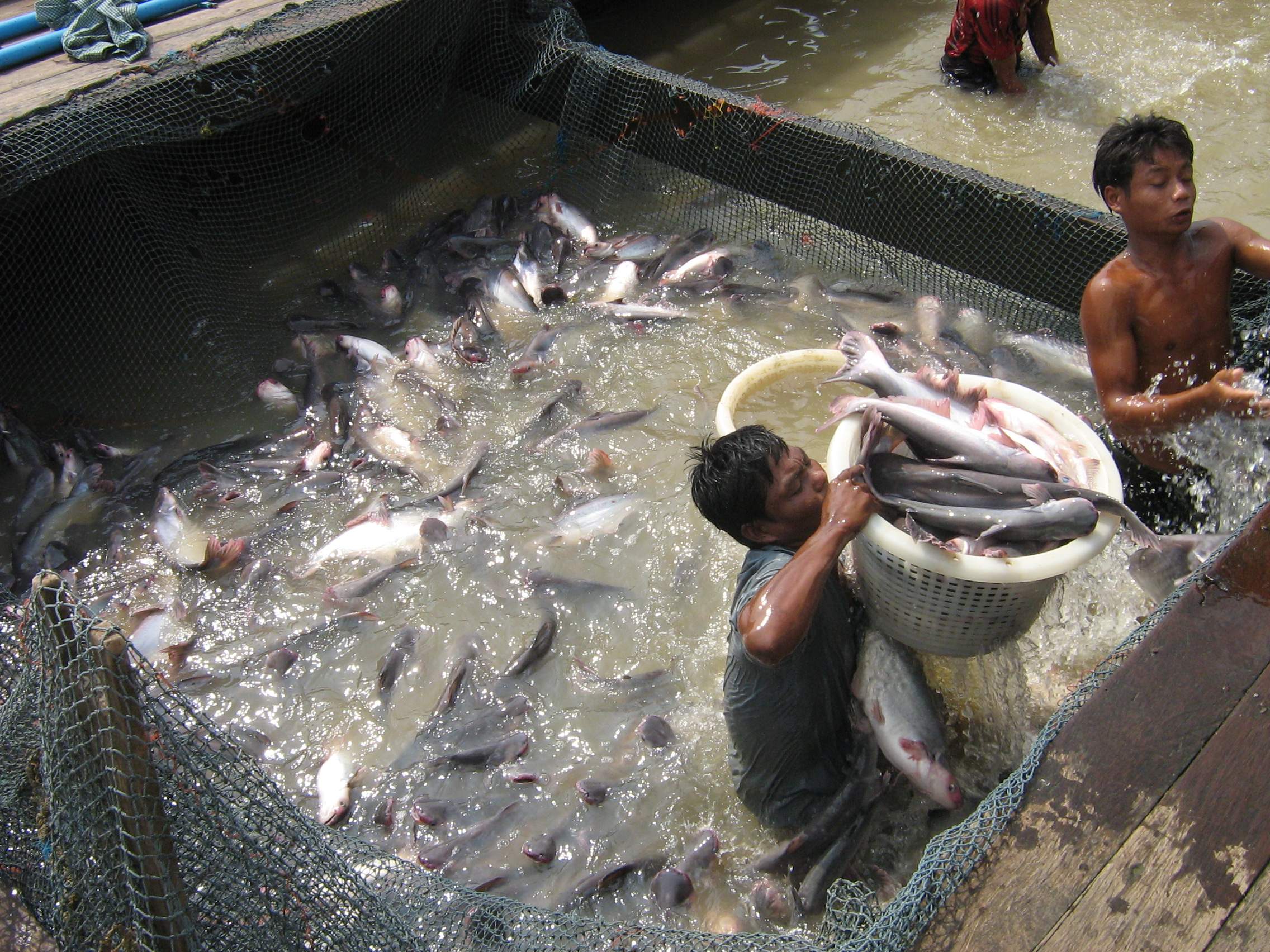
How Farmed and Frankenfish Salmon Endanger Our Most Perfect Food

(Dr. Mercola) In November 2015, the U.S. Food and Drug Administration (FDA) approved AquaBounty salmon, a genetically engineered (GE) “frankenfish” that’s being touted as a way to solve overfishing and world hunger. The GE salmon are engineered to grow about twice as fast as typical farm-raised salmon, an eerie feat achieved by inserting the DNA from two other fish, a growth-promoting gene from a Chinook salmon and a “promoter” gene from the eel-like ocean pout.

This genetic tweaking results in fish with always-on growth hormone, and because they grow so much faster than other salmon, they also require less food. The fish are being grown on land and have several other supposed safeguards in place to prevent both escape and breeding with wild populations but, in nature, nothing is foolproof.

If you live in the U.S., the fish haven’t reached grocery store shelves — yet — but there’s a chance they could become the first GE animal food to be sold in the U.S. to date, with completely unknown consequences.

Recommended: Best Supplements To Kill Candida and Everything Else You Ever Wanted To Know About Fungal Infections

GE Salmon, Already Sold in Canada, May Soon Be in US Grocery Stores

While the FDA approved AquaBounty’s salmon over two years ago, a rider attached to an Alaskan budget bill imposed an import ban, effectively blocking the FDA from allowing GE salmon into the U.S. In Canada, however, the GE fish are already being sold and eaten, to the tune of 5 tons in 2017 (none of which were labeled as such).1 Meanwhile, AquaBounty has recently acquired a fish farm in Indiana, where they’re making plans to start raising GE salmon.

“That means the company’s salmon could be on sale in the U.S. by 2019, which would make it the first genetically modified animal food ever sold and eaten in this country,” wrote Richard Martin, senior editor for energy at S&P Global Market Intelligence, for BioGraphic. “Opposition, naturally, is fierce.”2

The creation of GE salmon is anything but natural. For the last 13 generations of AquaBounty salmon, dating back to a single GE fish from 1992, every fish carries a copy of the “mutant” gene set that leads to the supergrowth and is passed down to the next generation. As such, gene splicing doesn’t take place at every AquaBounty facility, although intense breeding of the GE fish does. Martin explained:3

“At spawning time, conventional females are milked of their eggs by hand, a method that requires two fish wranglers per female — one to handle the fish and another to hold the container that collects the eggs. The technicians use the same squeeze technique to extract semen, or ‘milt,’ from the males … When combined, the eggs and milt produce fertilized eggs.

The technicians place the developing embryos in a stainless-steel tube where they are subjected to high pressure. This renders all the embryos’ cells triploid, meaning they have three sets of chromosomes instead of two, which makes the fish incapable of reproducing …

After a period of incubation at the Bay Fortune hatchery [on Prince Edward Island, Canada], the sterile, all-female transgenic embryos are flown to a rearing facility in the highlands of Panama, where the resulting salmon are grown to maturity before being reimported into Canada …

Eventually, AquaBounty plans to produce market-ready fish at a new facility under construction at Rollo Bay, on Prince Edward Island, and at the Indiana facility — an existing fish production factory that belonged to a now-defunct aquaculture company.”

Recommended: How to Avoid GMOs in 2018 – And Everything Else You Should Know About Genetic Engineering

Most Americans Say They Would Not Eat GE Fish

In the U.S., negative public opinion has been instrumental in keeping GE fish off store shelves. In 2013, a New York Times poll revealed that 75 percent of respondents would not eat GE fish and 93 percent said such foods should be labeled as such.4 Yet, as in Canada, which does not require GE seafood to be labeled, the FDA concluded that AquaBounty salmon is “not materially different from other Atlantic salmon” and thus would not require any special labeling.5

If the frakenfish does end up in U.S. stores in the next year, then, you won’t be able to distinguish it from other salmon. Further, many experts are concerned that the release of GE salmon hasn’t been thought through and could pose a risk to wild salmon species.

Martin quoted Anne Kapuscinski, a professor of sustainability science at Dartmouth College, and George Leonard, chief scientist at the Ocean Conservancy, who stated, “The future of GE fish farming will surely involve larger fish farms, with less confinement, in many different environments.”6

As such, no one knows what future expansion could mean for the marine environment. A lawsuit led by the Center for Food Safety, and joined by U.S. tribes in the Pacific Northwest, including the Quinault Indian Nation, is challenging the FDA’s approval of AquaBounty’s salmon, alleging the agency “has not adequately assessed the full range of potentially significant environmental and ecological effects presented by the AquaBounty application.”7

Recommended: How Farmed Fish Degrades Our Health and the Environment – Better Options Included

The lawsuit is pending, but for now the FDA continues to maintain that AquaBounty’s salmon “is as safe to eat as any nongenetically engineered … Atlantic salmon, and also as nutritious.”8 They also state the approval “would not have a significant impact on the environment of the United States,” but the Center for Food Safety sees it differently, stating:9

“Salmon is a keystone species and unique runs have been treasured by residents for thousands of years. Diverse salmon runs today sustain thousands of American fishing families, and are highly valued in domestic markets as a healthy, domestic, ‘green’ food.

When GE salmon escape or are accidentally released into the environment, the new species could threaten wild populations by mating with endangered salmon species, outcompeting them for scarce resources and habitat, and/or introducing new diseases.

Studies have shown that there is a high risk for GE organisms to escape into the natural environment, and that GE salmon can crossbreed with native fish. Transgenic contamination has become common in the GE plant context, where contamination episodes have cost U.S. farmers billions of dollars over the past decade. In wild organisms like fish, it could be even more damaging.”

Aquaculture’s Farmed Salmon Are Environmentally Destructive

In the U.S., farmed salmon is one of the most popular seafood choices, with many being misled to believe it is a safe choice for dinner. In reality, while farmed salmon is not genetically engineered like AquaBounty’s frankenfish, it is still one of the worst seafood choices available in terms of pollutants and the environment. One of the major problems is that farmed salmon are typically raised in pens in the ocean, where their excrement and food residues are disrupting local marine life. The potential for escape is also high.

Even land-based salmon aquaculture is problematic, according to research published in Scientific Reports, which performed an analysis of four salmon aquacultures in Chile.10

The facilities, often described as CAFOs (concentrated animal feeding operations) of the sea, pump water from rivers into their hatcheries, then pump it back out to the river once it’s no longer clean. The researchers found the water is often contaminated with dissolved organic matter (DOM) — a mixture of liquid excrement, food residue and other salmon excretions, along with disinfectants and antibiotics.

The release of DOM into Chile’s rivers is causing significant ramifications for the entire ecosystem. Upstream of the fish farms, the researchers detected higher amounts of natural algae biofilms on rocks, which help to produce oxygen and provide food for organisms that fish later eat.

Downstream, however, biofilms had a greater abundance of bacteria, which use up oxygen and may lead to low-oxygen environments that could threaten many species. The researchers suggested that no additional fish farms should be installed on Chilean rivers, noting, “[R]ivers should not be misused as natural sewage treatment plants.”11

Viruses, Sea Lice From Farmed Salmon Threaten Wild Fish

Since farmed salmon pens are often placed along wild salmon runs, they pose a severe threat to wild salmon stocks that pass by, exposing wild fish to diseases that run rampant among the confined fish, such as sea lice, pancreas disease, infectious salmon anemia virus and piscine reovirus. Piscine reovirus is a highly contagious blood virus that causes heart disease in the affected fish.

The virus was first discovered in Norwegian salmon farms and has proven to be nearly impossible to eradicate. And, with the spread of this disease into wild populations, wild salmon may soon go extinct. Alexandra Morton, a Canadian marine biologist who has spent decades studying the impact of salmon farming on wild salmon, has also reported that sea lice from salmon farms are eating young wild salmon to death, while Canada’s Department of Fisheries and Oceans (DFO) has failed to take action.

In fact, an oceanic watchdog group recently reported a sea lice outbreak in Clayoquot Sound UNESCO Biosphere Reserve, located on the west coast of Vancouver Island in British Columbia, Canada.

Fish farms in the area had salmon lice up to 10 times higher than the rate that requires treatment, at numbers that could prove lethal to wild salmon. While DFO requires salmon farms to monitor and control sea lice via the use of chemicals in feed or hydrogen peroxide baths, the measures don’t appear to be working — and are toxic in and of themselves.

British Columbia has granted aquaculture company Cermaq Canada a permit to apply 2.3 million liters of Paramove 50, a pesticide, to 14 salmon farms in Clayoquot Sound in order to fight sea lice. Not only may the pesticide be toxic to other marine life such as Dungeness crab, prawns and herring, but it’s also known to suppress salmon immune systems, making them even more susceptible to viruses. In turn, wild salmon swimming by may be further exposed to deadly diseases.

“So just as the young salmon are passing by the farms, we could shock these farmed fish into getting PRV or that becoming HSMI (heart and skeletal muscle inflammation disease) which is deadly to wild salmon,” watchdog group Clayoquot Action Campaigns director Bonny Glambeck told The Narwhal.12 She continued in a news release:13

“This outbreak is an environmental disaster — we are seeing wild juvenile salmon carrying lethal loads of salmon lice … These fish have been given a death sentence … We don’t expect the new pesticides that they want to use will work. It’s not working in Norway right now. Studies show there is no way these fish will survive to spawn and reproduce … Basically the industry is unable to control sea lice. So that’s why we want to see these farms come out of the oceans.”

Tire Chemicals, PCBs Common in Farmed Salmon

Nutritionally speaking, farmed salmon are also a far inferior choice to the wild variety. For starters, their pens are often placed near shore, which means they’re close to land-based sources of pollutant runoff. In addition, they’re fed a diet of ground-up fishmeal, which may lead to concentrated levels of PCBs.

In a global assessment of farmed salmon published in the journal Science, PCB concentrations in farmed salmon were found to be eight times higher than in wild salmon.14 Similarly, when the Environmental Working Group (EWG) tested farmed salmon from U.S. grocery stores, they found farmed salmon had, on average:15

  • 16 times more PCBs than wild salmon
  • 4 times more PCBs than beef
  • 3.4 times more PCBs than other seafood

Further, ethoxyquin, developed by Monsanto in the 1950s, is a rubber stabilizer (used in the production of tires), pesticide, preservative and antioxidant all in one that’s often added to farmed salmon feed. While it doesn’t have the health benefits normally associated with dietary antioxidants, it does prevent oxidation of fats, which is why it’s used in different types of animal feed, including fish feed and pet food.16

But studies have also shown ethoxyquin adversely affects cell metabolism, especially the metabolic pathways of renal and hepatic cells in rats, and the mitochondria in bovine hearts and kidneys. Due to its potential toxicity, the EU has strict limits for ethoxyquin levels in fruits, nuts, vegetables and meat. However, since it was never intended for use in fish, and fish feed manufacturers never informed health authorities that they were using it, there are no limits on how much of the chemical is allowed in seafood.

On top of more toxins, farmed salmon lack the correct ratio of healthy fats that many people are seeking when eating a “healthy” fish meal. Half a fillet of wild Atlantic salmon contains about 3,996 milligrams (mg) of omega-3 and 341 mg of omega-6.17 Half a fillet of farmed salmon from the Atlantic contains just a bit more omega-3 — 4,961 mg — but an astounding 1,944 mg of omega-6;18 more than 5.5 times more than wild salmon.

While you need both omega-3 and omega-6 fats, the ratio between the two is important and should ideally be about 1-to-1. The standard American diet is already heavily skewed toward omega-6, thanks to the prevalence of processed foods, and with farmed salmon, that unhealthy imbalance is further magnified rather than corrected.

Choose Wild Salmon for Your Health — and the Environment

If you’re wondering how can you tell whether salmon is wild or farm-raised, the flesh of wild sockeye salmon is bright red, courtesy of its natural astaxanthin content. It’s also very lean, so the fat marks, those white stripes you see in the meat, are very thin. If the fish is pale pink with wide fat marks, the salmon is farmed. Avoid Atlantic salmon, as typically salmon labeled “Atlantic Salmon” currently comes from fish farms.

The two designations you want to look for are “Alaskan salmon” and “sockeye salmon,” as Alaskan sockeye is not allowed to be farmed. So canned salmon labeled “Alaskan Salmon” is a good bet, and if you find sockeye salmon, it’s bound to be wild. As for GE salmon, if it comes to your grocery store it’s not currently slated to be labeled as such, but it’s another variety of Atlantic salmon, so steering clear of Atlantic salmon in favor of wild varieties will help you steer clear of adding this frankenfish to your dinner plate.

California First State Ever To Prescribe Specific Meals To Chronically Ill Patients

(Natural Blaze by Heather Callaghan) California has become the first state to prescribe specific – and presumably healthier – meals to chronically ill patients. The newly launched pilot program will treat low-income and at-risk Medicaid patients with “specially tailored meals that are proven to offer relief from chronic illnesses and diseases.”

Wait – Is this finally an admission that specific foods have an ameliorative effect on disease?

The “Food is Medicine” 3-year program draws on how certain illnesses require special diets that can be hard to orchestrate, especially for poorer patients. Congestive heart failure, for instance, requires people to consume less than one teaspoon of salt per day. While this can already be hard to actually measure throughout your daily meals, it can also be hard for low-income patients to find cheap foods that are low in sodium.

Over the course of the next three years, the state will be giving funding to hunger relief charities in San Francisco, the North Bay Area, Santa Clara County, Los Angeles, and San Diego. The charities and pantries, all of which are a part of the Food is Medicine coalition, will be providing specially prepared meals to 1,000 state Medicaid patients who suffer from congestive heart failure, cancer, diabetes, chronic obstructive pulmonary disease, and renal disease.

Gov. Jerry Brown (D) first approved the program back in June 2017, but legislators celebrated the actual launch of the program last Sunday.

Recommended: Start Eating Like That and Start Eating Like This – Your Guide to Homeostasis Through Diet

Important to note: while some people may scoff that the program is worried about salt for its patients, keep in mind that low-income people have little to choose from if they are to fill grocery carts and bellies. Processed food is nothing if not loaded with obscene doses of table salt. All this processed salt greatly displaces the precious amount of potassium that heart patients – and all people – need on a daily basis.

There are very few Americans who get the daily recommended 4,700 mg of potassium needed for detoxification and heart health. It comes from fresh, whole foods like dark leafy greens, potatoes, bananas and dates. On top of that, a single meal at a restaurant could easily top 1,200 mg of sodium! We might make a tasty human-jerky if aliens ever invaded… (but I digress!)

This program was inspired by a previous initiative by the Metropolitan Area Neighborhood Nutrition Alliance in Philadelphia. That stands for MANNA — get it?

Their study gave patients three medically tailored meals during six months and as a result they experienced a dramatic drop in monthly healthcare costs, from $38,937 per month to $28,183 per month all together. That was a 55% lower drop compared to the control group.

Recommended: Detox Cheap and Easy Without Fasting – Recipes Included

Likewise, more U.S. hospitals are using fresh food for their patients with great results.

Senator Mike McGuire said:

We couldn’t be more excited to turn this local success story into a statewide program that will improve the health of those who need it most while reducing costs for taxpayers over the long term.

The bottom line: We believe, over the next three years, we’ll demonstrate enhanced health outcomes for chronically ill Medi-Cal patients and save millions in health care costs.

We really couldn’t tell what types of foods the patients will be given – but any step in this direction is a giant step up from abysmal hospital food – which is thinly veiled GMO hog slop.

Recommended: How to Avoid GMOs in 2018 – And Everything Else You Should Know About Genetic Engineering

My only “beef” is that this type of program should become the norm for ALL patients and that’s an order that should have been placed long before yesterday. It’s hard not to notice that the real motivation seems to be making sure the hospitals aren’t incurring too many costs – but at least they are finally listening, one way or another.

USDA Wants Deceptively Cute Images For GMO Labels, But Cuts The Phrase “Genetically Modified”

(Natural Blaze) The public comment period is now open on the U.S. Department of Agriculture’s just unveiled proposal for food labeling of products using GMOs—a plan that would have labels without the words “genetically modified” or “genetically engineered,” but instead adorned with cheerful images.

The images are just as insulting to consumers as the law, which the chemical and junk food industry lobbyists spent $400 million to pass.” –Katherine Paul, Organic Consumers Association

According to Wenonah Hauter, executive director of Food & Water Watch, the proposal represents “a gift to industry from our now Secretary of State, Mike Pompeo, who authored the legislation to squash the Vermont GMO labeling law and mandatory labels.”

The proposal follows President Barack Obama’s 2016 signature on an industry-approved bill—dubbed the DARK Act—that required national labeling standard rules, and which critics blasted for having loopholees and lacking a mandate for adequate GMO labels. That law, which pre-empted Vermont’s first-of-its-kind labeling law, also required a deadline for the final rules by July 29, 2018, hence the USDA’s rollout this week.

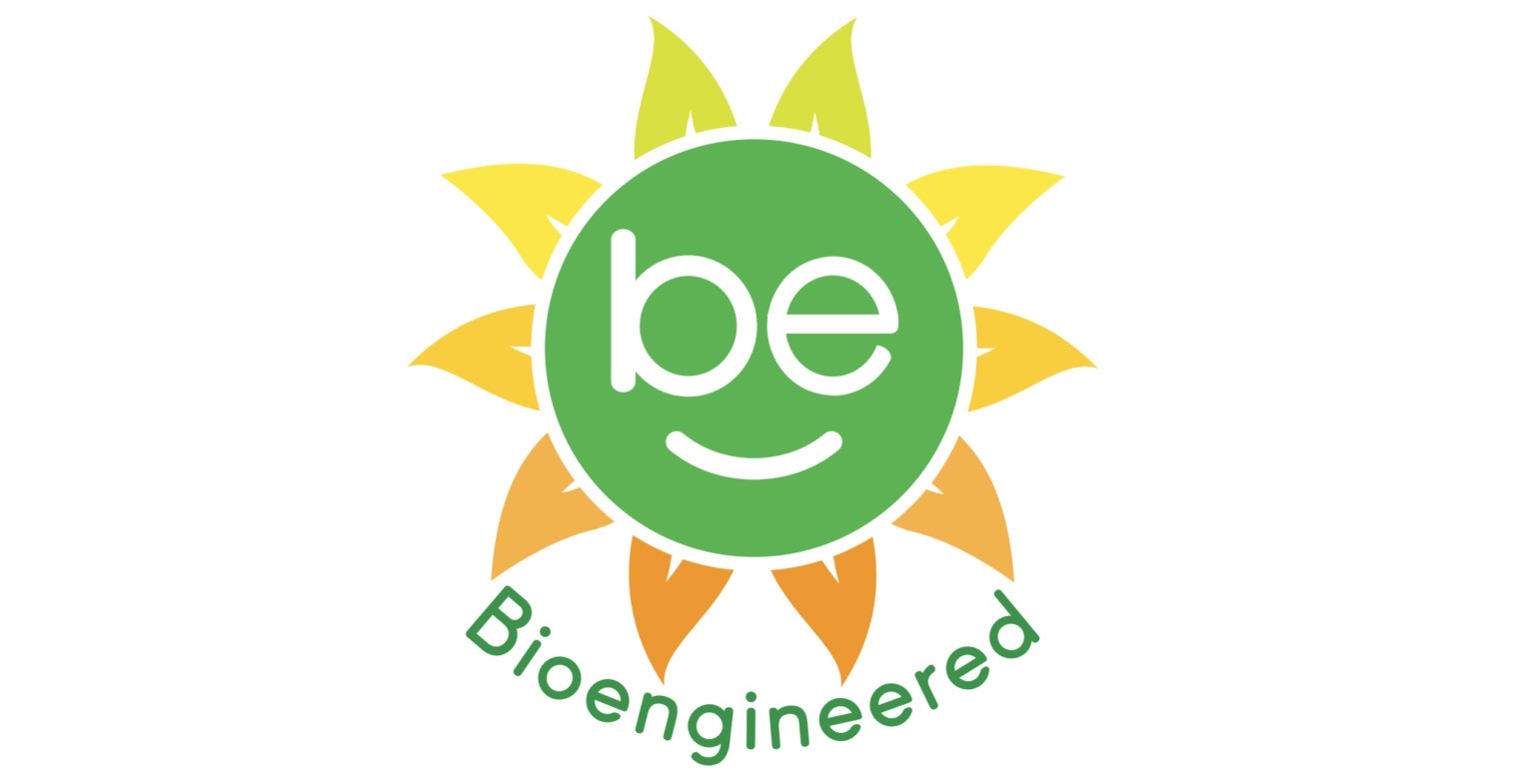
Among the problems with the proposal, says Hauter, is that the “rule refers to GMOs as ‘bioengineered,’ or BE foods. This is a deceptive strategy because most consumers don’t know what that means.”

Andrew Kimbrell, executive director at Center for Food Safety, agreed, saying, “USDA’s exclusion of the well-established terms, GE and GMO, as options will confuse and mislead consumers, and the agency must instead allow the use of those terms.”

As for the images that will bear the acronym BE—”Wait ’till you see them,” writes Katherine Paul, associate director of the Organic Consumers Association. “All bright and cheery, with sunburst and smiley-faced images—but without ‘GMO’ appearing anywhere on the labels.”

“The images are just as insulting to consumers as the law, which the chemical and junk food industry lobbyists spent $400 million to pass—under the specious name of the ‘Safe and Affordable Food Labeling Act,’” Paul said.

The problems go beyond the symbol, say food safety groups.

“One of the many loopholes,” Hauter added, is that it “would allow a company that knowingly sells canned GMO sweetcorn to use a label that says ‘may be bioengineered’ because less than 85 percent of sweetcorn grown is genetically engineered.”

In addition, it would allow companies to use electronic QR codes, instead of a clear symbol, which would necessitate consumers having a clear internet connection, a smart phone, and the time for the hassle it would take to scan them.

“USDA should not allow QR codes,” Kimbrell said bluntly. “USDA’s own study found that QR codes are inherently discriminatory against one third of Americans who do not own smartphones, and even more so against rural, low income, and elderly populations or those without access to the internet. USDA should mandate on-package text or symbol labeling as the only fair and effective means of disclosure for GE foods.”

In sum, the groups say, the proposal leaves consumers in the dark.

“This is a ‘Call to Action’ to all Americans who have waited for decades to finally have GE foods labeled,” says Kimbrell. “Now is the time to tell the Trump administration to do the right thing and meaningfully label these foods.”

This article (USDA Wants Deceptively Cute Images for GMO Labels, But Cuts the Phrase Genetically Modified) appeared first at Common Dreams and is licensed under a Creative Commons Attribution-Share Alike 3.0 License. (Image: Organic Consumers Association)

Most University Medical Research Brought To You By Big Pharma

(Natural Blaze by Brandon Turbeville) Partly a result in the decrease in government funding in innovation, health, science, and general development and partly a result of the close connection between major corporations, government, and academia, there has been a major increase in the “financial partnerships” between universities and Big Pharma over the past several years. Once a relatively rare occurrence, Big Pharma/Big Ed partnerships have become a common sight, with many corporations maintaining massive “integrated programs” and “science hubs” in university institutions. The focus of these programs are not necessarily public health but the development of drugs for Big Pharma profits.

GlaxoSmithKline at Harvard, AstraZeneca at the University of Washington, and Pfizer at the University of California are some of the most glaring examples, but they are by no means even the tip of the iceberg in Big Pharma/Big Ed partnerships. As SOTT.net writes in its article “Big Pharma Pays Universities For Most Medical Research In the United States,

In fact, with the increasing financial ties between academia and the pharmaceutical industry, many drug companies have formed specialized divisions that are solely responsible for seeking research and development relationships with academic institutions.”

Related: Doctors Against Vaccines – Hear From Those Who Have Done the Research

One such reason for a greater reliance on Big Pharma for research money is the decline in interest of the U.S. government to fund projects that would theoretically benefit human health and increase living standards through progress and development. For instance, a report in the British Medical Journal stated that “An estimated 60% of biomedical research and development in the United States is now privately funded, and two thirds of academic institutions have equity ties with outside sponsors.” In other words, over half of the medical research conducted at universities is conducted with funding from Big Pharma itself.

A review published in the Mens Sana Monograph suggests that,

This need for large funds is, moreover, coupled with the desire to acquire it without making a dent in one’s own pockets. The easiest way that can happen is getting an interested party to fund it, which has a big stake in the success of the entire venture. Hence, the pharmaceutical industry becomes a willing partner in the whole enterprise.

Related: The MMR Vaccine – A Comprehensive Overview of the Potential Dangers and Effectiveness

The Washington Post, surprisingly, explains one reason such heavy corporate funding is a bad idea. It states,

The billions that the drug companies invest in such experiments help fund the world’s quest for cures. But their aim is not just public health. That money is also part of a high-risk quest for profits, and over the past decade corporate interference has repeatedly muddled the nation’s drug science, sometimes with potentially lethal consequences

Ever since the 1980s, more money for medical research has come from Big Pharma than from grants awarded by the NIH. In 2011, Big Pharma spent $39 billion while the NIH only spent $31 billion. This is in part a testament to the fact that, while the U.S. can waste billions on foreign wars and foreign aid, it is pinching pennies with research that could benefit its own people back home. But it’s also a revelation of just how close corporate interests and the University Industrial Complex actually are. Thus, it’s very concerning when one of the greatest forces for cultural “revolution” and Big Pharma are teaming up to such an openly high level.

Editor’s Note: “Industry-sponsored clinical trials are four times more likely to report positive results than non-industry sponsored clinical trials.”

In addition, SOTT writes of how this growing partnership raises some serious conflict of interest questions. The website writes,

It is no secret that relationship between doctors and pharmaceutical companies has involved significant financial entanglement, consequently opening a debate on conflict of interest issues.4 Financial incentives provided by drug companies have influenced doctors to engage in inappropriate prescribing habits to promote the purchase and use of the sponsoring company’s drug, thus questioning the credibility of both parties involved.4

This same type of cozy relationship is now becoming prominent between academics and pharmaceutical companies. While financial relationships between doctors and drug companies has come under significant scrutiny, less attention is being paid to financial relationships between academics and the drug industry.4

There is enough evidence to document conflict of interest issues between academics in leadership positions and the drug industry. A study published in the Journal of the American Medical Association reveals:

Almost every major U.S.- based pharmaceutical company in 2012-and nearly 40 percent worldwide-had at least one board member in a leadership position from a U.S. academic medical center, raising potentially problematic conflict-of-interest questions. The board members were compensated an average of $312,564 by the pharmaceutical companies, while concurrently holding clinical or administrative leadership positions at academic medical centers.6

The study’s senior author, Welld Gallad, MD, MPH points out:

[P]harmaceutical industry board membership by academic medical center leaders could lead to a different kind of potential conflict of interest, since academic leaders wield considerably more influence over research, clinical and educational missions than ordinary physicians or staff who may be targeted for gifts by pharmaceutical representatives.6

Scientifically Proven Method to Reverse Diabetes (Ad)

Dr. Gallad adds:

The public will have to decide whether these non-profit, and in many cases publicly funded, academic institutions can manage these potential conflicts with internal policies, or whether additional regulation is needed.6

. . . . .

A significant amount of vaccine related research is now being conducted at American academic institutions. Many universities now have their own vaccine research centers, with pharmaceutical companies funding many of the studies. Professors and other academic scientists who conduct these studies often also have personal financial relationships with vaccine manufacturers. This conflict of interest may or may not be revealed in the study’s original publication, depending upon the medical journal in which the study is published.

Concerns have been voiced about the pharmaceutical industry’s lack of transparency with regard to the development and side effects of FDA licensed drugs and vaccines and financial relationships with the medical profession, which promotes the use of those drugs and vaccines. It is logical to ask whether the public can trust the conclusions of vaccine research conducted by academic institutions heavily funded by vaccine manufacturers, which may incentivize researchers to steer research toward conclusions that suit the financial interests of those companies.

One does not need to look too far in order to see that the University research/Big Pharma partnership is creating a dangerous culture. Many academics survive on grants either by government or by corporations and a researcher might be ending his own career if he bucks the institution which is paying for the gravy train. This is one reason university scientists, researchers, and academics are some of the most vociferous guard dogs and defenders of corporations. With Big Pharma paying the bills of most medical research conducted in the United States, there is no wonder why Big Ed is simply becoming the validator of industry science in the sickest nation on the planet. Come to think of it, there is no wonder why the United States is the sickest nation on the planet.

Hat tip to SOTT “Big Pharma Pays Universities For Most Medical Research In The United States

Supplements for BPA and BPS, Heavy Metal Detox, and Other Endocrine Disrupters

Without a proper diet, the right supplements will work, but only to a certain extent, and only for a little while. On the other hand, supplements taken with a healthy diet can radically speed up healing time.

This article is an excerpt from How to Detox From Plastics and Other Endocrine Disruptors

Probiotics

1.) Get thee some probiotics – pronto. I’m not talking celebrity endorsed yogurt here. Chose fermented foods like kimchi, natural sauerkraut, and kefir. A refrigerated, concentrated probiotic supplement helps. Drink kombucha. Bifidobacterium breve and Lactobacillus casei were found to extract BPA from the blood of mammals and were excreted out through the bowels. That is very good news!

Beneficial bacteria strengthen the gut and help break down chemicals like BPA so they can be cleared out. As a bonus, they break down pesticides, another major endocrine-disruptor, and other toxins as well. Probiotics are becoming well known for breaking down endocrine-disruptors and other toxins in the body.

Chlorella has a well-documented history of helping remove heavy metals and other toxins like dioxin from the body expeditiously. Its high concentration of chlorophyll and fiber seems to be a big part of its exceptional detox benefits. It’s almost certain, considering the mechanism, that Chlorella (and spirulina) help pull out BPAs and other plastic residue.

Chlorella is a good source of protein, GLA, and phytochemicals, B12, B2, B3, iron, magnesium, Beta Carotene, and a bunch of powerful phytochemicals. Chlorella stimulates the growth of friendly bacteria. Furthermore, chlorella’s cell walls act to absorb toxic compounds within the intestines, restoring proper gastrointestinal pH and helping to promote normal peristalsis. And it is another chelator, as it is also very negatively charged, attracting positively charged molecules.

Phytochemicals found within Chlorella pyrenoidosa support the complex network of enzymatic reactions that drive the human detoxification system. This detoxification network involves the Phase I and Phase II enzymatic reactions that take place in nearly all cells in the body, though they are concentrated in the liver cells. Phase I detoxification reactions change non-polar chemicals that are not water-soluble into relatively polar, water-soluble compounds. The Phase I process can result in the formation of reactive chemicals that are typically more toxic than the original compounds. Phase II detoxification is necessary therefore to add chemical groups to the toxic intermediates to make them water-soluble so that they may easily be excreted via urine and/or feces. Phase I and Phase II detoxification pathways must remain functional for the removal of toxins from the body. This research focuses specifically on the Chlorella pyrenoidosa species of green algae recognized for its detoxification properties. – King Hardt Academy

Spirulina

Chlorella is green algae, but spirulina is more of a blue-green in color. These two algae have a lot in common. Chlorella’s green hue demonstrates that it’s richer in chlorophyll than spirulina, and chlorella is said to have stronger detoxification properties. But spirulina is an even better source of protein, and it offers iron, B1, B2, B3, B6, B12, calcium, potassium, zinc, and a host of microminerals.

Related: Total Nutrition – Make your own Homemade Multivitamin and Mineral Formula

Enzymes

Digestive enzymes break down food. Metabolic enzymes, also known as systemic enzymes, break down foreign proteins, fibrin, and other toxins, and they clean the blood of impurities. Consider the ramifications of this. Probiotics and enzymes together help breakdown nearly everything in the gut that doesn’t belong. Read more about systemic enzymes here.

Green Tea

One way in which BPA harms body tissues is through oxidative stress. Two laboratory studies using extracts from both green tea and black tea were able to mitigate the damaging effects of BPA by protecting our cells from oxidative damage. Green tea has also been shown to stimulate glucuronidation, a detoxification pathway used for eliminating BPA from the body.

Lipoic Acid and folate have also been shown to reverse many of BPAs most damaging effects, especially oxidative stress.