Newsweek and USA Today Have Bizarre Standards for Opinion Writers

(USRTK by Stacy Malkan) Facts don’t matter in commentaries printed by Newsweek so long as the writer “seems genuine.” That’s the takeaway from a troubling email exchange with Newsweek Opinion Editor Nicholas Wapshott in response to concerns and questions I raised about a recent commentary attacking the organic industry.

The organic hit piece in Newsweek carried the byline of Henry I. Miller, who lost his platform at Forbes last year after the New York Times revealed that Miller had published an article in Forbes under his own name that was actually written by Monsanto.

In his recent Newsweek article, Miller spent several paragraphs attacking Danny Hakim, the New York Timesreporter who revealed that ghostwriting scandal; but Miller didn’t disclose to readers either the scandal or his collaborations with Monsanto.

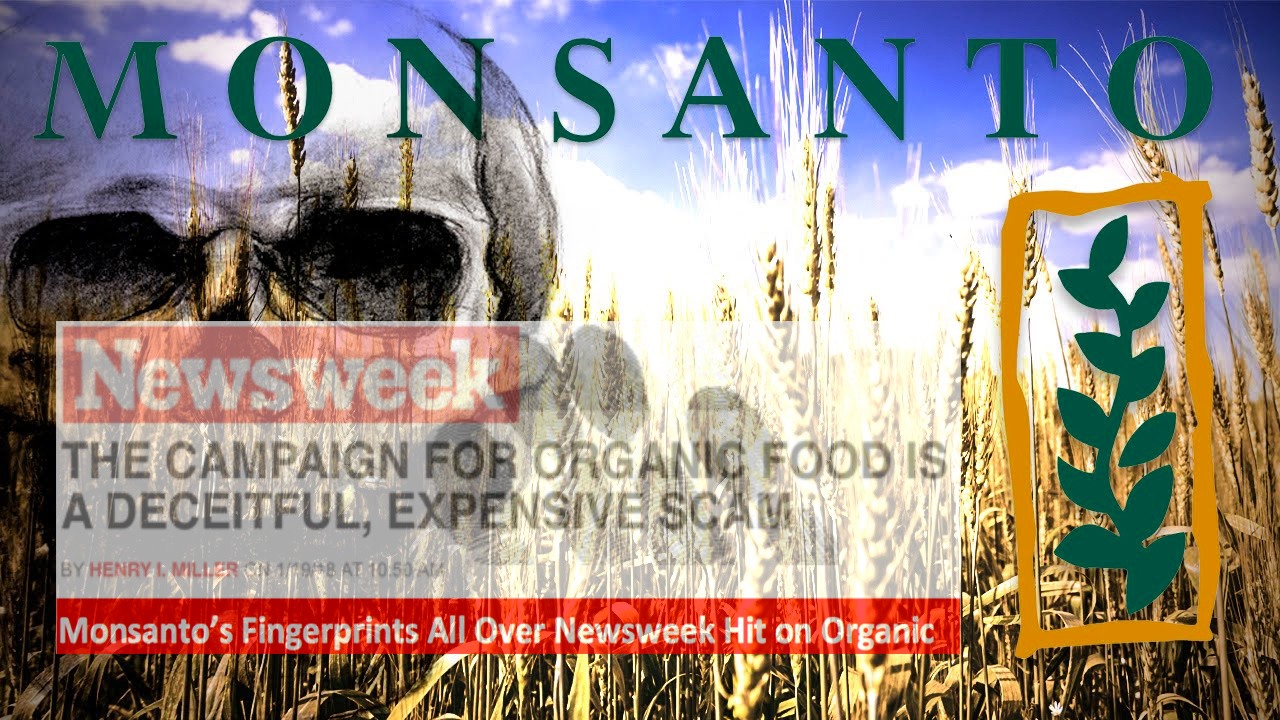
Yet Monsanto’s fingerprints were all over Miller’s Newsweek article, as I reported here. Miller used pesticide industry sources to make false claims about organic farming and attacked people who were named on a target list that had been developed by Monsanto and Jay Byrne, Monsanto’s former director of corporate communications, who was quoted in Miller’s piece with no mention of the Monsanto affiliation.

None of this appears to bother Newsweek Opinion Editor Nicholas Wapshott, according to an on-the-record email exchange.

Miller ‘Flatly Denies’ Facts 

On Jan. 22, I emailed Wapshott to raise concerns that Newsweek continues to publish Miller’s commentaries without disclosing his relationship with Monsanto, and asked if he was aware that:

1) The New York Times reported in August that Miller had been caught publishing an article ghostwritten by Monsanto under his own name in Forbes, in violation of Forbes’ policy. Forbes ended its relationship with Miller and deleted all his articles from the site.

2) A 2015 internal Monsanto PR plan (recently released by lawyers involved in litigation against Monsanto) lists “Engage Henry Miller” as one of its first action items.

3) A source Miller used in his Newsweek article, Jay Byrne, is a former Monsanto employee (not identified as such). According to emails I reported here, Byrne worked with Monsanto to set up a front group of “independent” academics, secretly funded by industry, who attacked the organic industry as a “marketing scam,” the same theme in Miller’s Newsweek article.

4) Miller has a long history of partnering with – and pitching his PR services to – corporations that need help convincing the public their products aren’t dangerous and don’t need to be regulated.

Wapshott responded, “Hi Stacy, I understand that you and Miller have a long history of dispute on this topic. He flatly denies your assertions. Nicholas”

I wrote back to ask for clarification.

Hi Nicholas, to clarify:

Miller denies he published a column ghostwritten by Monsanto under his own name in Forbes and that Forbes has since deleted all his articles? (NYT story, Retraction Watch story)

Miller denies the Monsanto’s PR plan to address the IARC cancer rating of glyphosate lists “Engage Henry Miller” on page 2, item 3?

Miller denies that Jay Byrne, the former Monsanto employee not identified as such in his Newsweek article, was involved with setting up Academics Review as a front group? (Byrne has not denied writing these emails.)

Miller and I have disagreed yes, we were on opposite sides of a political campaign to label GMOs, but the above facts are facts, and provable. Do you think it’s fair to your readers to continue to publish his work without disclosing his ties to Monsanto?

Wapshott responded, “I think so. I have met Miller and he seems genuine. And I find it hard to believe that his flat denial is a lie. We would need a full trial to determine the truth and those resources are, thank goodness, beyond our means.”

Jumbled Mix of Conflict Disclosures

I wrote back to Wapshott once more, pointing out that a trial is not necessary in the Miller case, since the facts have been established by reporting in the New York Times and corroborated by Forbes’ spokeswoman Mia Carbonell, who told the Times:

“All contributors to Forbes.com sign a contract requiring them to disclose any potential conflicts of interest and only publish content that is their own original writing. When it came to our attention that Mr. Miller violated these terms, we removed his blog from Forbes.com and ended our relationship with him.”

Does Newsweek have a similar policy to require writers to disclose potential conflicts of interest and use only their own writing? 

Newsweek editors have yet to respond to my query about disclosure policies. But the problem of weak, confused or non-existent conflict-of-interest disclosures is widespread in the media.

For a 2015 article in CJR, Paul Thacker asked 18 media organizations that cover science to describe their disclosure standards for both journalists and the sources they use in their stories, and 14 responded.

“The responses present a jumbled mix of policies,” Thacker wrote. “Some draw a bright line — preventing journalists from having financial ties to any outside sources. Others allow some expenses and speaking fees. To complicate matters further, some organizations have written rules, while others consider incidents on a case-by-case basis. Standards advocated by professional societies also seem to differ.”

Some outlets apply different standards to reporters and columnists, as I learned when I asked why Washington Post food columnist Tamar Haspel can take speaking fees from agrichemical industry groups while writing about that industry as part of her regular column beat. Reporters at Washington Post aren’t allowed to do that, but in the case of columnists, the editor decides.

Recommended: Sugar Leads to Depression – World’s First Trial Proves Gut and Brain are Linked (Protocol Included)

It’s all very murky. And some outlets are clearly crossing a bright line by publishing the views of groups and people who work with corporations to promote pro-industry science views without telling readers about the corporate collaboration.

Henry Miller’s attack on organic food in Newsweek is one example. Another is USA Today’s regular publication of science columns from the American Council on Science and Health, a front group for the tobacco, chemical, fossil fuel, pharmaceutical and other industries seeking to discredit scientific information about the harm of their products.

USA Today Lends Platform to Corporate Front Group  

In February 2017, two dozen health, environmental, labor and public interest groups wrote to the editors of USA Today asking the paper to stop publishing science columns by the American Council on Science and Health (ACSH), or at least provide full disclosures about who funds the group.

Leaked financial documents reveal that ACSH solicits money from corporations to defend and promote their products; for example, ACSH spins science on fracking, e-cigarettes, toxic cosmetics and agrichemical industry products, and solicits funding from those industries in exchange. Recent reporting establishes that ACSH works with Monsanto on messaging campaigns.

Recommended: Detox Cheap and Easy Without Fasting – Recipes Included

USA Today should not be helping this group promote its false identity as a credible, independent source on science,” the two dozen groups wrote to the editors. “Your readers deserve accurate information about what and whom this group represents, as they reflect on the content of the columns.”

Nearly a year later, USA Today is still publishing columns by ACSH staff and still failing to notify its readers about ACSH’s funding from corporations whose agenda they promote.

In an email response dated March 1, 2017, USA Today Editorial Page Editor Bill Sternberg explained:

“To the best of our knowledge, all of the columns in question were authored or co-authored by Alex Berezow, a longtime member of USA TODAY’s Board of Contributors. Mr. Berezow has written some 25 op-eds for us since 2011, and we consider him to be a credible voice on scientific issues. He holds a PhD in microbiology from the University of Washington, was the founding editor of RealClearScience and has contributed to a number of mainstream outlets.”

Berezow is now a senior fellow at ACSH, and his “@USAToday contributor” status appears in his bio on Twitter, where he frequently attacks critics of the pesticide industry, for example this recent vile tweet featuring a sexually graphic illustration of a nurse giving a patient a coffee enema.

Does USA Today really want to be associated with this type of science communication?

Recommended: Start Eating Like That and Start Eating Like This – Your Guide to Homeostasis Through Diet

Integrity and Transparency in Science Reporting

News outlets can do better than these examples at Newsweek and USA Today, and they must do better. They can start by refusing to publish columns by corporate front groups and PR surrogates who pose as independent science thinkers.

Recommended: How to Make the Healthiest Smoothies – 4 Recipes

They can implement clear and strong policies that require all columnists and journalists to disclose potential conflicts of interest for themselves and the sources they cite in their work.

At a time when the public is questioning the legitimacy of the news media, it is more important than ever for all publications to follow the highest standards of journalistic ethics and serve the public with as much truth and transparency as possible.


There are better ways to foster solar innovation and save jobs than Trump’s tariffs

President Donald Trump’s decision to impose punitive duties on imported solar panels and related equipment is rankling most of the industry.

This was the final step of a process that began when two U.S. subsidiaries of foreign solar panel makers filed a rarely used kind of trade complaint with the International Trade Commission. Trump largely followed the course of action the independent U.S. agency had recommended to protect domestic manufacturers from unfair competition.

But far from protecting U.S. interests, the tariffs are bound to stifle the current solar boom, destroying American jobs and dragging down clean energy innovation. As economists who research climate and energy policies that can foster a greener North American economy, we argue the government should instead create targeted subsidies that support innovation and lower costs across the supply chain. This approach would do a better job of helping the U.S. industry fend off foreign competition without harming the industry itself.

A booming industry

The U.S. solar industry has enjoyed unprecedented growth in recent years, thanks to the rapidly declining cost to install solar systems and tax breaks for homeowners, businesses and utilities that have expanded demand but are being phased out. Prices have plunged to roughly US$1.50 per watt from around $6 in 2010 due to both innovation that made it less expensive to make panels anywhere and cheap imports.

In 2016, 87 percent of U.S. solar installations used foreign-produced panels, also known as modules, primarily from China.

The rapid decline in solar panel costs has been driven by policies in China and elsewhere intended to expand domestic manufacturing of these products.

The problem is not unique. Other countries dependent on cheap solar imports, including Germany and Canada, are also grappling with how to sustain the solar boom while protecting their own domestic manufacturers from unfair foreign competition.

The trade commission sent Trump its recommendations in the fall of 2017, giving him until Jan. 13 to accept or reject its guidance. Later, U.S. Trade Representative Robert Lighthizerasked the agency to draft a “supplemental” report, which effectively extended the president’s deadline for setting the tariffs.

The request, observers surmised, may have signaled concern about the this case’s potential to spiral into a broader trade dispute with China and other major U.S. trading partners.

That may explain why the duties imposed are not as steep as the maximum 35 percent ratethe U.S. International Trade Commission had recommended. The tariffs will begin at 30 percent and then taper down in 5 percent increments over four years, ending at 15 percent in 2022. And they won’t apply to the first 2.5 gigawatts worth of imported solar cells, which domestic manufacturers use to build panels made in the U.S.

Solar job growth

Solar job growth took off in 2010. By 2016, more than 260,000 Americans worked in the industry, up from fewer than 95,000 seven years earlier.

An uninterrupted solar boom would create even more jobs. The number of solar panel installers, for example, would more than double from 11,300 to 23,000 within 10 years at the current pace of growth, which would make it the fastest-growing profession, according to the Bureau of Labor Statistics. Another renewable energy mainstay, wind turbine technician, came in a close second.

Imposing tariffs on imported panels would cloud that outlook, largely becausemanufacturing accounts for less than 15 percent of U.S. solar jobs while installation amounts to more than half of them, according to the Solar Foundation’s annual census. If panels get more expensive, the cost to go solar will rise and demand will fall – along with the impetus to employ so many installers.

The Solar Energy Industries Association, a trade group that represents many companies in the industry, objected to the new duties, saying they could cost the industry 23,000 jobs in 2018.

Smarter subsidies

Despite the robust growth in wind and solar employment and its official support for an “all of the above” energy policy that combines fossil fuels, nuclear power, biofuels and renewable energy alternatives like wind and solar, the Trump administration has sought to slash support for alternative energy through the federal budget.

We agree that the government should encourage solar panel manufacturing within the nation’s borders. But there are better ways to support this important priority than by raising prices on imported equipment through punitive tariffs.

China’s edge in solar panel manufacturing – apart from low wages – is driven by scale and supply-chain development, spurred by cost inducements like low-interest loans, technology development assistance and cheap land. Other newly industrialized countries like South Korea and Taiwan have followed China’s lead by fostering their own solar manufacturing bases with targeted subsidies.

We believe the U.S. should follow suit. In addition to directing subsidies to reduce the costs of the solar supply chain, the government should also increase subsidies for private research and development for green innovation. Currently, federal financing for private solar R&D lags far behind levels seen in China and the European Union.

These subsidies could be funded by the tariffs the government was already collecting on solar panels imported from China and elsewhere before these new duties were considered.

If the U.S. government deems that additional restrictions are required, then it makes sense to follow a separate recommendation to freeze solar panel imports at 2016 market share levels. The government should then auction off the rights to import foreign solar panels to U.S. installers.

The government could spend the proceeds from these auctioned import licenses on domestic innovation and other efforts to cut supply chain costs for U.S. manufacturers of solar panels and related equipment.

While World Trade Organization rules limit the use of subsidies that explicitly promote a country’s exports in global markets, the ones we are proposing would likely be WTO-compliant.

This is because their aim is to make the U.S. solar industry more competitive within the domestic market, given the government’s earlier findings that cheap imported panels are being dumped – sold too cheaply – here.

Why make an exception

Like most economists, we believe that subsidies should be avoided except in special circumstances. Here are three reasons why this industry is an exception.

First, when one nation subsidizes solar panel production and exports those panels, it makes it cheaper to go solar in other countries, effectively cutting the cost of implementing climate policies abroad.

Second, when solar energy replaces fossil fuels in one place, the declining carbon emissions benefit people around the globe. Climate change, after all, affects the entire world.

Third, R&D investments made in any one economy eventually add to the global knowledge base. Improving solar technology will ultimately benefit the entire industry worldwide.

The Trump administration’s solar tariffs will yield none of these benefits. In fact, they could instigate a trade war over clean energy products with our trading partners globally.

That is why we believe that the smarter subsidies we are proposing are a better way to sustain the U.S. solar industry and protect jobs.

Can Road Salt And Other Pollutants Disrupt Our Circadian Rhythms?

(Natural Blaze by Jennifer Marie HurleyRensselaer Polytechnic InstituteEvery winter, local governments across the United States apply millions of tons of road salt to keep streets navigable during snow and ice storms. Runoff from melting snow carries road salt into streams and lakes, and causes many bodies of water to have extraordinarily high salinity.

At Rensselaer Polytechnic Institute, my colleague Rick Relyea and his lab are working to quantify how increases in salinity affect ecosystems. Not surprisingly, they have found that high salinity has negative impacts on many species. They have also discovered that some species have the ability to cope with these increases in salinity.

But this ability comes at a price. In a recent study, Rick and I analyzed how a common species of zooplankton, Daphnia pulex, adapts to increasing levels of road salt. We found that this exposure affected an important biological rhythm: The circadian clock, which may govern Daphnia‘s feeding and predation avoidance behaviors. Since many fish prey on Daphnia, this effect could have ripples throughout entire ecosystems. Our work also raises questions about whether salt, or other environmental pollutants, could have similar impacts on the human circadian clock.

Related: Earthing – Ground Your Body for Optimal Health

Daily biological rhythms and the circadian clock

In studying how road salt affects aquatic ecosystems, the Relyea lab showed that Daphnia pulex can adapt to handle moderate exposures in as little as two and a half months. These levels ranged from 15 milligrams of chloride (a building block of salt) per liter of water to a high of 1,000 milligrams per liter – a level found in highly contaminated lakes in North America.

However, an organism’s ability to adapt to something in its environment can also be accompanied by negative trade-offs. My lab’s collaboration with Rick’s began in an effort to identify these trade-offs in salt-adapted Daphnia.

In my lab, we study how our circadian rhythms allow us to keep track of time. We investigate how the molecules in our cells work together to tick like a clock. These circadian rhythms allow an organism to anticipate 24-hour oscillations in its environment, such as changes from light (daytime) to dark (nighttime), and are essential to an organism’s fitness.

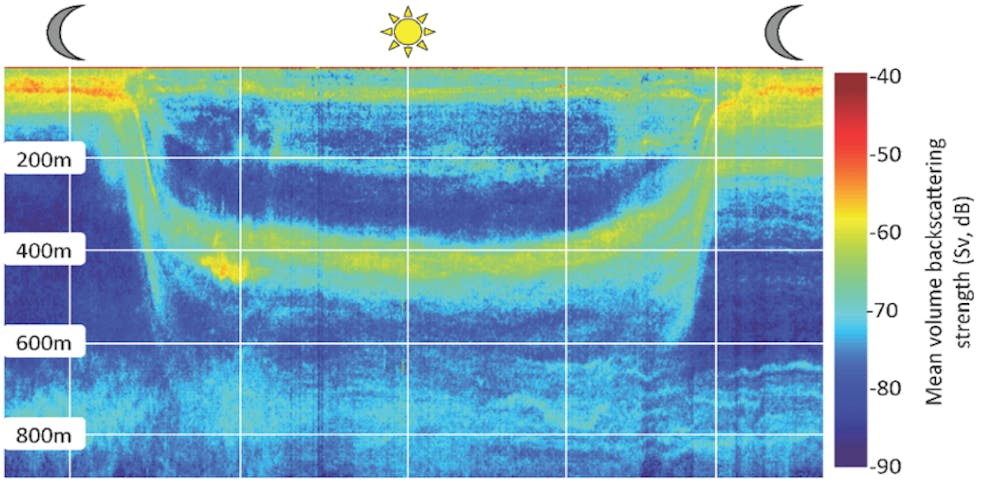
Rick and I hypothesized that adaptation to high salinity could disrupt Daphnia’scircadian rhythms based on recent evidence showing that other environmental contaminants can disrupt circadian behavior. One important behavior in Daphniathat may be controlled by the circadian clock is the diel vertical migration – the largest daily biomass migration on Earth, which occurs in oceans, bays and lakes. Plankton and fish migrate down to deeper water during the day to avoid predators and sun damage, and back up toward the surface at night to feed.

Echogram illustrating the ascending and descending phases of diel vertical migration, in which organisms ascend and descend through the water column. The color scale reflects acoustic scattering by concentrations of organisms at different depths.
DEEP SEARCH – BOEM, USGS, NOAA

Related: The Health Benefits of Epsom Salt Baths

Given what we know about circadian function, it would be logical to assume that exposure to pollution would not affect an organism’s circadian rhythms. While circadian clocks can incorporate environmental information to tell the time of day, they are heavily buffered against most environmental effects.

To understand the importance of this buffering, imagine that the timing of an organism’s day length responded to environmental temperature. Heat speeds up molecular reactions, so on hot days the organism’s 24-hour rhythm could become 20 hours, and on cold days it might become 28 hours. In essence, the organism would have a thermometer, not a clock.

Adaptation to pollution affects key circadian genes

To determine whether clock disruption is a trade-off to pollutant adaptation, we first had to establish that Daphnia is governed by a circadian clock. To do this, we identified genes in Daphnia that are similar to two genes, known as period and clock, in an organism that serves as a circadian model system: Drosophila melanogaster, the common fruit fly.

We tracked the levels of period and clock in Daphnia, keeping the organisms in constant darkness to ensure that a light stimulus did not affect these levels. Our data showed that the levels of period and clock varied over time with a 24-hour rhythm – a clear indication that Daphnia have a functional circadian clock.

Recommended: How to Cure Lyme Disease, and Virtually Any Other Bacterial Infection, Naturally

We also tracked the same genes in populations of Daphnia that had adapted to increased salinity. Much to my surprise, we discovered that the daily variation of period and clock levels deteriorated directly with the level of salinity the Daphniawere adapted to. In other words, as Daphnia adapted to higher salinity levels, they showed less variation in the levels of period and clock over the day. This demonstrated that Daphnia’s clock is indeed affected by pollutant exposure.

Daphnia and other plankton are among the most abundant organisms on Earth and play critical ecological roles.

We currently don’t understand what causes this effect, but the relationship between salinity levels and decreased variation in the levels of period and clock offers a clue. We know that exposure to pollutants causes Daphnia to undergo epigenetic regulation – chemical changes that affect the function of their genes, without altering their DNA. And epigenetic changes often show a gradual response, becoming more pronounced as the causal factor increases. Therefore, it is likely that high salinity is inducing chemical changes through these epigenetic mechanisms in Daphnia to suppress the function of its circadian clock.

The broad effects of circadian clock disruptions

We know that environmental conditions can affect what the clock regulates in many species. For example, changing the sugar that the fungus Neurospora crassa grows on changes which behaviors the clock regulates. But to our knowledge, this study is the first to show that genes of an organism’s core clock can be directly impacted by adapting to an environmental contaminant. Our finding suggests that just as the gears of a mechanical clock can rust over time, the circadian clock can be permanently impacted by environmental exposure.

This research has important implications. First, if Daphnia’s circadian clock regulates its participation in the diel vertical migration, then disrupting the clock could mean that Daphnia do not migrate in the water column. Daphnia are key consumers of algae and a food source for many fish, so disrupting their circadian rhythms could affect entire ecosystems.

Second, our findings indicate that environmental pollution may have broader effects on humans than previously understood. The genes and processes in Daphnia’s clock are very similar to those that regulate the clock in humans. Our circadian rhythms control genes that create cellular oscillations affecting cell function, division and growth, along with physiological parameters such as body temperature and immune responses.

Must Read: How to Detoxify and Heal the Lymphatic System

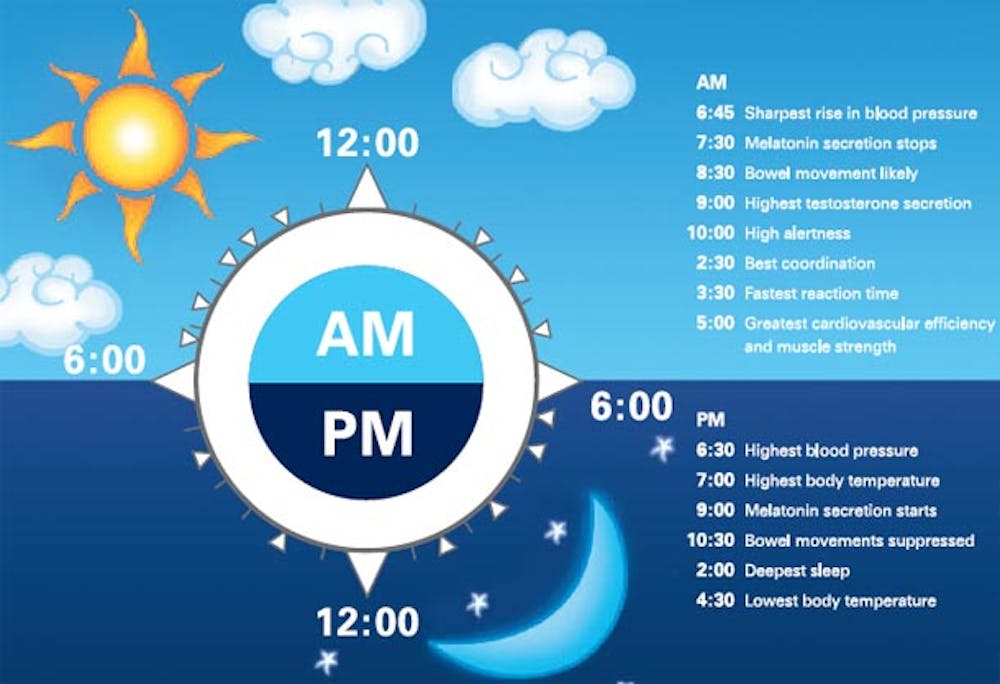
The human circadian clock regulates the cycles of many bodily functions. NIH

When these rhythms are disrupted in humans, we see increased rates of cancer, diabetes, obesity, heart disease, depression and many other diseases. Our work suggests that exposure to environmental pollutants may be depressing the function of human clocks, which could lead to increased rates of disease.

The ConversationWe are continuing our work by studying how the disruption of Daphnia’s clock affects its participation in the diel vertical migration. We are also working to determine the underlying causes of these changes, to establish whether and how this could happen in the human brain. The impacts we have found in Daphnia show that even a simple substance such as salt can have extremely complex effects on living organisms.
Farmer Witnesses Disturbing Side Effect After Feeding Pigs GMO Feed

(Natural Blaze) Jerry Rosman used to farm corn and pigs – now he helps other farmers begin a life of organic farming.

That’s because of a disturbing revelation he had after three years of feeding his pigs his genetically engineered corn crops – fresh off their modified cobs.

He was an ardent follower of Big Biotech and got in line to try GM crops in 1997. Time passed and all of a sudden his sows simultaneously experienced reproductive issues.

Come year 2000, his pigs began having “fake pregnancies.”

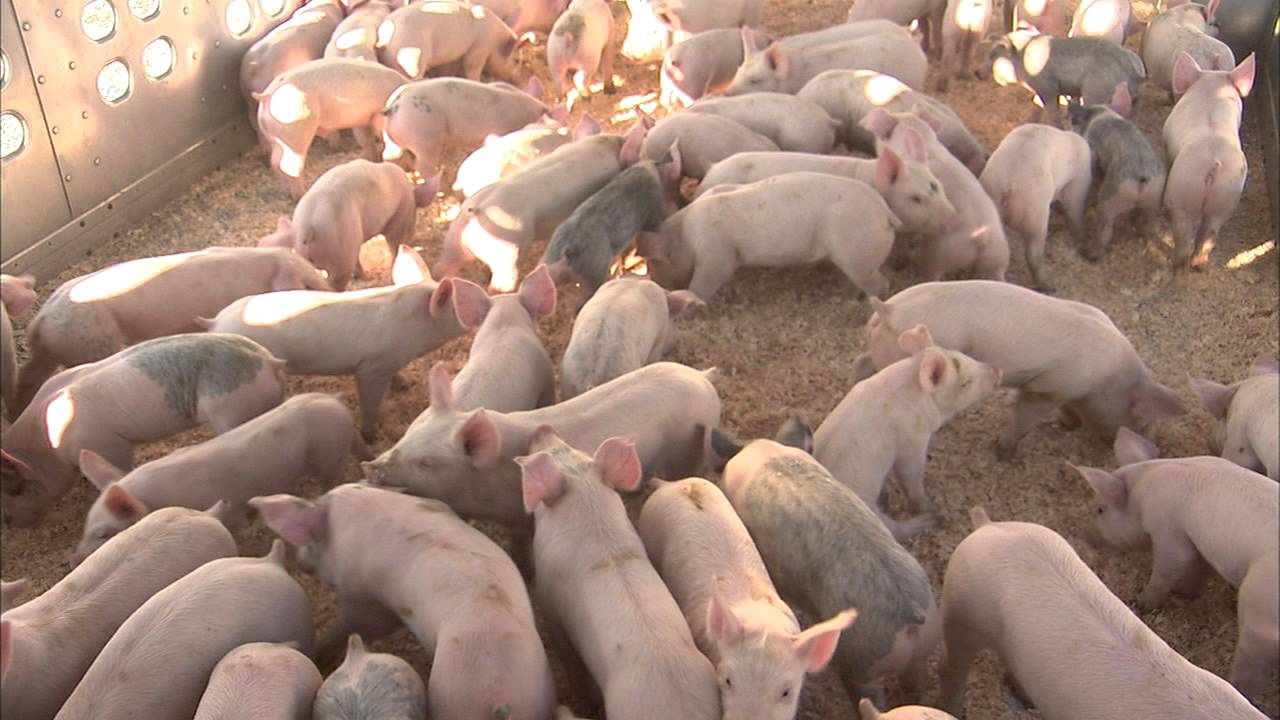
That is, 80% of his female pigs appeared pregnant, experienced all the symptoms of pregnancy – but when they went into labor they gave birth to sacks of water!

After years of being bullied or having those he talked to get bullied, Rosman found out he wasn’t alone. We’ve said time and again that Monsanto and other chemical/seed companies constantly blame farmers or thrown them under the bus when their products are revealed to cause major problems. They like to say that it’s a problem of crop management – that the farmers are not following instructions especially when it comes to pesticide use.

Related: Understanding and Detoxifying Genetically Modified Foods

Other farmers experienced Rosman’s farming losses but were dismissed by Monsanto et al. Likewise, it appears that employees from Iowa University stationed near Monsanto were silenced because of grants from Monsanto – eerily similar to the plot of the GMO thriller called Consumed – which we highly recommend.

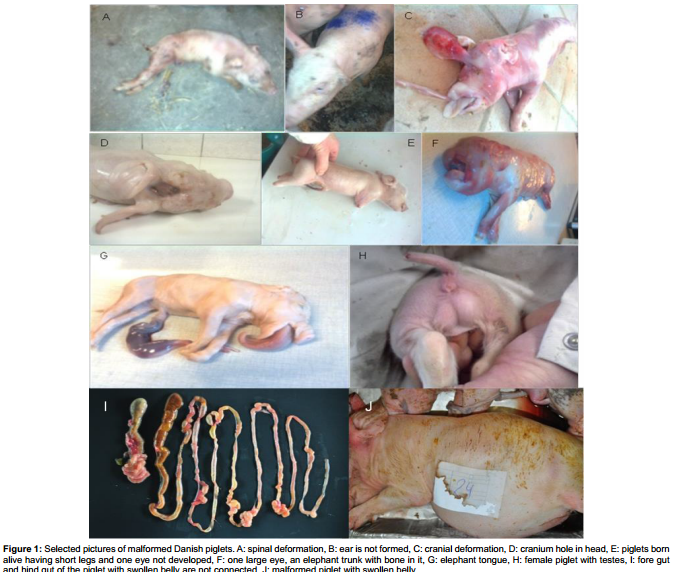
In 2014, we reported that a Danish farmer entered himself into a study to find out what made so many of his piglets deformed and stillborn. The culprit was glyphosate – the active ingredient in Monsanto’s Roundup herbicide that is used on its crops that are engineered to withstand the herbicide that would otherwise kill the crops.

Recommended: How to Detoxify From Chemotherapy and Repair the Body

Danish farmers’ deformed piglets:

Whereas Rosman lost his pig farm and they never recovered their fertility, the Danish farmer was able to recover his pigs when he switched them back to conventional feed.

Read more background on this story at AltHealth Works.

Check out the long version of this interview on Vimeo.

Get a nifty FREE eBook – Like at  Facebook, Twitter and Instagram.

This article (Farmer Witnesses Disturbing Side Effect After Feeding Pigs GMO Feed) appeared first at Natural Blaze. It can be reshared with attribution including link to homepage, intact links and this message. Image: Screenshot Vimeo

Researchers Warn How Pesticides Are Secretly Growing Antibiotic Resistance

(NaturalBlaze by Heather Callaghan) The first team of researchers ever to discover that the world’s most popular pesticides and herbicides increase the antibiotic resistance crisis have conducted another study to prove once and for all a frightening truth we must respond to.

Researchers at the University of Canterbury in New Zealand have confirmed once again that active ingredients of the commonly used herbicides, Roundup, Kamba and 2,4-D (glyphosate, dicamba and 2,4-D, respectively), each alone cause antibiotic resistance at concentrations well below label application rates.

Related: How to Detoxify From Antibiotics and Other Chemical Antimicrobials

GMWatch reports:

Professor Jack Heinemann of the School of Biological Sciences in UC’s College of Science said the key finding of the research was that “bacteria respond to exposure to the herbicides by changing how susceptible they are to antibiotics used in human and animal medicine.”

The herbicides studied are three of the most widely used in the world, Prof Heinemann said. They are also used on crops that have been genetically modified to tolerate them.

The effect was not seen at herbicide concentrations that are presently allowed for food (called Maximum Residue Limits, MRL). However, the effect was seen at concentrations well below those applied to plants (application rates). Therefore, the authors believe, the effect is most likely to arise in farm workers in rural areas and in children in urban settings who are exposed to herbicides, if they are also on antibiotics.

Heinemann said,

They are among the most common manufactured chemical products to which people, pets and livestock in both rural and urban environments are exposed. These products are sold in the local hardware store and may be used without training, and there are no controls that prevent children and pets from being exposed in home gardens or parks. Despite their ubiquitous use, this University of Canterbury research is the first in the world to demonstrate that herbicides may be undermining the use of a fundamental medicine – antibiotics.

Related: Understanding and Detoxifying Genetically Modified Foods

We reported on their previous research that discovered the same effects of pesticides on antibiotic resistance. A Monsanto spokesman at the time responded that the research couldn’t determine whether it was the active ingredients or the surfactants used in pesticides that actually made antibiotic resistance worse.

This research is a response to Monsanto’s claims to prove once and for all that both the active ingredients in pesticides and the surfactants are responsible for contributing to antibiotic resistance.

So now the scientists have even more bad news:

In addition, the new paper finds that added ingredients (surfactants) that are commonly used in some herbicide formulations and processed foods also cause antibiotic resistance. An antibiotic resistance response was caused by both the tested surfactants, Tween80 and CMC. Both are also used as emulsifiers in foods like ice cream and in medicines, and both cause antibiotic resistance at concentrations allowed in food and food-grade products.

Commenting on the regulatory implications of his team’s findings, Prof Heinemann said: “The sub-lethal effects of industrially manufactured chemical products should be considered by regulators when deciding whether the products are safe for their intended use.”

This discovery has much wider implications that we will have to handle in a future article…

Related: Gluten, Candida, Leaky Gut Syndrome, and Autoimmune Diseases

“The United States, for example, estimates that more than two million people are sickened every year with antibiotic-resistant infections, with at least 23,000 dying as a result. By 2050, resistance is estimated to add 10 million annual deaths globally with a cumulative cost to the world economy of US$100 trillion. In other words, roughly twice the population of New Zealand will be lost annually to antibiotic resistance,” said Prof Heinemann.
The biggest problem with our regulatory agencies is that they only study lethal or acute toxicity levels. They don’t focus on sub-lethal effects like how pesticides can kill ecologically important microbes. They focus on the effects of chemicals on humans and animals but not other organisms. Lastly, they do not consider the bigger picture such as cumulative and long-term effects of chemicals or what they do in combination.

Heinemann concludes:

Where this information is sought, it is usually only for people or animals. We are unaware of any regulator ever considering the risk of sub-lethal effects on bacteria. That is what makes this new research so important.

More emphasis needs to be placed on antibiotic stewardship compared to new antibiotic discovery. Otherwise, new drugs will fail rapidly and be lost to humanity.

Genetically engineered crops have increased the use of these pesticides. Pesticides aside, many have fears that the introduction of genetic engineering into the ecology will have grave ramifications. Norway, for instance, has banned GE salmon over fears of antibiotic resistance. And, earlier this year, an illegal GE bacteria found its way into an EU feedlot and it, too, was found to be resistant to antibiotics showing once again how reckless and unstable Big Biotech’s use of this technology really is.